
Mission Valley Animal Shelter plans for the future
EMILY MESSER | Hagadone News Network | UPDATED 1 month AGO
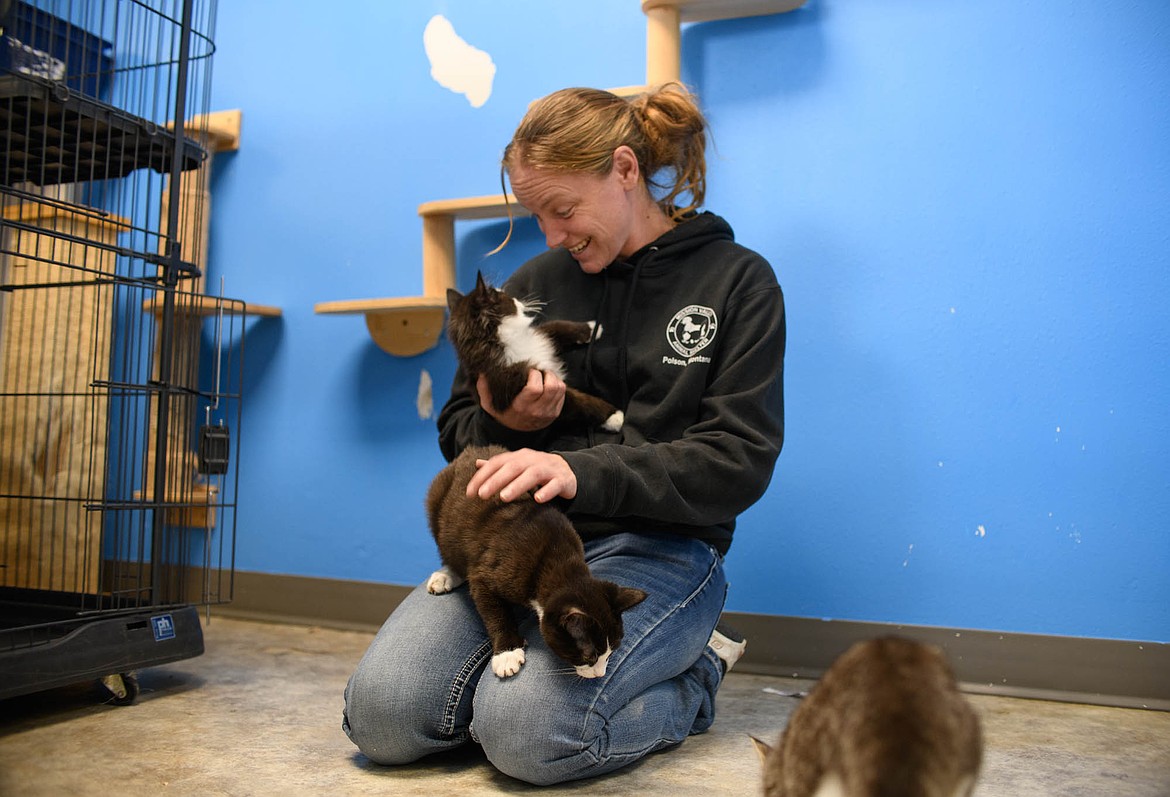
Mission Valley Animal Shelter’s manager, Raeva Corkill, holds kittens at the shelter on Wednesday, Jan. 28. (Emily Messer/Leader)
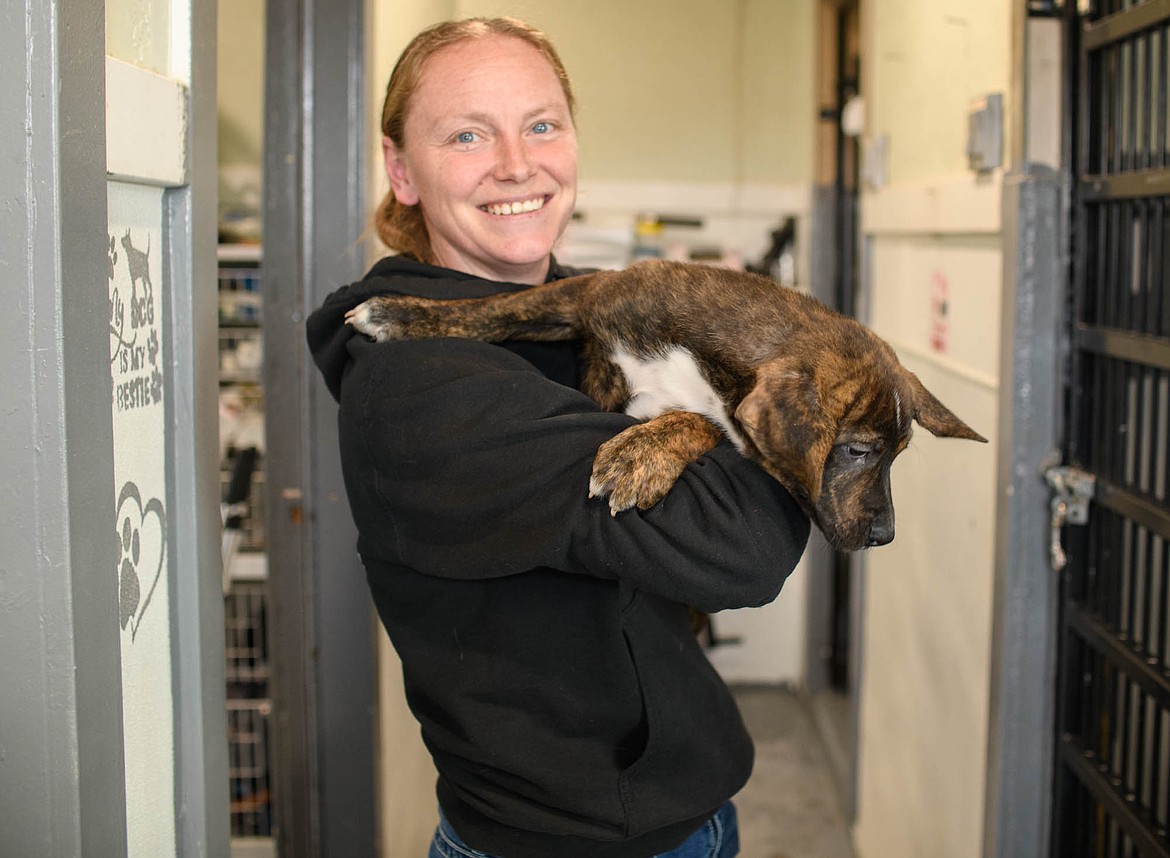
Raeva Corkill, the Mission Valley Animal Shelter’s manager, holds one of the many puppies currently at the shelter on Wednesday, Jan. 28. (Emily Messer/Leader)
Emily Messer joined the Lake County Leader in July of 2025 after earning a B.A. degree in Journalism from the University of Montana. Emily grew up on a farm in the rolling hills of southeast Missouri and enjoys covering agriculture and conservation. She's lived in Montana since 2022 and honed her reporter craft with the UM J-School newspaper and internships with the RMEF Bugle Magazine and the Missoulian. At the Leader she covers the St. Ignatius Town Council, Polson City Commission and a variety of business, lifestyle and school news. Contact Emily Messer at [email protected] or 406.883.4343 | February 4, 2026 11:00 PM
Mission Valley Animal Shelter hopes to build a new home and expand its capacity over the next three years to better serve a community without animal control.
The shelter's mission is to temporarily house lost or stray animals until they are reunited with their owners or placed in permanent homes. It also offers a number of community programs that help feed, neuter and vaccinate animals.
The animal shelter faced “serious financial challenges” in 2023, according to a letter from the Mission Valley Animal Shelter’s board of directors clarifying a misleading news story that aired recently. However, through community support and disciplined fiscal management, its trajectory has reversed. The shelter is now stable and saving for the future.
According to board member and financial officer Sharon Hawke, the board is working to generate sufficient revenue to offset the shelter's expenses, and once it consistently breaks even, it can move forward with a capital campaign to construct a new building.
Its current operational budget is $500,000. The organization also operates a thrift store in Polson called Seconds 2 Go. The store had $74,000 in net profit last year, which was allocated to the shelter's operational funds, according to Raeva Corkill, the shelter’s manager.
As of Wednesday, Jan. 28, the shelter had 26 dogs or puppies and 26 cats or kittens, with 32 animals on the waitlist. Corkill noted they can house 40-60 animals.
However, with its capacity at 99% most of the time, the organization has outgrown the building it has occupied for 32 years. Its property is leased from the county, and Corkill noted that the county allowed them to expand the backyard with additional kennels a few years ago.
To move forward with a new building, the organization will need a plot of land, either that is either donated or purchased. There isn’t room for the shelter to rebuild on its current property, Corkill noted, but they would like to stay somewhat in the same area.
Hawke said they have had issues with accessing water due to the high cost of drilling a well on the west side of Highway 93. She said they had to truck in water for 10 to 15 years before the neighboring transfer station was built, after which they were able to connect to its water system.
According to Kate Stinger, the county commissioner's executive administrative assistant, the county allocated $22,500 in federal ARPA funding to upgrade the shelter's septic system.
Hawke is aware of wells on the east side of the highway and hopes they might have easier and better access if they are able to construct a new building on that side.
Corkill envisions the shelter's new space as a two-story building with entire floors dedicated to both cats and dogs. Currently, the shelter has only an open cat room and a smaller room for kittens.
“What we're hoping to accomplish with the new building is to have at least double the number of kennels for adult dogs as well as puppies,” Corkill said.
There are no animal control officers within the county, tribal or city governments. The state of Montana does not require governing bodies to enact animal control, but authorizes them to “regulate, retrain or prohibit” the running of stray dogs.
Lake County Attorney James Lapotka said the county does not have an animal control department and only has a vicious dog ordinance. According to Corkill, the shelter will take animals while a court case is underway but doesn’t charge the county for that service.
The shelter has received $2,500 per year from the county over the last three years, according to Tara Barry, the county finance officer. Combined contributions from the Confederated Salish and Kootenai Tribes and the county total less than 1% of the shelter'sc total operating budget, according to the board of directors' letter.
Montana law does allow county and municipal jurisdictions to place a mill levy for animal control, which could include funding for shelters and related services, before voters. Stinger stated in an email to the Leader that there are no mills allocated to the animal shelter at this time.
CLARIFICATION: According to MVHS board member Sharon Hawke, the sewer system grant for the shelter was $20,650 and was awarded by the Department of Natural Resources in 2023.
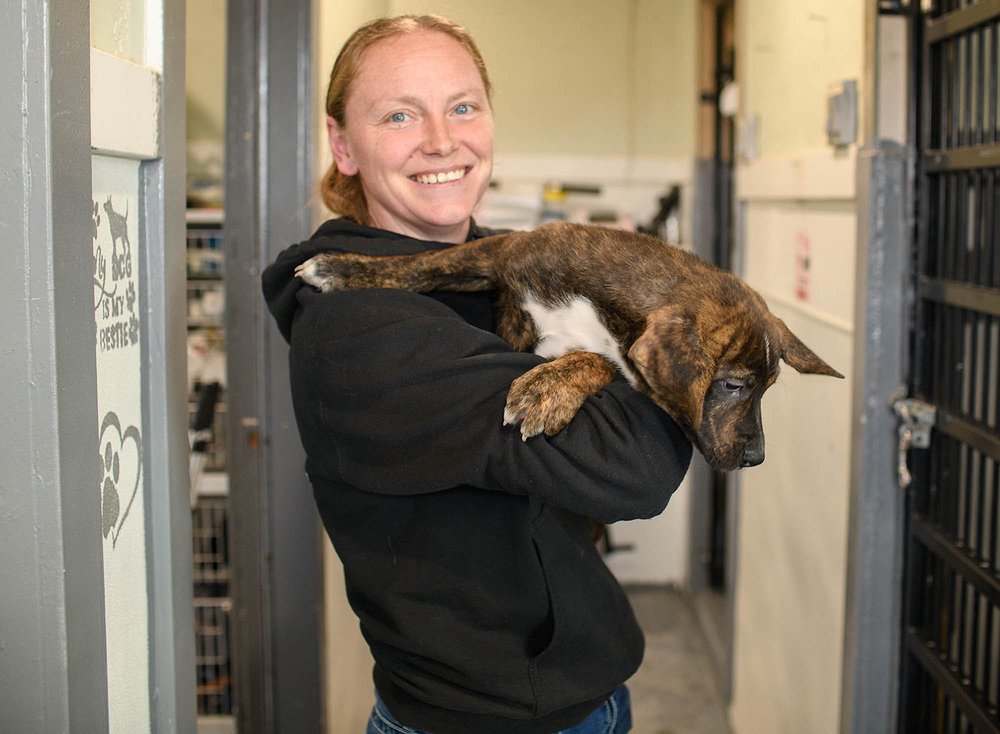 Raeva Corkill, the Mission Valley Animal Shelter’s manager, holds one of the many puppies currently at the shelter on Wednesday, Jan. 28. (Emily Messer/Leader)
ARTICLES BY EMILY MESSER

Polson commissioners hear plan for reducing E. coli in Flathead Lake
Representatives from the Flathead Lakers and the Polson Bay Golf Course presented a plan to the Polson City Commission last Wednesday to reduce stormwater runoff, which had caused increased levels of E. coli in Flathead Lake near Boettcher Park.
City Commission finalizes Salt Cafe grant, hears from market vendors
The Polson City Commission council chambers were full of support Monday night for Andrew Perkins, owner of Salt Cafe, who has been awaiting funding from the Tax Increment Finance District grant he received nearly three years ago.

Foundation established for Polson Police
A non-profit called the Polson Police Foundation was launched at the end of 2025 to support the department by contributing to training, officer wellness, critical equipment and community initiatives.