
Council discusses options to ensure Moses Lake water supply
CHERYL SCHWEIZER | Hagadone News Network | UPDATED 7 months AGO
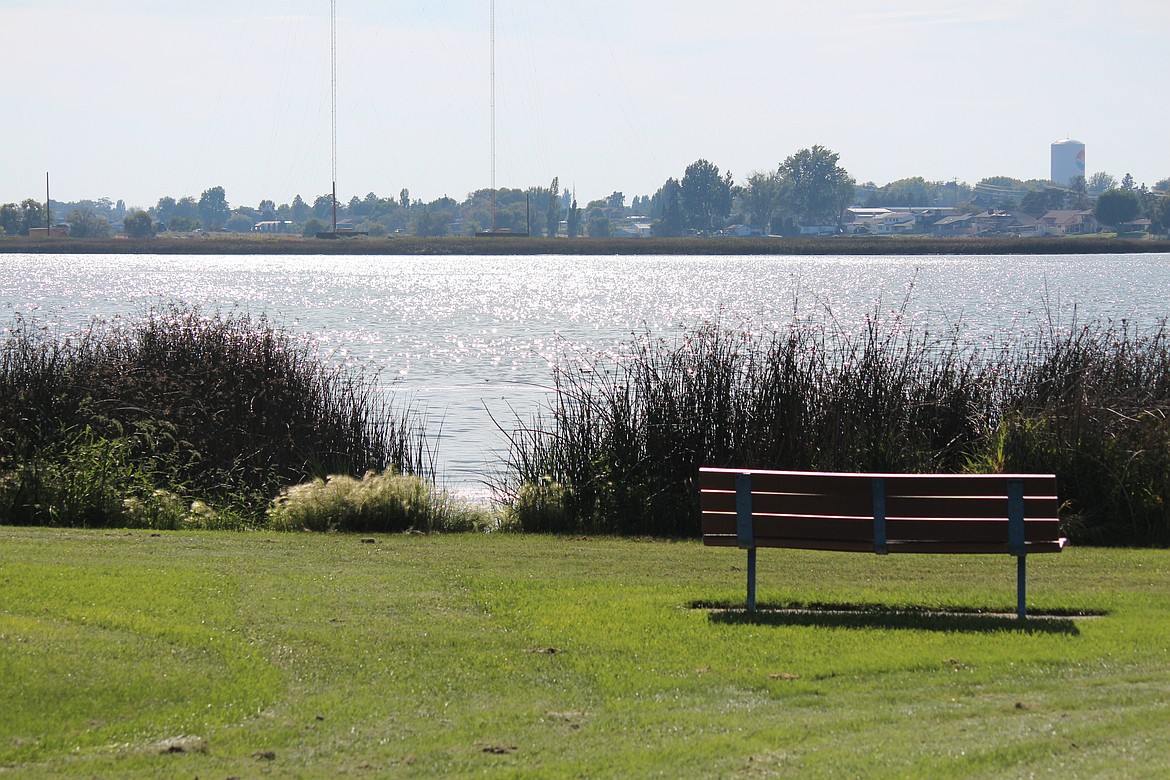
Moses Lake City Council members held a wide-ranging discussion on strategies to increase the city’s water supply Tuesday.
CHERYL SCHWEIZER/COLUMBIA BASIN HERALD
Water, and the most effective ways to get more of it including working with other entities, was the subject of a lengthy Moses Lake City Council discussion Tuesday.
Senior Reporter Cheryl Schweizer is a journalist with more than 30 years of experience serving small communities in the Pacific Northwest. She began her post-high-school education at Treasure Valley Community College and enerned her journalism degree at Oregon State University. After working for multiple publications, she has settled down at the Columbia Basin Herald and has been a staple of the newsroom for more than a decade. Schweizer’s dedication to her communities and profession has earned her the nickname “The Baroness of Bylines.” She covers a variety of beats including health, business and various municipalities. | February 5, 2026 3:00 AM
MOSES LAKE — Moses Lake City Council members discussed ways and means of obtaining more water and making more efficient use of water at a lengthy special meeting Tuesday. Mayor Dustin Swartz said water is a problem throughout the Columbia Basin, and cities, counties, ports and other entities would benefit from a common effort.
“I think we all have to work together to accomplish anything,” Swartz said.
Water and water availability are issues because Moses Lake gets its water from an underground aquifer, which is shared with cities throughout the Basin. The aquifer also provides irrigation water for some farmers in the area between Warden and Odessa. The combination has caused water levels in the aquifer to decline throughout the region. Moses Lake, Othello, Quincy, the ports of Moses Lake and Quincy, among others, are studying possible solutions.
Council members and consultants discussed a range of possible solutions, from accessing water closer to the surface to using surface water for conservation to drilling additional wells into the deep aquifer. City Manager Rob Karlinsey said drilling additional deep wells sounded a little counterintuitive.
“You might ask yourself, ‘I thought the city’s adopted water strategy is trying to have us wean ourselves off (deep wells). Why would we drill more?” Karlinsey said. “To buy us some time.”
The city has water rights for the deep aquifer that it’s not using, he said. Additional deep wells would provide water while city officials look for other, longer-term solutions.
Jill Van Hulle of Aspect Consulting, which is working with the city on its water planning and the search for additional water, said it’s unlikely the city could obtain more water rights, which should be taken into account.
“Where we have landed is the best option is to look at pursuing (possible solutions) that take water rights out of the equation,” she said.
City officials are working on converting some of the city’s existing water rights from the deep aquifer to water closer to the surface.
Moses Lake, like other cities in the Basin, does have access to water from the Columbia Basin Project; a small amount of project water is set aside for municipal and industrial use. Othello city officials have been working for about a decade on a project to take water from the irrigation canal system when it’s available, treat it, and pump it into the aquifer. Andrew Austreng of Aspect Consulting said that’s an option for Moses Lake, too.
The process is called aquifer storage and recovery, and Austreng cited Walla Walla and Yakima as other examples of cities that are using ASR to help alleviate water concerns. Moses Lake City Engineer Richard Law said city officials would want to use at least some of the surface water right away.
“We would treat it (and) use as much of it as we can,” Law said. “But if we have excess capacity, if we only need 100 gallons and we treated 200 gallons, why not put the other 100 gallons in a storage vessel and or the aquifer, so we could get it back out of there?”
There are still regulatory hurdles, Law said, but ASR is feasible.
Port of Moses Lake Director Dan Roach said the port is looking at another option for surface water, one that port officials think would help not only the city and the port, but other water users as well.
Kevin Richards of Western Pacific Engineering, the port’s engineer, said port officials are looking at obtaining water through a canal that runs close to the lake and has the capacity to meet the needs of both the port and the city. The project would increase the flow of water through Moses Lake as well, which would help alleviate algae blooms and other problems that come with stagnant water, Richards said.
Marc Maynard, manager for the Bureau of Reclamation’s Ephrata field office, said the port’s proposal could help alleviate some of the challenges faced by the bureau and some of its irrigation customers around Moses Lake and Quincy. Studies will be needed before anything can happen, he said.
“(The bureau) will have to do an operational study. To do an operational study, I need to know exactly what you guys are asking for,” Maynard said.
Richards said the port’s research is in its early stages, and what the project needed now from the city is support.
 Water, and the most effective ways to get more of it including working with other entities, was the subject of a lengthy Moses Lake City Council discussion Tuesday.
ARTICLES BY CHERYL SCHWEIZER
Road projects on hold for Labor Day weekend
MOSES LAKE — With Labor Day weekend dead ahead, drivers will be able to move freely about the state. Most road projects are on hold for the holiday weekend. Nobody will be working on the Hansen Road overpass on Interstate 90, but the lane restrictions that are in effect will continue through the end of the project.
Cost estimates for water source alternatives given to Moses Lake City Council
Protected under the U.S. Endangered Species Act, efforts are ongoing to keep it self-sufficient
MOSES LAKE — It’s going to cost a lot of money to provide alternative water sources for the city of Moses Lake, but some of the possible alternatives will cost more than others. City officials provided the Moses Lake City Council with costs for various alternatives Tuesday.

Dryer vent cleaning is important -- but often overlooked
MOSES LAKE — Not all the maintenance a house needs is visible. Sometimes a potential problem just goes unnoticed until it causes trouble, sometimes serious trouble. But a lot of potential problems give off warning signs. Clothes dryers often do when they need a good cleaning.