
Shakespeare goes bonkers
JOEL MARTIN | Hagadone News Network | UPDATED 8 months, 1 week AGO
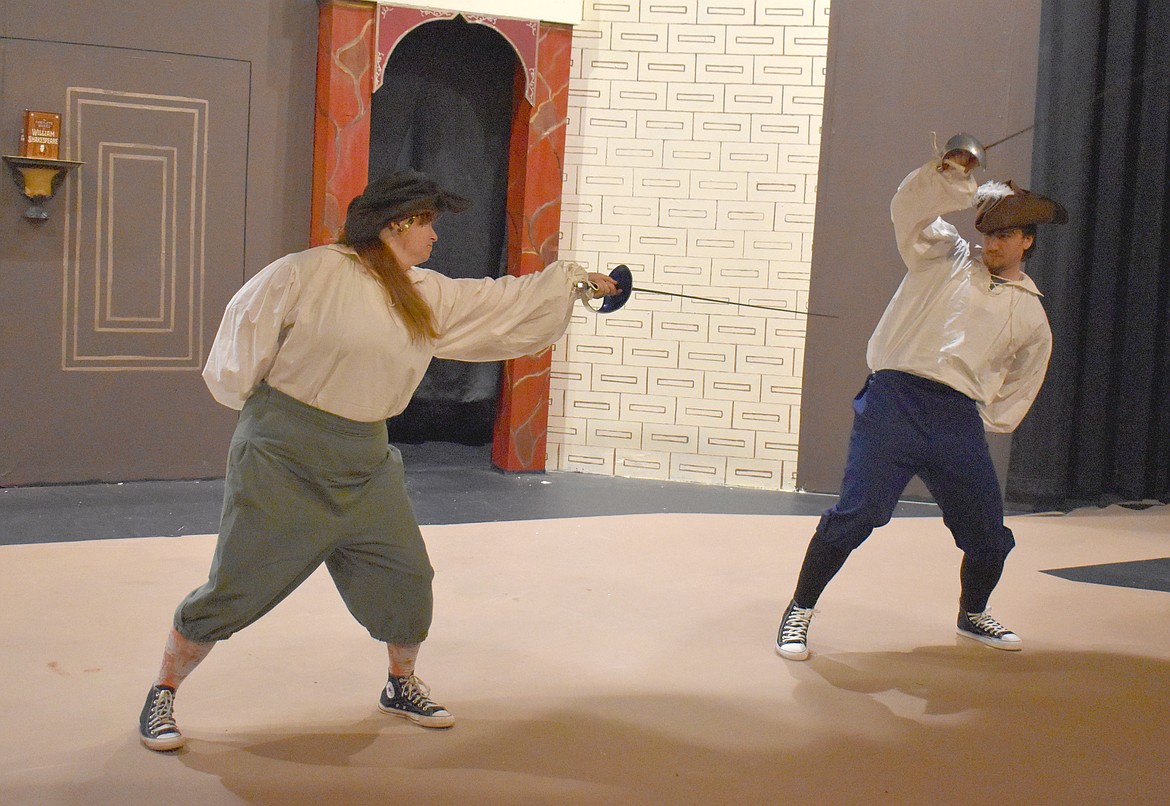
Kristina Allman, left, and Blane Schafer cross swords in “The Complete Works of William Shakespeare (abridged) [revised] [again],” opening Feb. 13 at the Masquers Theater.
JOEL MARTIN/COLUMBIA BASIN HERALD
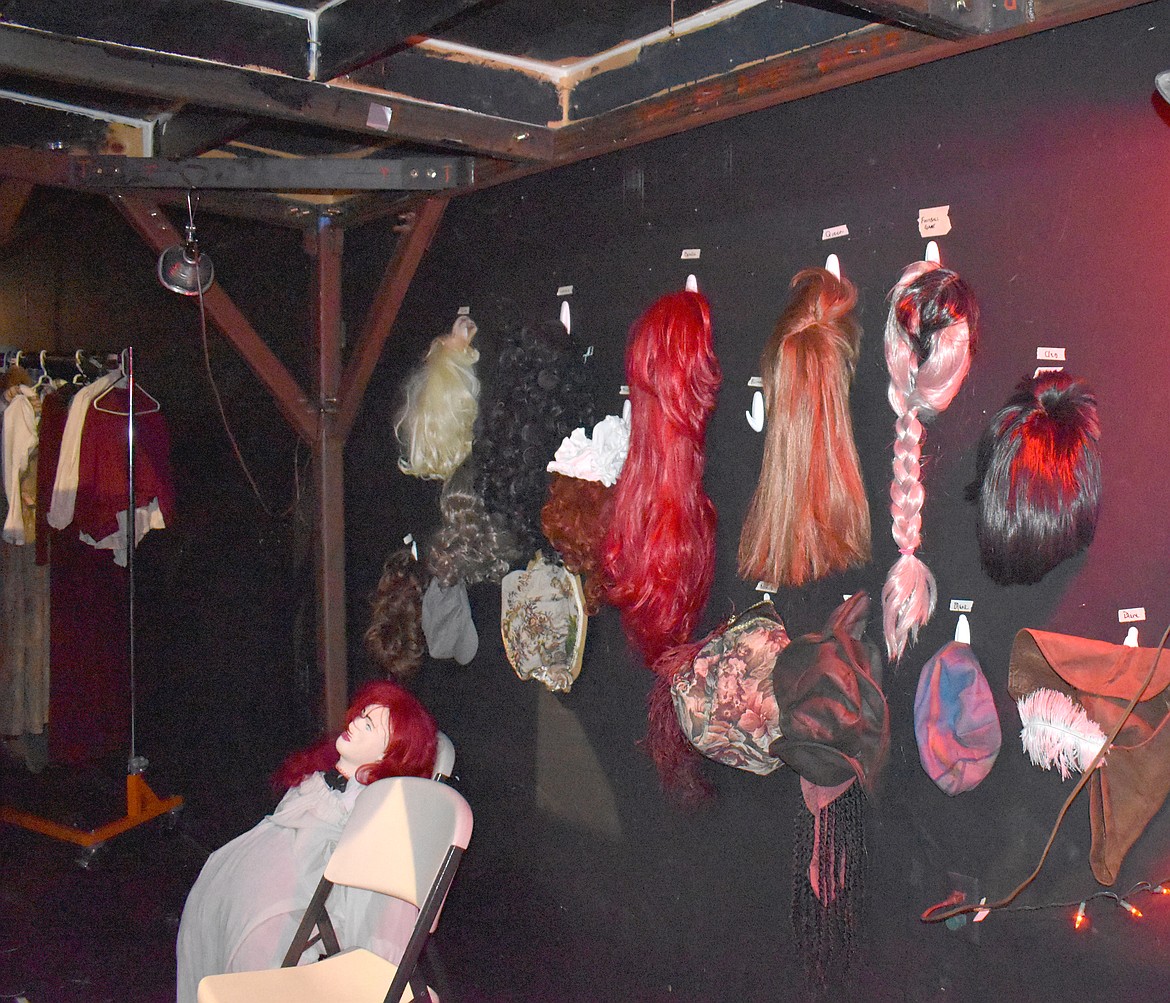
The Masquers production of “The Complete Works of William Shakespeare (abridged) [revised] [again]” entails a deranged number of wigs, costumes and props, all arranged in order so the backstage crew can get them quickly to the three actors.
Joel Martin has been with the Columbia Basin Herald for more than 25 years in a variety of roles and is the most-tenured employee in the building. Martin is a married father of eight and enjoys spending time with his children and his wife, Christina. He is passionate about the paper’s mission of informing the people of the Columbia Basin because he knows it is important to record the history of the communities the publication serves. | February 6, 2026 3:00 AM
SOAP LAKE — Thirty-seven plays. That’s how many plays William Shakespeare wrote in his career. And every one of those will be on the Masquers stage next week.
“We take all of Shakespeare’s plays – tragedies, comedies, histories – and mash them all into a little under two hours,” said Adam Zaleski, who’s directing “The Complete Works of William Shakespeare (abridged) [revised] [again],” opening Feb. 13. “It’s a real blast. It’s a lot of fast acting.”
To make matters even more manic, the entire body of the Bard’s work is performed by only three actors: Cassie Nelson, Kristina Allman and Blane Schafer, all credited in the program as themselves. None of the actors was entirely certain how many characters each one plays, but they determined it worked out to a minimum of 15 apiece. Not counting the sock puppets and Godzilla. Yes, really.
“It’s probably the craziest play I’ve done,” Schafer said.
The play begins with Romeo and Juliet, one of the most familiar – and misunderstood – of the playwright's pieces.
“People think of Romeo and Juliet as this tragic love story,” Zaleski said. “As a kid in high school, you think, ‘Oh, that’s so sad.’ And then you grow up to be an adult, and you’re like, ‘These kids are stupid.’’”
The play segues into two more tragedies, “Titus Andronicus” and “Othello,” before shifting gears and tackling the comedies. All of them at once.
“We call it the ‘Lump of Hilarity,’” Zaleski said. “Shakespeare had 16 comedies that all basically have the same plot. So instead of doing 16 semi-OK plays, it’s one stupendous play. It’s a lot of mixing and matching and a lot of wordplay. Our actors and have got a box full of props, and they’re flipping through them as Cassie is reading out the synopsis version of what’s going on.”
From there, the script descends back into tragedies, which, as one character says, are even funnier than the comedies. Those are followed by the historical plays, most of which deal with the wars that ravaged England for generations and ended about half a century before Shakespeare’s birth.
“They’re played as a football game,” Zaleski said. “If you think about it, all the different kings bouncing around, throwing the crown back and forth, it’s a lot like football.”
All that is just Act I.
“The second act is ‘Hamlet,’” Zaleski said. “We do the full (first act) and (the characters) think they’re done, and then they realize they missed one.”
“Hamlet” may be well known, but the Masquers’ performance will be like nothing the audience has come to expect from it, Zaleski said, avoiding giving spoilers.
“It’s all fun and games until everybody dies at the end,” Zaleski said. “(There are) two endings of Shakespeare plays: Either everybody gets married or everybody dies.”
The script allows for a lot of improvisation, and Zaleski made liberal use of that.
“I absolutely love improv comedy,” he said. “I love it so much that I do it in shows that don’t have improv, which makes directors angry at me. So in this one, I’m letting them get away with a lot more improv.”
A cast of three doing 37 plays requires a very well-organized backstage crew. The walls are lined with wigs, costumes, swords and assorted other items, all organized so they can be grabbed in a hurry.
“Props and costume changes are very puzzle-pieced,” said Assistant Stage Manager Michaela Greely. “If we just run around, it doesn’t always get done the way it needs to. We figured out a plan to make it work.”
The improvisational nature of the play is a challenge for the crew, Greely said, but a worthwhile one.
“We know most of the lines in the script and we know what each character needs,” Greely said. “If they jump a scene or an ad lib goes for a longer time, we know step for step what’s happening on stage, so we can prepare for it backstage.”
“We work really hard to make it seem like we’re not working really hard,” Zaleski said.
This play can appeal both to the Shakespeare fanatic and those who struggled through reading a play in school, the cast said.
“I think if they already hated Shakespeare, it’ll just reinforce their hatred if it,” Schafer said. “And if they already love Shakespeare, it’ll make them want to go and read more.”
“Or people are going to walk away scratching their heads, wondering, 'What the heck did I just watch?'’” Allman said.
Nelson hopes for another reaction.
“I don’t think they will do that,” Nelson said. “I think they’ll be laughing their tushes off.”
‘The Complete Works of William Shakespeare (abridged) [revised] [again]’
Feb. 13-March 1
7:30 p.m. Fridays and Saturdays, 2 p.m. Sundays
Masquers Theater
302 W. Main Ave.
Soap Lake
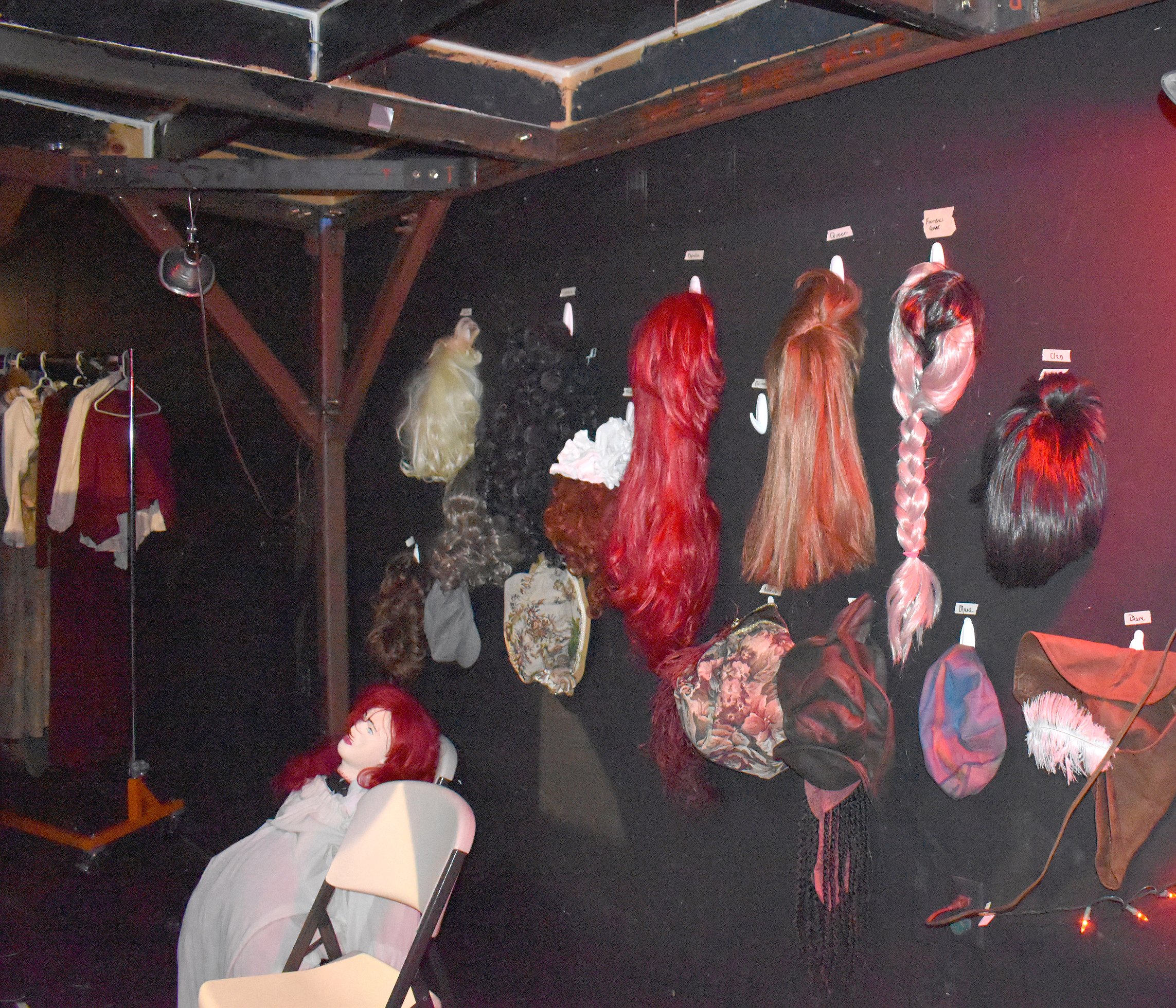 The Masquers production of “The Complete Works of William Shakespeare (abridged) [revised] [again]” entails a deranged number of wigs, costumes and props, all arranged in order so the backstage crew can get them quickly to the three actors.
ARTICLES BY JOEL MARTIN

Endless battle
Noxious Weed Control Board works to keep invasive plants under control
MOSES LAKE — Some of the nastiest plants in Grant County were the topic of a class led by Jay Johnson, a consultant with the Grant County Noxious Weed Control Board, Tuesday. The Noxious Weed Control Board, as its name would suggest, is tasked with keeping weeds under control in Grant County. That’s not a small job; the board’s website lists 129 species of noxious weeds that are found around Grant County. A noxious weed is defined as an invasive, non-native plant that threatens agricultural crops, local ecosystems or fish and wildlife habitat, according to the Noxious Weed Control Board. Washington state law requires that these weeds be identified and their spread kept to a minimum, if not completely eradicated. “We’re one of those agencies a lot of people don’t really understand,” Johnson said. “We’re a county office and … our funding is tax-based assessment. When you get your tax bill and you look down at all the expenses that you pay for, there we are.”

BASIN EVENTS: Oct. 16-24
COLUMBIA BASIN — Whether you feel like shopping, crafting, learning or seeing a show, there’s something happening for you this week in the Basin. Oct. 16 ‘My Family (Mi Familia)’ screening Spanning three generations, “My Family (Mi Familia)” is a heartfelt drama that follows the Sánchez family as they build their lives in East Los Angeles. Through love, hardship, triumph, and sacrifice, the film explores the immigrant experience, the strength of family bonds, and the traditions that connect one generation to the next. Lowrider show and taco truck before the screening. Sponsored by Columbia Basin Allied Arts, EDUBS C/S and the Moses Lake Creative District. $12 per person. Doors open at 6 p.m., film begins at 7 p.m. at the Moses Lake Civic Center Auditorium, 401 S. Balsam St. Tickets and info: www.cba-arts.org.

Moses Lake author encourages women to look beyond church culture norms
MOSES LAKE — A Moses Lake author’s book, “A Christian Woman Striving to Live Her Faith in a Man-Controlled World,” takes aim at the role to which many churches relegate the female half of their congregations. “It’s to encourage women in the faith,” Linda Curran said. “A lot of churches say, ‘Teach Sunday school, do this, do that, but don’t (evangelize.)’" In her book, Curran recounts a time when she moved to a new community and joined a church there. She was surprised to learn that, as a new female member, she had been automatically assigned church cleaning duties. When she questioned it, she wrote, she was met with condescension and her objections were brushed aside. In other churches, she said, women who were capable of teaching were relegated to “women’s ministry.”