
Banking on kindness: Mineral County food bank serves as community pantry as demand increases
HANNAH SHIELDS | Hagadone News Network | UPDATED 1 month, 2 weeks AGO
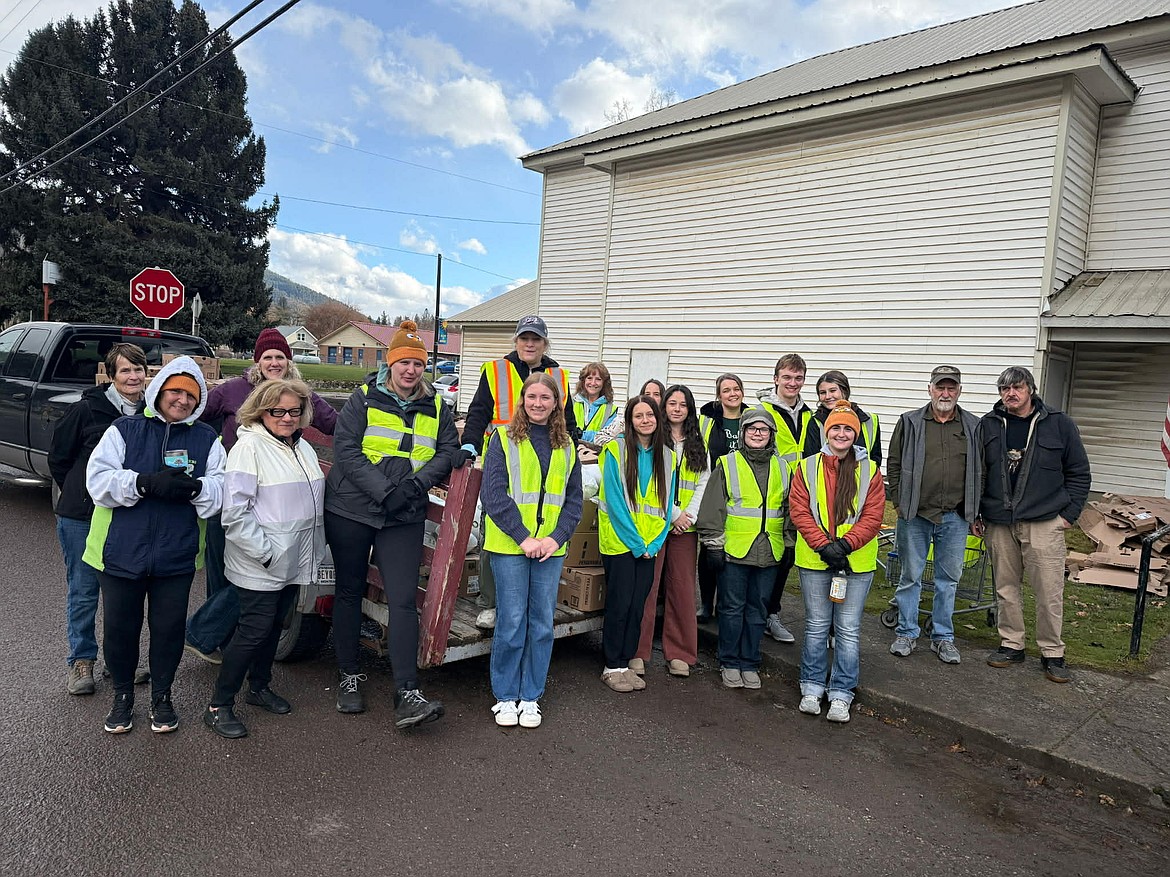
A group of volunteers with the Community Food Bank of Mineral County pose for a photo in November 2025, after spending a full day giving out turkeys and Thanksgiving meals to those in need. (Courtesy of Shana Williams)
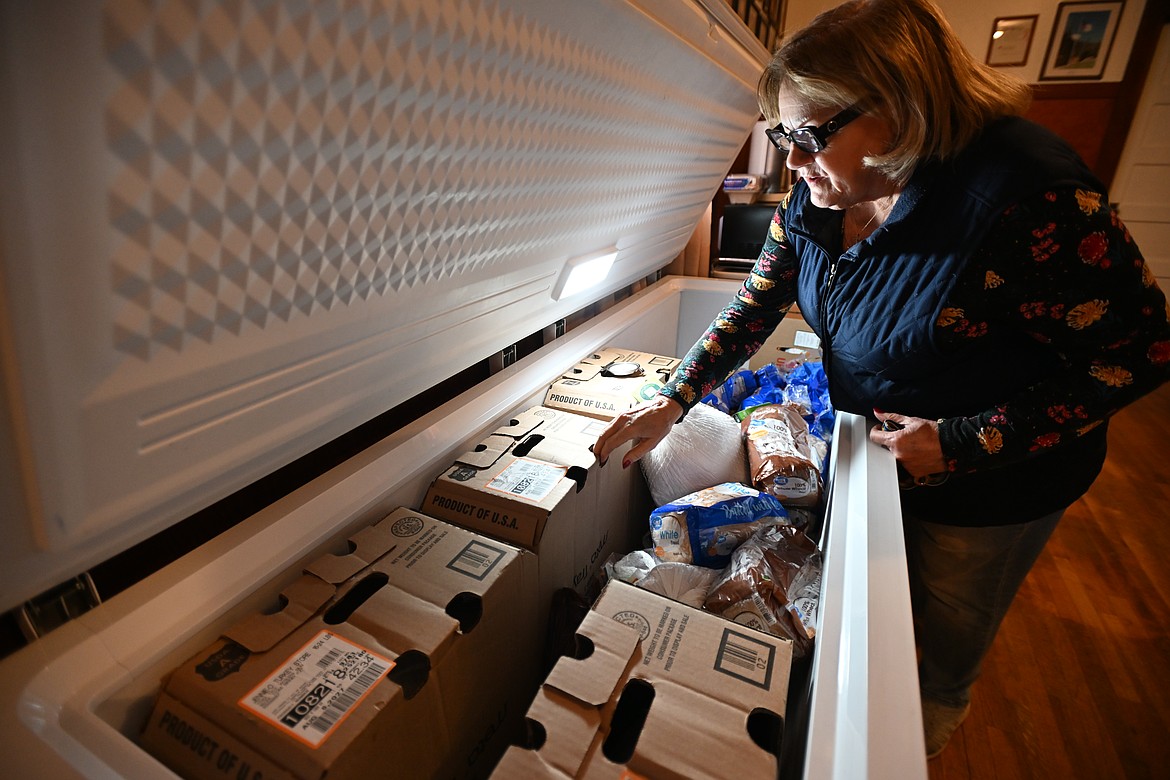
Community Food Bank of Mineral County President Wanda James peruses through a freezer of stored food at the Masonic Temple in Superior. (Hannah Shields/Daily Inter Lake)
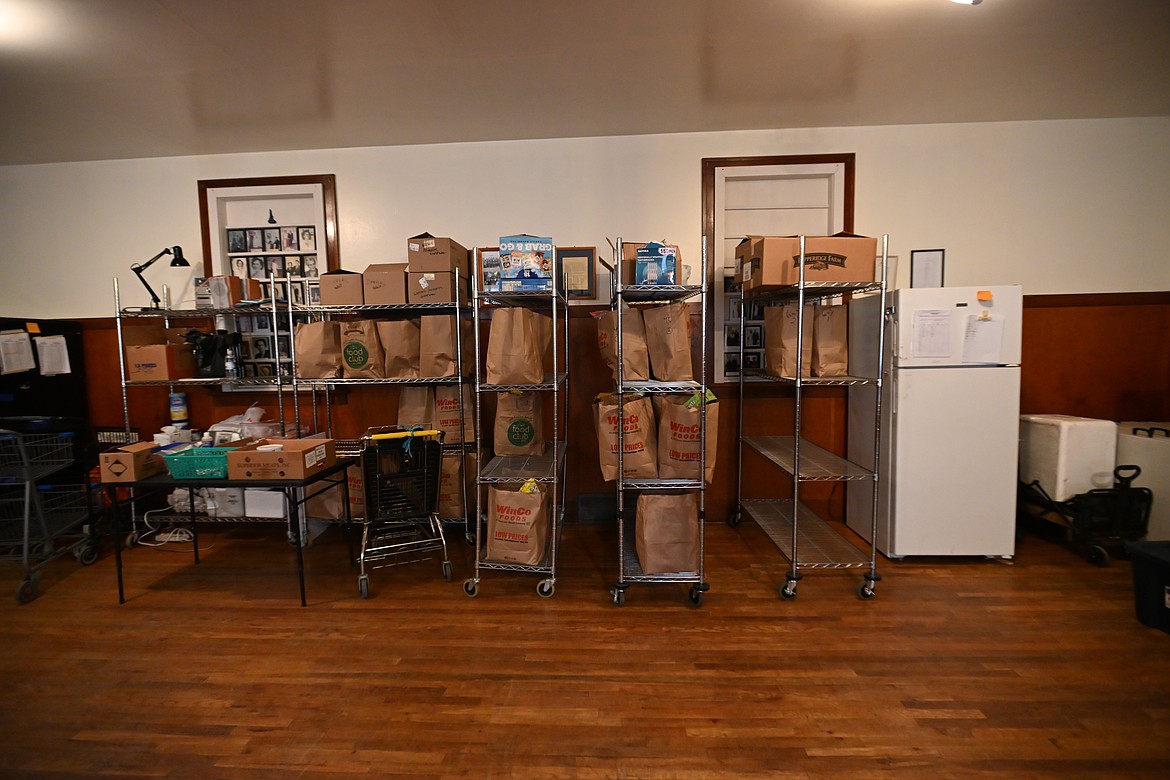
Bags of food sit in the Masonic Temple in Superior, waiting to be distributed to clients through the Community Food Bank of Mineral County. (Hannah Shields/Daily Inter Lake)
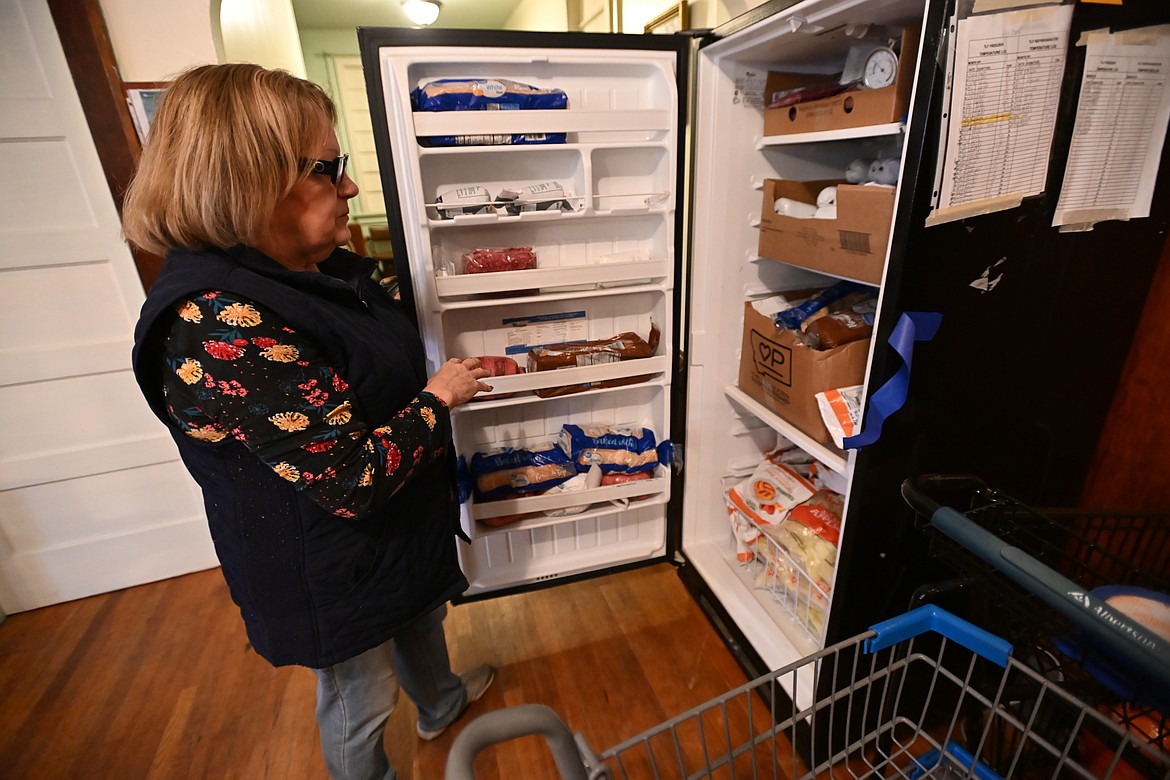
Community Food Bank of Mineral County President Wanda James opens a refrigerator full of food ready for distribution to clients, held at the Masonic Temple in Superior. (Hannah Shields/Daily Inter Lake)
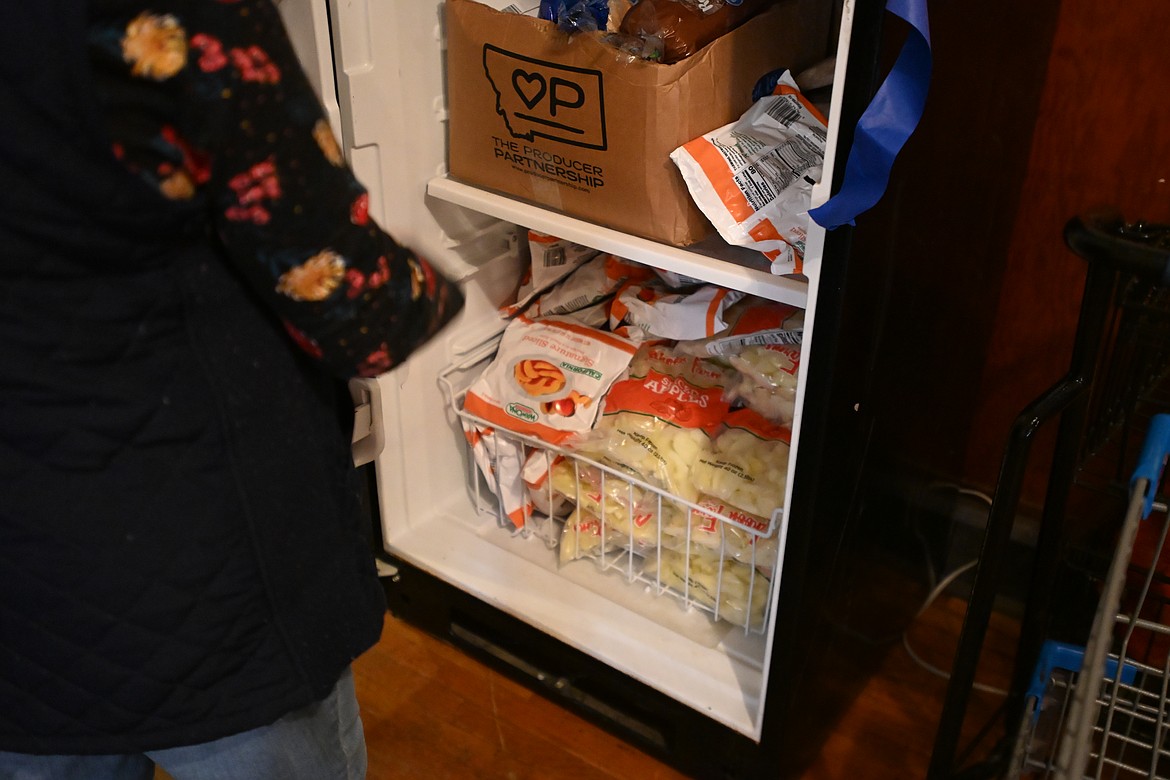
Community Food Bank of Mineral County President Wanda James opens a refrigerator full of food ready for distribution to clients, held at the Masonic Temple in Superior. (Hannah Shields/Daily Inter Lake)
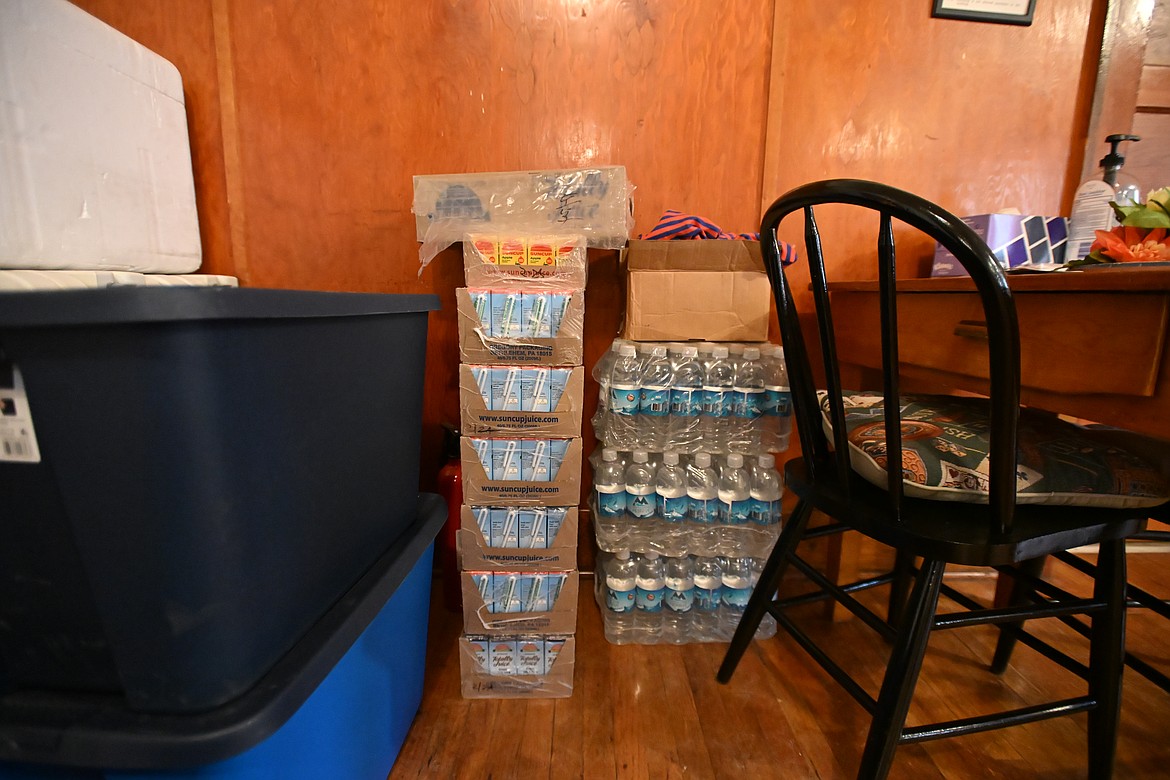
Juice boxes and water bottles stored in the Masonic Temple in Superior will soon be distributed to clients through the Community Food Bank of Mineral County. (Hannah Shields/Daily Inter Lake)
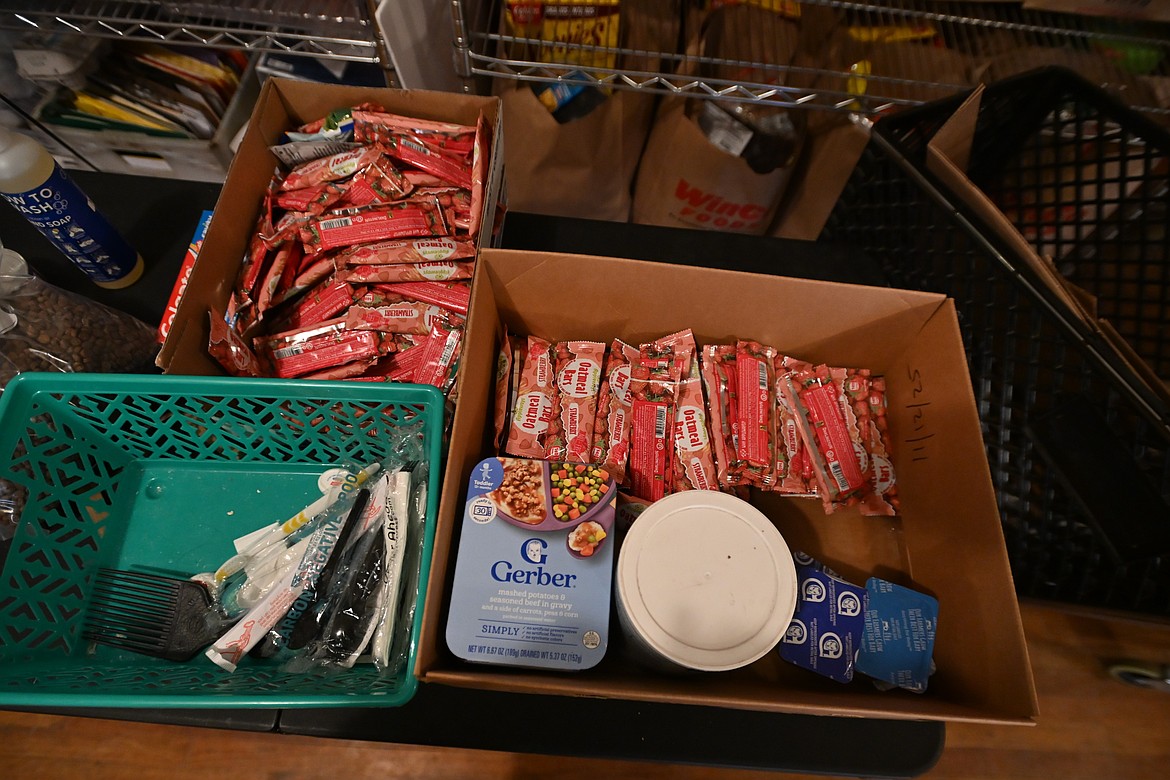
Snacks and baby food are up for grabs through the Community Food Bank of Mineral County, temporarily stored at the Masonic Temple in Superior. (Hannah Shields/Daily Inter Lake)
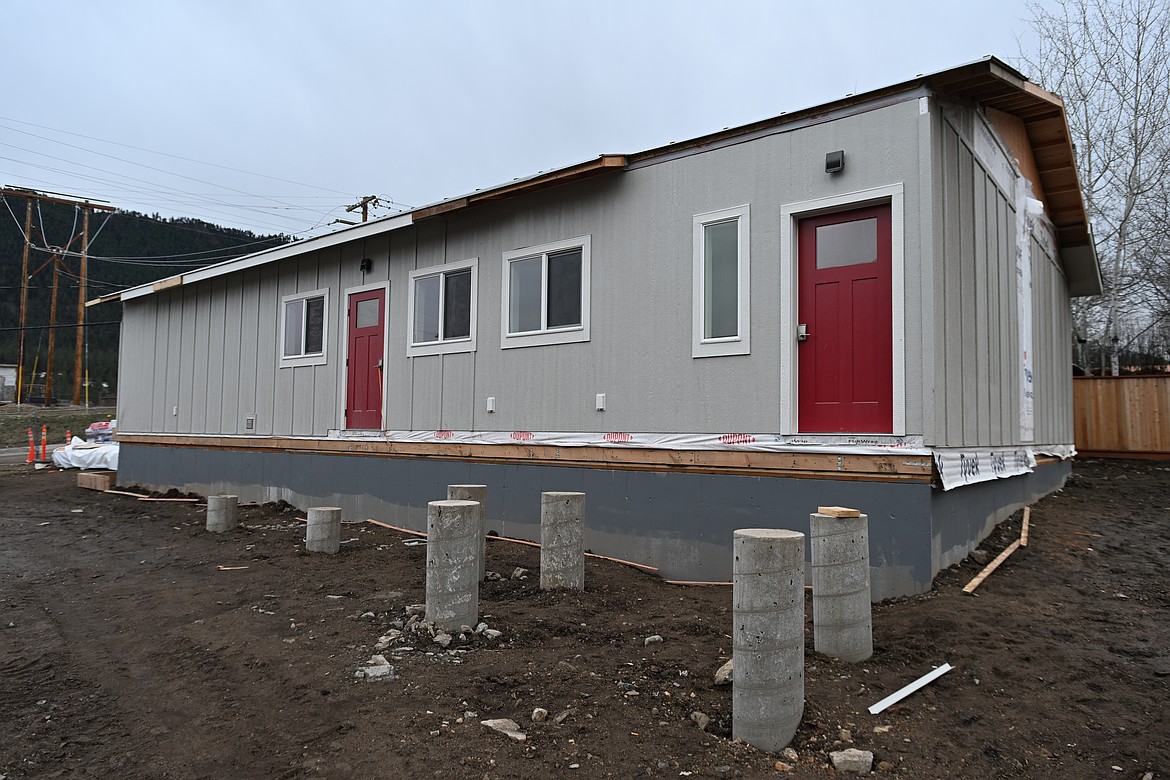
A new 2,200-square-foot building in downtown Superior is the future home of Community Food Bank of Mineral County. (Hannah Shields/Daily Inter Lake)
RURAL GOVERNMENT REPORTER, REPORT FOR AMERICA Hannah Shields covers rural government and accountability reporting for the Daily Inter Lake and Northwest Montana weekly papers as part of the national Report for America program. Her reporting focuses on transparency, public spending and the impact of local government decisions on small communities. Shields has covered issues ranging from school district finances to development disputes and rural infrastructure projects. She regularly uses public records and investigative reporting to examine institutions that affect local residents. Her work helps bring greater oversight and visibility to rural government across Northwest Montana. IMPACT: Hannah’s work strengthens transparency and accountability in rural communities that often lack consistent watchdog coverage. | February 7, 2026 11:00 PM
The Community Food Bank of Mineral County was operating out of a clothing store’s basement when Roselyn Duncan joined the nonprofit in 1990. It had less than $10 in its checking account.
Volunteers hefted heavy bags of food up steep steps to clients waiting outside. Annual food drives were held in October, and members of the Boy Scouts went around town, collecting food from donors.
“We were totally dependent upon the local people,” Duncan said, who serves as the food bank’s secretary, treasurer and fundraising coordinator. “We didn't have an affiliation with the Montana Food Bank Network at that time.”
Before moving into the clothing store basement, the food bank started in a Methodist church over 30 years ago. The organization has moved seven times since then, jumping from one spare closet to another.
“We rented, begged, borrowed ... for space,” Duncan said.
The nonprofit is currently operating out of the Masonic Temple on Pine Street in Superior, where it moved in 2022, but there’s limited room for supplies. Nine freezers and two refrigerators are scattered around town in various homes and garages. Duncan’s office at the District XI Human Resource Council building is filled with receipts, records and other miscellaneous paperwork related to food bank services.
But the organization’s transient lifestyle is close to an end.
A new, 2,200-square-foot building will soon serve as the food bank’s permanent home, right in the heart of downtown Superior. There will be plenty of space for food storage, and volunteers hope to install a commercial kitchen and community meeting room. Duncan said it would be great to hold regular cooking classes.
The property, which used to belong to the Montana Bar for 70 years, was purchased in 2022 for $180,000, with a $50,000 downpayment the nonprofit managed to save up.
A grand opening is tentatively planned for April.
“We're sure looking forward to the grand opening and being in our own place and calling it home,” Duncan said.
MINERAL COUNTY’S local food bank meets a critical community need, serving residents beyond Superior’s town limits. In 2025, it provided food to 1,375 clients in 656 households, which accounts for about 25% of the county’s population.
More than 19,400 pounds of food were given out last year, equivalent to about 30 pounds per household.
"We've fed more people than everybody that lives in Superior,” Duncan said. "With as small as a community as we are, that's pretty significant.”
And for Duncan, the food bank’s new home can’t come soon enough. She expects it to be a busy year as new requirements take effect for the Supplemental Nutrition Assistance Program, a federal program that provides food assistance to millions of Americans.
Under the “One Big Beautiful Bill Act” that passed last July, the work requirement age to receive food assistance rose from 55 years old to 65, effective Feb. 1. This applies to all adults without dependents younger than 14 years old. They must work, train or volunteer at least 80 hours a month to receive benefits. Those who fail to meet the requirement are limited to three months of benefits over a three-year period.
Food bank volunteers worry about how the new age requirement will affect older folks, especially given the county’s tight job market.
“It’s only fair in some places,” said assistant manager Shana Williams. “But there's places like here, where if there's jobs available, they're already taken.”
Areas that lack enough jobs no longer qualify for a waiver under the new program guidelines. The only exception is for states with a 10% or higher unemployment rate.
Nearly 600 people in Mineral County currently receive SNAP benefits, including 216 children, as of June 2025, according to the Montana Budget and Policy Center. That accounts for 11% of the county’s total population.
November saw a surge in clients after the Trump administration temporarily cut funding to SNAP benefits during the 43-day government shutdown. The food bank served 33 new households that month, with a total of 2,880 pounds of food. That’s 1,434 more pounds of food than provided in October, Duncan said.
The program has also seen an increase in new clients over the last three months, volunteers said, and they expect it to grow as the effect of new federal guidelines starts to take place.
Since November, 27 adults, 16 senior citizens and 15 children have signed up to receive food from the food bank, Williams said.
RUNNING A food bank doesn’t come cheap, either.
“I was really surprised that people thought that the [Montana] Food Bank Network just gives us food,” Duncan said. “The last check I wrote them was $5,000.”
In 2024, the food bank spent $24,000 on food, or an average of $2,000 a month. Purchased food is delivered to Superior from a local warehouse every six to eight weeks, and distribution days are every other Friday. When the new facility opens this summer, food will be distributed every Friday.
“We also look for killer deals in Missoula,” Duncan said.
A couple weeks ago, she and another volunteer hopped in their cars and made a two-hour round trip to the city, returning with 40 loaves of bread and 50 pounds of onions.
“We don't have the resources Missoula does, or any of the bigger towns,” Duncan said. “A lot of the stores give the food bank their day-old bread. We don't have that.”
The nonprofit readily accepts donated food. Gardeners often donate leftover vegetables in the summertime, and the Humane Society of Western Montana recently donated two pallets of pet food. The food bank is limited in what it can order from the Food Bank Network, Duncan said, and it’s hard to justify purchasing dog food.
“All of our people have animal friends that is family to them. I mean, little ladies ... will go hungry and feed their cat or their dog,” she said. “The animals come first, because that's their reason for getting up in the morning.”
Items like coffee and creamer are considered a luxury.
“Oh my God, if somebody donates a whole bunch of coffee, I mean, that's like Christmas for us,” Duncan said.
Total annual expenses for the food bank last year came to $56,000. This includes utility bills, mortgage payments on the new property and operating expenses. The food bank is considering taking on a second loan, but Duncan said she wants to explore all grant and fundraising options first.
“We don't want to have to lose one more penny than we absolutely have to,” she said.
The food bank is still paying off a $128,000 loan from Trail West Bank that was used to purchase the four lots for the new building in 2022. The bar that originally stood on the property on Mullan Road West was demolished soon after engineers deemed it unsafe for habitation. It cost $10,150 to tear the building down.
Human Resource Council, a nonprofit that provide assistance to low-income individuals, offered to provide a $175,000 30-year loan, with 4% interest, to cover the remaining gap, should the food bank need it. The nonprofit even offered to keep it as a food bank, should the loan fail to be paid back.
“We're hoping that it's not going to be very much money that we have to borrow from them,” Duncan said. "We're going to finish the project. That's not the issue. It's just how much extra is it going to cost us.”
Despite the growing list of expenses, Duncan and the rest of the food bank’s board of volunteers find the nonprofit to be well-supported by the community.
Last year, the food bank received a $700,000 Community Development Block Grant to go toward the new facility, Duncan said. The food bank also participated in Town Pump’s matching fundraiser, “Be a friend indeed, helping those in need,” which brought in $37,000. Local businesses and organizations have made donations to the food bank in amounts between $1,000 to $5,000.
"Mineral County has always been very, very supportive,” Duncan said. “If they’ve got the ability to donate, they just do.”
Reporter Hannah Shields can be reached at 758-4439 or [email protected].
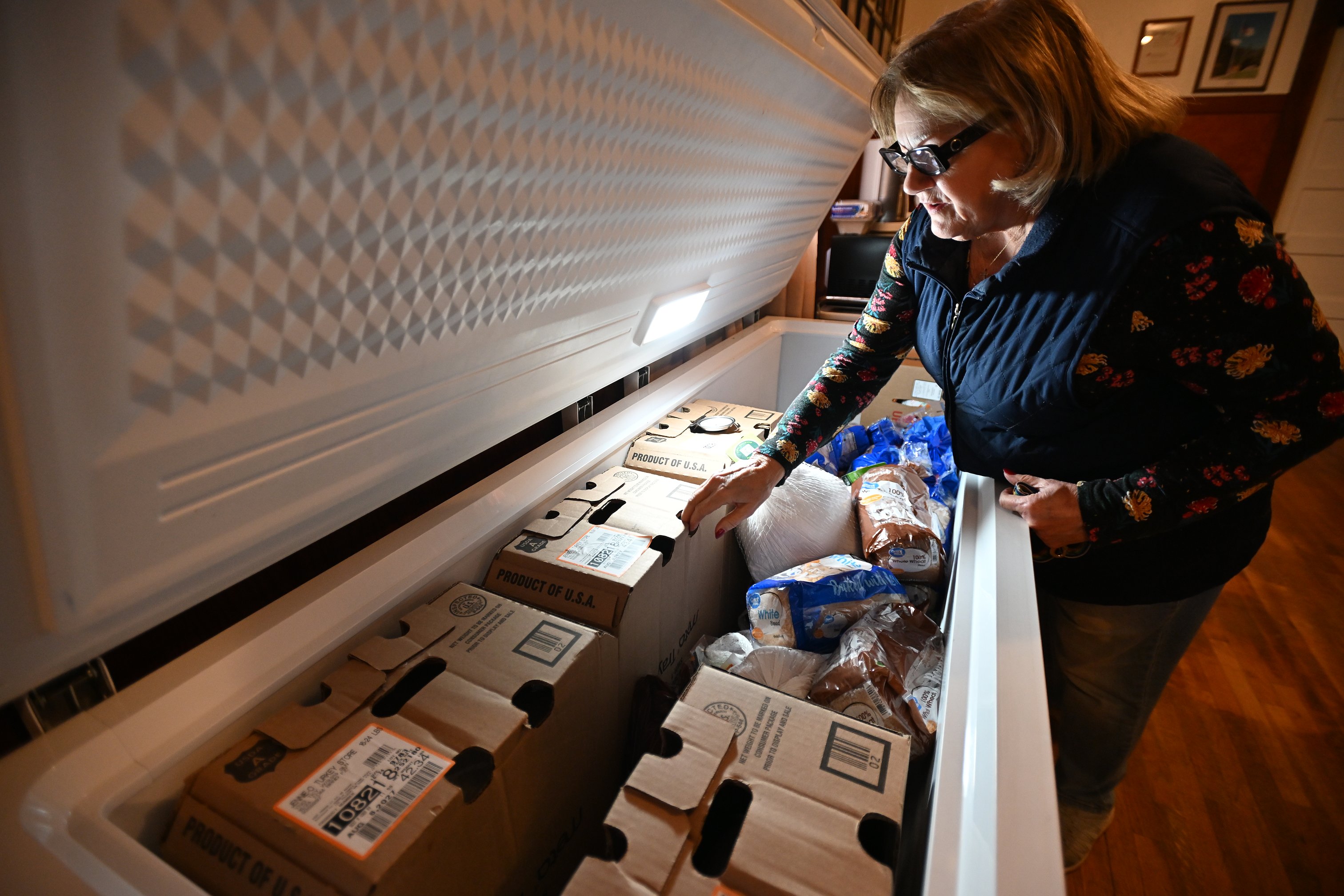 Community Food Bank of Mineral County President Wanda James peruses through a freezer of stored food at the Masonic Temple in Superior. (Hannah Shields/Daily Inter Lake)
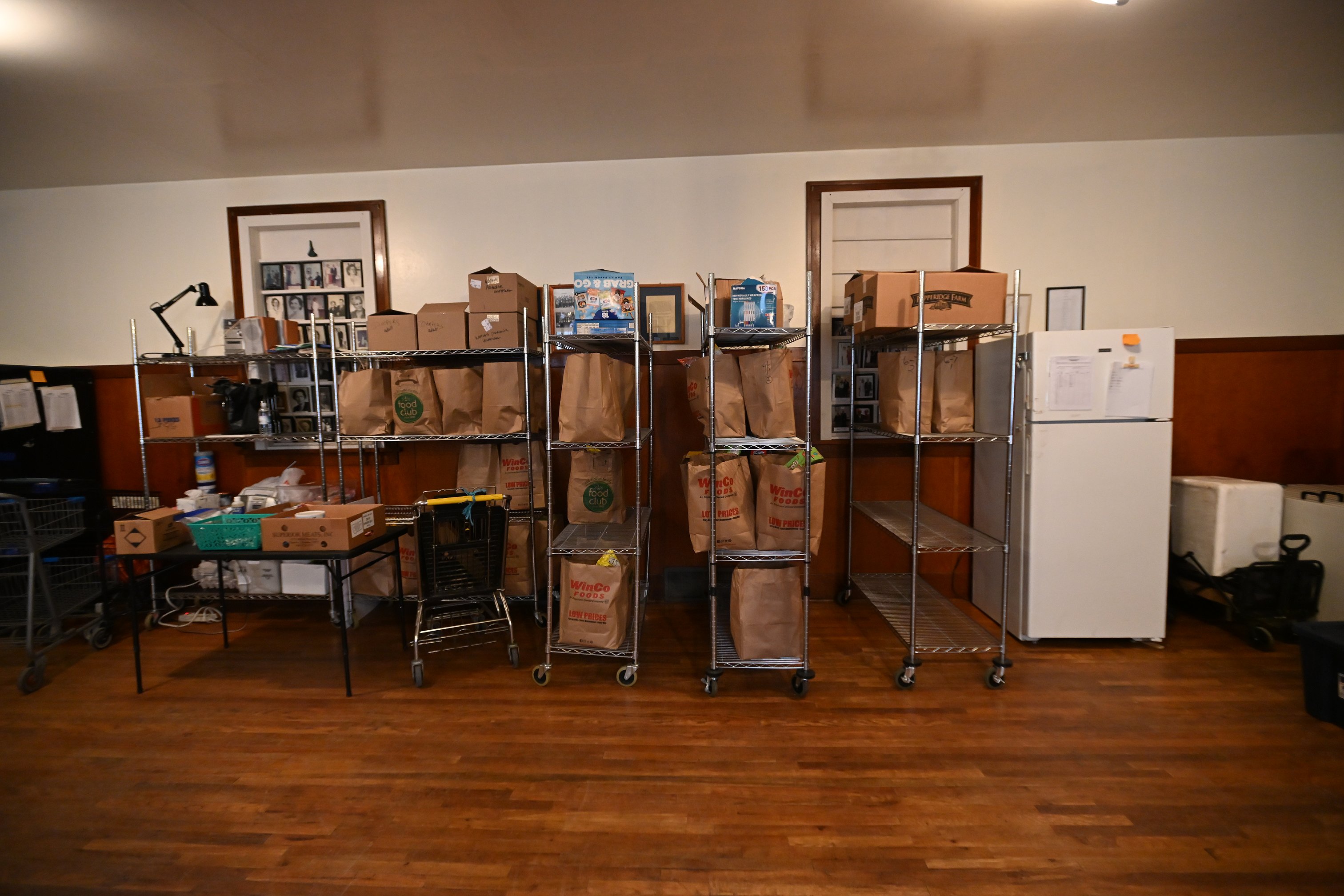 Bags of food sit in the Masonic Temple in Superior, waiting to be distributed to clients through the Community Food Bank of Mineral County. (Hannah Shields/Daily Inter Lake)
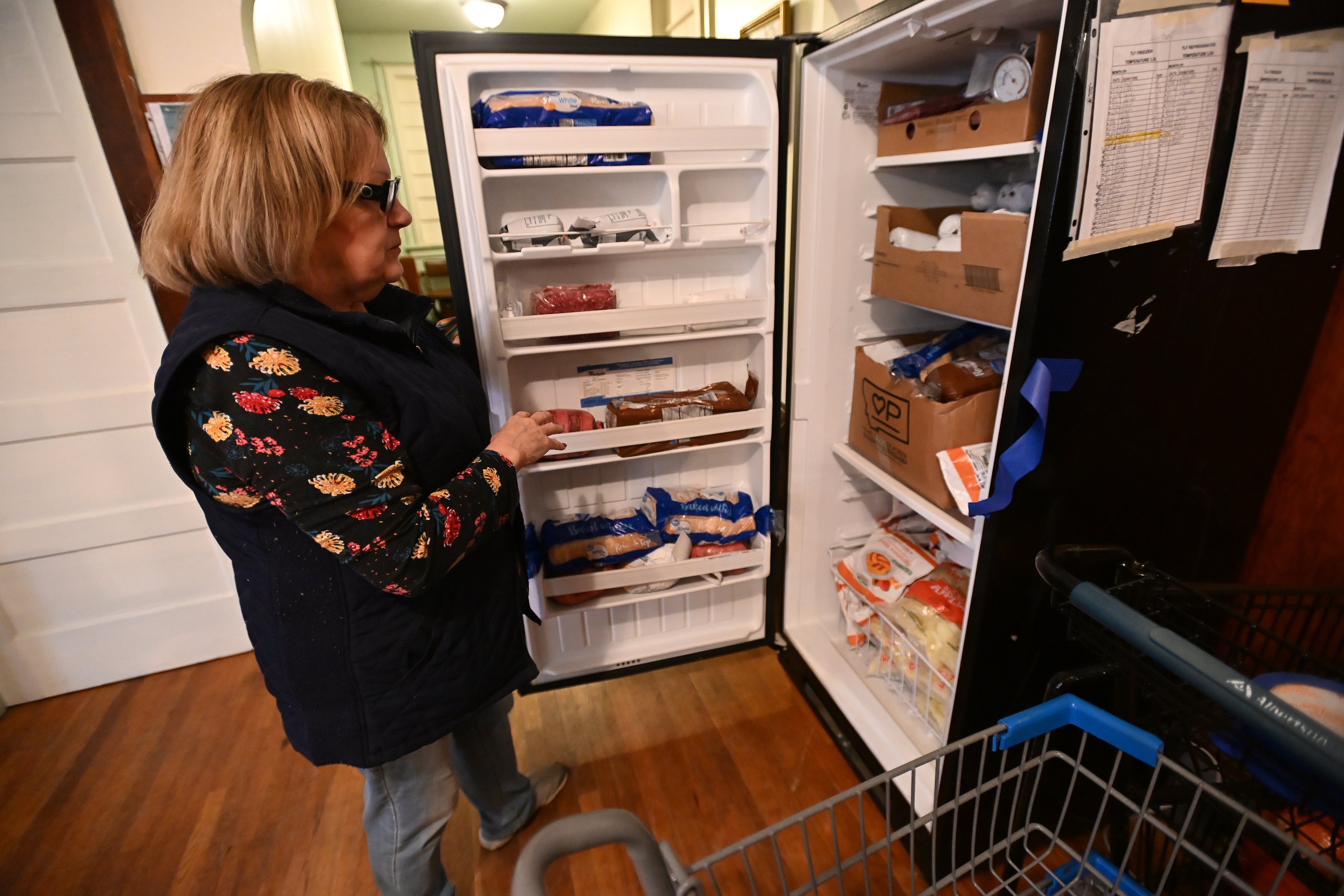 Community Food Bank of Mineral County President Wanda James opens a refrigerator full of food ready for distribution to clients, held at the Masonic Temple in Superior. (Hannah Shields/Daily Inter Lake)
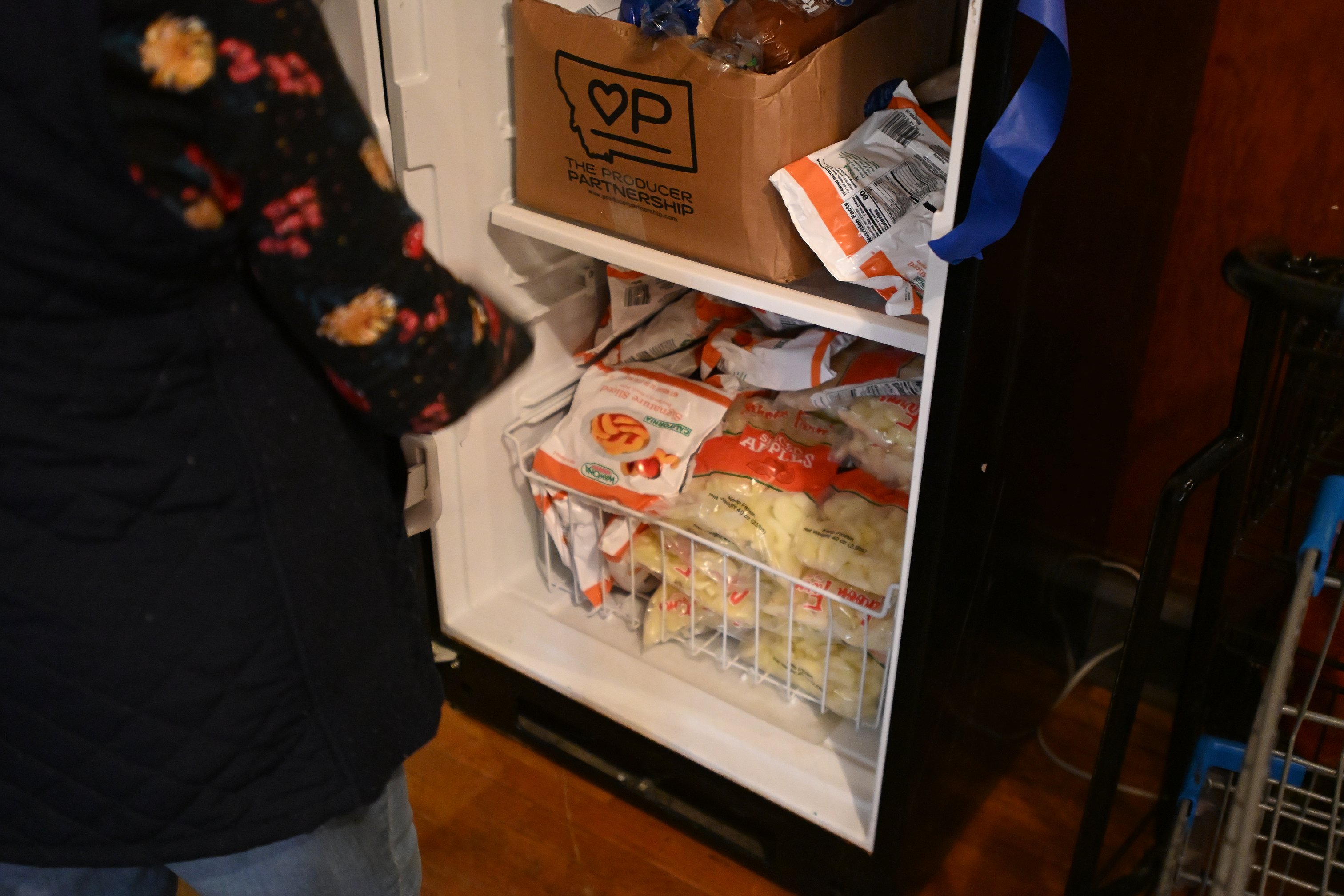 Community Food Bank of Mineral County President Wanda James opens a refrigerator full of food ready for distribution to clients, held at the Masonic Temple in Superior. (Hannah Shields/Daily Inter Lake)
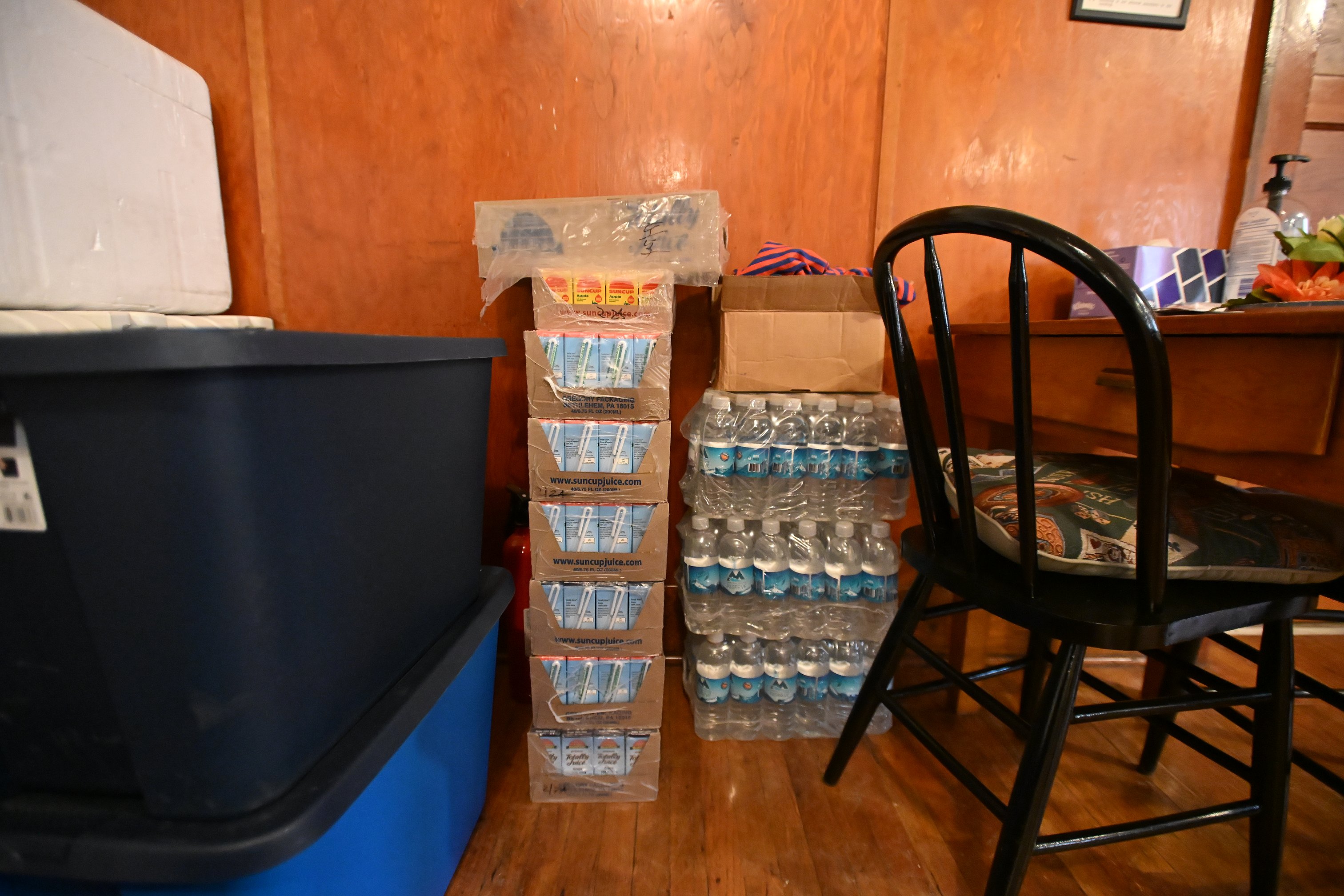 Juice boxes and water bottles stored in the Masonic Temple in Superior will soon be distributed to clients through the Community Food Bank of Mineral County. (Hannah Shields/Daily Inter Lake)
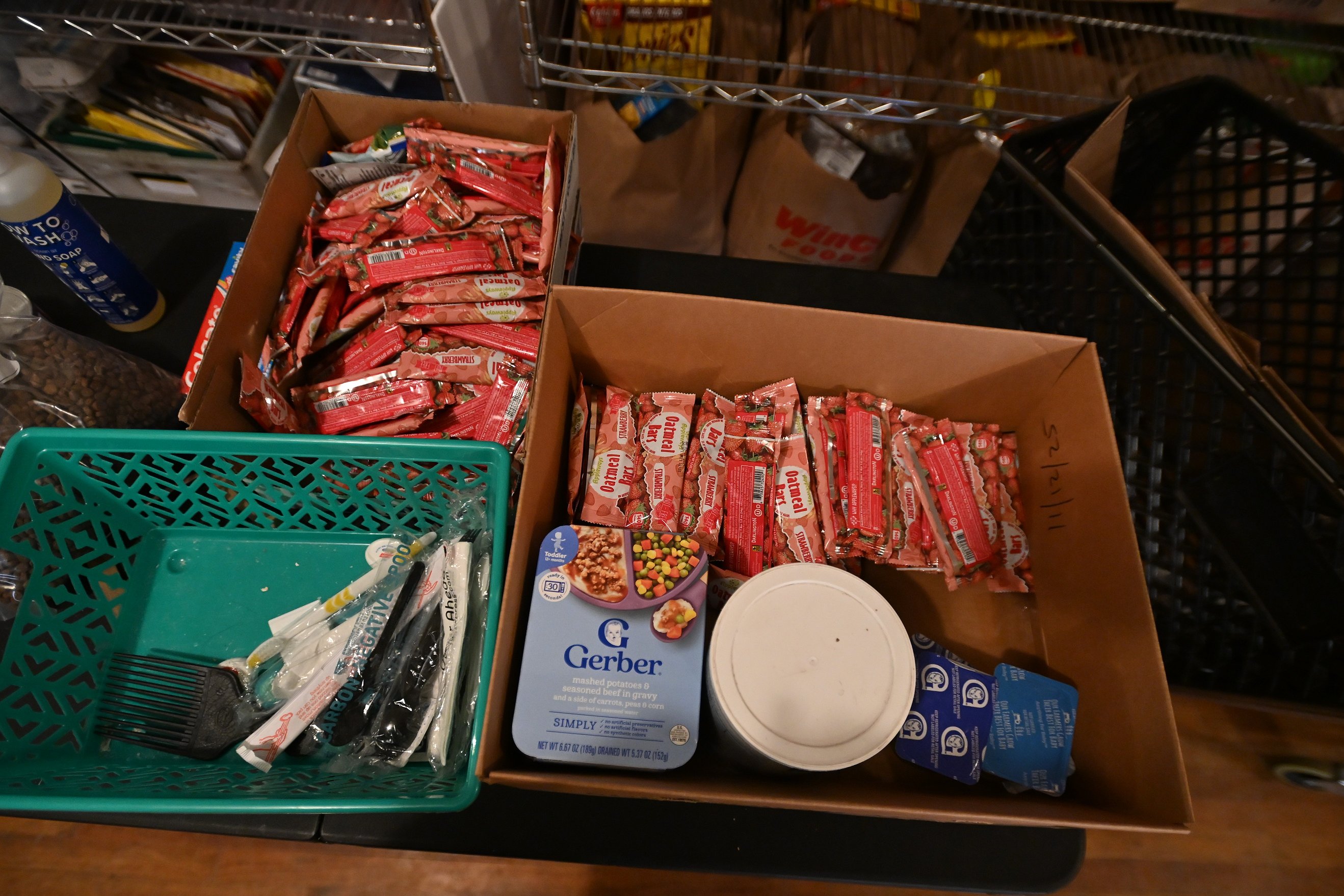 Snacks and baby food are up for grabs through the Community Food Bank of Mineral County, temporarily stored at the Masonic Temple in Superior. (Hannah Shields/Daily Inter Lake)
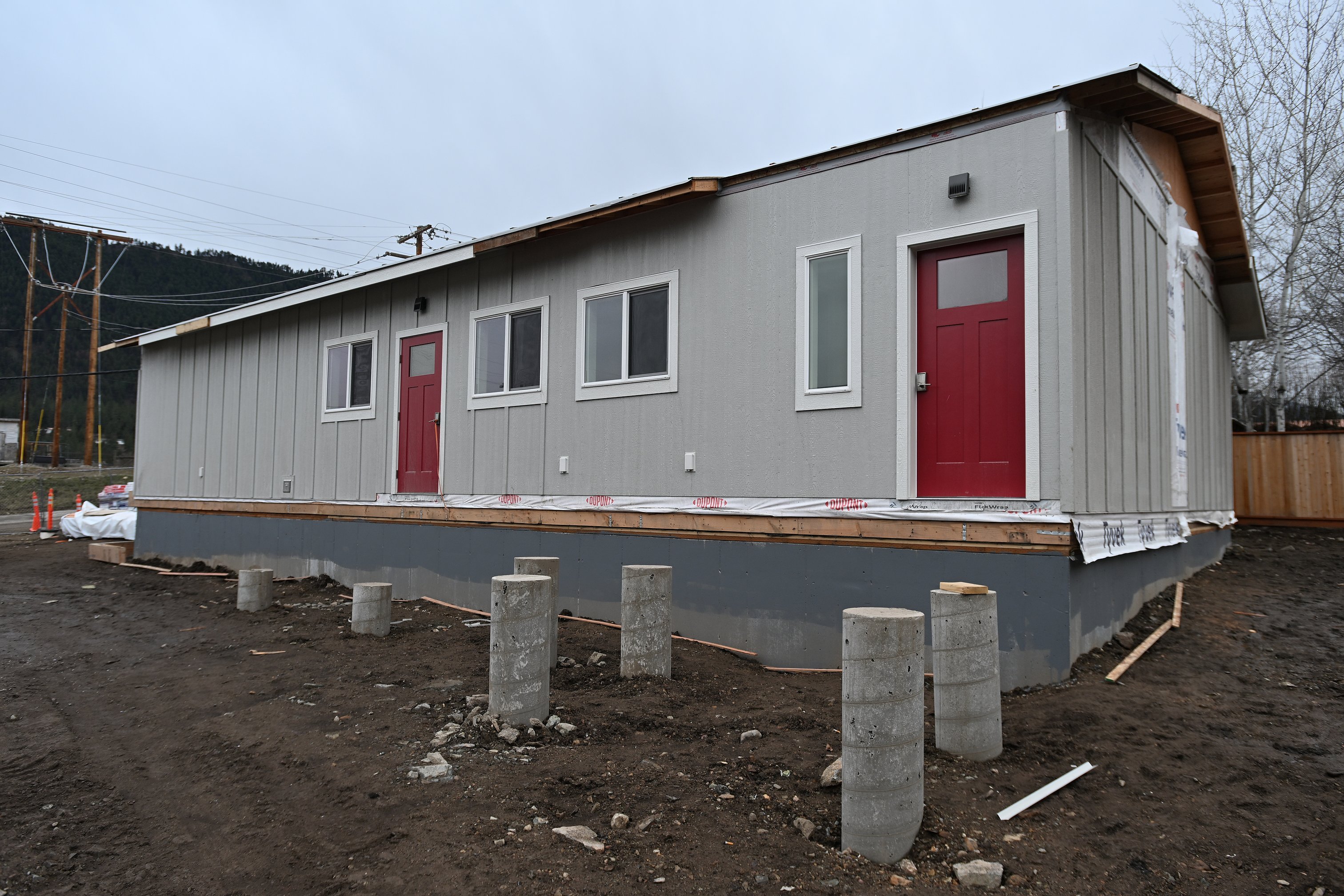 A new 2,200-square-foot building in downtown Superior is the future home of Community Food Bank of Mineral County. (Hannah Shields/Daily Inter Lake)
ARTICLES BY HANNAH SHIELDS

Flathead Library director to retire after her contract expires in 2028
Flathead Library Director Teri Dugan will retire at the end of her contract, which was extended through 2028 by trustees on Thursday.
Flathead County Library continues negotiations for new Kalispell branch
Flathead County Library trustees are re-negotiating the purchase of property at the Kalispell Center Mall for a future Kalispell branch.

'We know we can do the job:' Smith Valley Fire Department deploys all-woman volunteer shift
Smith Valley Fire Chief Amy Beick walked into the station one December day and saw something she’d never encountered in her two decades at the department.