
Scotchman Peaks' Winter Tracks connects kids with nature
SCOTT SHINDLEDECKER | Hagadone News Network | UPDATED 3 weeks, 4 days AGO
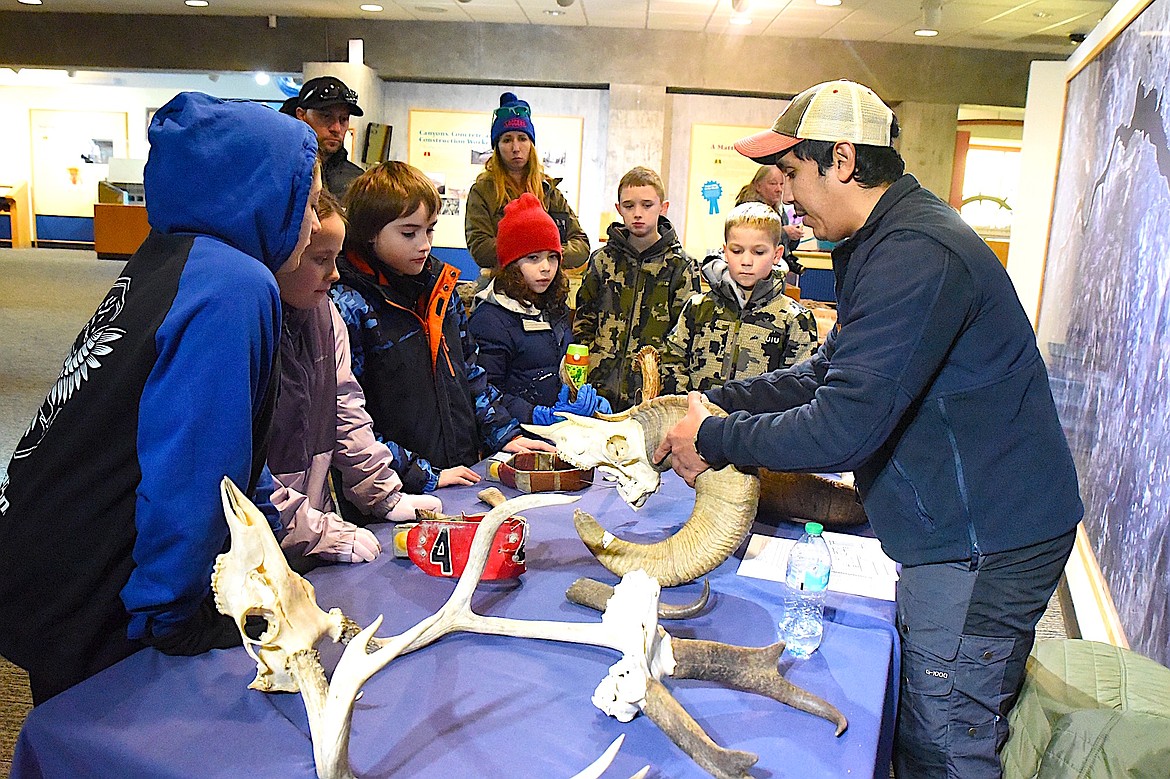
Montana Fish, Wildlife and Parks biologist Sam Martinez talks about horns and antlers Friday, Jan. 23, 2026, during the 2026 Friends of Scotchman Peaks Winter Tracks event at the Libby Dam Visitor Center. (Scott Shindledecker/The Western News)
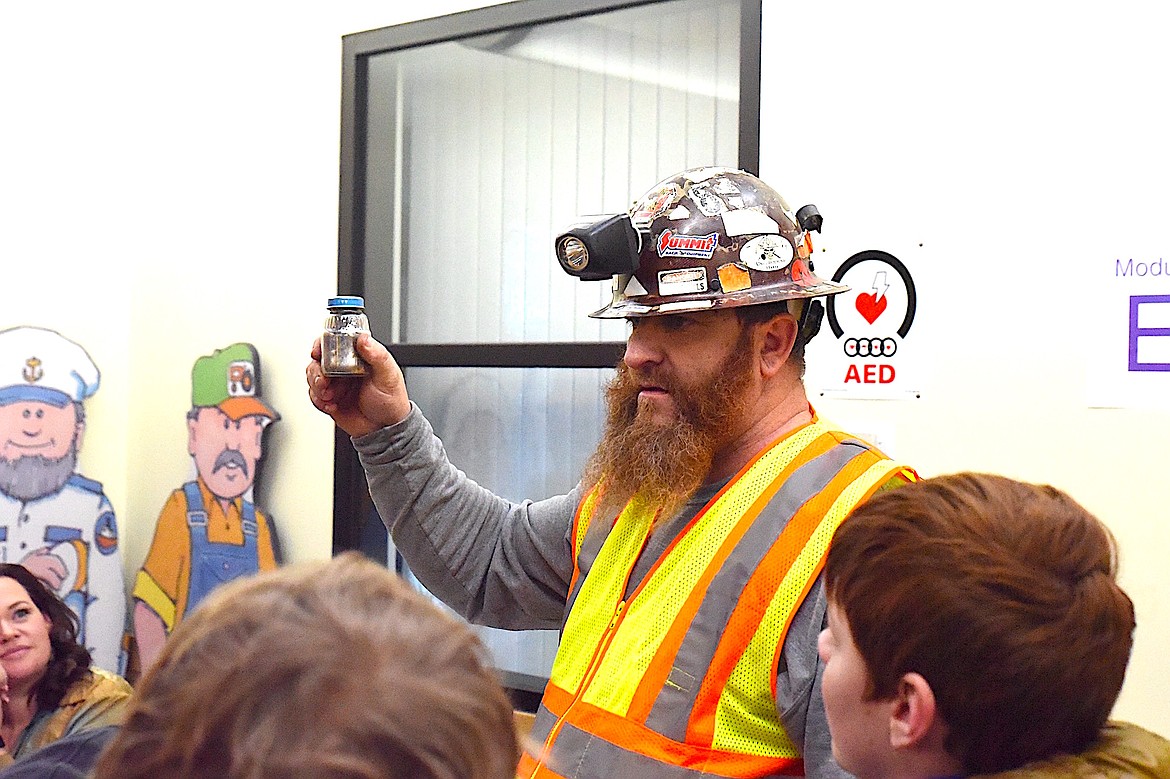
Libby miner Robert Viergutz talks about mercury Friday, Jan. 23, 2026, during the 2026 Friends of Scotchman Peaks Winter Tracks event at the Libby Dam Visitor Center. (Scott Shindledecker/The Western News)
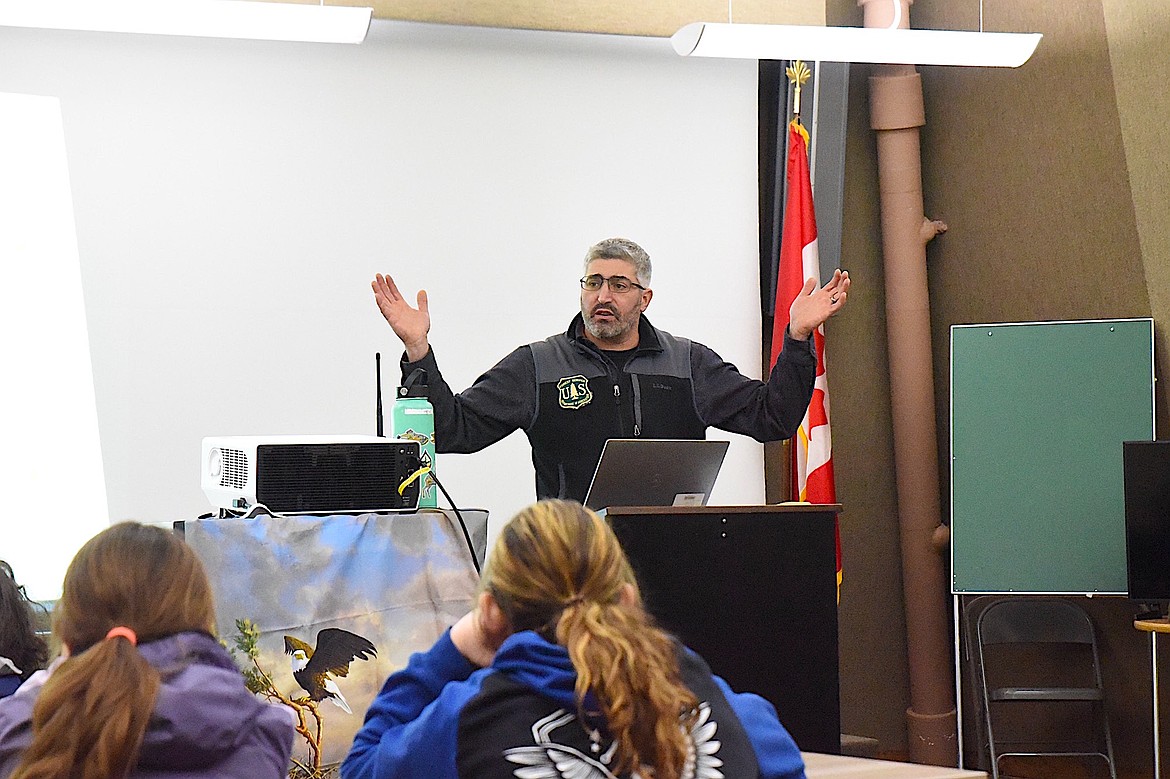
Kootenai National Forest Hydrologist Keith Karoglanian talks about measuring water content in fallen snow Friday, Jan. 23, 2026, during the 2026 Friends of Scotchman Peaks Winter Tracks event at the Libby Dam Visitor Center. (Scott Shindledecker/The Western News)
Electronic devices may hold a wealth of information, but there’s nothing quite like a hands-on demonstration to make it stick.
During a recent excursion to the Libby Dam Visitor Center, elementary students in the fourth and fifth grades from Libby took part in the Friends of Scotchman Peaks Winter Tracks event.
“The purpose of this program is to give students the opportunity to deepen their relationship with their wild backyard, build community, and equip them with the tools they need to safely and responsibly explore the outdoors,” Peaks Lincoln County Outreach Coordinator Isabelle Manning said.
Manning said it’s the 12th year for Scotchman’s Peaks involvement in Winter Tracks.
Libby’s Winter Tracks is usually held at J. Neils Memorial Park, but Libby Dams’ Susan James had a thought that having at the dam would allow for some stations to be held indoors, giving the young participants a break from the cold weather.
It proved to be a good decision.
Scotchman Peaks got a $1,000 grant from the Lincoln County Community Foundation that helped pay for the event, particularly bus transportation and lunch for the volunteers and kids.
“We learned from one of the fifth-grade teachers that the school wouldn’t be able to pay for the transportation,” Manning said. “The dam’s visitor center doesn’t typically get used during the winter, so we were both excited to do it here.”
Students were split into small groups that rotated through five different learning sessions. Those included horns and antlers, mining, winter tracks walk, snow survey as well as fire safety and snacks.
Libby’s Robert Viergutz gave a talk on mining, a subject he knows well.
He displayed a large piece of pyrite, also known as fool’s gold due to its metallic luster.
Owing to the recent health emergency in Libby where a family was exposed to mercury and sickened by it, Viergutz spent a lot of time speaking about the heavy, liquid metal while also displaying a bottle of it collected from Libby Creek.
“It does occur naturally, but it’s not something we use anymore in the mining process due to its toxicity,” he said.
Montana Fish, Wildlife and Parks Libby area biologist Sam Martinez led the horns and antlers station where kids learned the difference between horns and antlers. He had antlers from deer, elk and moose as well as horns from bighorn sheep, mountain goats and pronghorn antelope.
“Pronghorn antelope head gear are part antler and part horn,” Martinez said. “They shed the outer sheath of their horns each year as a new sheath grows under the old one and pushes it off.”
Not surprisingly, the bighorn’s head gear were highly fascinating to the youthful observers.
“Ram horns are hollow which allows for blood flow that helps the horns grow,” Martinez said. “You can actually tell how old a ram is by counting the growth rings on the horns, similar to how trees are aged.”
He also explained the use of collars that are used to track animals.
“Radio collars were used to first track animals to better understand their movement, migration and behavior, but now GPS collars are used. For most larger animals, we tranquilize them and put the collar on.”
The kids also learned about snow surveys and their importance to many things we may take for granted.
Kootenai National Forest Hydrologist Keith Karoglanian, who has worked in the area since 2018, illustrated how he measures the annual water availability in this watershed and how the snow survey is conducted in remote areas.
“Once a month, we go up into the mountains on the snowmobile, then ski or snowshoe to our measuring sites, also known as Snotel sites,” Karoglanian said. “We’ll plunge a long, metal tube into the snow, then we weight it on a portable scale. The depth is important, but the weight is what really determines how much water is in the snow. Water weights about 8 pounds per gallon and we all know some snow is really dry and doesn’t hold as much water. But the surveys allow us to know how much water is present and it allows us to develop a water budget.”
Karoglanian said people in Oregon are concerned right now because of a lack of snowpack in many areas. It may have to institute water restrictions later this year so there is enough water for irrigating crops.
“But here, we’re lucky because there is not as much demand for water and there is more water,” he said.
He also pointed out that less than 1% of the world’s water is fresh water and why there needs to be a budget for its use.
“Obviously, water is critical to our existence. We use it for so many things, including drinking, cooking, keeping us and our clothes clean and watering our gardens, trees and crops,” Karoglanian said.
Karoglanian also explained his role in protecting the waterways of the Kootenai in Montana.
“Part of my job is to make sure we’re protecting the water and make sure activities on the Forest don’t negatively affect the water to the detriment of aquatic life and people,” he said. “Fortunately, here, we have a lot of good miners and they’re careful. When logging occurs, we make sure the streams have a buffer where cutting doesn’t occur. Smaller streams without tree cover will heat up a lot faster and that affects the fish and the aquatic life they eat.
“Road building is another activity that we want to avoid putting too much dirt and sediment into the water because that also affects the quality,” Karoglanian said.
Despite a lack of snow, Montana FWP Wildlife Management Specialist Garrett Tovey showed kids how they can identify and read different types of animal sign.
Last, but not least, was the fire building and snacks station with Keith Meyers and Barb Grant. Popcorn and marshmallows were the snacks of choice that everyone enjoyed on the cold winter day.
Winter Tracks events were also held this week for elementary students in Troy and for home-schooled students.
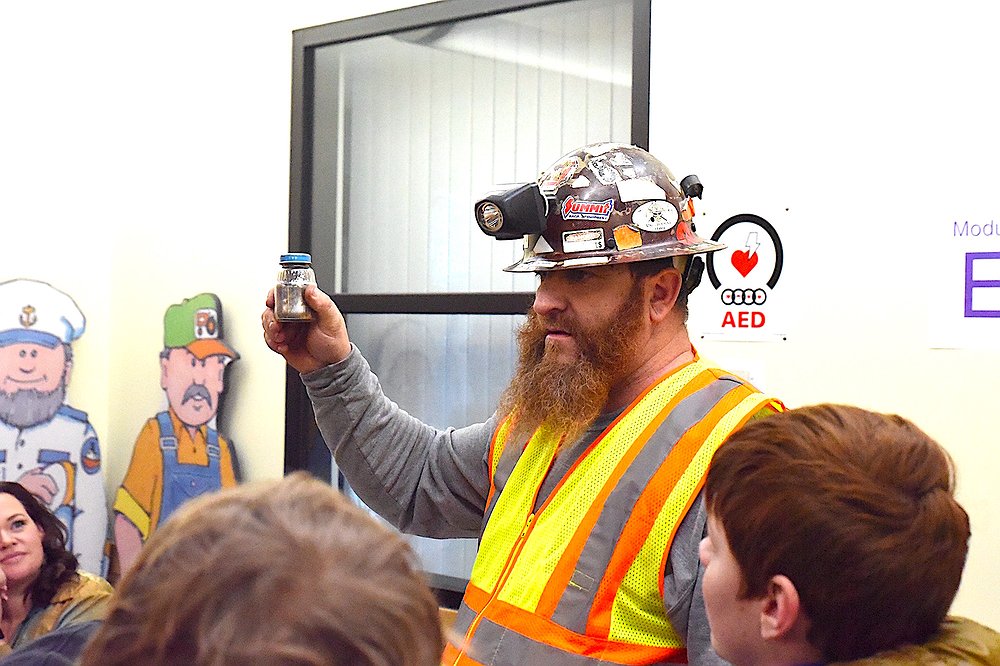 Libby miner Robert Viergutz talks about mercury Friday, Jan. 23, 2026, during the 2026 Friends of Scotchman Peaks Winter Tracks event at the Libby Dam Visitor Center. (Scott Shindledecker/The Western News)
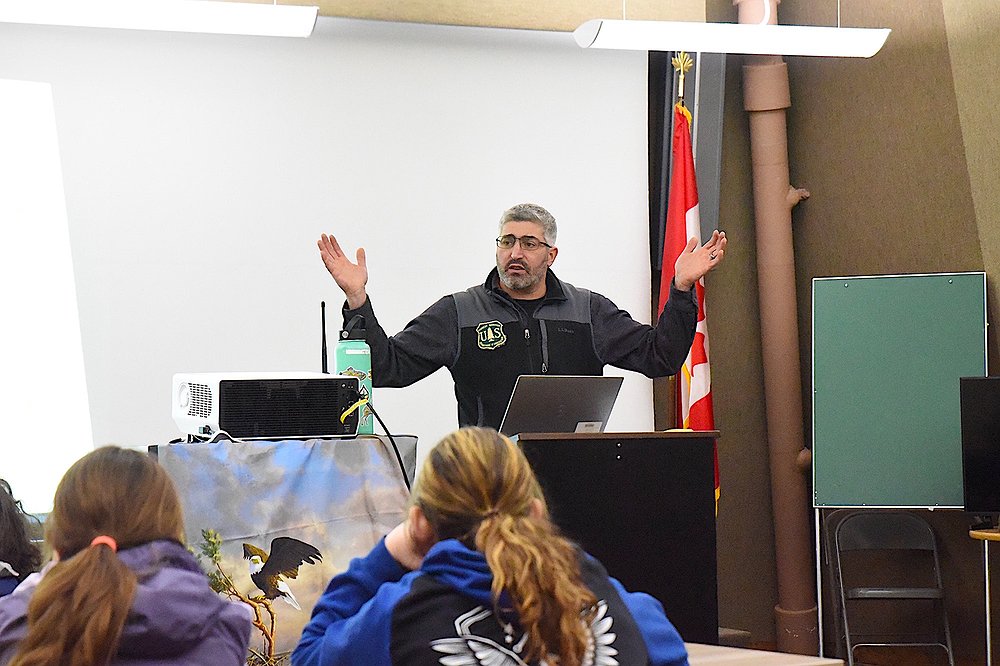 Kootenai National Forest Hydrologist Keith Karoglanian talks about measuring water content in fallen snow Friday, Jan. 23, 2026, during the 2026 Friends of Scotchman Peaks Winter Tracks event at the Libby Dam Visitor Center. (Scott Shindledecker/The Western News)
ARTICLES BY SCOTT SHINDLEDECKER
Officers involved in shooting near Libby while serving warrant
Lincoln County law enforcement officers were involved in a shooting Wednesday afternoon at a location on Libby Creek Road, authorities said.
Local officers involved in shooting near Libby
During the course of serving the warrant...
Four dead in head-on crash in Lincoln County
Four people died in a two-vehicle, head-on crash late Tuesday morning on U.S. 2 in Lincoln County.