
Float permits, parking ban proposed for Flathead River under new management plan
HAILEY SMALLEY | Hagadone News Network | UPDATED 1 month, 2 weeks AGO
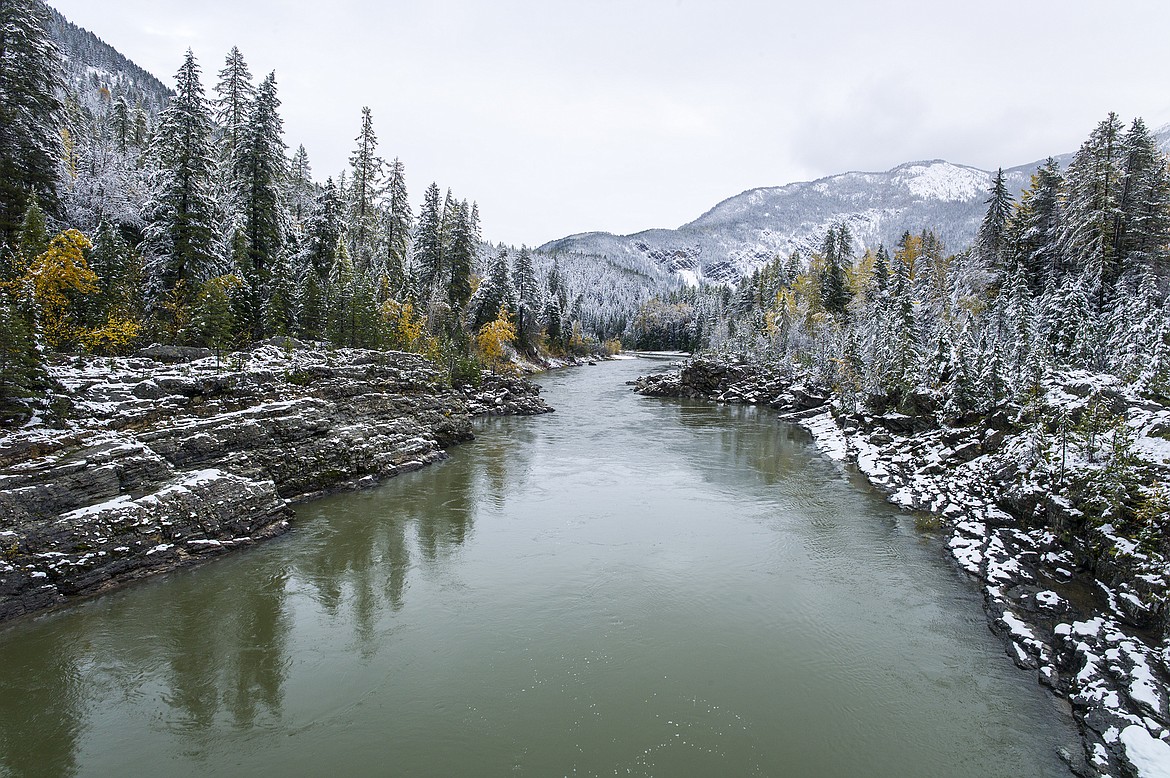
The Middle Fork of the Flathead at West Glacier in this file photo. (Hungry Horse News file)
A recently released rewrite of the Flathead River Comprehensive Management Plan promises to introduce new regulations, including a float permit system, to the waterway in the coming seasons.
The plan, which was released in draft on Feb. 10, represents the first major update to the rules and regulations that govern the three forks of the Flathead River in 40 years.
Flathead National Forest and Glacier National Park first adopted a management plan in 1980, a few years after the three forks of the Flathead River upstream from Hungry Horse received designation under the Wild and Scenic Rivers Act. A recreation-specific directive was added in 1986, marking the final time officials made a major adjustment to the document.
Both the resident and tourist populations of the Flathead Valley have boomed in the intervening years, and the river itself is also shifting as climate change drives water temperatures up and changes the seasonality of streamflow.
“This draft plan is an important step towards long-term river management and protection of this world-class resource,” said U.S. Forest Service District Ranger Rob Davies in a Feb. 10 press release that accompanied the release of the long-anticipated draft management plan. “The 1980 plan is past due for an update, and the Flathead National Forest has been deeply engaged in this multi-agency project.”
The updated document details decades of data on water quality, streamflow and visitor use to describe the current and desired condition of the three forks of the Flathead River. From there, officials worked backward, drafting proposed management actions that would help ensure desired conditions are met and maintained.
Perhaps the most substantial of these proposed management actions is the implementation of a mandatory permit system for all floaters and boaters on the three forks of the Flathead River.
“These permits would serve two purposes: to collect more detailed visitor use data than is currently available and ensure visitors are exposed to regulation and etiquette information relevant to their float,” reads the management plan.
An unlimited number of permits would be available, though officials noted they could transition to limited permits in the future if recreational traffic reaches unsustainable levels. The system is expected to be rolled out in phases over the course of a few years if the management plan receives final approval.
Other river-wide initiatives proposed in the plan include a prohibition on vehicle camping or parking on gravel bars; a mandate that all solid human waste be contained if it is within 200 feet of the high-water mark; a restriction on the landing or launching of drones near the river; and a prohibition on noise exceeding 60 decibels at 50 feet.
For other proposed actions, officials segmented the river into 10 management units largely characterized by the sort of recreational experience that users can expect to have.
In North Fork Scenic Management Unit 1, which includes the 25-mile stretch of river between Polebridge and the Canadian border recreationists can expect “a high degree of solitude, isolation, commitment, risk and challenge while floating or fishing on the river with few encounters with the sights and sounds of humans.” Farther downstream, in a unit bracketed by Camas and Blankenship bridges, officials say users should expect frequent encounters with other parties and intermittent congestion during the summer months.
The highest levels of traffic are expected along the Middle Fork of the Flathead River, between Cascadilla Flat River Access Site and the confluence with the South Fork. The two management units that comprise the stretch can likely accommodate up to 1,220 and 1,900 recreationists per day, according to a user capacity analysis that officials from Flathead National Forest and Glacier National Park completed in September 2025.
“These capacity estimates are not restrictions on amounts of visitor use, but rather provide a sense of the kinds and maximum amounts of use that are most likely sustainable without causing degradation to river values,” wrote officials in the plan.
On the North Fork, total user capacities vary between 310 and 480 users per day, while upper reaches of the Middle Fork capped out at 150 users per day. Units on the South Fork were estimated to have respective total user capacities of 90, 70 and 30 users per day.
The management plan also details the maximum number of user days that will be designated to outfitters and guides on each segment. Between the Cascadilla site and West Glacier, officials plan to cap commercial use at 73,810 user days per season, a number equal to 50% of the unit’s total user capacity. Outfitters and guides currently hold permits for 63,347 user days on the stretch of river, according to the management plan.
Outfitter operations would be limited to 45,980 user days on the Middle Fork between West Glacier and the confluence with the South Fork and 8,712 user days on the North Fork between Camas Bridge and Blankenship. Both numbers represent 20% of the total user capacity for the respective segments. Self-guided boaters and floaters are expected to make up the majority of traffic in other management units.
With the proposed caps on commercial use comes a new type of outfitter permit for organizations that work with youth, veterans and other underserved populations. One temporary permit will be issued to an organization each year, though officials noted that there was an opportunity to grow the program if there is substantial interest.
All aspects of the management plan are intended to be adaptive and provide opportunities for managing agencies to adjust as conditions change. Environmental review processes still apply to projects that are undertaken as part of the plan, and public comment periods are already anticipated for several facilities upgrades that officials plan to undertake at river access sites in the coming years.
Officials are hosting public information sessions on the updated river management plan from 6-8 p.m. on Feb. 17 and Feb. 18. Both sessions will follow an open-house format and will take place in room 139 of the Arts and Technology building at Flathead Valley Community College.
Public comments on the draft management plan will be accepted through March 13 at www.fs.usda.gov/r01/flathead/projects/56536.
A draft decision on the adoption of the management plan is expected in May and a final decision notice in July.
Reporter Hailey Smalley can be reached at 758-4433 or [email protected].
ARTICLES BY HAILEY SMALLEY

Winging it through winter: Rare Anna's hummingbird finds shelter in Bigfork backyard
The bird turned out to be an Anna’s hummingbird — a rare find in western Montana. The Montana Natural Heritage Program’s bird distribution database has logged only 158 sightings of Anna’s hummingbirds in the state, including 21 sightings in Flathead County.

Business groups sue to stop proposed ban on political spending in Montana
The Kalispell Chamber of Commerce is one of several organizations to file suit over a proposed ballot initiative to ban corporate spending in politics, arguing it infringes on the free speech rights of businesses.

Mexican man who led deputies on high-speed chase in Kalispell receives federal prison sentence
A Mexican national arrested after a high-speed chase through Kalispell in June 2025 received an 18-month sentence for illegal reentry in federal court last week.