
Snowpack accumulation stalls in January
Natural Resources & Conservation Service | Lake County Leader | UPDATED 4 days, 17 hours AGO
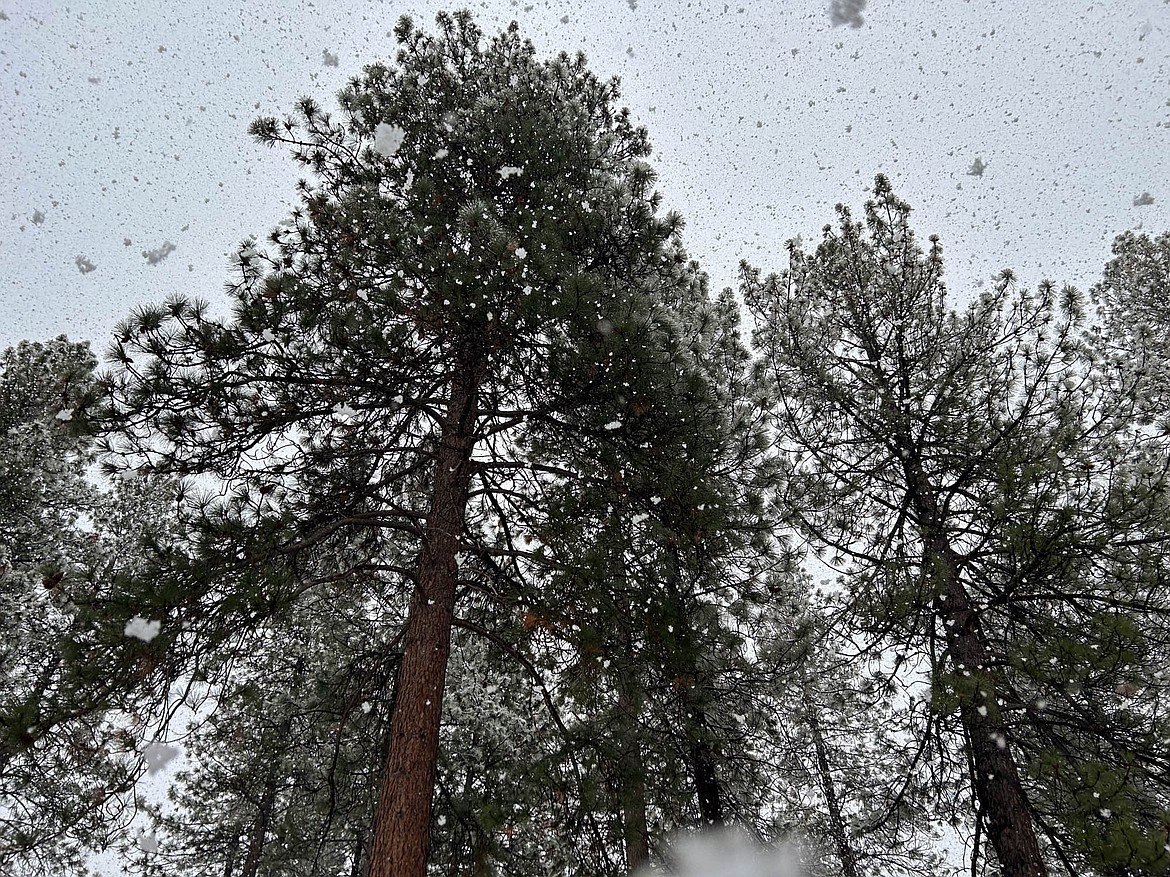
The Ponderosa pines took a load of heavy snow in Pablo on Feb. 9 outside of Salish Kootenai College. (Emily Messer/Leader)
Well-below-normal January precipitation and unseasonably warm temperatures stalled Montana’s snowpack accumulation last month.
According to the monthly report from the Natural Resources Conservation Service, most Montana basins are now reporting below normal snowpack.
“While some higher elevations are holding onto their snowpack reserves, mid-elevation snowpack is falling behind, and low-elevation snowpack is noticeably absent,” said NRCS hydrologist Florence Miller.
As of Feb. 1, most major basins had 65-90% of median snowpack, a 10-30% decrease from the Jan. 1 medians. Snowpack in the Bears Paw Mountains is currently around 45% of median Snow Water Equivalent (SWE), while the Upper Yellowstone and Bighorn basins are the only basins in the state hovering around 100% of median SWE.
January precipitation was only 50-75% of median and temperatures remained largely above normal. Many areas across the state lost soil moisture with the dry January and minimal snow cover, causing drought conditions to increase.
According to Miller, the snowpack continues to be denser than normal for this time of year due to the above normal temperatures seen in December and January.
Water-year-to-date precipitation remains well above normal (100-150% of median) statewide, thanks to a wet December. Higher elevation SNOTELs, where early precipitation fell as snow, accumulated snowpack surpluses during that period.
However, January’s lack of precipitation eroded those extra inches at all but the highest sites. Most SNOTEL and snow course stations across Montana are now reporting a one- to five-inch deficit below normal SWE for this time of year, with a couple higher elevation pockets in the Cabinet and Swan Range nearing an eight-inch deficit.
A few higher elevation stations have retained up to a five-inch surplus from the early winter precipitation. For example, in the Whitefish Range, the Stahl Peak SNOTEL at 6,040 feet is reporting 24.5 inches of SWE (111% of median). The lower elevation Grave Creek SNOTEL, at 4,350 feet, has only 4.4 inches of SWE (41% of median).
Since mid- to high-elevation snowpack is the main contributor to summer streamflow, Miller says it’s uncertain how lack of low-elevation snow coverage will influence snowmelt-driven runoff this year.
“Official water supply forecasts will be available starting next month after more of the snowpack accumulation season has played out,” she said.
Montana’s mountains typically reach peak snowpack between late March and early May. Conditions at that time will influence summer streamflow far more than this Feb. 1 snapshot.
Statewide, most SNOTELs are less than half of the way towards their normal peak snowpack.
“With two to three months remaining in the snowpack accumulation season, a return of winter and continued snowfall will be crucial to catch up current snowpack deficits,” Miller said. “While current snowpack deficits can still be recovered, the larger they grow, and the shorter the time to catch up, the less likely full recovery becomes.”
A full report of conditions on Feb.1 can be found in the monthly Water Supply Outlook Report available on the Montana Snow Survey website. In addition, real-time snow survey data is available at nrcs.usda.gov/montana/snow-survey.