
Rain-heavy winter leaves North Idaho short on snow
NOAH HARRIS | Hagadone News Network | UPDATED 1 month, 2 weeks AGO
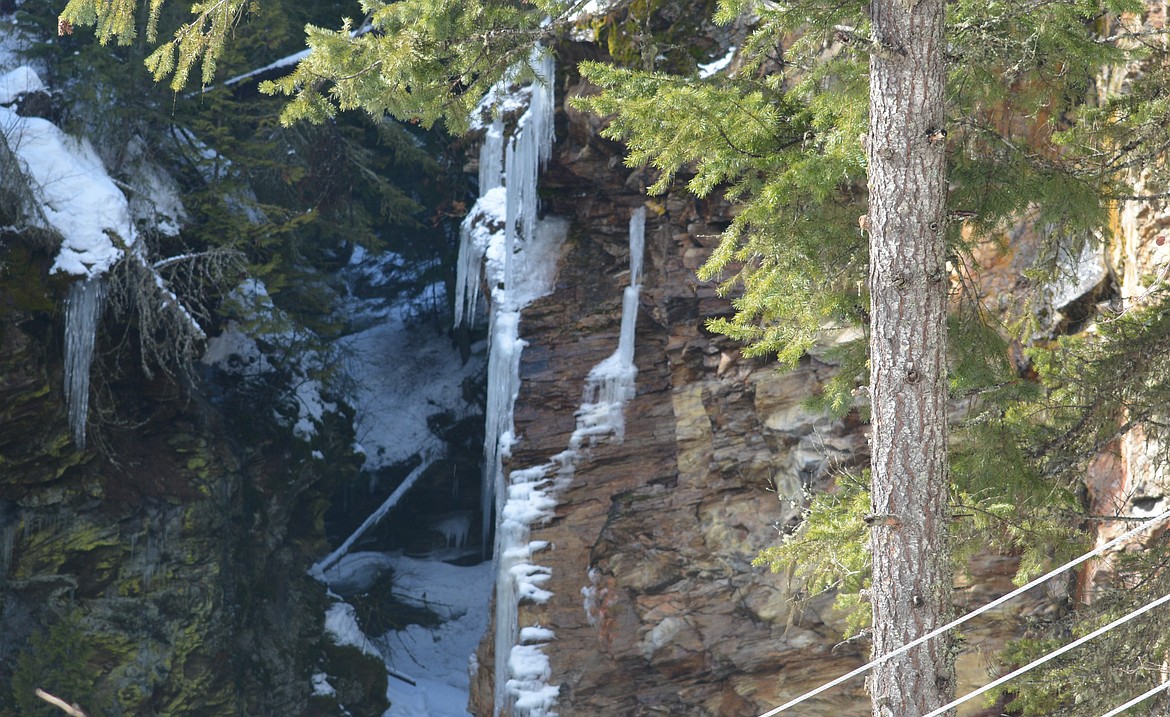
Snowpack melting from Myrtle Creek during the spring of 2019.
Photo By DON BARTLING
While North Idaho has seen plenty of precipitation this winter, much of it has fallen as rain instead of snow, leaving mountain snowpack well below normal despite a wetter-than-average season.
While snowfall has lagged, overall precipitation has not. Jeremy Wolf, a meteorologist with National Weather Service in Spokane, said the region has seen about 10% to 30% more precipitation than a typical winter. December was also the sixth wettest on record in Boundary County in the 131 years since recordkeeping began, according to the National Integrated Drought Information System.
“Most of our precipitation this winter is falling in the form of rain versus snow, as we’ve had predominantly milder systems moving through the region, milder compared to normal,” Wolf said.
Those mild systems have contributed to what Wolf described as one of the worst snowpack seasons in recent years.
“The snowpack this year in general has been one of the worst,” Wolf said. “It’s been pretty prevalent across all of the western United States. Most of Washington, Idaho, Oregon, Nevada and Northern California have all been hurting with the snowpack this winter.”
This winter, the National Oceanic and Atmospheric Administration declared a La Niña pattern, a climate phenomenon that can influence weather, wildfires and ecosystems. However, Wolf said this winter has not followed the typical La Niña script.
“Typically with weak La Niña winters, we see cooler systems coming in from the northwest that give us near to above normal snowfall,” Wolf said. “But as we always emphasize, La Niña or El Niño is always just one piece of the winter puzzle.”
Wolf said the unusual pattern highlights the limits of long-range forecasting.
“It goes to show that forecasting months out into the future has had limited skill in the past and continues to have limited skill,” he said. “There are a lot of factors that influence the general weather patterns that set up and it’s often interesting to see how it evolves through the winter.”
According to a report from the Natural Resources Conservation Service, Idaho would need precipitation at or above the 90th percentile by April 1 to reach median snowpack conditions.
“Snowpack up in the mountains typically peaks around April 1,” Wolf said. “We still have most of February and all of March to go through. Things are looking better for the mountains as we move into the next few weeks, but there is quite a bit of catching up to do since we’re pretty far behind.”
At Myrtle Falls, snowpack levels have dropped sharply in recent weeks. A National Weather Service official said the area recorded about two inches of snowpack from early January to early February, but much of it has already melted. As of this week, snowpack at the site measured about 1.2 inches and NWS officials said it is uncertain if it will rebound later this season.
The NRCS reported that Idaho has seen little snowfall since Jan. 9. Without a significant shift in weather patterns, statewide snow water equivalent is on track to reach record low levels. As of Feb. 1, the statewide average SWE stood at 72% of normal.
The agency’s Feb. 1 report stated Idaho would likely set a new record for low snowpack over the weekend before an incoming cold front brought some moisture to the region on Feb. 8.
An official with the National Weather Service said a cold front did move through during the weekend, but it did not produce significant snowfall and remained centered south of Boundary County. The official said additional snowfall is possible in Boundary County later this week or next week.
Snowpack conditions also vary significantly by elevation.
“One of the stations at 3,500 feet has a snowpack that is only 39% of normal,” Wolf said. “But if you get up to the really high sites, like 6,500 feet, it’s right at normal. As you get down in elevation, that’s when the influence of the mild winter really shows itself.”
Below-normal snowpack could have downstream effects, Wolf said.
“If the snowpack remains below normal, it can affect water supply,” he said. “There’s not as much snow to come off the mountains. There’s also the potential that if there’s less snow in the mountains and it melts off sooner, the fire season could be longer since those fuels could dry out quicker. That’s always a wild card because typically our summer weather is the main driver of wildfire season and not the winter snowpack.”
Research from the U.S. Geological Survey shows snow droughts can correlate with lower streamflow, reducing the amount of water available in rivers and streams later in the year.
ARTICLES BY NOAH HARRIS

Bill amended to let Canadian flag to fly

PREP BASEBALL: Bonners Ferry battles in 10-0 losses to Lakeside