
Eight years after first meeting, draft Flathead River Management Plan released
CHRIS PETERSON | Hagadone News Network | UPDATED 8 hours, 45 minutes AGO
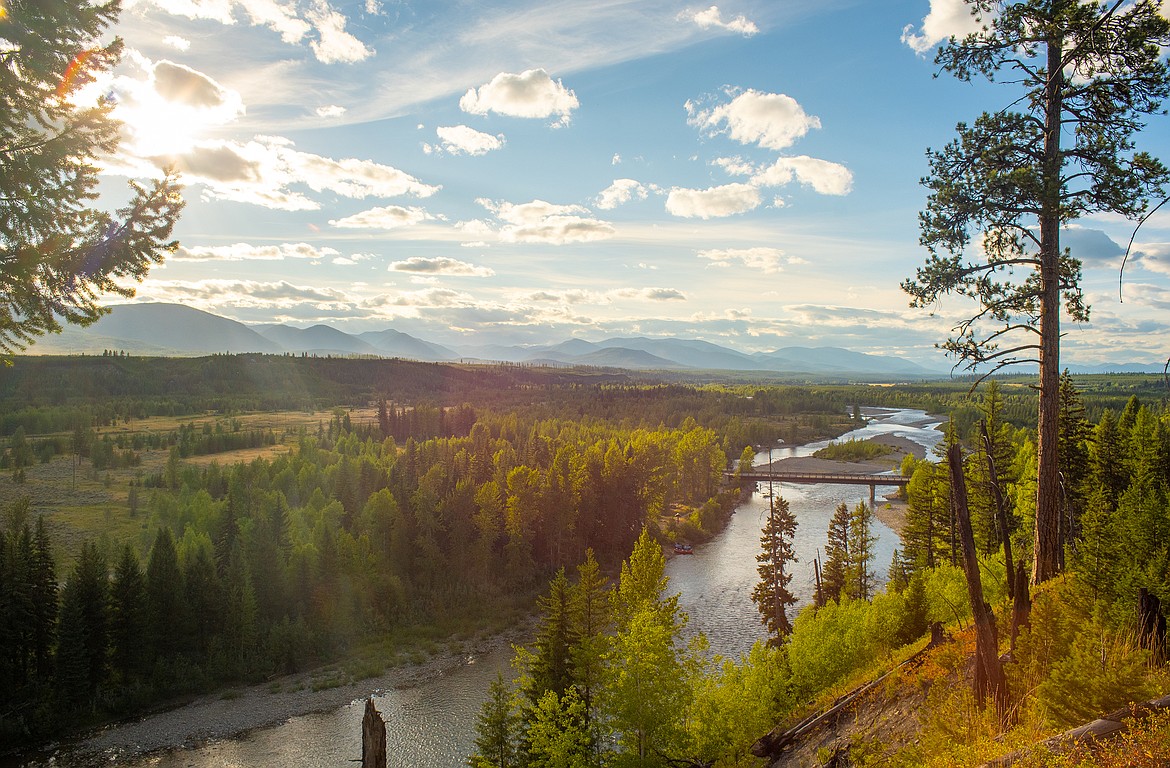
The North Fork of the Flathead looking into Canada from Glacier National Park.
Chris Peterson is the editor of the Hungry Horse News. He covers Columbia Falls, the Canyon, Glacier National Park and the Bob Marshall Wilderness. All told, about 4 million acres of the best parts of the planet. He can be reached at [email protected] or 406-892-2151. | February 13, 2026 6:45 AM
In March of 2018, the Flathead National Forest and Glacier National Park had its first meetings to talk with the public about a revised comprehensive management plan for the three forks of the Flathead River.
After a series of starts and stops and nearly eight years later, the draft Comprehensive River Management Plan was released this week for public review.
The draft Comprehensive River Management Plan revises the existing 1980 river management plan and brings it into compliance with the statutory requirements of the Wild and Scenic Rivers Act.
The plan covers the North, South and Middle Forks of the Flathead River, 219 miles of waterway, all protected to one degree or another under the Wild and Scenic Rivers Act in 1976.
The draft plan in many ways mirrors a proposed action that was released last year. It calls for several measures to further protect the rivers, particularly in sections where they are classified as “wild” or “scenic” under the Act.
The plan also addresses some concerns raised by the public over the years and looks to monitor river usage more closely.
For example, the plan would, “establish a mandatory, unlimited (no limit on the number of permits available) float permit across the system. This may be implemented in phases, initially on priority segments, over the first 2-3 years to better understand patterns of use and use levels and provide education to users,” the draft notes.
The details of how that would work aren’t written into the plan itself, but would be done administratively after the plan is finalized., possibly through Recreation.gov, a government clearinghouse website for permits for both Forest Service and Park Service users.
One notable part of the plan would set user day limits allowed for guided rafting and fishing trips on various river segments, based on their location and historic use.
For example, outfitter and guide service days will not exceed 20% of the user capacity estimate for the North Fork recreational section (from Camas to Blankenship) of a total of 8,712 service days. The proposed authorized service days would include all current permitted service days, which account for approximately 641 service days. The remainder of the service days allocated will be held in a priority use pool and will be available for use if biological and social resource conditions allow. Outfitters may request an increase of service days up to 5% of their prior year actual use annually, if monitoring shows there are no impacts to social and biological resources, until the cap of 8,712 is met.
“The authorized official can restrict use to address resource conditions as warranted,” the plan notes.
Similar language is used to address busy sections on the Middle Fork of the Flathead River as well.
For example, in the lower whitewater section of the Middle Fork, outfitter and guide service days will not exceed 50% of the user capacity estimate for that section, up to a total of 73,810 service days, the plan notes. That’s the busiest part of the entire river system.
During the pandemic, when half of Glacier National Park was closed, service days surged over 100,000 for the season. Last year, according to Forest Service data, the number of outfitter and guide service days from Paola to the House of Mystery was 69,831.
By contrast, the Upper Middle Fork in the Great Bear Wilderness was 324, down about 70 from the year before.
A service or user day is one person that takes a trip for that day. So, for example, if a raft company sends a raft down the river with 15 people on board, that would amount to 15 user days. It doesn’t matter if the trip lasts the entire day or just a half day, once they’re on the trip, it’s considered a day.
The Forest Service does have the ability to audit outfitters and guides if need be, noted Hungry Horse/Glacier View District Ranger Rob Davies.
While the plan talks a lot about river capacities, it’s “not a goal,” noted Spotted Bear District Ranger Adam LaDell. “It’s not something we’re trying to reach.”
Managers will use thresholds and trigger points before capacity numbers are reached.
The plan itself identifies capacity as, “The quantity of recreation use which an area can sustain without adverse impact on the outstandingly remarkable values and free-flowing character of the river area, the quality of recreation experience, and public health and safety.”
“Outstanding and remarkable values” cover a wide gamut of conditions on all of these rather spectacular rivers, the plan notes, from cultural aspects to the water itself. Almost all sections, save for the section of the South Fork below the Hungry Horse Dam, are considered A1 waters, the highest of water quality standards.
Other aspects of the plan would:
Prohibit motor vehicle camping or parking on gravel bars; motor vehicle travel across gravel bars to launch or retrieve boats would be allowed. Since the pandemic, more people have taken to camping at “free” sites like Blankenship, where they drive their campers out onto a large gravel bar and camp without charge. This caused outcry from neighbors and other river users, as initially there were no toilets and the vehicles would often leak fluids into the rivers. People who want to walk to such areas and camp would still be allowed to do so, Forest Service officials noted.
Restrict the use of drones on the rivers and their banks.
Restrict the party size on some sections of rivers.
Restrict noise levels.
Restrict where people can get out of their crafts on the Middle Fork of the Flathead River in and near Glacier National Park. The idea there is to not disturb mountain goats and otehr wildlife using the mineral licks in the cliffs above the river. The section that will see restrictions has also been expanded.
Four management units would prioritize a higher degree of solitude over freedom of access with low encounter standards (four or less encounters per day, or equivalent). These management units are North Fork Scenic Management 1 (from the border south to Polebridge), Middle Fork Wild Management Unit 1 (headwater to Bear Creek), South Fork Wild Management 1 (Youngs Creek to the Wilderness boundary) , and South Fork Wild Management Unit 2, Wilderness to the Spotted Bear River).
When the permit system comes into being, those would be the first places to see it, Forest Service officials noted.
All told, it amounts to just under 123 miles of the system.
For more information about the project and to submit a comment, please visit the Flathead National Forest NEPA project webpage, Comprehensive River Management Plan at https://www.fs.usda.gov/r01/flathead/projects/56536
Two public information sessions on the plan are 6-8 p.m. on both Tuesday, Feb. 17 and Wednesday Feb. 18 at Flathead Valley Community College Arts and Technology Building, room 139.
The hope is to have a final plan completed by this summer, noted Flathead National Forest spokeswoman Kira Powell, with implementation in the 2027 season.
ARTICLES BY CHRIS PETERSON
Glacier National Park superintendent reiterates that there will be no Sun Road reservations this year
While no official word has yet to be released on Glacier National Park’s summer operations, Superintendent Dave Roemer told the crowd at the North Fork Interlocal meeting on Wednesday that it’s safe to assume there will be no reservation system to enter the park this summer.
Glacier National Park won't open Camas Road early
The North Fork Road may be rougher than usual for this time of year, but Glacier National Park will not open the Camas Road early to alleviate the problem.

Eight years after first meeting, draft Flathead River Management Plan released
In March of 2018, the Flathead National Forest and Glacier National Park had its first meetings to talk with the public about a revised comprehensive management plan for the three forks of the Flathead River.