
A balanced plan for the future of the Flathead’s three forks
Daily Inter Lake | Daily Inter-Lake | UPDATED 7 months, 2 weeks AGO
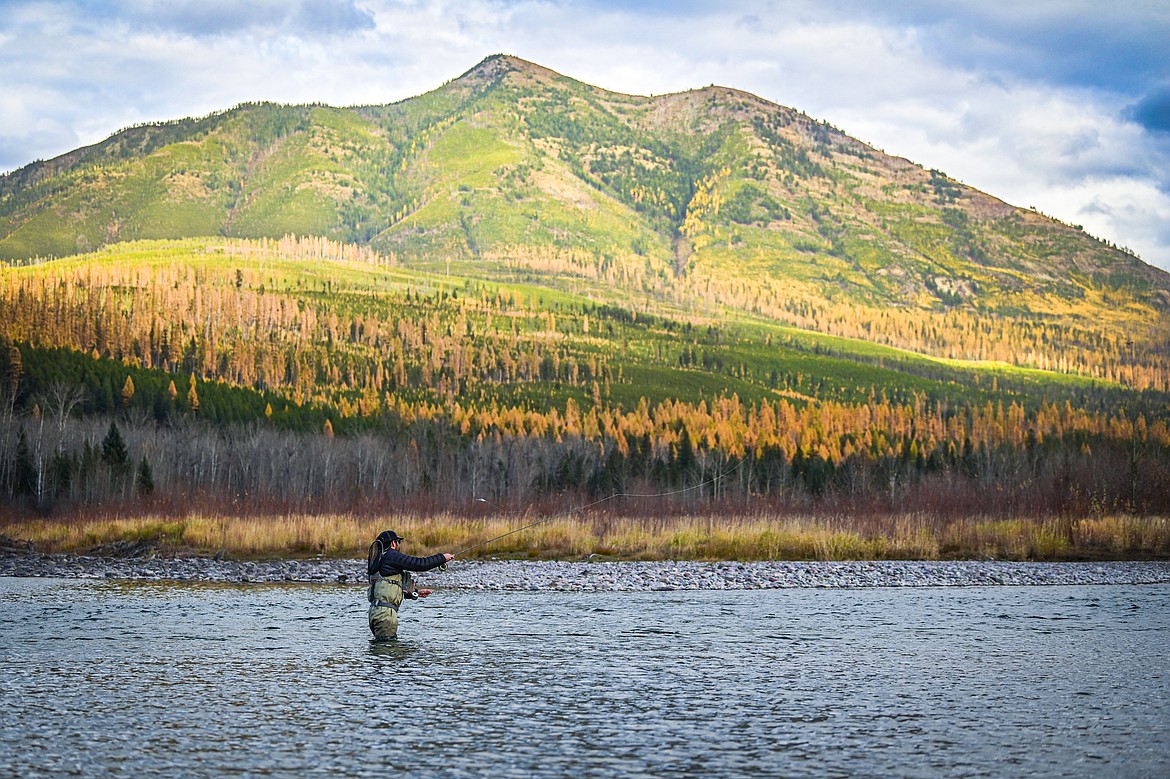
Milan Mena casts a line into the Middle Fork Flathead River below Loneman Mountain in 2024. (Casey Kreider/Daily Inter Lake FILE)
Casey Kreider
The Three Forks of the Flathead encompass 219 miles of cold, clear, free-flowing waters considered among the most pristine river systems in the world.
The North and Middle Forks flow through the Flathead National Forest and along the border of Glacier National Park, while the South Fork springs to life deep in the Bob Marshall and Great Bear wilderness areas. All three unite near Hungry Horse to form the Flathead River’s main stem that eventually spills into Flathead Lake.
Each of the three branches offers unique characteristics — from peaceful solitude with world-class fisheries to rowdy Class IV whitewater — and that range was taken into consideration in updating the system’s Comprehensive River Management Plan. The Flathead Forest collaborated with Glacier National Park on the draft document that maps out how to best protect and enhance the river system for future use.
Long overdue, the document has not been updated since the 1980s. Over the last 40 years, use on the river has steadily increased, and today, portions of the system see more than 1,000 people a day in peak summer months.
To maintain a balance of solitude and recreation, the management plan starts by defining unique values for different river segments.
For example, the North Fork is split into a “scenic” segment north of Polebridge, where a more tranquil experience is expected, and a “recreational” segment south to Camas Creek, where people should expect to encounter more congestion and commercial activity.
Pushing commercial use toward certain areas while limiting it in others will help accommodate everyone’s desires and expectations for the river system.
The plan also proposes a mandatory permit system for all floaters and boaters. At the onset, an unlimited number of permits would be available, but that could transition to limited permits if traffic reaches unsustainable levels. The idea of limited permits justifiably has many river users on edge, but it’s important to note that a change of that magnitude would go through a public review process first.
Another big change is a proposed ban on vehicle parking and camping on gravel bars. The last five years have shown how this scenario can get out of hand with overuse and disrespect for natural resources — the worst example coming in 2021, when a school bus got stuck in the water at the popular car-camping spot near Blankenship Bridge.
Given the level of visitation to Glacier Park and the corresponding mistreatment of its waterways, unfettered use of the Flathead River’s gravel bars is no longer safe or responsible.
Other reasonable actions to protect the river experience include limiting group sizes to 50 people and clamping down on noise, such as outdoor speakers.
While individual actions in the plan stand out, the document as a whole hits a sweet spot of balancing use and preserving the river assets that make these waters so desirable in the first place.
If river use is important to you, there’s still time to weigh in and learn more. An open house is planned for Feb. 18–18 at FVCC, and public comments will be accepted through March 13.
Speak up now — this plan, like its predecessor, may last another 40 years.