
COLUMN: Reporting on the Frontier tragedy
NANCE BESTON | Hagadone News Network | UPDATED 1 month, 3 weeks AGO
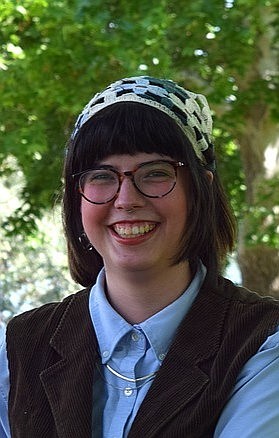
BESTON
MOSES LAKE — I wasn’t born, yet, at the time of the 1996 Frontier Middle School tragedy, but I grew up in the long shadow of school violence. I remember the blue glow of the TV during Sandy Hook coverage, the volume lowered when I walked in, the hush in classrooms after every new headline. I remember lockdown drills – the click of the door, scuffed linoleum under my knees – and the crisp Montana wind when my middle school was evacuated for a bomb threat.
Whether I like it or not, I’m part of a generation raised to know that shared spaces – classrooms, churches, grocery stores – may not always be safe. It has shaped me.
Four months ago, when Ryan Shannon, the Moses Lake School District’s communications director, told me the 30‑year mark of Frontier was approaching, something dropped in my stomach. A knot. A responsibility. After conversations with my editor and Shannon, I was assigned the story.
I felt heat rise in my face – like being called on before you’re ready. I wanted to do it right. I was afraid of getting it wrong.
I’m 24, with not even two years of newsroom experience, and I was being asked to write about one of the earliest modern school shootings – an event woven into Moses Lake’s DNA. What harm could I cause by choosing the wrong words?
Coming from Missoula, Mont., I knew only the outlines. I had to unlearn the myths whispered by outsiders and learn instead from the people who lived it.
I went to the records. Court documents. AP coverage. Herald archives. I watched hearings where the turning of a page felt loud. Somewhere in this process, something in me shifted. I stopped reading to memorize facts and began reading to understand what survival looks like over decades – how a community builds a life around a crack in its foundation and keeps going anyway.
The journalists who got it right didn’t hover over the wound. They wrote about resilience, community – the ordinary ways people reach for each other when the world cracks open.
I read about Jon Lane, and then had the honor of speaking with him.
Lane told me, “Make something good come from this.”
It felt like a blessing and a challenge.
Soon after, Jason McLean agreed to talk, the then-young teacher who took over the classroom the Monday after the tragedy. I honor his strength. If he, also young in his career, could step into the classroom and make those students feel safe then I had no excuse to shy away from the story. I hoped my words could embody that same strength.
In the days leading up to the deadline, I wasn’t writing my best work. I felt the responsibility of accuracy as something sacred, especially for a story like this, where dates and details are more than facts; they are memory, they are grief, they are the way a community keeps faith with itself.
I reached out to many people. Several declined, and I’m grateful for the grace of that boundary.
I wrote the first story slowly, struggling over every sentence. And then we made a mistake. A single character. A date error.
When I saw it, my chest went hollow, not from embarrassment, but because accuracy is a form of respect. One wrong digit can feel like a cracked frame around a treasured photograph.
Then I remembered what Lane told me about making something come of this. So, I kept going.
I reread every Herald story from 1996, pulled passages, and began again – something steadier, fuller. Then my editor got a text: Shannon Hintz was ready to share her story. Her words helped shift the piece from chronology to witness – from “what happened” to “how we have kept living.”
This story isn’t mine; it belongs to those who lived it, and to those who chose silence as much as those who spoke. Reporting on the tragedy has changed how I think about community and responsibility – about holding a story gently enough that it doesn’t break.
I don’t know if anyone can get something like this perfect. But I do know this: for 30 years, Moses Lake has practiced a quiet, determined kind of healing – the kind which shows up, holds hands and stays.
If the piece I wrote reflects even a fraction of that courage, then maybe something good came from the telling. And if it helped even one person feel seen, then every hour of doubt was worth it.
With honor,
Nance Beston
Staff Writer
ARTICLES BY NANCE BESTON
1 arrested after Highway 17 stop; detectives recover fentanyl, firearms
MOSES LAKE — The Moses Lake Street Crimes Unit conducted a traffic stop on Highway 17 near Randolph Road and executed a search warrant Friday morning as part of an ongoing narcotics investigation.

4th-year drought declaration in WA, subtle effects in the Columbia Basin
EPHRATA — Washington’s fourth straight year of drought is expected to hit some regions hard, but in Grant and Adams counties, the impacts will look different – quieter, less visible and centered underground. Statewide, the Department of Ecology issued an emergency drought declaration after a warm winter left Washington with about half its usual snowpack, raising concerns about low summer streamflows, stressed fish populations and heightened wildfire risk. Seven of the past 10 years have included drought somewhere in the state. “If you look at our mountains, the challenge we are facing is clear,” Gov. Bob Ferguson said during a press conference Wednesday. “We’re taking emergency action to protect fish, farmers and communities across Washington.”

Sleep Diagnostic Center to close after doctor’s sentencing
MOSES LAKE — The Central Washington Sleep Diagnostic Center announced it will be closing its doors effective April 30. This includes locations in Moses Lake, Spokane Valley, Brewster and Wenatchee. The announcement follows the March 25 guilty plea from Dr. Eric Edward Haeger, 57, in United States District Court to adulterating and misbranding medical devices with the intent to defraud or mislead, according to a statement from the U.S. Attorney’s Office. “The adulterations by Dr Haeger show a dangerous disregard for the safety of his patients,” Washington Attorney General Nick Brown said in a statement. “This is a win for patient safety, for protecting public dollars from fraud, and for ensuring citizens of Washington get necessary healthcare. This case exemplifies the great work our team is doing in collaboration with our federal partners to fight fraud and protect Washingtonians.”