
Essex ‘blindsided’ by looming closure of historic Izaak Walton Inn
JUSTIN FRANZ Montana Free Press | Daily Inter-Lake | UPDATED 5 hours, 41 minutes AGO
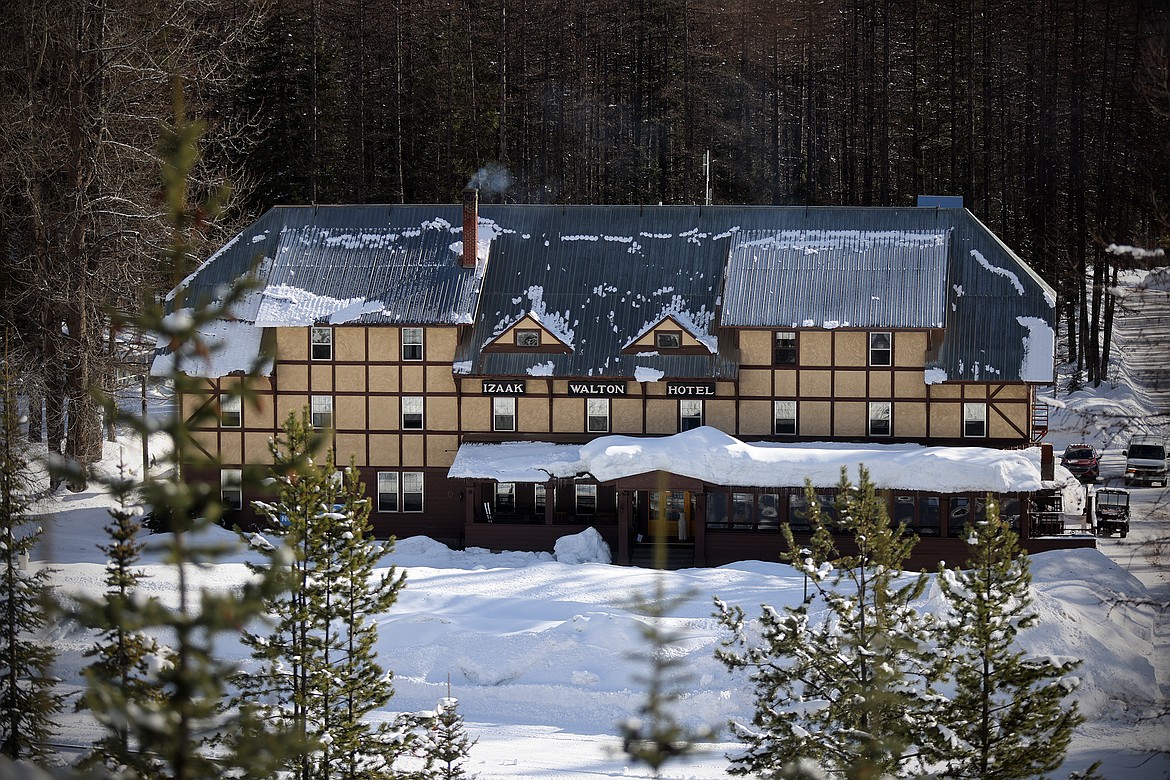
The Izaak Walton Inn in Essex Thursday, Feb.9, 2023. (Jeremy Weber/Daily Inter Lake)
ESSEX — Over the winter, those in the tiny mountain hamlet of Essex, on the southern edge of Glacier National Park, said something felt amiss around LOGE Glacier, the beloved old railroad lodge better known as the Izaak Walton Inn. Perhaps it was the lackluster snow covering the cross-country trails or the recent departure of a popular employee at the inn, they thought. Even when the trail-grooming machine the inn had been leasing this winter was suddenly repossessed a few weeks ago, locals hoped that maybe someone had made a mistake and missed a payment.
Regardless of what they thought, no one expected that the inn was just weeks away from shutting down as a result of “significant” financial challenges for its Washington-based parent company, which had purchased and remodeled the inn just a few years ago.
Now locals in Essex are wondering what their community will do without its beloved gathering spot, and employees are wondering where they will go once their jobs are eliminated and employee housing is shuttered.
“We were all blindsided,” said Fantasia Knight, a housekeeper at the inn since LOGE reopened it in 2024. “A lot of us moved our entire lives up here, and some of us have nowhere else to go.”
WHILE THERE are a number of historic lodges in and around Glacier National Park, few are as connected to their communities as the Izaak Walton Inn. While there are more than 30 rooms in the lodge itself, plus a number of rail cars-turned-cabins scattered across the grounds, on a Friday or Saturday night, you were just as likely to run into a local bellied up to the basement bar as you were a tourist.
While Essex has built a reputation in recent years as a haven for outdoor recreation, it began as a railroad town. Shortly after the Great Northern Railway built its main line over nearby Marias Pass, Essex became a “helper station,” where extra locomotives were added to trains for the climb over the mountain. It was also where plows were stationed to keep the tracks clear in winter. Every winter, the Great Northern would have about 200 railroaders based in Essex. But in 1935, the “beanery” that fed and housed those workers burned down. For a few years, the railroad had its employees stay in old boxcars, but the accommodations were far from attractive, and managers had difficulty finding people willing to work out of Essex during the winter.
In 1939, the railroad made a deal with the Addison Miller Company to construct a hotel and lunch room next to the tracks in Essex. The Izaak Walton Inn opened later that year. While the inn’s primary purpose was to serve railroaders, the evocative name honoring a popular 17th-century outdoorsman and the Tudor Revival style were meant to attract tourists as well. Located about halfway between West Glacier and East Glacier Park, the Izaak Walton earned the nickname “the inn between” and was known as a quiet oasis away from the park’s busier east and west sides.
In 1957, the Addison Miller Company sold it, and the inn passed through several private owners. One of the most consequential was the Veilleux family, which owned it from the early 1980s until 2006. During their tenure, the family helped develop a system of cross-country ski trails and leveraged the inn’s railroad connection by buying old cabooses and converting them into cabins. The family even sought permission from the railroads to paint the cabooses into the appropriate colors, logos and all, representing the companies that operated in Montana. Over the years, the inn became popular with outdoor and railroad enthusiasts alike. In 2006, the inn was sold to Brian Kelly, who helped the business grow by acquiring a nearby motel and a cafe within Glacier Park. In 2022, Kelly put the inn and surrounding property up for sale, and nine months later, it sold to LOGE Camps for $13.5 million.
LOGE CAMPS (pronounced “Lodge” and standing for “Live Outside, Go Explore”) was founded in 2016 with the mission to find “forgotten motels near our favorite towns and trails, and bring them back to life.” Suggesting that the Izaak Walton was “forgotten” irked some locals and long-time visitors, and eyebrows raised even further in 2023, when the hospitality company announced they were shutting the inn down for a major renovation. As part of that, the company held an auction in which it sold hundreds of pieces of memorabilia from the walls, along with furniture and just about anything else that wasn’t nailed down. After the auction, the inn closed, and over the next year, LOGE undertook a major renovation, including upgrades to the water and heating systems, new wiring and a brand-new kitchen. Some of those upgrades, management later admitted, were not part of the initial plan but were required (most notably the outdated electrical system).
But with the inn, along with its restaurant and bar, closed, many locals found themselves without a centralized gathering spot, said Brian and Lisa McKeon, whose family has owned a cabin near the inn for decades.
“Without the inn, it’s just a remote neighborhood,” Brian McKeon told Montana Free Press this week. “With the inn, it’s a community.”
“The energy was completely different when the inn was closed,” Lisa McKeon added. “It was kind of sad and lonely to go up there. There was a desolate energy about the place.”
That lonely era came to an end when the inn reopened under a new name, LOGE Glacier, in the fall of 2024. Inside, guests and locals found refreshed rooms with new furniture and modern amenities. Some of the railroad memorabilia from the inn’s previous iteration had also been squirreled away before the auction and made an appearance inside the hallways and downstairs bar.
“We knew we had something special here,” general manager Lucas Hillman told the Flathead Beacon in late 2024. “You don’t buy a place like this and then change everything. Locals said that Hillman and the rest of the LOGE staff made a concerted effort to be good neighbors and invite the locals to the inn by hosting trivia nights and other community events. While some changes irritated locals — like painting the old cabooses a generic blue, no longer picking up guests from the Amtrak station in Essex and a limited menu in the restaurant — they generally gave the local management positive marks, said longtime resident Larry Epstein.
“When it reopened, it quickly became our community center again,” he said.
Meanwhile, LOGE was rapidly expanding across the region, opening locations in Washington, California and Colorado. It also opened a hotel in Missoula, and said it saw additional opportunities in Montana.
BUT THE company was struggling financially. According to a report from the Flathead Beacon, which broke the news late last week that LOGE Glacier was closing, the company’s board of directors discovered in late 2025 that the company was in “significant distress” and lacked the money to continue operating. According to emails reviewed by the Beacon, LOGE CEO Cale Genenbacher had told the board that the company had refinanced one of its properties. But in reality, LOGE had repurchased it after the lender foreclosed on the property, according to the Beacon. Genenbacher resigned in November, and last month the company retained a chief restructuring officer and insolvency counsel, who typically guide a company through restructuring or bankruptcy.
In January, LOGE’s board of directors decided to begin winding down operations.
“The board did not make this decision lightly, but this was required due to a lack of cash flow at the property level and the inability to continue paying required operating costs,” the board wrote in an email, according to the Beacon. “The company is doing everything in its power to look for ways to continue maximizing value in these properties, but cannot risk additional liability that would come from missing payroll obligations or other obligations to critical vendors.”
LOGE did not respond to a request for comment from MTFP.
Last week, word spread that LOGE properties across the region were closing, including the hotel and cafe in Missoula. Knight, the housekeeper, said she and the rest of the staff were informed last Friday that they were losing their jobs.
“We were shocked,” she said.
While some LOGE properties have already closed, the Izaak Walton is expected to remain open until March 1. Knight said she suspected the facility in Essex is staying open longer because it has two weddings scheduled for the end of this month. While LOGE has informed the 17 full-time employees that they will be out of work at the end of this month, Knight said it has provided little additional information.
“We have been getting a lot of phone calls, but we don’t have a lot of answers,” she said.
Knight said that she and the rest of the staff are committed to one another and to finishing the job they were hired to do. But they’re also trying to figure out what’s next. Most full-time staff live in employee housing, which will also be closed, so most people will not be able to stay in Essex. Knight said she was unsure where she would go. Some were unsure how they would leave town, as not everyone owns a car. Others were dealing with the logistics of moving with the pets they had brought with them to Essex. Knight has organized a GoFundMe to raise money that will be split among the employees to help with moving expenses. As of Wednesday night, it had raised about $1,300.
Local residents told MTFP that they were concerned about the staff, many of whom had become friends over the years. But they were also wondering what would happen to the community of Essex now that the inn at its heart is once again about to be closed, this time, with no firm plans about its future. Thane Johnson, an attorney who splits his time between Helena and Essex, said the inn is in great shape and would be an attractive business for a new owner. Although if LOGE declares bankruptcy, Johnson said it could be months before the legal issues are resolved and the inn is reopened. Others expressed concern about the impact of an extended closure on a historic building in a rugged environment.
“It would be devastating if no one bought it,” Johnson said. “Our community would survive — we’re close-knit — but there would be a hole in that community.”sold to LOGE Camps for $13.5 million.