
Sandpoint local option tax delayed to fall election
JACK FREEMAN | Hagadone News Network | UPDATED 1 month, 2 weeks AGO
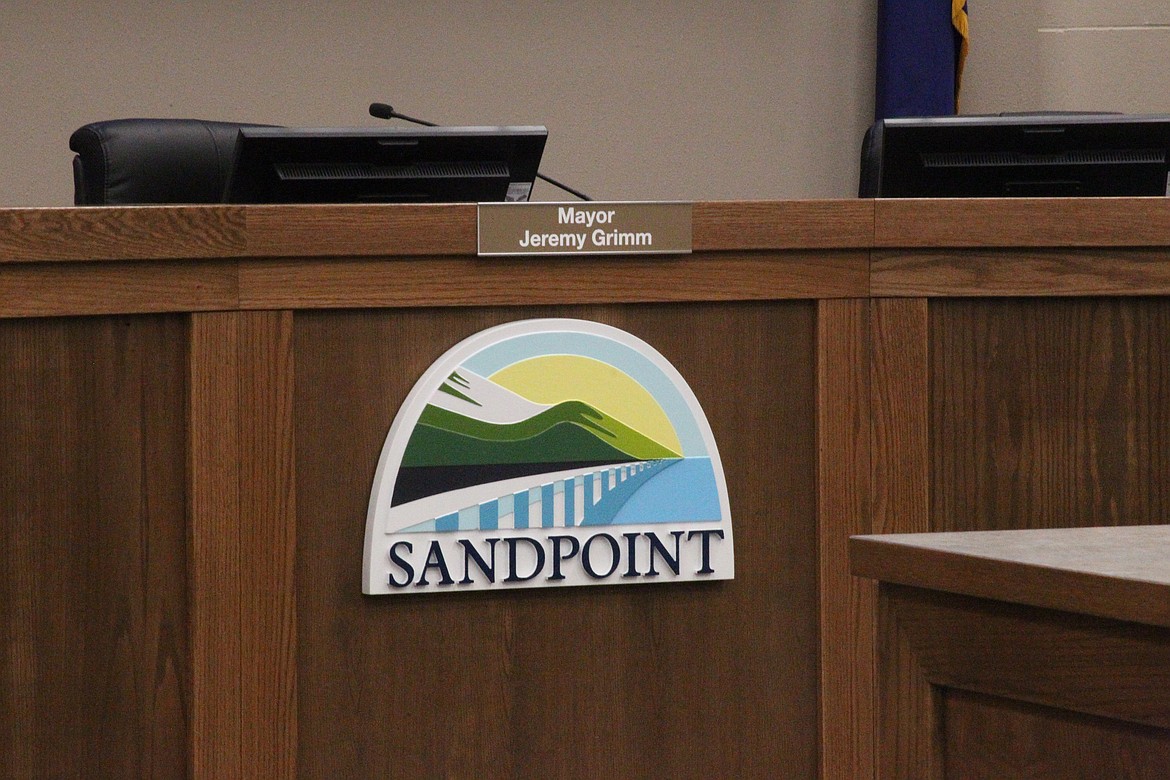
A view of Sandpoint's city logo at the City Council dais.
Photo by JACK FREEMAN
SANDPOINT — In a unanimous decision, the City Council voted to delay any potential local option tax until the November election citing concerns of a rushed process.
The LOT was introduced to the council by Mayor Jeremy Grimm at its previous February meeting and was relatively well received. Grimm brought back draft ballot language for the Feb. 18 meeting, which prompted concerns from the council, primarily Council President Deb Ruehle.
Ruehle said she felt like she was being rushed into the decision without the data to back up the case for the LOT and wanted to see some of the language changed to include specific projects.
“There's not enough background. There's not enough graphs and charts and all those things for me to look at visually to know, are we making the right choice,” Ruehle said. “We need to be really clear and really secure, because if we put this out there without doing that outreach, I think it's going to fail.”
In the draft language, the LOT would stay in place for 20 years, with 60% of the collected tax would go toward street maintenance and improvements while the other 40% would go toward the city’s sewer fund. Grimm said the idea behind including the sewer fund was to help offset the cost of the city’s new wastewater treatment plant and keep utility rates in check.
Grimm said while the city continues to search for grants and ways to lower the cost of the plant, he’s disturbed by the lack of meaningful commitment from Idaho or the federal government. In November, voters approved a $130 million bond for the city to use for the construction of the plant, but Grimm said the city is looking into ways of lessening the cost through alternative treatment methods.
During deliberation, the city’s Director of Finance, Sarah Lynds, and legal counsel, Fonda Jovick, said they had never heard of a city using LOT money for an enterprise fund, like the city’s sewer. Jovick said she did not have the chance to see the draft language before it was posted to the online agenda and under Idaho Code, local option taxes can only go toward “general city services.”
“We have not been asked to evaluate the legal legitimacy of utilizing a local option tax revenue as a source of income and a revenue into an enterprise fund,” Jovick said. “That has significant legal consequences, if not allowable.”
Multiple councilors said they agreed with having the LOT go toward the sewer fund, if it was legal. Councilor Pam Duquette said she hears now about the wastewater plant’s cost, almost as much as concerns about the streets.
Councilor Kyle Schrieber said he wanted further clarification on where the LOT revenue would go, if the city is able to find funding for the wastewater treatment plant. Grimm said under the draft language, which reads that funds would be directed to the city’s utility system, means the city could use the revenue to offset utility costs.
However, the lack of clarity in that area was one of the factors cited by councilors who voted to postpone. Grimm said that while he’s heard spring elections are more favorable for LOTs, he wants the council to be unanimous in putting an LOT on the ballot.
“Whatever we do here, I hope that it's a unanimous vote,” Grimm said. “If Deb is, even with all the information, feeling like this is too much pressure, then I would recommend we defer this until the fall, for whatever that's worth.”
Under Idaho Code, cities can only run LOTs when their population is under 10,000 on the latest census. Grimm has said that this only gives Sandpoint until 2030, when the next national census takes place, to adopt one.
According to data from the U.S. Census Bureau, Sandpoint’s population was over 10,000 in 2024 and under that mark in 2020. The Idaho statute says the city must be under that cap “according to the most recent census within the state of Idaho,” but does not specify if that’s at the time of the LOT or based off the decennial census.
If adopted, the LOT would stay in place for the entirety of its term, regardless of population size. Moving forward, the city will be collecting more input from the public, more detailed data from staff and answering the legality of using LOT revenues on the sewer fund.
According to a memo put together by Grimm, the LOT would provide $16.8 million toward the sewer system and around $25 million for road repair. By Grimm's estimation, the tax would add between $36 to $72 per year for resident's grocery bill and potentially avoid sewer costs of $200 to $250 per year, if allowed.
The full meeting can be viewed on the city’s YouTube channel at youtube.com/@CityofSandpoint. The council’s next scheduled meeting is set for March 4 at 5:30 p.m. at City Hall.
ARTICLES BY JACK FREEMAN

Outgoing POP executive director wins statewide award
That effort combined with the construction of nearly 20 miles of new trail and a new trail management plan has earned her the 2026 Professional Award for Parks, Trails, or Conservation from the Idaho Recreation and Parks Association.

APRIL NIBJ: Nonprofits help people follow their life’s compass
Kanning’s story isn’t unique, ask any worker at one of the 500 nonprofits in Bonner County are you’ll likely hear the same reason for working: it feels right.
Ponderay to begin Black Rock clean-up project
With the approval of a memorandum of agreement with Sandpoint on Wednesday evening, the city of Ponderay is now able to begin its Black Rock clean-up project next week.