
Veggies the focus of April gardening symposium
JOEL MARTIN | Hagadone News Network | UPDATED 7 months, 4 weeks AGO
Joel Martin has been with the Columbia Basin Herald for more than 25 years in a variety of roles and is the most-tenured employee in the building. Martin is a married father of eight and enjoys spending time with his children and his wife, Christina. He is passionate about the paper’s mission of informing the people of the Columbia Basin because he knows it is important to record the history of the communities the publication serves. | February 20, 2026 3:15 AM
MOSES LAKE — Vegetables will be the main topic of discussion at this year’s Eco-Gardening Symposium April 18.
“It’s for backyard gardeners, but also for people who intensively garden a small plot of land, either for sale at farmers markets or for helping out at food banks,” Hastings said.
The theme will be “From Seed to Table,” according to Sharon Hastings, who handles community outreach for the WSU Master Gardeners of Grant–Adams Counties. The symposium, now in its ninth year, is a joint effort of Master Gardeners and the Columbia Basin Conservation District.
“We have a program that will cover all kinds of aspects, from growing vegetables in containers versus a garden itself,” said Master Gardener Diane Escure. “(We’ll cover) the whole process from start to finish, from the beginning of planting seeds to taking care of the vegetables during the summer, how to winterize at the end of a season (and) how to how to do some canning as well.”
The opening keynote speaker will be Isaac Lnenicka, who farms a quarter-acre of vegetables in Soap Lake. He’ll discuss practical strategies for growing edible gardens in the Basin’s climate.
“He’s an intensive farmer … with lots of great stories,” Hastings said.
The closing speaker will be Judy Conlow, who will present “Lemurs and Wolves.”
“(It’s) about different aspects of pollination and different sources of pollination other than those that people think about (like) bees or perhaps moths,” said Master Gardener Diane Escure. “There are all kinds of ways to pollinate a garden for successful production.”
In between, there are eight breakout sessions, all geared toward folks who want to grow their own veggies. They’ll cover topics like irrigation, container gardening, pest management and food preservation.
“One (session) will be a panel discussion from some of our Master Gardeners and others who have been successfully growing vegetables and fruits for quite a long time,” Escure said. “(It’s called) ‘The Good, the Bad, and the Ugly of Vegetable Gardening.’”
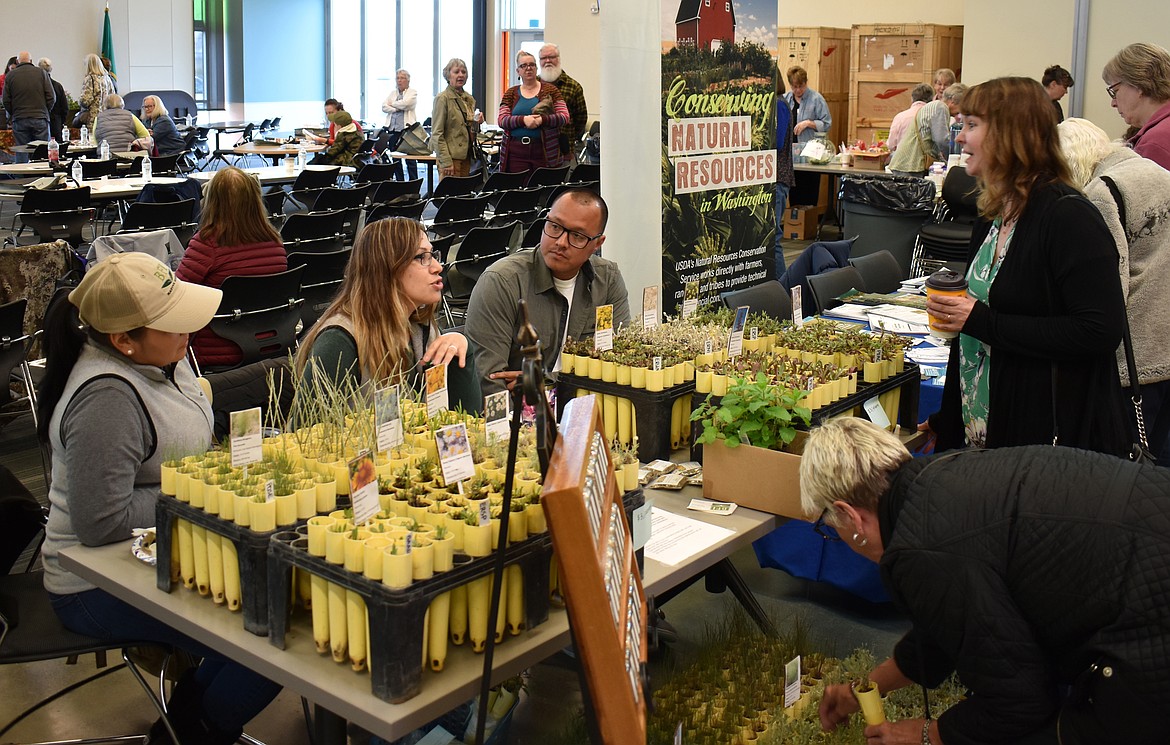
Besides the sessions, attendees can expect a gardening raffle with prize baskets, a selection of 15-20 vendors offering plant sales, soil testing and other services. The Master Gardeners will hold a plant clinic as well, to answer questions about any aspect of gardening. Attendees will be sent home with a take-home packet of gardening resources.
There will be complimentary beverages and snacks, and box lunches will be available for $5.
The event is free, but because of space limitations, attendance is capped at 200 people, Hastings said. Anyone interested in attending can register at https://bit.ly/Eco-Symposium26.
“(When) food prices are very high, people become more interested in feeding their family from a garden,” Hastings said. “You can control what you’re feeding your family in terms of what’s in the soil and what’s been applied to the soil, and it just tastes so much, much better.”
Eco-Gardening Symposium: From Seed to Table
8:45 a.m.-1:30 p.m. April 18
Big Bend Community College ATEC Building
7611 Bolling St NE, Moses Lake
https://bit.ly/Eco-Symposium26
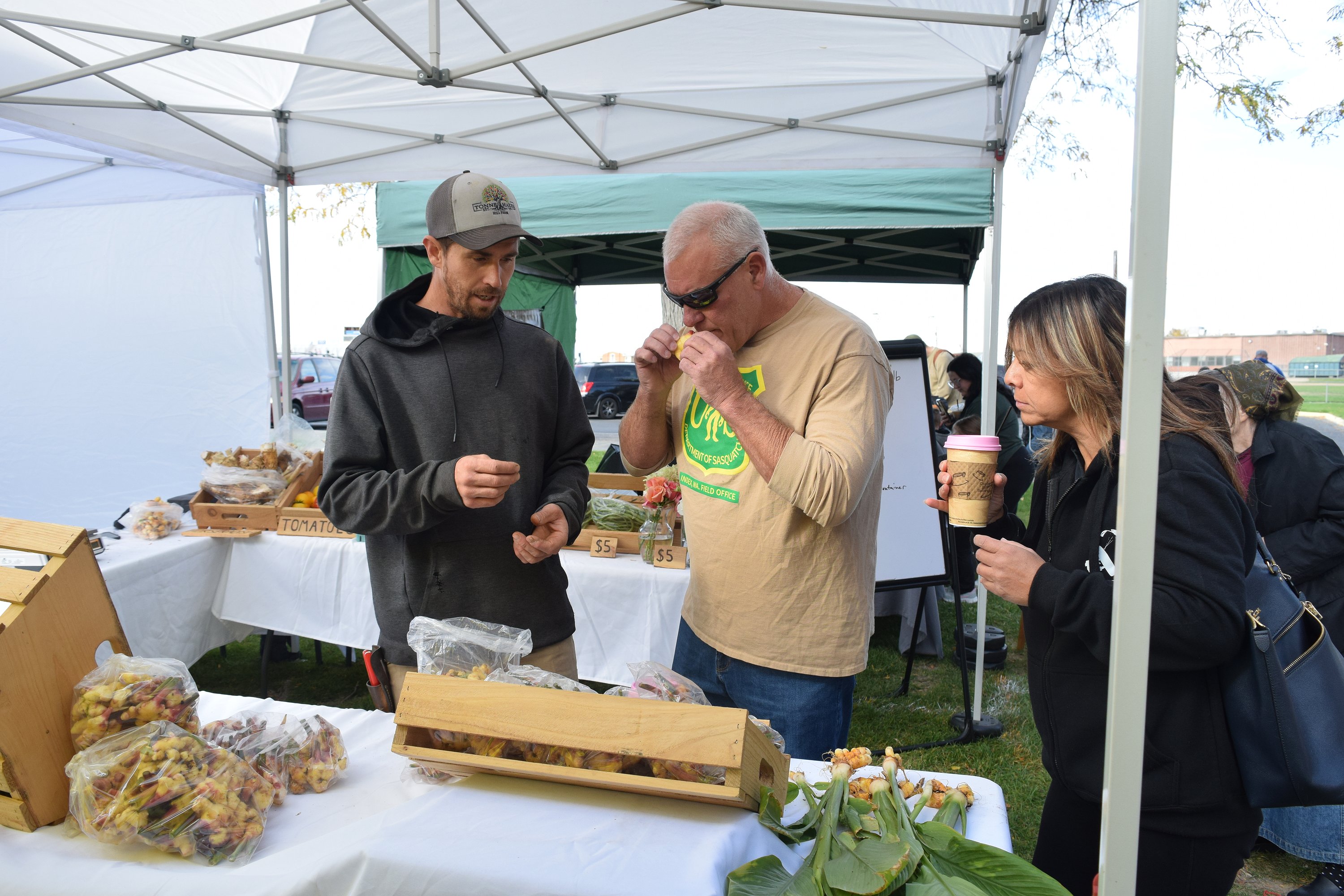 Isaac Lnenicka, shown here at the Moses Lake Farmers Market, will be the opening keynote speaker at the Eco-Gardening Symposium April 18.
ARTICLES BY JOEL MARTIN

Endless battle
Noxious Weed Control Board works to keep invasive plants under control
MOSES LAKE — Some of the nastiest plants in Grant County were the topic of a class led by Jay Johnson, a consultant with the Grant County Noxious Weed Control Board, Tuesday. The Noxious Weed Control Board, as its name would suggest, is tasked with keeping weeds under control in Grant County. That’s not a small job; the board’s website lists 129 species of noxious weeds that are found around Grant County. A noxious weed is defined as an invasive, non-native plant that threatens agricultural crops, local ecosystems or fish and wildlife habitat, according to the Noxious Weed Control Board. Washington state law requires that these weeds be identified and their spread kept to a minimum, if not completely eradicated. “We’re one of those agencies a lot of people don’t really understand,” Johnson said. “We’re a county office and … our funding is tax-based assessment. When you get your tax bill and you look down at all the expenses that you pay for, there we are.”

BASIN EVENTS: Oct. 16-24
COLUMBIA BASIN — Whether you feel like shopping, crafting, learning or seeing a show, there’s something happening for you this week in the Basin. Oct. 16 ‘My Family (Mi Familia)’ screening Spanning three generations, “My Family (Mi Familia)” is a heartfelt drama that follows the Sánchez family as they build their lives in East Los Angeles. Through love, hardship, triumph, and sacrifice, the film explores the immigrant experience, the strength of family bonds, and the traditions that connect one generation to the next. Lowrider show and taco truck before the screening. Sponsored by Columbia Basin Allied Arts, EDUBS C/S and the Moses Lake Creative District. $12 per person. Doors open at 6 p.m., film begins at 7 p.m. at the Moses Lake Civic Center Auditorium, 401 S. Balsam St. Tickets and info: www.cba-arts.org.

Moses Lake author encourages women to look beyond church culture norms
MOSES LAKE — A Moses Lake author’s book, “A Christian Woman Striving to Live Her Faith in a Man-Controlled World,” takes aim at the role to which many churches relegate the female half of their congregations. “It’s to encourage women in the faith,” Linda Curran said. “A lot of churches say, ‘Teach Sunday school, do this, do that, but don’t (evangelize.)’" In her book, Curran recounts a time when she moved to a new community and joined a church there. She was surprised to learn that, as a new female member, she had been automatically assigned church cleaning duties. When she questioned it, she wrote, she was met with condescension and her objections were brushed aside. In other churches, she said, women who were capable of teaching were relegated to “women’s ministry.”