
WA Legislature considering ‘Blue Envelope Bill’ to make traffic stops safer for neurodivergent drivers
JOEL MARTIN | Hagadone News Network | UPDATED 7 months, 3 weeks AGO
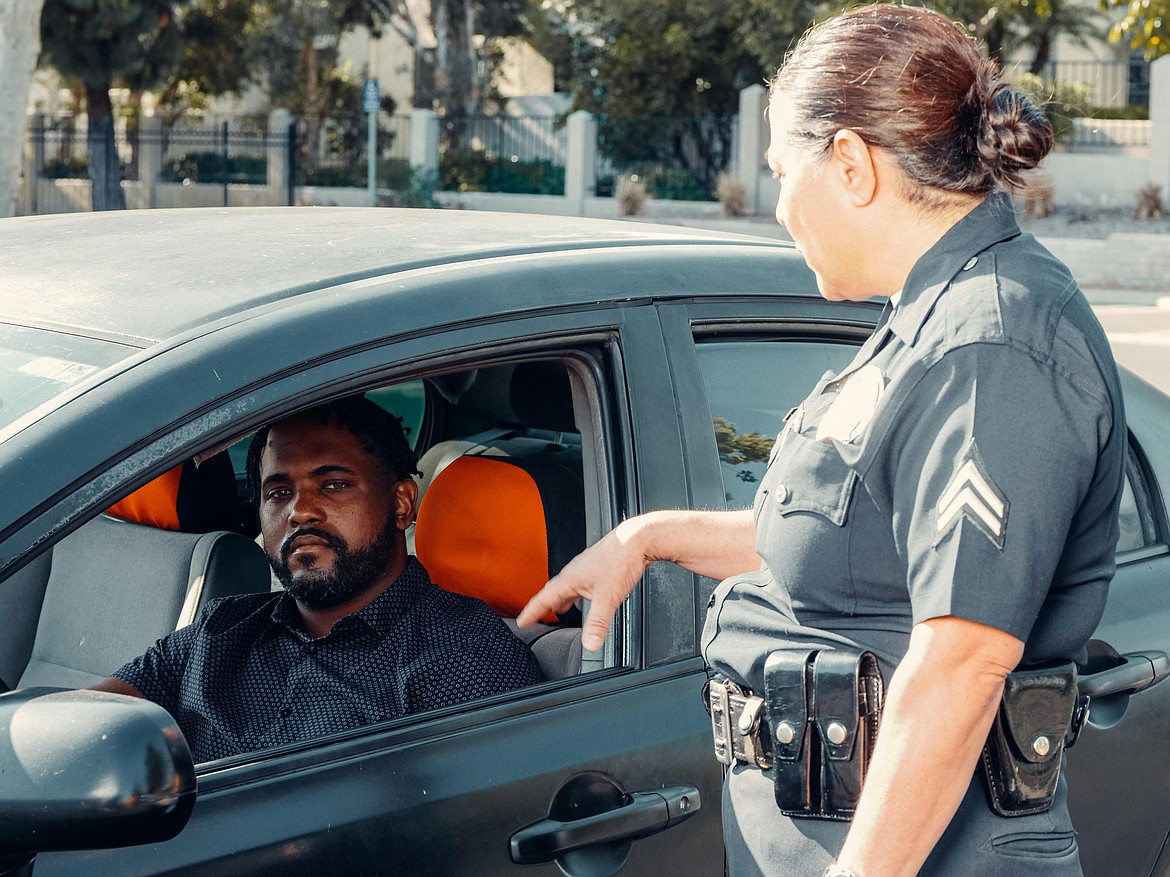
A routine traffic stop can be anything but routine for a person with autism. A bill before the Washington Legislature would make encounters between police and neurodivergent drivers safer and calmer.
COURTESY PHOTO/KINDEL MEDIA/PEXELS
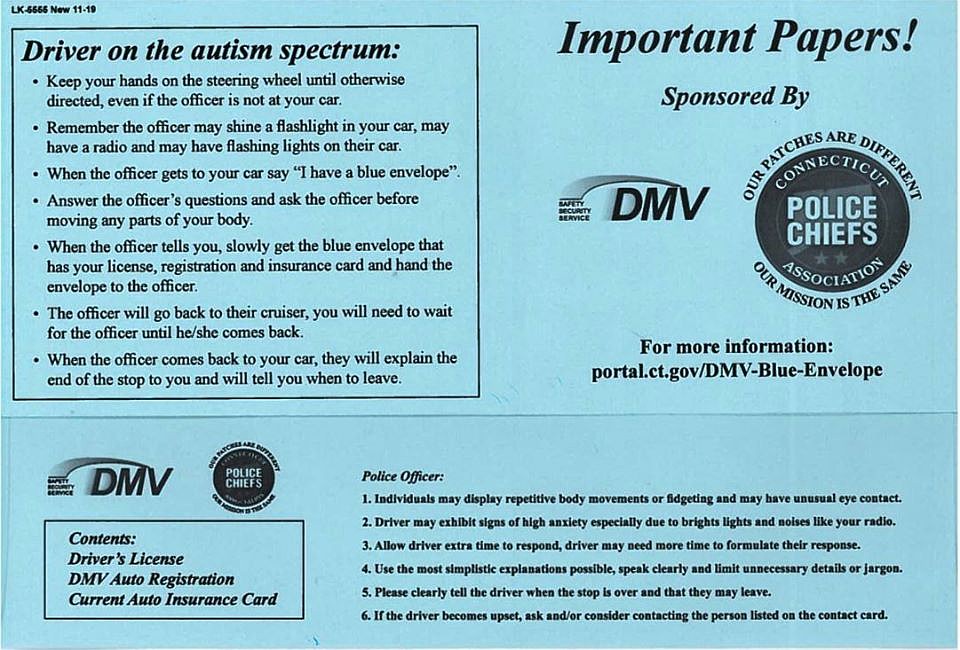
A blue envelope issued by the Connecticut Department of Motor Vehicles. Connecticut was the first state to implement the program in 2020.
Joel Martin has been with the Columbia Basin Herald for more than 25 years in a variety of roles and is the most-tenured employee in the building. Martin is a married father of eight and enjoys spending time with his children and his wife, Christina. He is passionate about the paper’s mission of informing the people of the Columbia Basin because he knows it is important to record the history of the communities the publication serves. | February 24, 2026 3:15 AM
OLYMPIA — A bill in the Washington Legislature has the potential to make encounters between police and people with autism safer.
House Bill 2323, which passed the Washington House of Representatives 92-1 on Feb. 16, would enable drivers with autism or other neurodivergent conditions to keep their paperwork in a special blue envelope, which they could hand to a police officer in the event they are pulled over. The officer would then be alerted that they were dealing with someone who communicates differently from what they expect, according to the bill’s sponsor, Rep. Carolyn Eslick, R-Sultan.
“This is a simple idea that can make a life-saving difference,” Eslick wrote in a statement. “When an officer knows right away that someone may need a little more time or clearer communication, it can prevent misunderstandings, reduce stress and help everyone go home safely.”
The program is modeled after one created in Connecticut in 2020 and since adopted by several other states. A driver with a neurodivergent condition like autism requests a special blue envelope from the Department of Licensing, in which the person keeps their vehicle registration, insurance papers and other papers a police officer might ask to see. The envelope would be printed with instructions for the officer as to how to communicate effectively with the driver, as well as reminders for the driver as to how to respond when pulled over.
The envelope would be free of charge, and no proof of any particular disability would be required, according to the bill’s text.
Nora Borek, a former Washington resident who now lives in Arizona, testified to the House Transportation Committee about her son’s use of a blue envelope. Arizona adopted the program in 2024.
“In Arizona, the blue envelope is kept in the vehicle,” she said. “It helps the drivers stay organized and helps the officer understand right away that communication may need to be calm, clear, and direct … I truly believe a tool like this can prevent misunderstandings and reduce stress.
Borek’s son Nick Borek also testified, holding up his envelope for the committee.
“I'm a person with autism,” he said. “This is my blue envelope. I keep my registration and insurance information in here. It has my mom and dad's phone number in case I get overwhelmed. If I ever get pulled over, I hand this to the officer right away, so they understand how to communicate with me calmly. It helps me stay organized, so I don't fumble with paperwork. I want to cooperate and do the right thing. This helps the traffic stop stay calmer, safer for me and the officer.”
Ryan Fox of Monroe, who also has autism, said his parents had heard about the blue envelope and made one for him when he got his driver’s license 15 years ago.
“Since then, I've had two traffic stops,” Fox said. “When I handed the officers my envelope, they nodded and were very pleasant, and I felt calm having a visual reminder of what to say.”
A study cited in the Journal of Autism and Developmental Disorders showed that one in five young adults with autism had been stopped and questioned by police, and that almost 5% had been arrested. In stressful situations, a person with autism may freeze up or make panicked gestures, which a police officer might misinterpret as potentially dangerous. Flashing lights, sirens and sharply spoken commands can exacerbate a neurodivergent person’s stress.
“I've been tracking these blue envelope bills for quite some time, and they have been fairly successful in other states, said John Lemus, advocacy director for the disability advocacy organization AtWork. “I think that anything we can do to accommodate people with disabilities when dealing with the police is going to lead to better outcomes for everyone.”
HB 2023 was referred to the state Senate on Feb. 18 and is scheduled for a public hearing Thursday.
 A blue envelope issued by the Connecticut Department of Motor Vehicles. Connecticut was the first state to implement the program in 2020.
ARTICLES BY JOEL MARTIN

Endless battle
Noxious Weed Control Board works to keep invasive plants under control
MOSES LAKE — Some of the nastiest plants in Grant County were the topic of a class led by Jay Johnson, a consultant with the Grant County Noxious Weed Control Board, Tuesday. The Noxious Weed Control Board, as its name would suggest, is tasked with keeping weeds under control in Grant County. That’s not a small job; the board’s website lists 129 species of noxious weeds that are found around Grant County. A noxious weed is defined as an invasive, non-native plant that threatens agricultural crops, local ecosystems or fish and wildlife habitat, according to the Noxious Weed Control Board. Washington state law requires that these weeds be identified and their spread kept to a minimum, if not completely eradicated. “We’re one of those agencies a lot of people don’t really understand,” Johnson said. “We’re a county office and … our funding is tax-based assessment. When you get your tax bill and you look down at all the expenses that you pay for, there we are.”

BASIN EVENTS: Oct. 16-24
COLUMBIA BASIN — Whether you feel like shopping, crafting, learning or seeing a show, there’s something happening for you this week in the Basin. Oct. 16 ‘My Family (Mi Familia)’ screening Spanning three generations, “My Family (Mi Familia)” is a heartfelt drama that follows the Sánchez family as they build their lives in East Los Angeles. Through love, hardship, triumph, and sacrifice, the film explores the immigrant experience, the strength of family bonds, and the traditions that connect one generation to the next. Lowrider show and taco truck before the screening. Sponsored by Columbia Basin Allied Arts, EDUBS C/S and the Moses Lake Creative District. $12 per person. Doors open at 6 p.m., film begins at 7 p.m. at the Moses Lake Civic Center Auditorium, 401 S. Balsam St. Tickets and info: www.cba-arts.org.

Moses Lake author encourages women to look beyond church culture norms
MOSES LAKE — A Moses Lake author’s book, “A Christian Woman Striving to Live Her Faith in a Man-Controlled World,” takes aim at the role to which many churches relegate the female half of their congregations. “It’s to encourage women in the faith,” Linda Curran said. “A lot of churches say, ‘Teach Sunday school, do this, do that, but don’t (evangelize.)’" In her book, Curran recounts a time when she moved to a new community and joined a church there. She was surprised to learn that, as a new female member, she had been automatically assigned church cleaning duties. When she questioned it, she wrote, she was met with condescension and her objections were brushed aside. In other churches, she said, women who were capable of teaching were relegated to “women’s ministry.”