
Conservationists eye $37 million in state funding for habitat improvement projects
HAILEY SMALLEY | Hagadone News Network | UPDATED 7 months, 3 weeks AGO
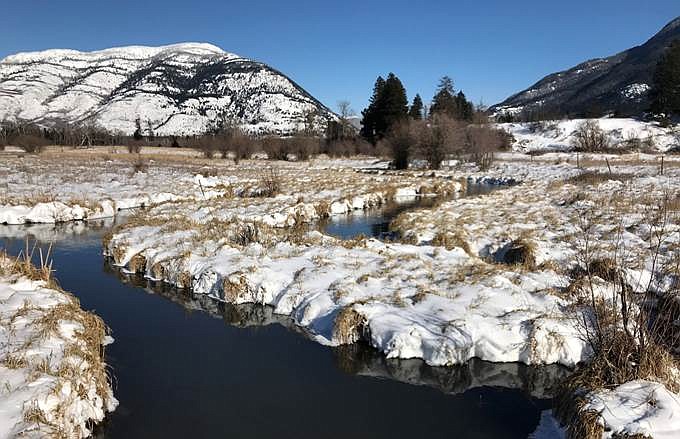
Bad Rock Canyon Wildlife Management Area near Columbia Falls. (Flathead Land Trust photo)
Conservationists are debating how to spend an estimated $37 million influx of funding for habitat improvement projects ahead of the 2027 state Legislature.
Lawmakers passed a bill in 2025 that directs 20% of the state’s recreational marijuana tax into the newly created Habitat Legacy Account. Another 12% is tagged for existing funds that benefit parks, trails and non-game wildlife.
“Basically, in a nutshell, this directs recreational cannabis revenue into our parks, our trails, wildlife crossings and corridors, working lands, to the tune of $37 million every other year. So, that is a big win for Montana,” said Rep. Becky Edwards, D-Bozeman, at a Feb. 26 event in Kalispell discussing the funds.
Edwards sponsored the legislation to direct marijuana tax revenue to conservation efforts, along with Rep. Ken Walsh, R-Twin Bridges and Sen. Denley Loge, R-St. Regis. While the measure proved successful in 2025, she expressed reservations about the longevity of the funding stream, especially as the state is expected to be in a $200 million deficit at the onset of the next legislative session.
“These funds already have eyes on them,” Edwards said. “So, the only way that we can protect these funds is by having projects ready to go.”
The first chunk of money is expected to become available to Montana Fish, Wildlife and Parks on July 1 of this year. The agency is hammering out guidelines for a competitive grant program to disburse funds to partnering organizations. Applications are expected to open in April or May.
Organizations can use the grant funds for projects that improve or protect both terrestrial and aquatic wildlife habitat, conserve working lands and promote outdoor recreational access.
Attendees at the Feb. 26 event pointed to conservation easements as one way the money could be used in the Flathead Valley.
Landowners that opt into a conservation easement agree to limit development and parcelization of their lands, either for a set period of time or in perpetuity. The agreement is legally binding and typically includes a stipulation that the restrictions apply to any subsequent owners.
In Northwest Montana, conservation easements have become a common tool to beat back the suburbanization that has accompanied the region’s rapid population growth. Between 2000 and 2021, more than 49,000 acres were converted from open space to housing in Flathead County alone, according to a report from Headwaters Economics.
“Once those pieces of land are broken up into smaller pieces, then it really becomes far more difficult, if not impossible, to create that mosaic or maintain into the future the kind of open space, connectivity or wildlife corridors that we enjoy now,” said Amber Steed, regional supervisor for Montana Fish, Wildlife and Parks.
She said financial incentives are necessary for many private landowners to opt into a conservation easement and suggested that some of the newly available funds could be used for that purpose.
Other attendees highlighted the need for wildlife crossings on major roadways, including Montana 83 in the Swan Valley, and stream restoration projects that help keep water on the landscape during the dry summer months.
“Other types of projects that might qualify would be, you know, anything that would improve range health for our livestock producers, soil health, drought resiliency,” said Noah Marion, the state policy director for Wild Montana. “There are a lot of opportunities that can be addressed with this new program.”
The priority, said Marion, is to showcase the benefits of continuing to fund conservation efforts.
“We want to keep this [funding source], and then we also want to see these projects happen,” said Marion. “We need to use this money to show our elected leaders that we deserve to have this kind of investment in these kinds of projects that our communities want.”
Reporter Hailey Smalley can be reached at 758-4433 or [email protected].
ARTICLES BY HAILEY SMALLEY

Trump stumps for Flint in Kalispell as Election Day nears
President Donald Trump, wearing a dark suit, red tie and red USA cap, ambled into the Majestic Valley Arena to the raucous roar of a crowd.
Flathead National Forest greenlights Swan Valley timber project
A 2,307-acre timber project is now under way in the Swan Valley.
Flathead National Forest greenlights Swan Valley timber project
A 2,307-acre timber project is now under way in the Swan Valley.