
Challenges ahead for Glacier Park in 2026
HAILEY SMALLEY | Hagadone News Network | UPDATED 2 months, 3 weeks AGO
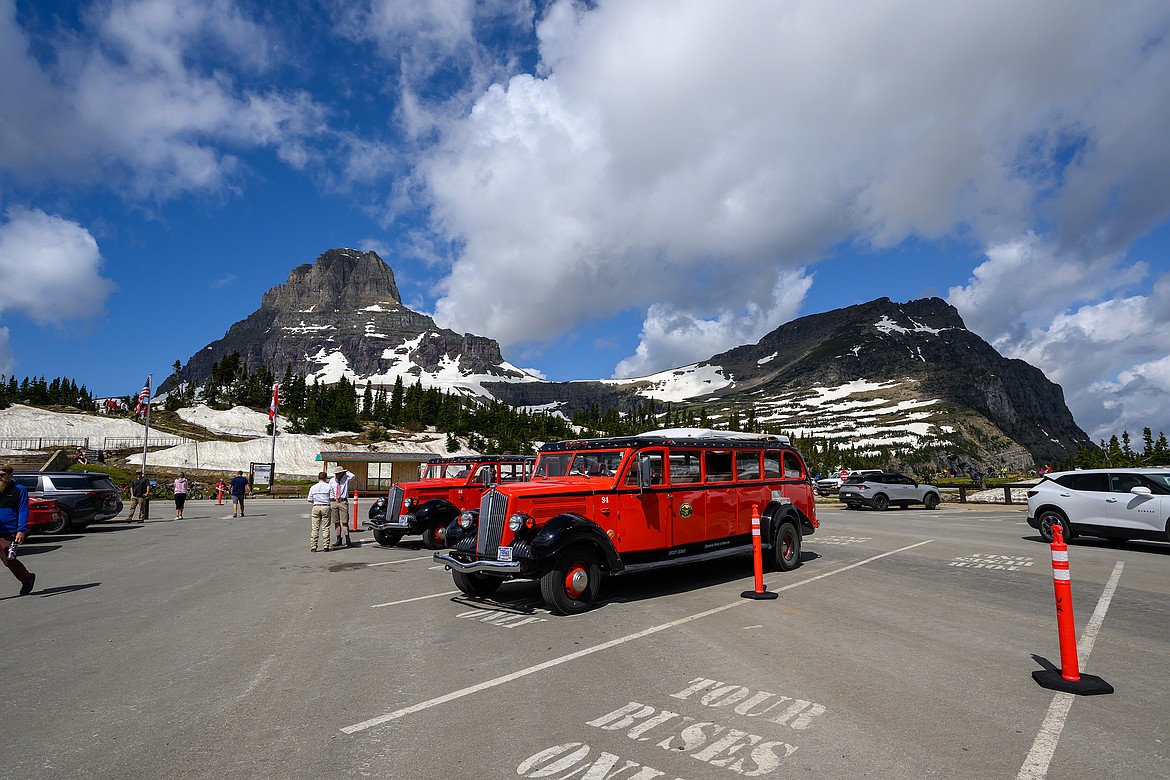
Red Busses at Logan Pass on June 14, 2025.
For Glacier National Park Superintendent Dave Roemer, the past year has been marked with plenty of challenges.
“This has been a turbulent year for us,” he told members of the Columbia Falls Chamber last month. “It has featured many opportunities for us to leave public service for the private sector and do something different. Those of us that are still here are battle-tested and hardened now.”
That may be exactly what officials need to navigate the coming year, as ongoing staffing challenges, construction projects and a new vehicle management system promise to complicate the already complex task of managing one of the most-visited national parks in the country.
Driving the surge in annual visitation is a shift toward more shoulder-season recreationalists. May visitation has increased 26% since 2021, and visitation during September and October has also been on the rise.
The influx of annual visitors spurred the park to introduce a seasonal vehicle reservation program in 2021. The program underwent several variations in the following years, including the timed-entry system that visitors used in 2024 and 2025.
Next summer, visitors will likely be able to enter the park at any time without securing a vehicle reservation beforehand. The shift is part of a pilot program that Roemer said is intended to address two of the park’s most persistent issues: overcrowding at Logan Pass and an ineffective shuttle system.
Officials also plan to enforce a new three-hour parking limit on all personal vehicles at Logan Pass next summer.
Visitors hoping to stay at the pass longer or hike the popular Highline Trail will now need to secure a spot on one of the park’s shuttles. Unlike previous years, the shuttles will require a prior reservation and run what Roemer described as “an express route” to Logan Pass, beginning around 6 a.m.
Through-hikers would still be able to hitch a ride back to Apgar or St. Mary from some locations, but shuttles will no longer stop at many of the most popular destinations on the west side of the park, including Avalanche Lake Trailhead.
“The thought is we would be shifting our energies and our focus into managing Logan and providing visitors a very clear option,” said Roemer. “If you know you’re going to be at Logan to hike all day, then the shuttle is your ticket. If you’re going to hike Hidden Lake Overlook or just want to be up at Logan to be at the top of the Crown of the Continent on the Continental Divide, then we think we’ll increase your odds of being able to park there, spend a little bit of time there and then go.”
Roemer told the chamber he was still seeking final approval for the plan and that many of the details were still being worked out behind the scenes.
ANOTHER CHALLENGE comes in the way of increased fees for visitors without U.S. citizenship. In November, the Department of the Interior announced a new $100 surcharge for foreign visitors to 10 national parks, including Glacier. Foreign tourists will also see the price of an annual parks pass increase from $80 to $250.
Roemer said he was “a little bit devastated” by the new fee structure, which he learned about in tandem with the public.
“The direction that I feel a lot from this community is one that’s been trying to incentivize and not turn away international visitors,” said Roemer. “And we’re the first peace park on Earth, which Congress said. So, the idea of charging an extra $100 a head to people from Canada and other countries — it’s a hard thing for those of us in the gray and the green to get our heads wrapped around.”
There are also practical concerns. The West Entrance Station already struggles with heavy traffic congestion during the summer months, with vehicles sometimes backed up all the way to U.S. Highway 2.
“We know that if we have to utter an extra sentence to each car that comes in, that’s going to slow down things coming into the park,” said Roemer.
As of Dec. 9, Roemer said he had not received guidance from the Department of the Interior on how to implement the new fee structure and determine visitors’ citizenship status. He hoped the slow winter season would provide an opportunity to learn from other parks implementing the new fees and sharpen the system ahead of next summer.
The mandate to increase fees for foreign visitors comes at a time when the park is struggling with staffing. About 25% of the park’s full-time staff positions have been vacant most of the year, including key positions like chief ranger, chief of interpretation and deputy superintendent. Roemer said the chief facilities manager is retiring at the end of the year, opening yet another gap in the park’s staff.
With a federal hiring freeze still firmly in place, there is no clear timeframe for when those positions might be filled, but Roemer expressed optimism about the park’s ability to continue employing substantial numbers of seasonal workers during the busy summer months.
“We seem to be given a lot of latitude to hire seasonals, and of course, we’ll also be prioritizing within our workforce to do the things that are expected of us,” said Roemer.
He said maintaining access to the park, keeping visitors center hours and implementing the new parking and shuttle systems were among those expectations.
WORK BEGAN this year on a multi-year project to replace outdated water and wastewater systems at heavily visited areas throughout the park.
Construction in the Two Medicine area of the park began in October in tandem with a separate project to rehabilitate the road into the area. The roadway will remain closed to vehicles through the spring, though non-motorized winter recreation is permitted. The road will temporarily open to vehicles during the summer before closing again from fall 2026 through spring 2027. The Two Medicine Campground is expected to remain closed for the 2026 summer season, but visitors will still have access to other amenities in the area, including the camp store, boat company and picnic area.
St. Mary was also slated for construction this fall, but Public Affairs Specialist Autumn Sifuentes said plans to replace waterlines at the visitor center and campground and install a new sewage system in the staff housing area were delayed due to design setbacks and other unforeseen circumstances. Construction is now expected to begin in spring 2026.
ARTICLES BY HAILEY SMALLEY

Winging it through winter: Rare Anna's hummingbird finds shelter in Bigfork backyard
The bird turned out to be an Anna’s hummingbird — a rare find in western Montana. The Montana Natural Heritage Program’s bird distribution database has logged only 158 sightings of Anna’s hummingbirds in the state, including 21 sightings in Flathead County.

Business groups sue to stop proposed ban on political spending in Montana
The Kalispell Chamber of Commerce is one of several organizations to file suit over a proposed ballot initiative to ban corporate spending in politics, arguing it infringes on the free speech rights of businesses.

Mexican man who led deputies on high-speed chase in Kalispell receives federal prison sentence
A Mexican national arrested after a high-speed chase through Kalispell in June 2025 received an 18-month sentence for illegal reentry in federal court last week.