
Dementia challenges: Handling difficult behaviors with calm and care
JOEL MARTIN | Hagadone News Network | UPDATED 1 month, 3 weeks AGO
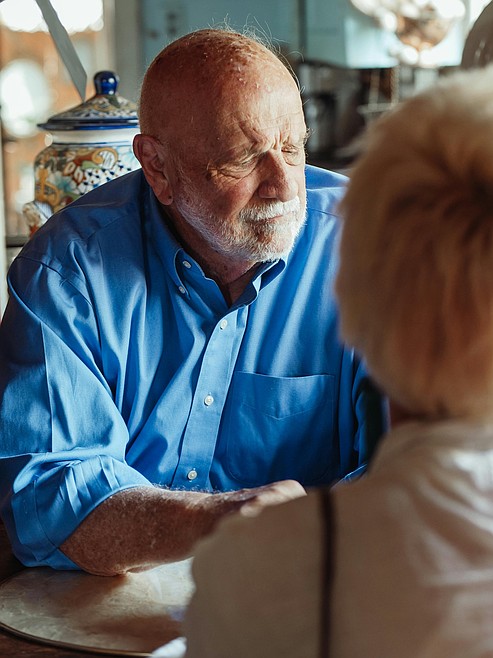
The later stages of dementia bring on behavioral changes that caregivers should be prepared to handle.
COURTESY PHOTO/KINDEL MEDIA/PEXELS
Joel Martin has been with the Columbia Basin Herald for more than 25 years in a variety of roles and is the most-tenured employee in the building. Martin is a married father of eight and enjoys spending time with his children and his wife, Christina. He is passionate about the paper’s mission of informing the people of the Columbia Basin because he knows it is important to record the history of the communities the publication serves. | January 7, 2026 2:45 AM
MOSES LAKE — Once dementia has set in, it’s time to adjust to a new reality, which can include behavioral challenges as the family member experiences frustrations associated with their symptoms.
“Behavior disturbance is really where the rubber meets the road,” said Dr. A. Carroll Hayman, a Seattle physician who specializes in Alzheimer’s and other dementias, at a symposium in Pasco in October. “Memory loss is ... sort of manageable. A nic,e sweet person who has memory loss and sits in the corner, that’s OK. What’s hard is when that same person starts fighting with their caregivers over whether or not they’re going to shower, or starts pacing around and hiding underneath the trash can, or they say they want to die.”
An important thing to remember, according to the Lewy Body Dementia Association, is that the patient isn’t behaving the way they are on purpose. They may be reacting to fatigue, pain, hunger or something else they can’t communicate, or the behavior may be a side effect of medication. In any case, you can’t correct the behavior or teach the person to act differently, so it’s important not to get angry or upset.
The LBDA also recommends that caregivers:
• Speak calmly and softly to the person.
• If the behavior is aggressive, don’t argue. Back away, then calmly approach him or her.
• Respond to the emotion, not the behavior. Don’t try to reason with them; they may not be able to follow a lengthy explanation. Be reassuring and deal with them where they are instead of expecting them to adjust.
“It's way harder to take care of your loved one when they're accusing you of stealing from them than it is when they say ‘I can't remember,’” Hayman said. “… One of the most important things to recognize is that the difficult behaviors that people are doing, that they're not important. And that can be really hard when it's your mom and your mom has (made you angry) for a variety of reasons for 15 years, and now she's going to be saying, ‘That's not me.’ We have to try to take a step away from that and realize that … they're not intentionally repeating the same story 15 times.”
Knowing that it’s not the person’s fault doesn’t make it easy to deal with, Hayman added. There are coping techniques that caregivers can apply to the situation to understand and respond to dementia-driven behavior. One that she recommended is the DICE method, which stands for Describe, Investigate, Create and Evaluation. According to the Fein Memory and Aging Center at the University of California – San Francisco, DICE can include the following:
Describe the behavior – What did the patient do? Is the behavior threatening them or others? What happened before and after?
Investigate possible causes – Does the patient feel frightened, out of control or embarrassed? Have there been recent changes in medication? Is the patient’s environment overstimulating, boring or disorienting? Have there been changes in routine?
Create a plan – Ensure the patient’s environment is safe. Discontinue high-risk medications. Get the patient on a regular schedule of waking and sleeping, and simplify their daily routine.
Evaluate – What worked? What didn’t? Are there barriers to trying something else?
Sometimes what works is admitting that it’s too much for the family to handle alone, and it’s time to look at a professional care facility. February’s Senior News will look at options for care in a patient’s final days.
ARTICLES BY JOEL MARTIN

Space Burger booth open March 13-15
MOSES LAKE — Those who can’t wait for the Grant County Fair can get their Space Burger fix next weekend, according to an announcement from the Lioness Club of Moses Lake. The iconic Grant County sandwiches will be available at the Grant County Fairgrounds March 13-15, according to the announcement. There is no admission fee to get into the fairgrounds that weekend.

SENIOR EVENTS: March 2026
COLUMBIA BASIN — Plays, art shows, auctions and more await seniors in the Columbia Basin this month. Here are some opportunities to get out and about in March.

Valentine’s Day cards flood Brookdale Hearthstone with love
MOSES LAKE — Residents at Brookdale Hearthstone Assisted Living in Moses Lake got Valentine’s Day greetings from across the country last month. “I believe that the only states we have not received (cards from) yet are Vermont and Maine,” Lifestyle Director Imelda Broyles said Feb. 24. “We keep receiving new cards every single day. They have not stopped. My residents are in awe with every single one of the cards that we’ve been receiving.” The Hearts Across America project started as a way for children in school classrooms to exchange Valentine’s Day cards with classes in other states or even countries, but the idea has expanded to senior living facilities, according to the project’s social media.