
A new species makes for an unforgettable Christmas bird count
SCOTT SHINDLEDECKER | Hagadone News Network | UPDATED 1 month, 2 weeks AGO
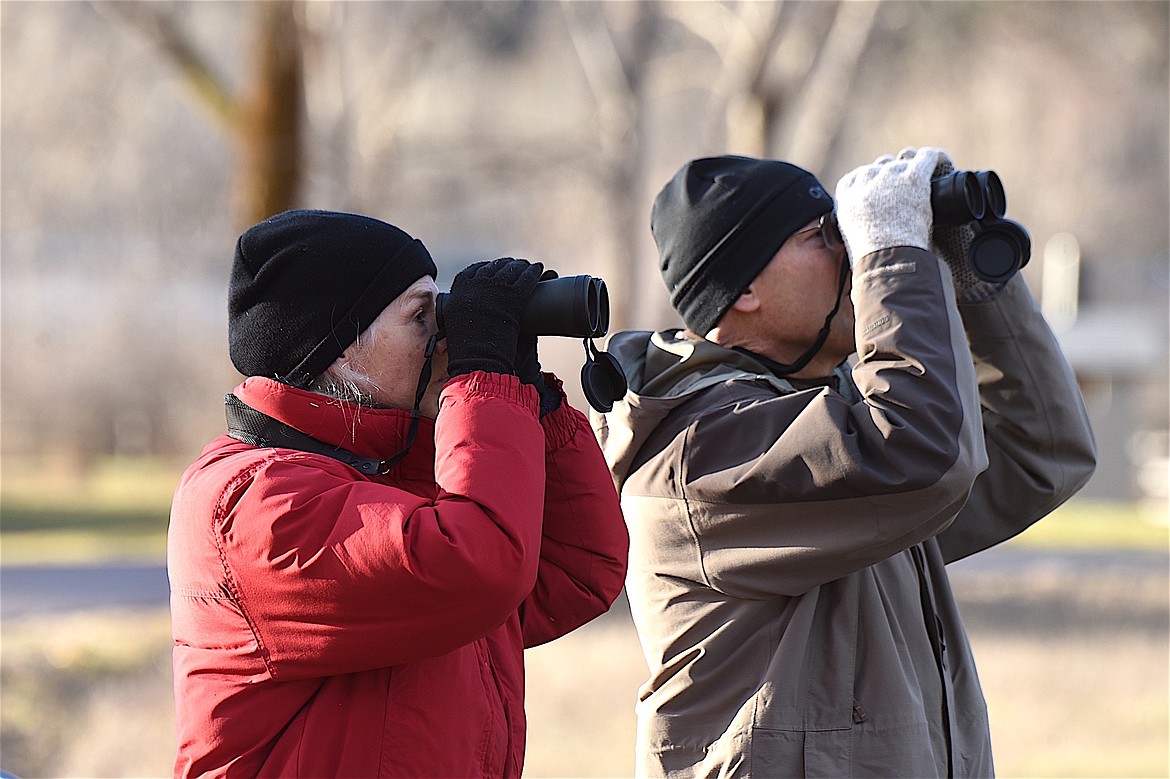
Nora Reckin, left, and Gene Reckin look for birds at the U.S. Army Corps of Engineer's Blackwell Flats Recreation Area Friday, Dec. 19, 2025, during the National Audubon Christmas Bird Count in Lincoln County. (Scott Shindledecker/The Western News)
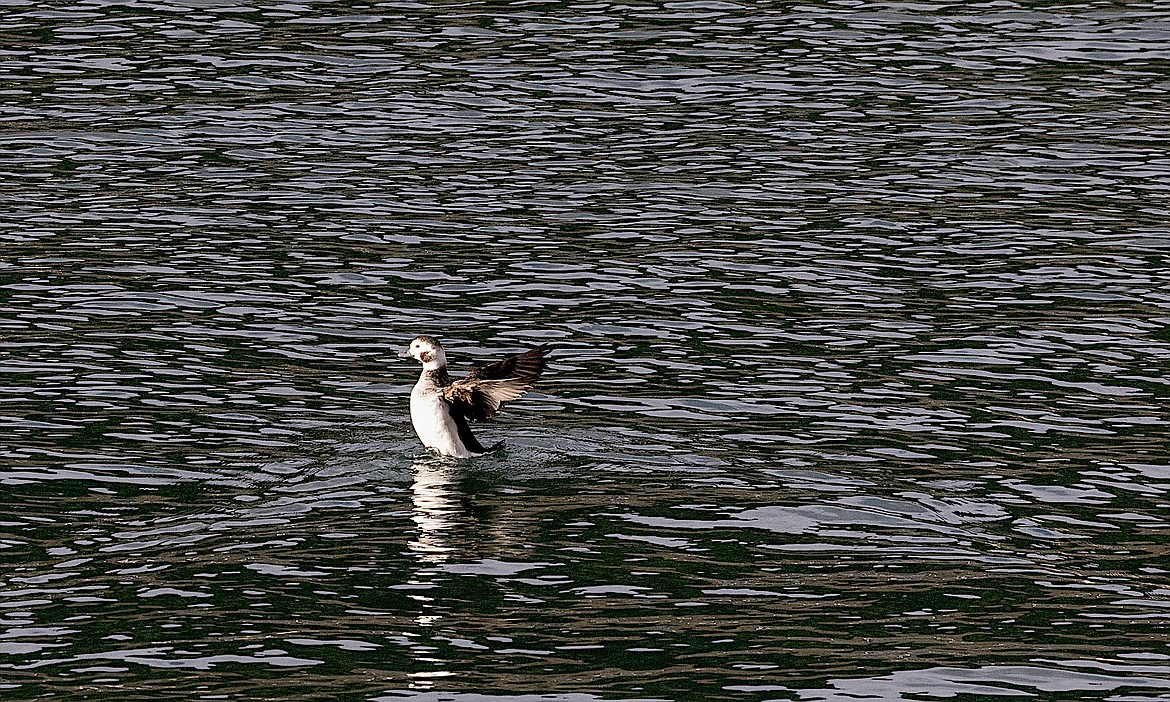
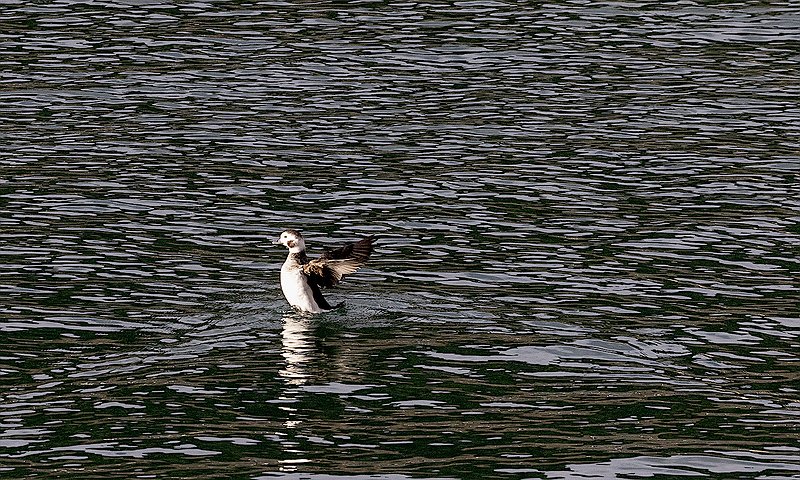
Acclaimed Troy wildlife photographer Don Jones took this photo of a long-tailed duck in the spillway of the Libby Dam Dec. 20, 2025. The species is seldom seen in Montana. It was first seen by Gene and Nora Reckin during the National Audubon Society Christmas Bird Count Dec. 19, 2025. (Photo courtesy Don Jones)
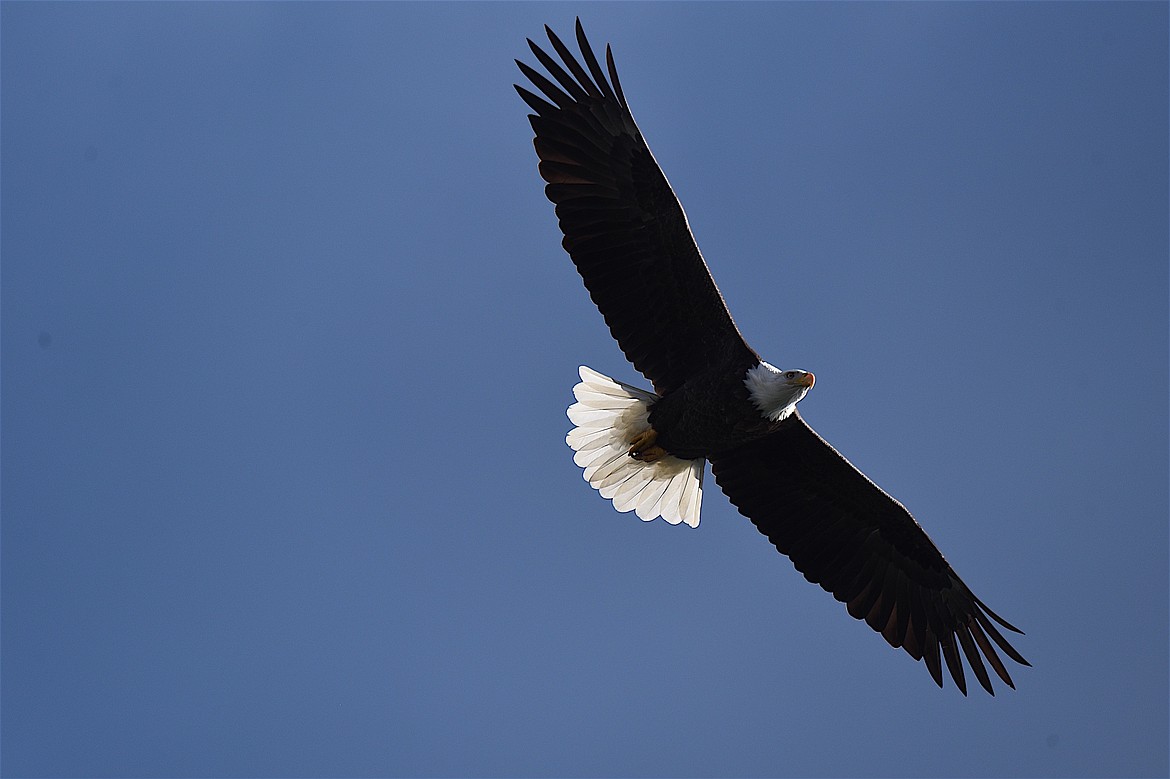
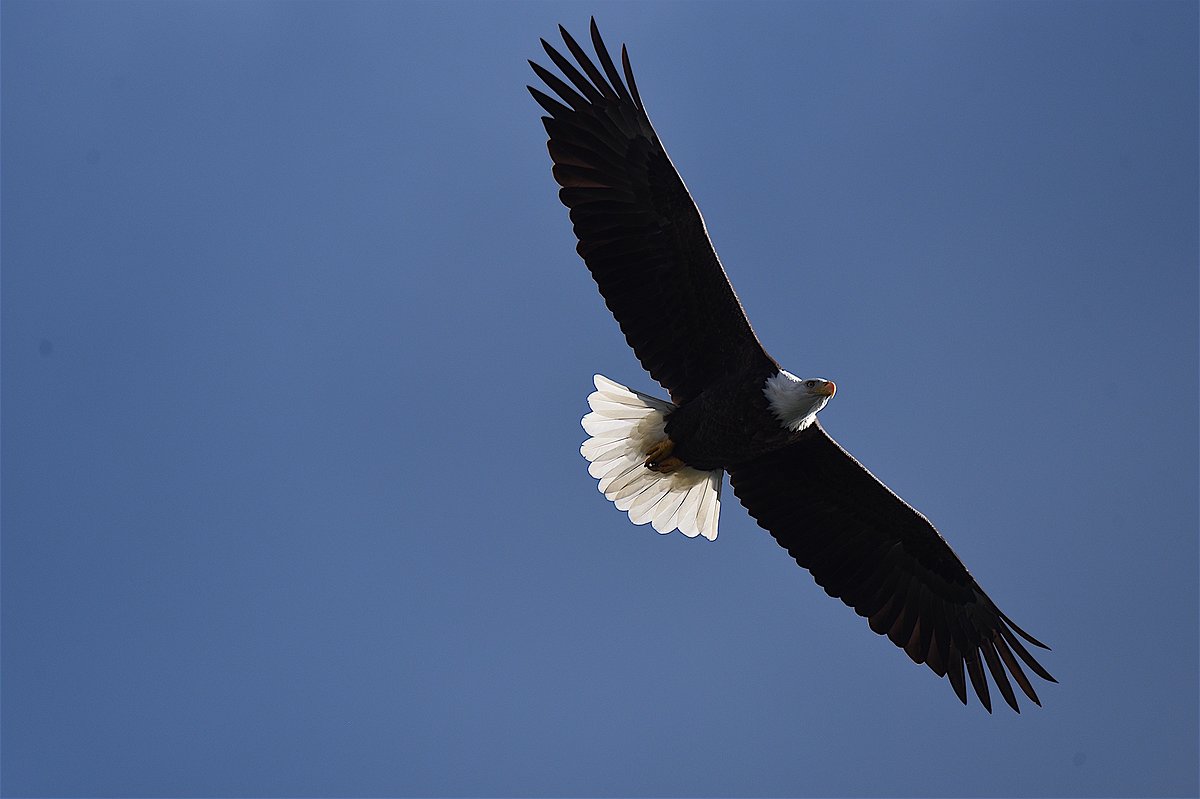
A bald eagle eyes the waters of the Libby Dam spillway Friday, Dec. 19, 2025, during the National Audubon Christmas Bird Count in Lincoln County. (Scott Shindledecker/The Western News)
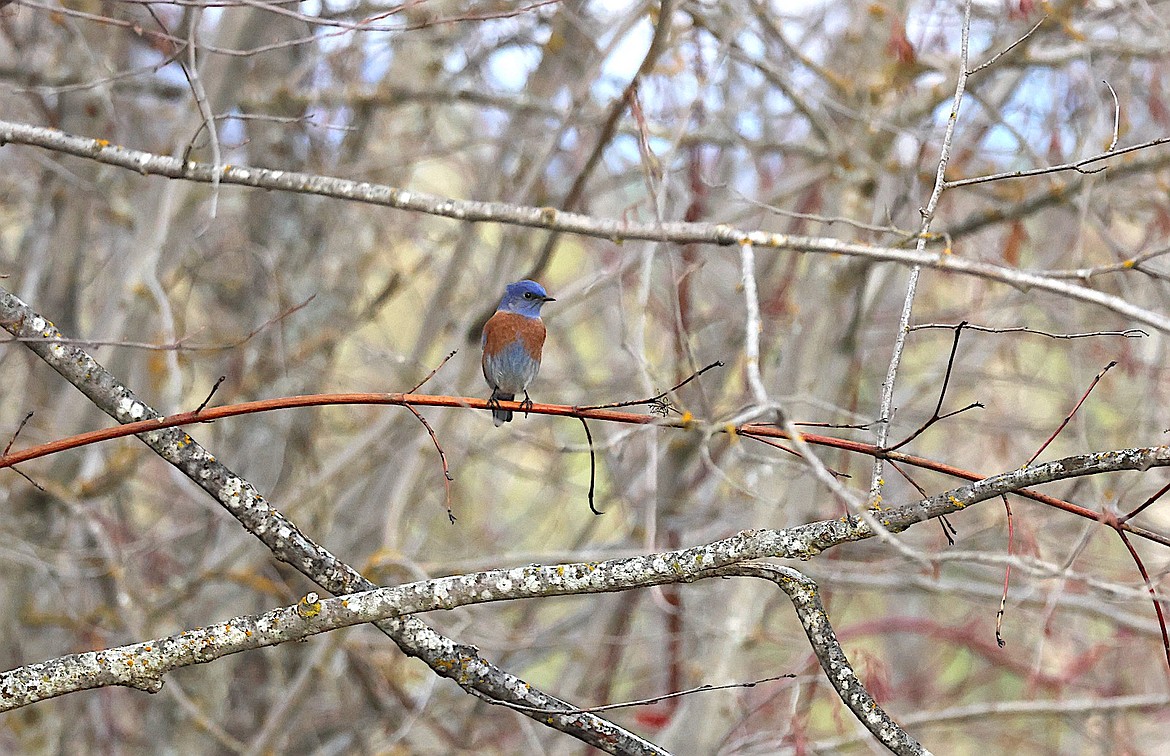
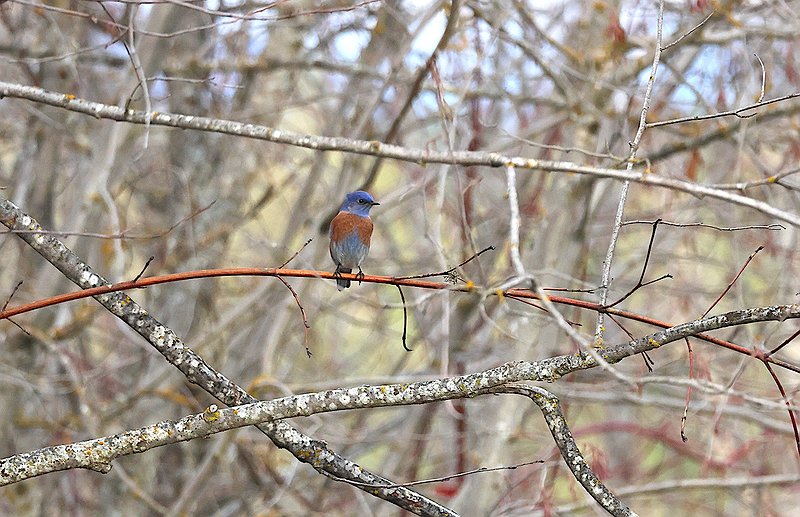
Libby resident Dorian Boling took this photo of a Western bluebird Dec. 19, 2025, during the National Audubon Society's Christmas bird count in Lincoln County. (Photo courtesy Dorian Boling)
One hundred years after Libby’s first participation in Audubon’s Christmas Bird Count the 2025 count became notable for more than just marking a milestone.
Witnessing a waterfowl species that is rarely seen in Montana turned Friday, Dec. 19, into a day that the husband and wife team of Gene and Lenora Reckin will never forget.
The Dec. 19 count, began in 1925 by Winton Weydemeyer, followed a devastating wind storm that left tens of thousands of Lincoln County residents without power. It may have also set the stage for the species the couple saw in the spillway of the Libby Dam.
Gene, who taught science classes for Libby Public Schools for 35 years, was peering through his old, but still powerful, 45x spotting scope when he saw a duck he knew existed, but had never seen in this part of Montana. A bit hesitant at first, he excitedly shared what he thought he was seeing - a female long-tailed duck.
Formerly known as an oldsquaw, the long-tailed duck winters on the West and East coasts and the Great Lakes. According to CornellLab’s All About Birds, they breed in the Arctic. The Montana Field Guide says the long-tailed duck is an uncommon migrant to Montana with fewer than 16 observations reported in the typical year.
The long-tailed duck bobbed and dove in the dam’s spillway, finding small fish to eat. It was near a small group of buffleheads, another diving duck. It never truly mingled with the buffleheads, but seemed content to be among friends.
“For us, no matter where we go, it’s always exciting to see a new species,” Gene said. “There’s next to no chance a long-tailed duck shows up here without the weather pattern we had. The patterns affect bird migrations a great deal.”
The Reckins planned to have others confirm the identity of their sighting. Troy’s Don Jones, an internationally acclaimed wildlife photographer, was one they wanted to try to photograph the duck to confirm its local appearance.
“We err on the side of caution when we’re counting, Lenora said. “Sometimes you can see the same group of birds as they move up and down a river.”
A discussion ensued about how the duck came to be in an area and the region’s extreme wind storm of the previous days was believed to have played a role.
“Lenora and I helped on the Troy count which was Jan. 1 and we saw a female (long-tail) on Throop Lake which is in the Troy count circle,” Gene said. “Don knew it had been seen there along with a male which we did not see. It definitely was not the same bird we saw on the Libby count. This one had much darker plumage. There were also two seen on Lake Coeur d' Alene and two on Foy's Lake in Kalispell. We are hypothesizing that the extraordinary weather brought them this way,” Gene, who began his involvement in the bird count in 1981, said. “It would be interesting to know if they ever make it back “home!”
The long-tailed duck was not the only new species seen in the Dec. 19 count. Libby resident Dorian Boling saw some Western bluebirds.
Audubon’s Christmas Bird Count is an event that thousands of volunteers participate in annually. The bird census, done between Dec. 14 and Jan. 5, involves participants in the U.S., Canada and beyond. Volunteers go out over a 24-hour period to count birds. The event is open to beginners and experienced birders. Gene explained that volunteers in a particular area coordinate ahead of time with the local count compiler, who chooses a day, and they all count within established 15-mile-diameter circles. Following specific routes, people count every bird they see or hear and record the data. For those who live within the circle, they were allowed to count birds that visited their bird feeders.
Gene and Lenora’s count area included the Kootenai River
This annual event is the longest-running community science bird project. According to the Audubon Society website, on Christmas Day of 1900, Frank Chapman and 26 other conservationists initiated the Christmas Bird Count as a way of promoting conservation by counting, rather than hunting, birds. Some counts have been running since then, and 126 years later the event spans more than 20 countries in the western hemisphere.
Locally, Weydemeyer, an avid conservationist, tree farmer, Master of the Montana State Grange, Montana legislator and long-time resident of Fortine, conducted the first Christmas Bird Count in the Libby area. With limited road and trail access he still covered 24 miles on foot and observed 13 species of birds.
Weydemeyer also counted in 1926, but there was no count until 1951-59. It resumed in 1980 and has been held every year since with this year’s count the 57th conducted in the Libby area.
“Each years’ data is compared to all of the observations collected back from Winton’s time to help determine the status of all of our local species,” Gene said.
Gene’s interest in birding grew substantially when he took an ornithology class while studying at the University of Montana.
“Philip Wright, who was a pretty neat guy, taught the course and he inspired a whole lot of people to enjoy birding,” Gene said.
Wright, who died in 1997, was a Zoology professor at UM. He took over the university’s Zoological Museum in 1939. The museum was dedicated in his name shortly before his passing.
According to information in his obituary, Wright amassed a collection of more than 18,000 specimens at the museum and it is considered one of the finest collections of northwestern birds and mammals in the country.
In the Libby count, volunteers saw 2,907 total birds among 57 species.
Not surprisingly, wild turkeys, a total of 486, dominated the count. Four hundred fifty-nine Canada geese were No. 2. Coming in third was the American crow with 297 counted. Mallard ducks, 267, were fourth, and the common raven, 233, completed the top five.
Lenora, who also taught in the Libby School District as a gifted and talented program coordinator and reading specialist, said her mother shared an old legend that the Raven Ranger station located south of Libby was named as such due to the prevalence of the bird in the area.
Gene’s hypothesis is that as the community grew, the presence of the landfill and more road-killed animals on area roads provided more food for the scavenger.
Owing to the relatively mild winter, 176 American robins were the sixth-most counted species.
“Climate change is making a big difference,” Gene said. “It’s not often to have robins here at this time of year. Cold and snow drive them to migrate south, but if they can find food and the temperatures are favorable, they’ll stick around.”
The rock, or feral, pigeon was seventh with 167.
The ever popular black-capped chickadee was eighth with 137. A count of 80 pine siskins put them at ninth.
Libby’s unofficial official bird - the bald eagle made the top 10 after 73 were counted.
Three golden eagles were also counted. Gene said they can be seen along the river corridor to the dam because they enjoy the thermal patterns that make it better for the large birds to soar.
Libby is part of the Flathead Audubon group. Counts also occurred in Bigfork, Eureka, Troy, Kalispell, Upper Swan, Glacier National Park and Ninepipe National Wildlife Refuge in the Mission Valley.
The data that is collected by bird count volunteers is used to assess the health of bird populations and help guide conservation action.
Those interested in participating in future bird counts may call Gene at 406-291-4842.
For more information, go to https://www.audubon.org/community-science/christmas-bird-count.
 Acclaimed Troy wildlife photographer Don Jones took this photo of a long-tailed duck in the spillway of the Libby Dam Dec. 20, 2025. The species is seldom seen in Montana. It was first seen by Gene and Nora Reckin during the National Audubon Society Christmas Bird Count Dec. 19, 2025. (Photo courtesy Don Jones)
 A bald eagle eyes the waters of the Libby Dam spillway Friday, Dec. 19, 2025, during the National Audubon Christmas Bird Count in Lincoln County. (Scott Shindledecker/The Western News)
 Libby resident Dorian Boling took this photo of a Western bluebird Dec. 19, 2025, during the National Audubon Society's Christmas bird count in Lincoln County. (Photo courtesy Dorian Boling)
ARTICLES BY SCOTT SHINDLEDECKER

Officers involved in shooting near Libby while serving warrant
Lincoln County law enforcement officers were involved in a shooting Wednesday afternoon at a location on Libby Creek Road, authorities said.
Local officers involved in shooting near Libby
During the course of serving the warrant...
Four dead in head-on crash in Lincoln County
Four people died in a two-vehicle, head-on crash late Tuesday morning on U.S. 2 in Lincoln County.