
Conservation nonprofits sue feds over wolverine management
HAILEY SMALLEY | Hagadone News Network | UPDATED 2 months AGO
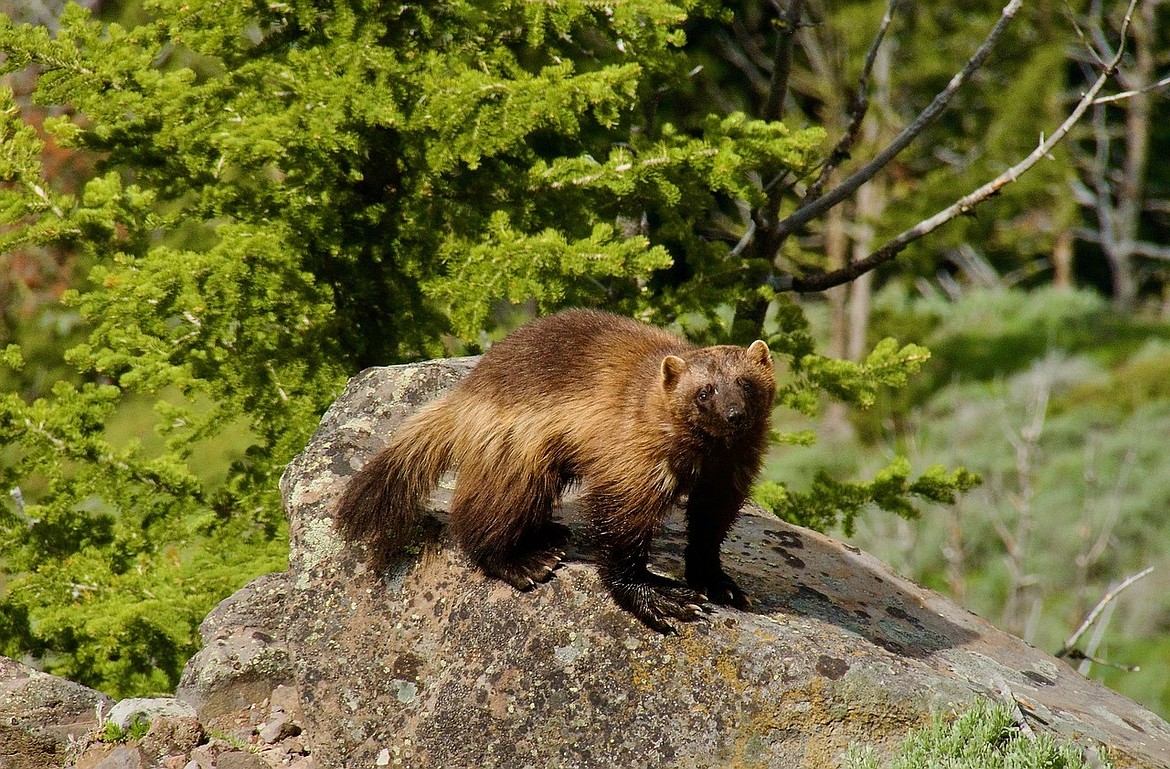
Listed as a threatened species in 2023, wolverines are currently found in several mountain ranges throughout Montana. (Courtesy of Howie Wolke)
A coalition of environmental groups is suing the U.S. Fish and Wildlife Service for failing to designate critical habitat for wolverines.
The snow-loving mustelids were listed as threatened in November 2023, primarily because of the effects of climate change. The U.S. Fish and Wildlife Service is required to designate critical habitat for an animal within a year of it being added to the Endangered Species Act, but officials have yet to begin the often long and tedious process of delineating critical habitat for the wolverine.
“Bottom line is wolverines are threatened with extinction,” said Keith Hammer, who chairs the Swan View Coalition.
Hammer's organization joined 12 other regional wildlife and conservation nonprofits to file a complaint against the U.S. Fish and Wildlife Service in U.S. District Court in Missoula. Other plaintiffs in the case include Friends of the Wild Swan, Alliance for the Wild Rockies, WildEarth Guardians and Western Environmental Law Center.
Scientists estimate that a few hundred wolverines currently inhabit mountain ranges in the contiguous United States. Populations are typically regulated to the high peaks as females use dens dug into snowbanks to birth kits in the spring.
Around 49 animals currently occupy areas around the northern Continental Divide. Another 50 are found in western Montana and the Idaho panhandle, and about 119 wolverines roam the peaks of the Salmon-Selway and Wallowa mountain ranges that cut through northeastern Oregon, Central Idaho and western Montana. Wolverines are also found in southern Montana, with 63 animals identified in the Greater Yellowstone Ecosystem.
Hammer believes critical habitat designations are essential to the survival of these far-flung wolverine populations, especially as climate change alters snowpack patterns and shrinks the amount of suitable denning habitat.
“While there are certain endangered species protections for the wolverines themselves, they need habitat,” said Hammer. “Critical habitat affords further and better protections for wolverine habitat.”
Land designated as critical habitat for a threatened or endangered species is not necessarily barred from development or extraction. Rather, the U.S. Fish and Wildlife Service frames the designation as “a reminder to federal agencies of their responsibility to protect the important characteristics of [an] area.” Agencies seeking to include land designated as critical habitat in development or extraction projects must consult with U.S. Fish and Wildlife Service to ensure activities do not adversely affect threatened or endangered species.
Delays in the designation of critical habitat are not uncommon. It took seven years and a federal lawsuit for the agency to designate critical habitat for bull trout. The fish were first listed under the Endangered Species Act in 1998 and 1999. Alliance for the Wild Rockies and Friends of the Wild Swan successfully sued the agency for the failure in 2001, leading to a final designation in 2005.
Critical habitat for the Canada lynx was likewise designated in 2006, six years after the big cats were added to the Endangered Species Act.
“We have been inundated with lawsuits for our failure to designate critical habitat,” wrote officials in the final rule designating critical habitat for lynx. “And we face a growing number of lawsuits challenging critical habitat determinations once they are made. These lawsuits have subjected the service to an ever-increasing series of court orders and court-approved settlement agreements, compliance with which now consumes nearly the entire listing program budget.”
In the same document, officials described the protection of habitat as “paramount to successful conservation actions.”
The litigious nature of critical habitat designations drew the attention of the Trump administration, which proposed a suite of rewrites to the Endangered Species Act in November 2025.
Under the proposed changes, the federal wildlife agency’s definition of harm to an endangered or threatened species would be modified to exclude adverse effects caused by habitat modifications. The regulations would also strip the requirement to designate critical habitat for species affected by climate change, including wolverines.
Hammer said the administration's proposal makes the current lawsuit all the more important. If the nonprofits prevail, the U.S. Fish and Wildlife Service would be required to designate critical habitat for the wolverine within 12 months of the final judgement.
The groups have also requested payment to cover attorney’s fees and the costs of litigation.
Magistrate Judge Kathleen DeSoto is presiding over the case. A hearing has not yet been set.
Reporter Hailey Smalley can be reached at 758-4433 or [email protected].
ARTICLES BY HAILEY SMALLEY
Winging it through winter: Rare Anna's hummingbird finds shelter in Bigfork backyard
The bird turned out to be an Anna’s hummingbird — a rare find in western Montana. The Montana Natural Heritage Program’s bird distribution database has logged only 158 sightings of Anna’s hummingbirds in the state, including 21 sightings in Flathead County.

Business groups sue to stop proposed ban on political spending in Montana
The Kalispell Chamber of Commerce is one of several organizations to file suit over a proposed ballot initiative to ban corporate spending in politics, arguing it infringes on the free speech rights of businesses.

Mexican man who led deputies on high-speed chase in Kalispell receives federal prison sentence
A Mexican national arrested after a high-speed chase through Kalispell in June 2025 received an 18-month sentence for illegal reentry in federal court last week.