
Council moves forward with lot coverage code changes
JACK FREEMAN | Hagadone News Network | UPDATED 2 months, 2 weeks AGO
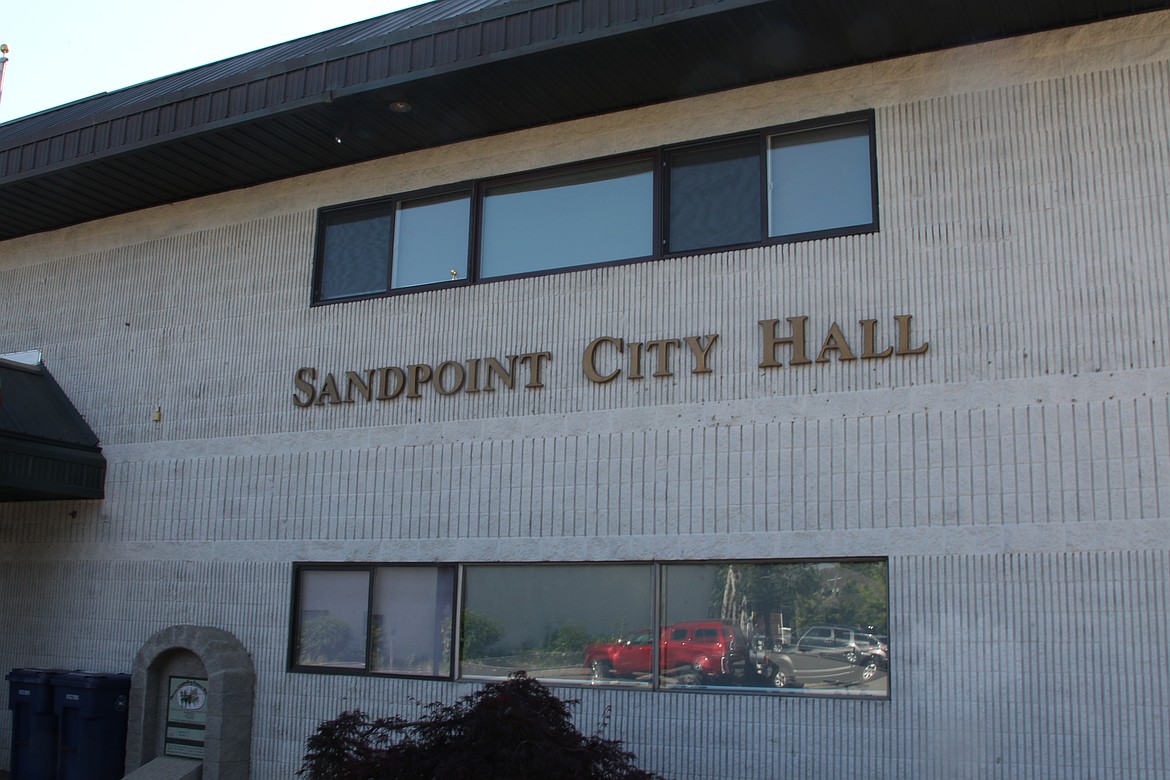
The side facing sign of Sandpoint City Hall.
Photo by Jack Freeman
SANDPOINT — After nearly three hours of heated discussion, the Sandpoint City Council voted 4-2 to approve amendments to the city’s lot coverage, size and density code.
Council President Deb Ruehle was joined by councilors Joel Aispuro, Joe Tate and Joshua Torrez in voting to approve the code changes. The amendments include lowering the minimum lot size in the residential multi-family zone to 3,500 square feet, allowing for houses in both residential zones to expand their building footprint to 70% and increasing allowed density on lots.
“What we do have control over is a very thoughtful effort to allow changes to our zoning code to then allow organizations like [Kaniksu Land Trust] to step up and try to make a difference,” Ruehle said. “This is the first tool that we can move in that direction, and then we can add more tools on top of it to hope that we get to the end game.”
The changes were brought by Community Planning and Development Director Jason Welker as part of an effort to increase the city’s housing supply. Welker said the increase in supply should help meet demand and hopefully create more affordable housing.
Councilors Kyle Schreiber and Pam Duquette dissented, citing concerns about the lack of guardrails and guarantees that the changes would result in more affordable housing. Schreiber said the increased lot coverage would damage the city’s urban canopy and expressed concern about stormwater issues.
“If there is a clear benefit to our community, I think it's still worth it, and affordable housing is that benefit, but we're only going to accomplish that if we require those units to be affordable housing,” Schreiber said. “We can develop every square inch of the town, and it's going to continue to be unaffordable.”
Both Welker and Mayor Jeremy Grimm said the changes alone will not fix the crisis, but it’s one of the avenues the city can take to try and alleviate the issue. Welker cited the example of Jackson Hole, Wyoming, which has seen an absurd increase in housing costs while the population has flatlined.
“When the community can't keep up with demand for housing, those who live there today will be pushed out,” Welker said. “The code amendments brought to you tonight are about accommodating the demand that will come, whether we make these changes or not, to ensure that people who live here today are still here 20 years.”
During deliberation, Schreiber floated the idea of using zoning to encourage deed restrictions on properties to motivate developers to create affordable housing. Fonda Jovick, the city’s legal counsel, said the idea had come before the council before and was voted down because it would require creating a department to handle an optional program.
Both Aispuro and Ruehle said they would encourage staff to research how the city could encourage deed restrictions.
“I'm absolutely for that,” Aispuro said of the deed restrictions. “I don't think it's a false dichotomy that we have to choose one or the other. I think it can be a both, and I think we should look into that.”
During the public hearing, most residents spoke out against the amendments voicing concern it would damage the “character of Sandpoint” and result in less affordable housing.
“What I see is like an investor [or] developer's dream, I'm afraid,” Rebecca Holland said about the amendments. “There's always going to be people who want to come and live here, but there's just so much room for everybody. You can't continue to just fill it up like a big game of Monopoly.”
Brent Baker, executive director of the Pend Oreille Economic Partnership, testified in favor of the amendments. Baker said the limited housing supply is the top hinderance to economic development in the region, and the region needed to start trying anything to solve the crisis.
During his testimony, Baker pointed to work by nonprofits LEAP Housing and the Kaniksu Land Trust in Priest River which built six deed restricted, affordable homes in the region. He said LEAP Housing estimates the county needs around 3,000 homes for the workforce to meet the demand.
“We need approximately 3,000 and we provided 10 this year. So, the good news is that we will accomplish this in 300 years,” Baker said. “We need to scale up big time and every little bit helps.”
With the code changes approved, the final ordinance will come before the council at a later date. For a full review of the changes, the discussion can be viewed on the city’s YouTube channel at YouTube.com/@CityofSandpoint.
ARTICLES BY JACK FREEMAN

Outgoing POP executive director wins statewide award
That effort combined with the construction of nearly 20 miles of new trail and a new trail management plan has earned her the 2026 Professional Award for Parks, Trails, or Conservation from the Idaho Recreation and Parks Association.

APRIL NIBJ: Nonprofits help people follow their life’s compass
Kanning’s story isn’t unique, ask any worker at one of the 500 nonprofits in Bonner County are you’ll likely hear the same reason for working: it feels right.

Ponderay to begin Black Rock clean-up project
With the approval of a memorandum of agreement with Sandpoint on Wednesday evening, the city of Ponderay is now able to begin its Black Rock clean-up project next week.