
FEB NIBJ: Gravis Tech: Proving that tech innovation can thrive in Idaho's rural communities
JOSH McDONALD | Hagadone News Network | UPDATED 1 week, 2 days AGO
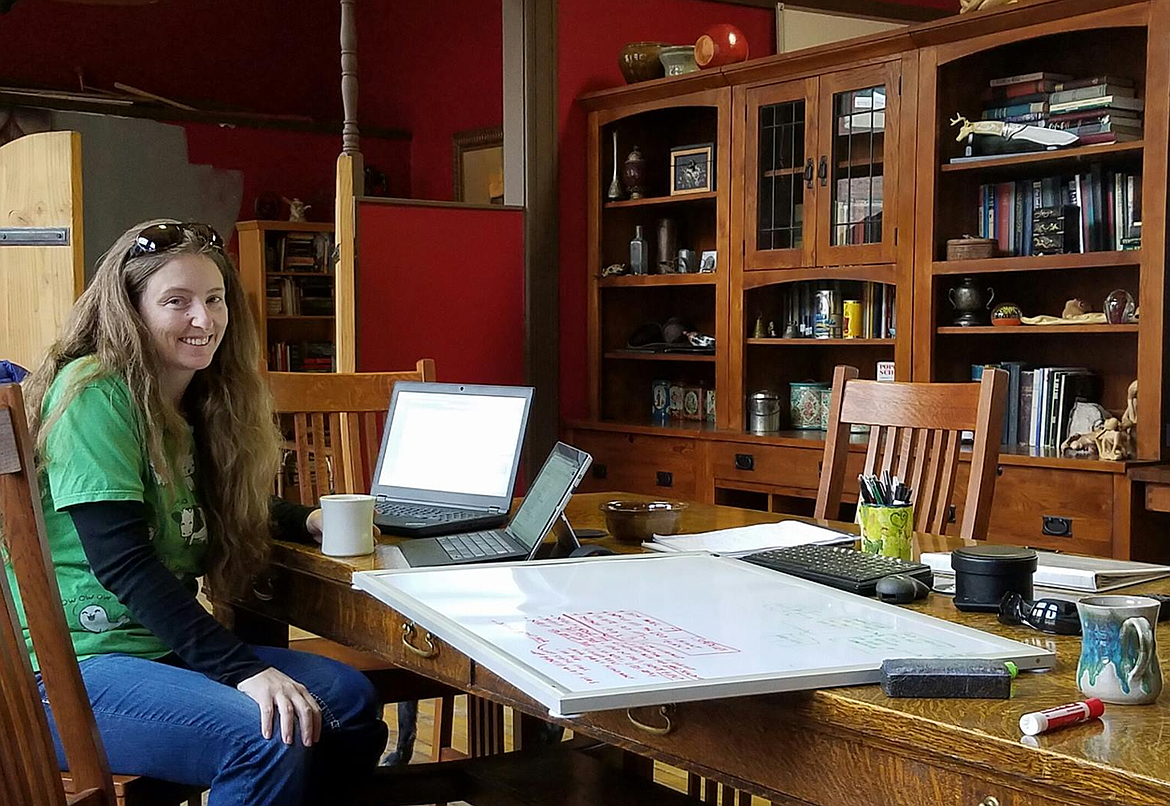

WALLACE — In a town better known for its mining history than modern technology, Gravis Tech has spent the past decade proving that innovation can thrive anywhere.
Founded in January 2015 by Sera White and Greg Bosen, the small firm recently celebrated its 10-year milestone — a rarity in the fast-moving tech world. From its headquarters in Wallace, Gravis Tech has carved out a niche in technical communications for the energy and environmental sectors.
“Our clients are tackling global energy challenges and complex environmental cleanup, and we want to support work that matters,” White said. “In practice, we use emerging technologies and data analysis to help organizations communicate more effectively, both internally and with the public.”
That mission often translates into building data management systems, such as air quality monitoring platforms that streamline public information requests and give decision-makers clearer insights.
“It all comes back to communication: helping people who do important work share what they know,” White said.
Gravis Tech began as two people chasing every opportunity. Guidance from North Idaho Small Business Development Center coaches helped the founders refine their focus, and today the company employs seven full-time staff spread across Wallace, Spokane, Moscow and Boise, along with five regular subcontractors throughout the West.
Operating a tech company in a rural community comes with challenges, particularly in hiring.
“Finding local talent in a specialized technical field is always a challenge in a small community, but we love hiring locally when we can,” White said. The company has invested in its community through high school internships and teacher externships with the Wallace and Mullan school districts, often working on projects like local history apps and nonprofit tech support.
Remote work has been key to Gravis Tech’s success.
“We wanted to live here, so we built a company we could bring with us,” White said.
By investing in software and processes for remote collaboration, the firm serves clients across the western U.S. and Canada while staying rooted in North Idaho.
Looking ahead, White sees artificial intelligence as a game-changer.
“Our background in technical systems means we can apply AI tools with precision, not just generating content, but understanding when the output is right, when it’s wrong, and how to refine it,” she said.
For White, the formula for success is simple: strong community, great people and a willingness to adapt.
“We’re grateful to live and work in North Idaho,” she said. “There’s no shortage of adventure.”

ARTICLES BY JOSH MCDONALD

I‑90 pursuit from Pinehurst ends with arrest, dogs seized
Stanton reported locating the vehicle and observing multiple traffic violations, including failure to stop before entering roadways, failure to signal turns and erratic driving through parking lots, campgrounds and city streets. When Stanton activated his overhead lights to initiate a traffic stop, Warnock did not stop and instead continued driving at slow speeds while repeatedly changing direction before entering Interstate 90 eastbound.
I‑90 pursuit from Pinehurst ends with arrest, dogs seized
Kellogg sees progress in FEMA flood map dispute
In 2020, Kellogg and neighboring municipalities sought updated river flow data from the U.S. Army Corps of Engineers, whose long‑term monitoring showed flood levels lower than those reflected in FEMA’s maps. Using that data, Kellogg submitted a Letter of Map Revision, or LOMR, to FEMA in early 2021, arguing that flood levels shown as 100‑year events would likely require flows closer to a 500‑year flood to reach projected elevations.