
Robo champions
JOEL MARTIN | Hagadone News Network | UPDATED 1 month, 3 weeks AGO
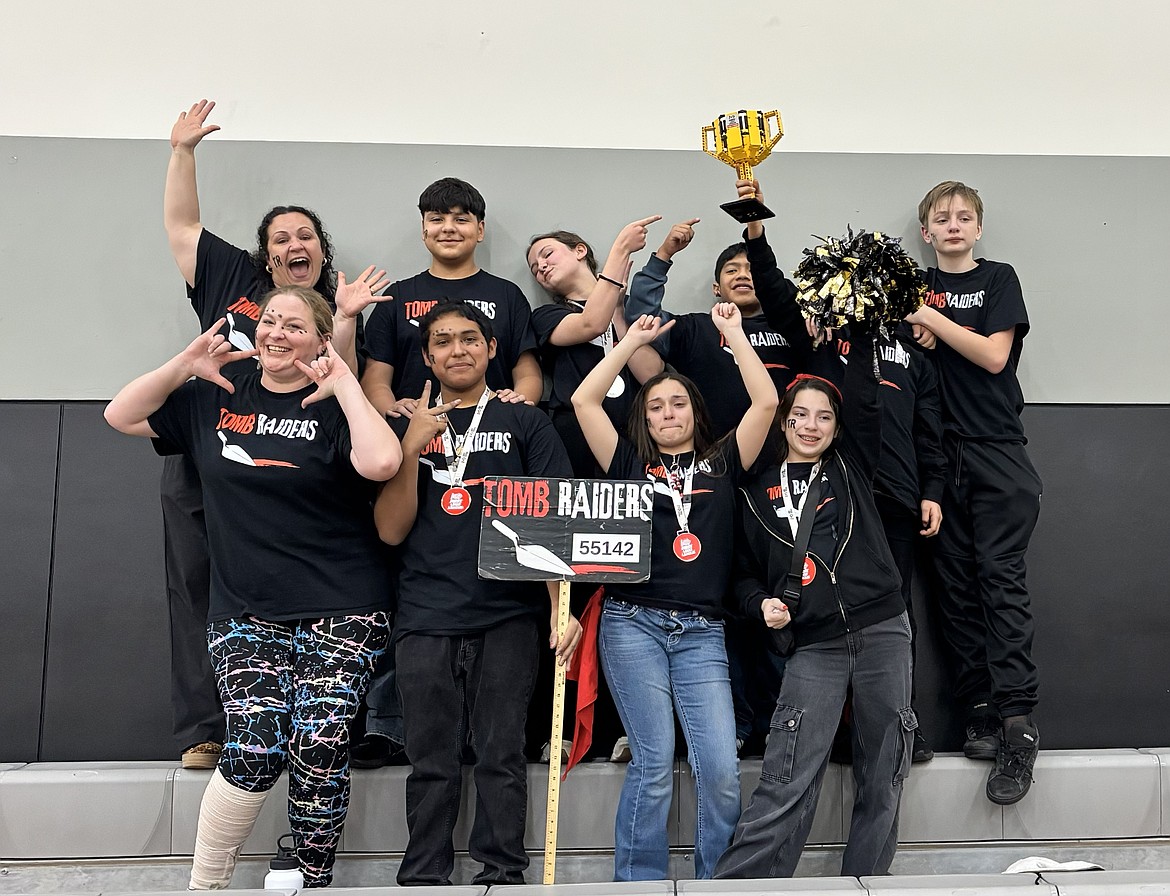
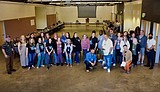
The Royal Middle School Tomb Raiders took the championship at the First Lego League state competition Saturday, earning them a spot at the world competition in Houston. Back, from left: Theresa Piper, Diego Lopez, Lilly Piper, Emmanuel Luis-Reyes, Archer Guyton. Front row: sign language interpreter Jenna Conley, Jacob Aparicio, Maria Gallegos, Eva Villa.
COURTESY PHOTO/THERESA PIPER
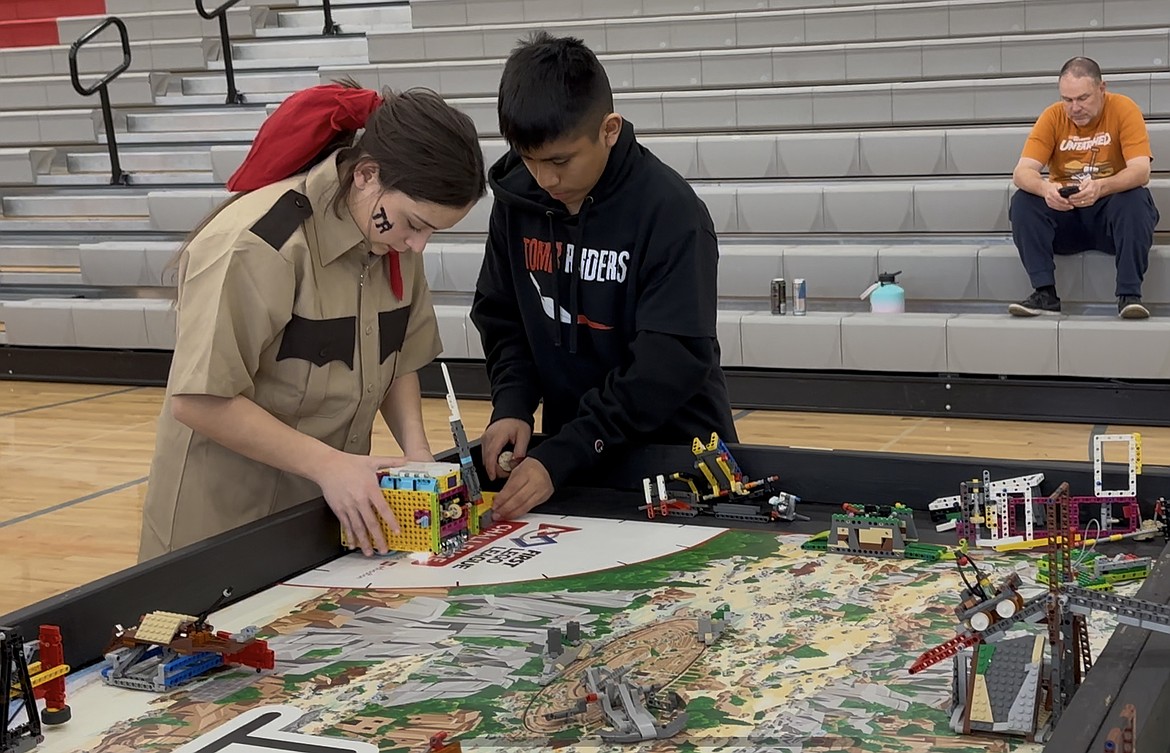
Two Royal Middle School Tomb Raiders set up their robot to perform a series of tasks at the First Lego League competition in Spokane Saturday.
Joel Martin has been with the Columbia Basin Herald for more than 25 years in a variety of roles and is the most-tenured employee in the building. Martin is a married father of eight and enjoys spending time with his children and his wife, Christina. He is passionate about the paper’s mission of informing the people of the Columbia Basin because he knows it is important to record the history of the communities the publication serves. | January 28, 2026 3:00 AM
ROYAL CITY — Students from the Royal School District brought home some honors from the First Lego League state robotics competition Saturday in Spokane. Royal Intermediate School’s Mayan Memers earned a trophy for designing an archaeological research station, and the Tomb Raiders, Royal Middle School’s team, excelled in both robotics and innovation, garnering the championship for eastern Washington. The theme for this year is archaeology, and 25 teams from across the brown side of the state competed.
“The kids got to present their innovation project, which was their big research project in archaeology, to some judges,” said their advisor, RMS science teacher Theresa Piper. “They also got to present about their robot, describe how they built their robot, how they decided which missions they were going to complete, what we call our mission strategy, some of their problem-solving aspects of robotics.”
The competition is in four parts: robot design, robot games, the innovation project and core values. Robot design and robot games involved the students building a Lego machine that could be programmed to execute tasks in order, then turning it loose on a board to tackle a set of missions.
“Some of the things that the robot gets to do on the board (are) moving a lever so it falls into a different position, picking up items a little brush they have to pick up,” Piper said. “There's a little Lego guy on a rolling cart and they have to lift a railroad track to make the guy roll onto the other side of the board. They have to lift statues up and release little mini Lego boulders. There's lots of different moving parts and mechanisms that the robot can do.”
The missions must all be completed in a two-and-a-half-minute run. Some missions are more difficult than others, and some are worth more points than others, so part of the challenge is to select just the right set of missions.
“Typically, we choose the missions that are what we call low-hanging fruit,” Piper said. “They're really easy ones. “We try to combine missions together that are close together to come up with the most sensible path.”
For their innovation project, the Tomb Raiders designed an app to keep archaeological treasures where they belong. The inspiration for that came from a field trip to the Gingko Petrified Forest, where an archaeologist told them that when people post photos of artifacts they find on social media, it can increase looting. After consulting with other archaeologists about the problem, they created an app that lets ordinary people take a photo of an artifact – say, an arrowhead – that they’ve found. The app will pinpoint the location of the find and send it to a database for archaeologists so they can review and recover the object. It also uses AI to identify the artifact and share interesting information about it with the finder.
“One thing that they learned when they spoke to some archaeologists was the importance of reporting to the correct authorities,” Piper said. “Depending upon what land you're on, it either needs to go to a state archaeologist, or it goes to federal archaeologists if it's found on federal land, or it needs to go to tribal archaeologists if it's a tribal artifact or if it was found on tribal land. Working with the three different authorities becomes tricky, but they're navigating how to manage that.”
The Tomb Raiders will go on to the world competition in Houston, Texas, on April 29-May 2. There, they’ll compete against about 160 teams from all over the world, Piper said. It will cost a good bit of money to send eight students, two chaperones and a deaf student’s sign language interpreter, she said. The students are gearing up to begin fundraising soon to cover their expenses.
“We're excited about the opportunity to represent Washington state and Royal City on a world scale,” Piper said. “Sometimes we think of our small town, and we think about limited opportunities. We're really excited that these kids can shine and show off that it doesn't matter where you're from. Anyone, if you work hard, can achieve great things.”
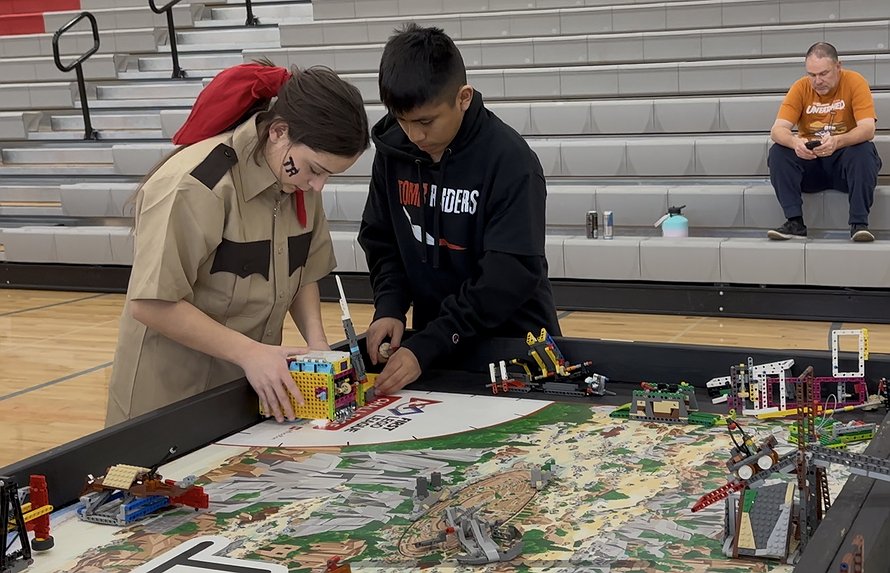 Two Royal Middle School Tomb Raiders set up their robot to perform a series of tasks at the First Lego League competition in Spokane Saturday.
ARTICLES BY JOEL MARTIN

COLUMN: Looking ahead toward Easter
A few weeks ago I wrote a story about local Lenten observances that got me to thinking: What is it about this time of year?
Moses Lake Touch a Truck to return April 25
MOSES LAKE — The MomCo Touch a Truck event will be April 25, and there may be something new, according to organizer Brittney Ketterer.
Summit set to build leaders for recovery, mental health
MOSES LAKE — The Eastern Washington Home Grown Leadership Summit will come to Moses Lake April 18, to equip people who have lived through hard times to help others through them.