
Personality of health discussions: How raw milk churns up more than debate
SETH SCHNEIDER / Health Columnist | Bonner County Daily Bee | UPDATED 4 months, 1 week AGO
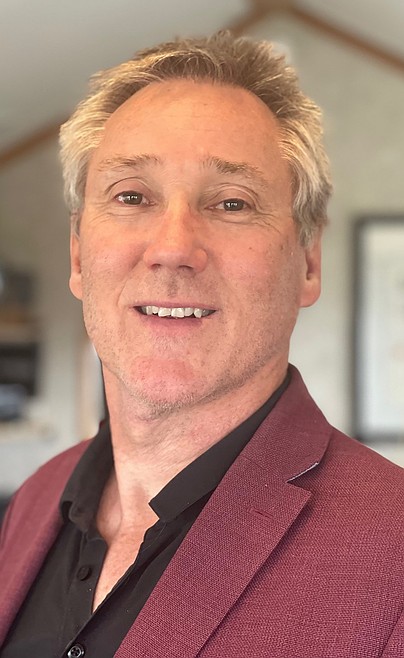
Seth Schneider
I was reading a discussion about raw milk recently, and what stayed with me afterward had very little to do with milk. It began with the expected words. Bacteria. Pasteurization. Food safety. E. coli. Public health.
Before long, it had pulled in COVID, RFK Jr., vaccine resentment, processed foods, Amish farmers, government corruption, masculinity, “trad wife” culture, personal freedom, elitism, Oreos, ivermectin, and institutional trust.
One person defended raw milk by noting that RFK Jr. can still do pull ups in his seventies. Another mocked raw milk drinkers as people consuming “cow manure.” Someone brought up tuberculosis. Someone else asked why critics who worry about raw milk seem less disturbed by soda and ultra processed snacks.
The conversation kept widening emotionally while narrowing intellectually.
What became hard to miss was how quickly people stopped examining the subject once they recognized each other’s side. Certain phrases established orientation before any careful exploration had begun. One group leaned on familiar language about experts, public safety, and science. Another moved just as quickly toward corruption, government deception, pharmaceutical influence, and bodily autonomy. The positions were recognizable almost immediately.
Very little curiosity survived after that.
Almost nobody slowed down enough to ask basic questions. How common is serious illness from raw milk in modern systems? Under what conditions does the risk rise? Does milk from a small local farm differ meaningfully from milk produced in a large industrial system? Are the proposed health benefits measurable, or mostly anecdotal? How does raw milk compare with other accepted food risks that people barely think about?
Instead, people began signaling what kind of person they believed themselves to be. Responsible or reckless. Independent or obedient. Intelligent or gullible. Scientific or anti scientific. The milk became hard to separate from identity.
Ridicule arrived quickly, as it often does in health arguments. People became “flat earthers,” “government sheep,” “wackadoodles,” or “cow poop drinkers.” Once someone was placed in the category of foolish or irrational, engagement mostly stopped. The question was no longer only what is true. It was who deserves to be taken seriously.
The strange part was how similarly both sides behaved while believing they were completely opposed. Institutional defenders repeated trust language with high emotional certainty. Skeptical groups repeated distrust language with the same kind of certainty. Each side accused the other of emotional thinking while leaning heavily on emotion itself.
The microbial danger made this easier. People can picture contamination. They can picture a child becoming severely ill from food poisoning. That kind of risk feels immediate and morally urgent. At the same time, grocery stores are filled with ultra processed foods associated with obesity, insulin resistance, fatty liver disease, chronic inflammation, and metabolic dysfunction. Those foods rarely produce the same emotional reaction. Slow degeneration does not seize the imagination the way a vivid outbreak does, even when the long term burden may be much larger.
That imbalance shapes modern health culture in quiet ways.
The word “science” appeared often, but disciplined scientific reasoning appeared less often. Few people talked carefully about denominators, outbreak frequency, comparative risk, confounding variables, statistical context, or study quality. Science functioned more as a badge of authority than as a patient method of inquiry. Distrust worked the same way from the other direction. Many people were not sorting evidence as much as filtering it through loyalties and suspicions already in place.
By the end, raw milk barely seemed like the subject anymore. The conversation had become a social sorting process. People were establishing allegiance, morality, skepticism, intelligence, and trust while believing they were debating health.
That is what makes these discussions so difficult. They are not only arguments about food safety or nutrition. They are attempts to locate oneself inside a fractured world of authority, risk, expertise, and truth.
Seth Schneider is a health columnist for the Bonner County Daily Bee.