
Rediscovering home: Losing access to public information
BRUCE MOATS Mineral Independent | Valley Press-Mineral Independent | UPDATED 1 week, 3 days AGO
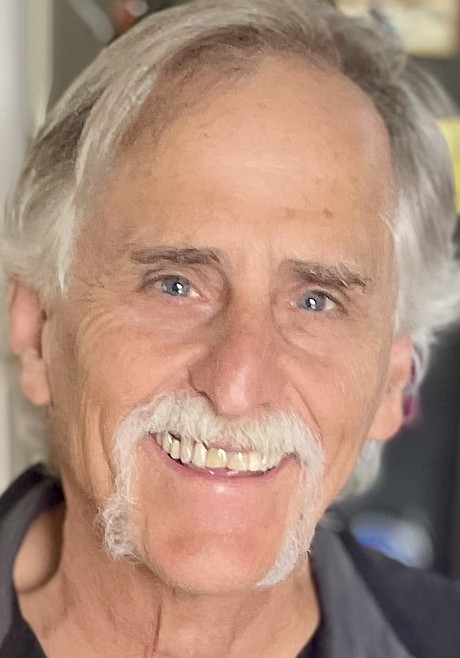
Bruce Moats
The court’s order opening the so-called Brady hearing regarding Sheriff Ryan Funke proved a “nothing burger,” to borrow a phrase used in the hearing.
The court found that the allegations that Funke was dishonest in apparently two cases while a deputy in Lake County a “nothing burger,” repeating a phrase used by Mineral County attorney-to-be Roy Miller during his testimony. Therefore, an investigation into Funke did not have to be turned over to defense counsel in cases where Funke was to be a witness.
The Court initially ruled otherwise based on the Lake County Attorney’s investigative report and accompanying material, but reversed its ruling after the evidentiary hearing where live testimony was heard.
This column is not about Sheriff Funke, but about public access to information about those with power over our lives. I waited until after the election to write this to avoid any implication otherwise.
Remember that I spent my career as both a journalist and then attorney fighting for the public’s right to know. So, when I heard the folks on the opposite of the bar from the public talk about the privacy of public officials, I bristled. Hearing the attorney hired with Mineral County funds state he wanted to ensure protection of public official privacy grated even further against the grain.
The hearing was initially determined to be closed to protect criminal justice information, but then the judge reversed course and ruled it would be open with measures taken to protect any personal privacy. At the beginning of the hearing, the judge acknowledged that Montana law requires that courts balance any right to privacy with the right of the public to know what their government is up to.
After opening statements, the court announced that the hearing would be closed to hear from the assistant Lake County attorney, who apparently oversaw the investigation of Funke, and former Lake County attorney.
The hearing was not opened again until late in the day when a former defense attorney in one of the cases and Miller were called to the stand.
The Montana Supreme Court has ruled that any privacy interest in public officers must clearly outweigh the public interest in learning government information. The Supreme Court frequently has cited the law enforcement example when considering whether other public employees or officials possess “an expectation of privacy that society is willing to accept as reasonable.”
The court noted that for 30 years, it had “acknowledged that ‘it is not good public policy to recognize an expectation of privacy in protecting the identity of a law enforcement officer whose conduct is sufficiently reprehensible to merit discipline.’ We emphasized that ‘[t]he public health, safety, and welfare are closely tied to an honest police force. The conduct of our law enforcement officers is a sensitive matter[,] so that if they engage in conduct resulting in discipline for misconduct in the line of duty, the public should know.’ ”
The court has extended this ruling to apply to “an officer disciplined for off-duty conduct, again emphasizing the ‘position of great public trust which law enforcement officers occupy.” In that case, the court upheld the trial court’s determination that allegations of sexual misconduct “went directly to the police officer’s breach of his position of public trust [and] that, therefore, this conduct is a proper matter for public scrutiny[.]”
If we are to continue to govern ourselves in the next 250 years, then those with power over lives, or who ask for our blessing in their request to represent us, must accept the sometimes unpleasant prospect that their official lives are an open book. Information is power. Knowledge will forever govern ignorance.
As is most often the case, no one was at the hearing to argue the public’s case, an argument that should have won the day.
I was fortunate during my legal career in Wyoming, newspaper publishers paid for me to represent the public in seeking to open court and other government proceedings. Facebook and other digital media have stolen away advertising dollars from local newspapers. Their distressed financial condition means less reporters to report on government. There is plenty of click bait on the internet, but fewer reporters doing the grinding work of covering local and state government. The result is less information in your hands. Government officials are only concerned about the presence of a reporter at gatherings they wished to keep secret, because that reporter was going to tell you what they observed.
The financial difficulties facing newspapers also means less money to pay folks like me to argue for the public’s right to information held by the government. In the final few years of my career, government recognized this and became more aggressive at keeping information secret.
The loss is not to newspaper owners, but to you as essential consumers of information necessary for the public to rule themselves.