
Shelters see increasing need for pet surrenders
JULIE ENGLER | Hagadone News Network | UPDATED 3 months, 3 weeks AGO
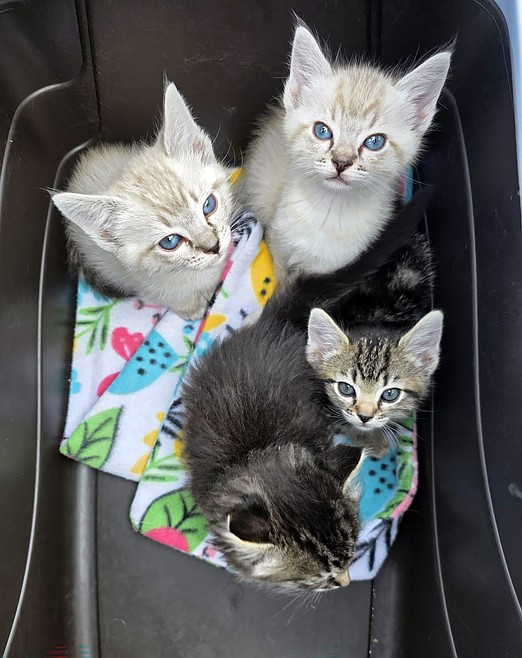
These four kittens were found in a woodpile west of Kalispell on Friday. KitttyMOM's is still searching for the mother cat. (Photo provided)
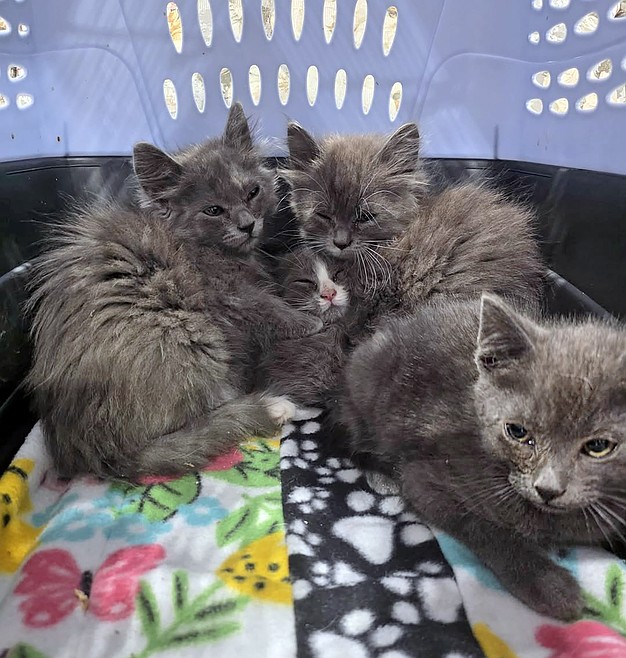
These four kittens were orphaned when a dog killed their mother. (Photo provided)
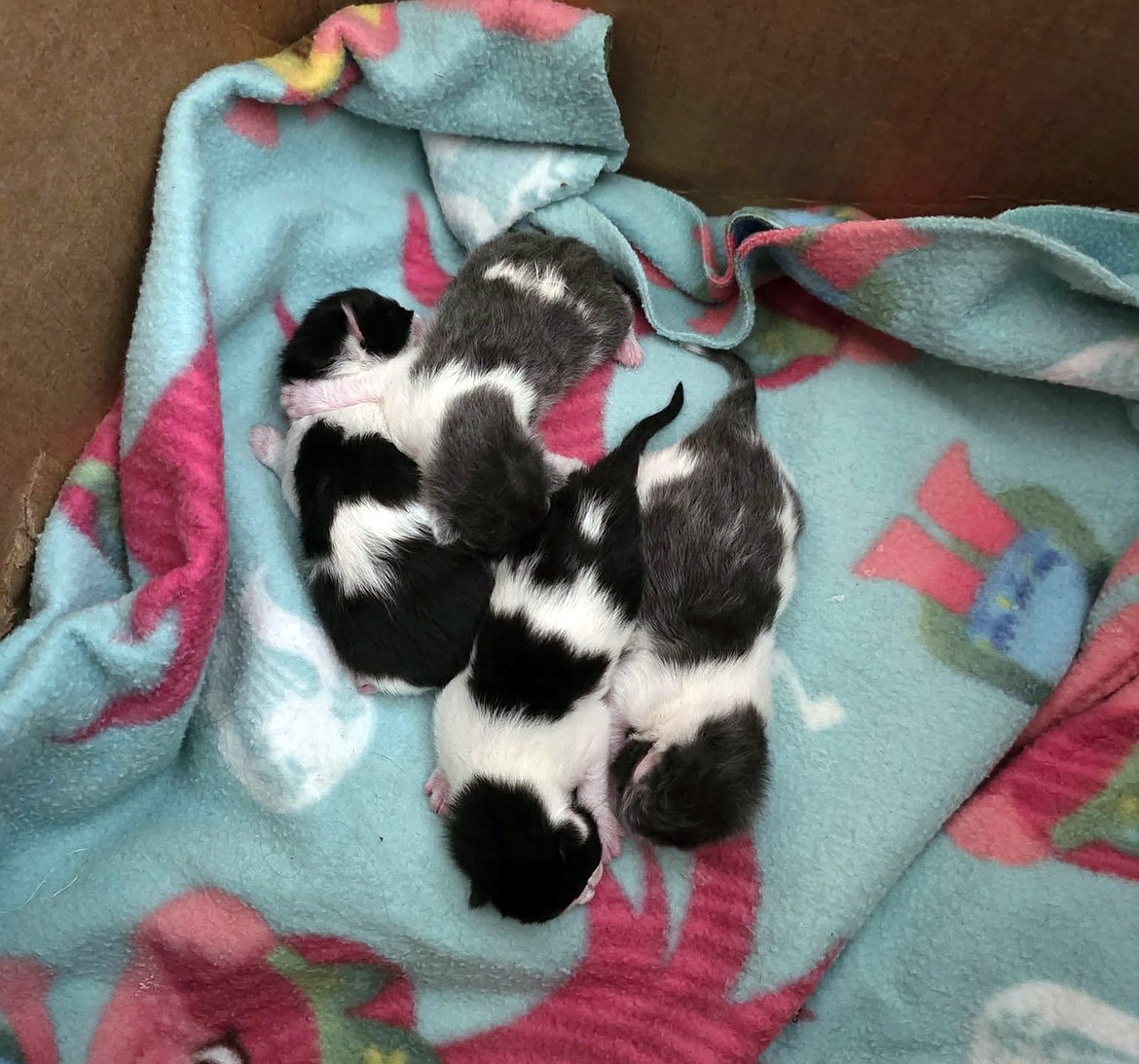
This litter of kittens was found by a dog walker in Coram near their mother who died while giving birth to a fifth kitten. The kittens were too cold to feed and are being cared for by a KittyMOM's foster mom. (Photo provided)
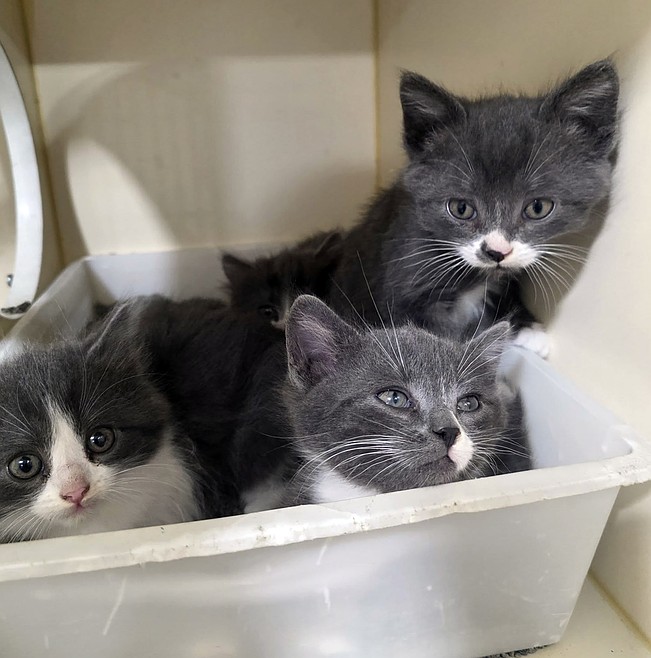
This litter of kittens was found Friday near a lake west of Kalispell. (Photo provided)
Julie Engler covers Whitefish City Hall and writes community features for the Whitefish Pilot. She earned master's degrees in fine arts and education from the University of Montana. She can be reached at [email protected] or 406-882-3505. | July 1, 2026 1:00 AM
Seventeen more felines were found and delivered to KittyMOM’s Rescue Organization in the last week, including one adult and four litters of kittens. They were found in woodpiles, along roadsides and near lakes.
One litter was found near its mother who had died giving birth. Another litter’s mom had been killed by a dog, and a third litter’s mother has not yet been found.
“They just keep coming,” said Darcy Albert, president of the rescue group. “We are only taking emergencies right now. If they are being fed and are in a safe place, we are having to say no.”
With more than 80 cats in its foster homes, KittyMOM’s is seeing “epidemic” levels of cat abandonment in the valley, said Albert.
Flathead Valley is served by one public and one nonprofit animal shelter — the Flathead County Animal Shelter south of Kalispell and the Humane Society of Northwest Montana north of Kalispell.
Flathead County Health Department Director Jen Rankosky is serving as the interim director of the County Animal Shelter. She said the rising demand for services in the county has been ongoing for several years and the shelter has responded by continuing to provide services and resources to support the community.
Rankosky added that providing appropriate housing, medical care and daily support to the animals in its care has reduced the shelter’s ability to accept owner-surrendered pets.
“Due to ongoing capacity challenges and the high volume of animals entering the shelter, we have temporarily limited owner surrenders,” she said. “The shelter continues to receive a steady influx of animals brought in by Animal Control Officers and members of the public.”
Both shelters suggest that people who need to surrender a pet check the websites home-home.org and rehome.adoptapet.com.
“We continue to evaluate shelter capacity on an ongoing basis and work with pet owners to identify alternative resources whenever possible,” Rankosky added.
Both shelter directors say they are operating at capacity, but the actual capacity of the county shelter is not a set number.
“Shelter capacity is a complex and constantly changing issue,” Rankosky said. “Available space can vary from day to day based on several factors, including ongoing legal holds, animals brought in by Animal Control Officers, stray animal intake, and the age and temperament of animals currently in our care.”
She said the policy regarding strays affects capacity, too, because strays must be held for a minimum of 72 hours for the owner to reclaim the pet. If the owner does not arrive, the pet undergoes medical evaluation, vaccination, and spay/neuter procedures before becoming available for adoption.
“Because animal intake, reclaim rates, adoptions and medical needs can change rapidly, shelter capacity is highly dynamic and can be difficult to predict from week to week,” Rankosky said.
The county shelter tracks animal intake and outcomes monthly and provides reports to the Board of Health and the public. These reports include information on animal intakes, adoptions, owner reunifications, transfers and other outcomes.
“In April, the shelter began the month with 59 animals in care and took in 144 additional animals throughout the month,” Rankosky said. “During that same period, 111 animals left the shelter through adoption, return to owner, transfer, clinic release, or other outcomes.
“As a result, the shelter population increased to 92 animals by the end of the month,” she said. “Because intake and outcome numbers fluctuate throughout the year, shelter capacity can change rapidly from month to month.”
The most recent posted report is from May 2024 and is available at the Flathead County Animal Shelter website, under the shelter statistics and reports tab.
Executive Director of the Humane Society, Stacie DaBolt, said the shelter facilitates about 500 adoptions each year and always operates at capacity, which is about 24 dogs and 48-50 cats.
The Humane Society intake statistics for January through June of this year show it has accepted 46 adult cats and 35 kittens from owner surrenders, and another 38 felines were transferred into the facility.
DaBolt said she has noticed an increase in the number of owner-surrendered pets recently.
"That's a conversation that needs to be had,” she said. “I think that's economy. I think that's housing issues here.
“Last year we saw an influx,” she continued. “This year we're seeing the trend going up. Most of our intakes have been from owner surrenders, because there's so many of them and the county can't handle it, and there are no other resources.”
Dabolt said the Humane Society has tweaked its intake policies to keep up with the number of owner surrenders. Dog owners go through an evaluation to determine if the dog has significant behavioral issues.
“We don't do evaluations on cats. There are no barriers there,” DaBolt said. “There's a $30 surrender fee, but we waive it if somebody can't afford it. If you don't have the money, we're still going to take your cat in.”
To surrender a pet to the Humane Society, owners are asked to fill out the pet surrender form on the shelter website and submit photos of the pet, before they are put on a wait list. To surrender a pet to the county animal shelter, people are asked to make an appointment and let a staff member provide guidance regarding the next steps.
“I've taken the [annual] budget from about $600,000 to $1 million in the three years I've been here, and that's where we need to be,” DaBolt said. “That's the bare minimum that we can be, and a lot of that is putting the programs in place and hiring the staff to do it, like a behavior trainer. Literally, 90% of that money goes to actual care of the animals.”
She said medical care and spay and neuter services are the major expenditure for the shelter. Since the shelter does not have a veterinarian on staff, all the cases are bought to private practices.
As a nonprofit, the Humane Society’s 990 tax forms are available to the public at apps.irs.gov.
Under the county shelter trap, neuter and release program, people can bring stray cats to the shelter in traps. They are spayed or neutered, and their ears are tipped. The animals are then released where they were originally caught.
DaBolt said there is controversy over such programs because some people want to see cats cared for while others believe they can fend for themselves.
“The other caveat about that situation, is you have to have a colony manager ... somebody who is committed and dedicated to taking care of those cats throughout their lives,” DaBolt said. “So, educating those people that you can't just throw your cat out. It will not survive.”
She said the caretaker, or colony manager, needs to ensure the cats have appropriate shelter, food, water and basic medical care, so they do not transmit diseases to other cats.
“An outside cat's average lifespan is maybe five years old, six years old, versus an indoor cat who's always been indoors and protected from the elements and who's being taken care of, can live 15, 20 years,” she said. “It comes down to education, and it also comes down to more spay and neuter services.
“At the end of the day, spay and neuter is always it [the solution], but we'll never be out of a job, sadly, because of the free roaming and the fact that there's no legislation or policies from a state level government, city level about cats,” DaBolt said. “They're not doing anything to help the community mitigate the spay and neuter and the overpopulation, because they consider them free roaming, which is a very convenient way of saying, ‘We're not dealing with this.’”
This series continues next week with ways residents can help ease the pet abandonment problem.
Reporter Julie Engler can be reached at 406-862-3505 or [email protected]. If you value local journalism, pledge your support at whitefishpilot.com/support.
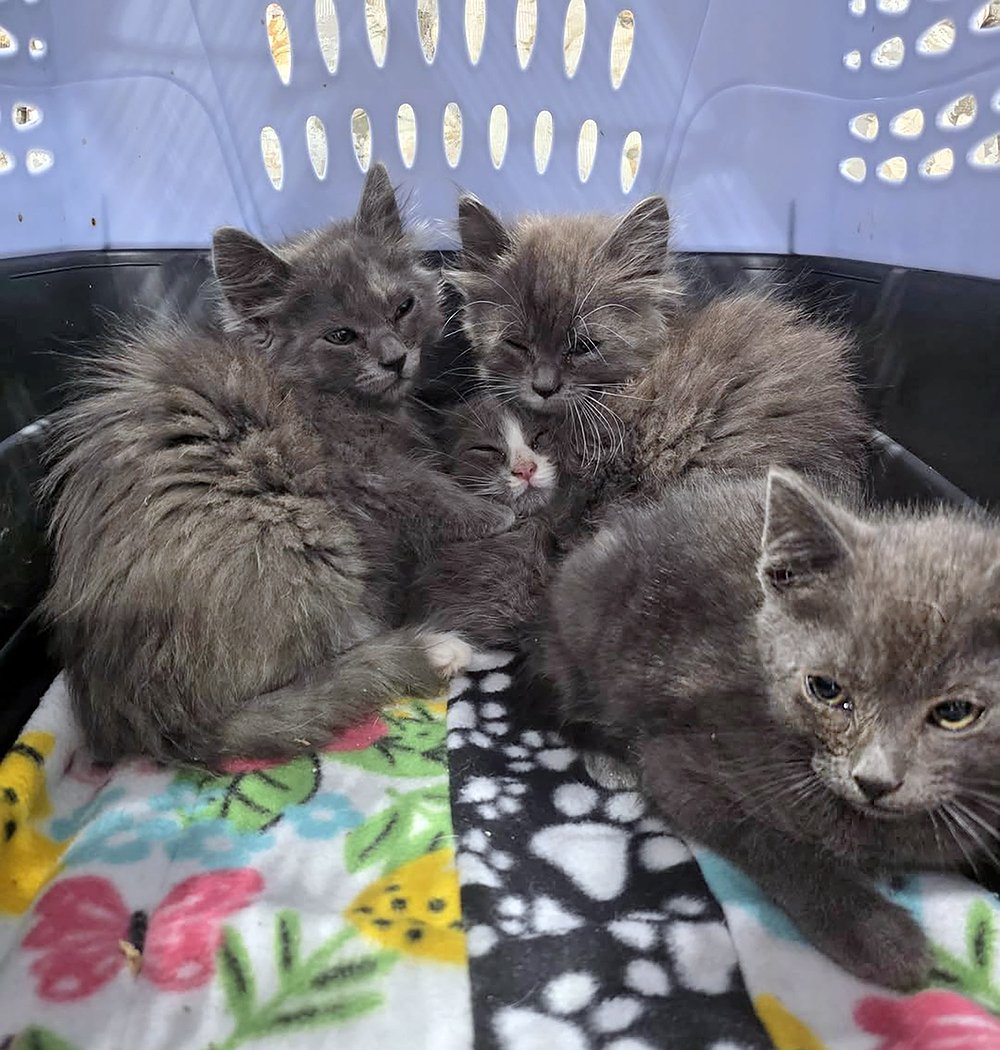 These four kittens were orphaned when a dog killed their mother. (Photo provided)
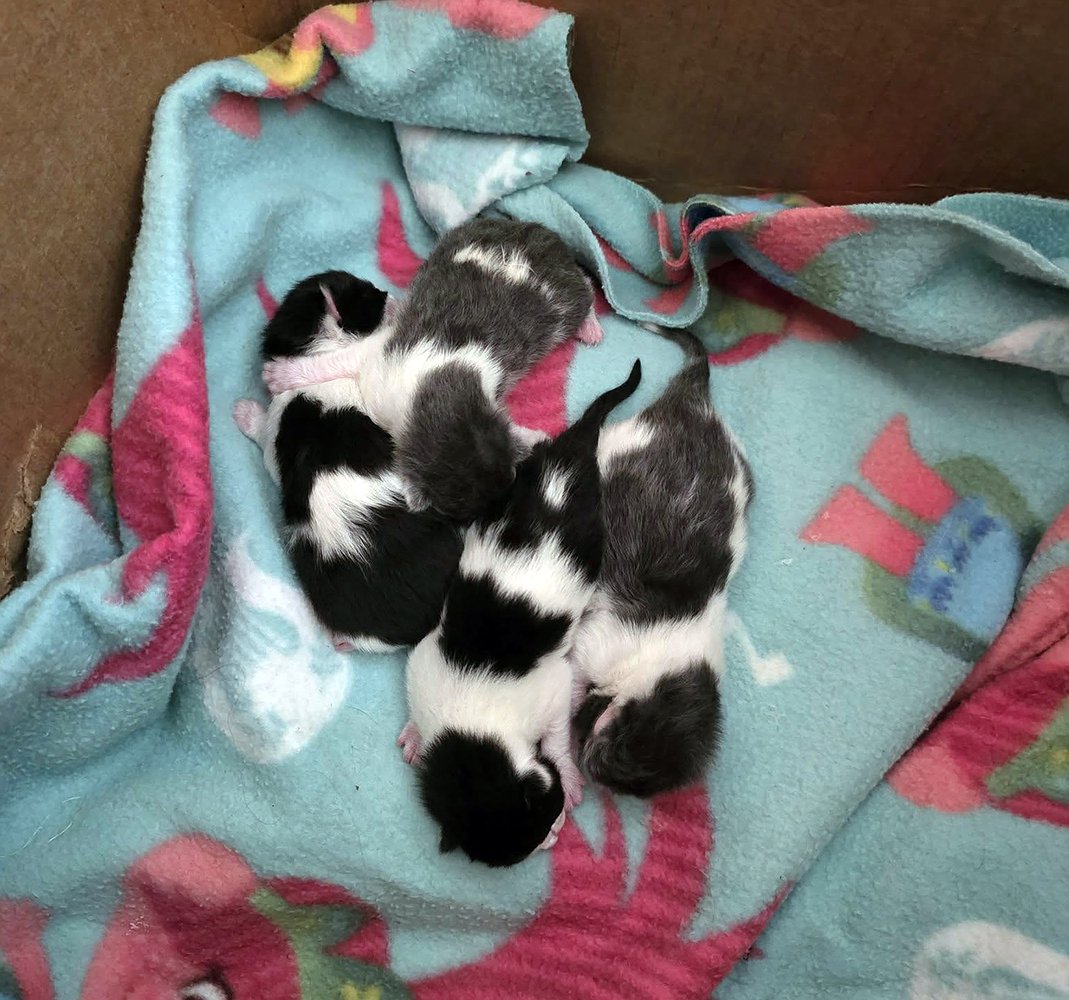 This litter of kittens was found by a dog walker in Coram near their mother who died while giving birth to a fifth kitten. The kittens were too cold to feed and are being cared for by a KittyMOM's foster mom. (Photo provided)
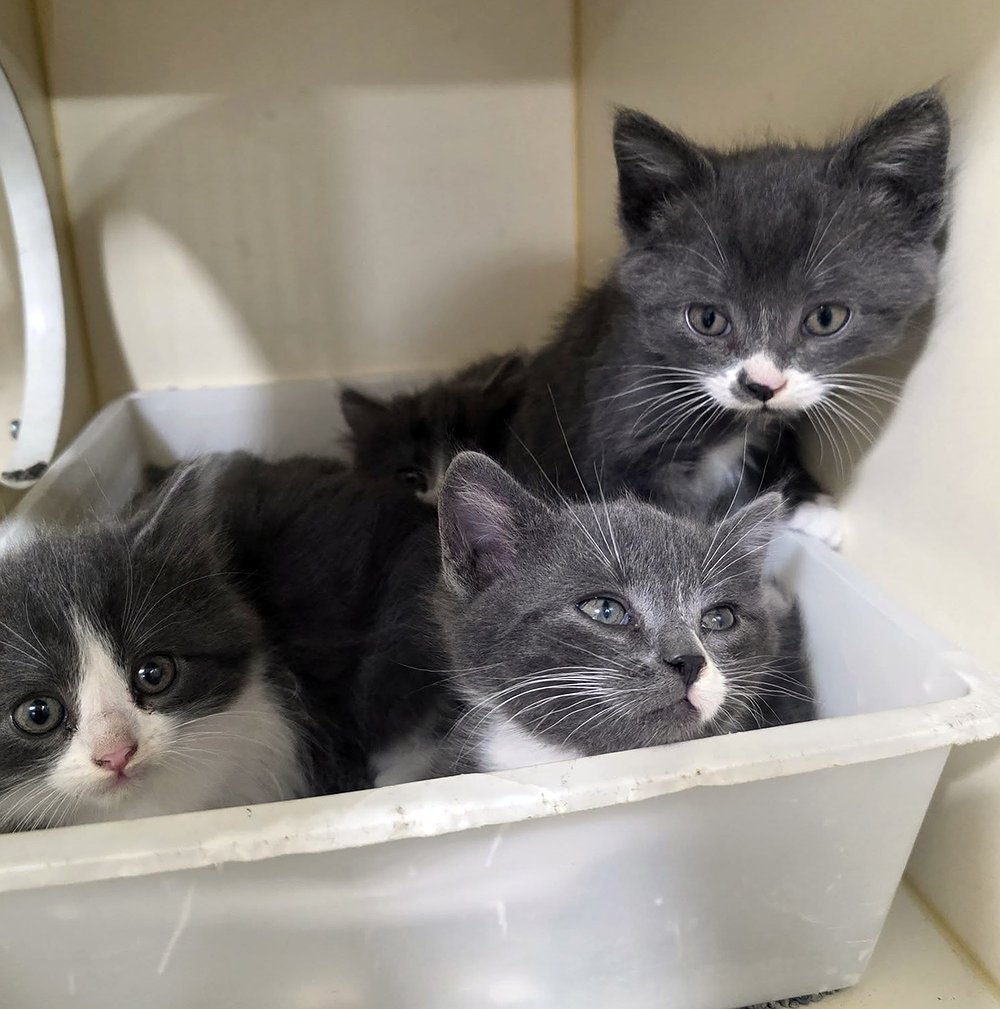 This litter of kittens was found Friday near a lake west of Kalispell. (Photo provided)
ARTICLES BY JULIE ENGLER

Photo: Water tank rises in Whitefish
The tank for the Whitefish south water tower was hoisted on Thursday, Oct. 8.

Whitefish soccer teams advance to state semifinal round
Whitefish soccer continued its winning ways in the quarterfinals of the Class A playoffs at home Saturday.

O’Shaughnessy Center gets upgrades and design refresh
Recent upgrades to the O'Shaughnessy Center have increased the building’s energy efficiency and prepared the nearly 30-year-old facility to serve the needs of the growing community into the future.