
Science on Tap celebrates 50 years of Wild and Scenic protection for the Flathead River
Vivianne Ostheimer | Lake County Leader | UPDATED 1 hour, 6 minutes AGO
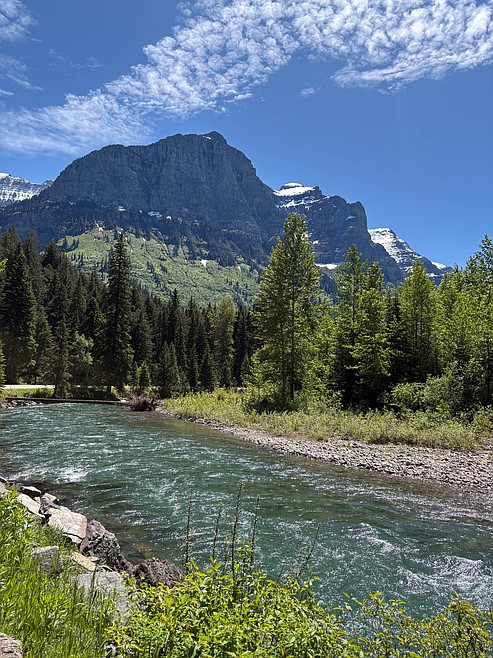
The Middle Fork of the Flathead River was designated a Wild and Scenic River under the Wild and Scenic Rivers Act, a designation that John and Frank Craighead advocated for after floating this stretch of the river. (Vivianne Ostheimer photo)
This year marks the 50th anniversary of the Flathead River system's designation as a National Wild and Scenic River.
To celebrate the milestone, Flathead Rivers Alliance program coordinator Geoffrey Gill traced the river's history — from dam proposals that nearly transformed it to conservation efforts that protected it — and discussed the challenges of preserving the river for the next 50 years during Science on Tap on July 1.
The anniversary is a reminder that the Flathead’s clean and free-flowing water shouldn’t be taken for granted, according to Flathead Lake Biological Station associate director Tom Bansak.
“The fact that people had the foresight to protect the upper watershed 50, 60, 70 years ago is why we have an incredibly clean, clear lake that brings people from around the world,” Bansak said. “That's not the norm.”
Following the construction of the Hungry Horse Dam on the South Fork of the Flathead in 1953, planners proposed additional dams that would have flooded the North Fork, diverted the Middle Fork into Hungry Horse Reservoir through tunnels and left long stretches of river dry.
“ So that whole section of river that borders Glacier National Park —the section of river that you drive past as you're going over to the east side — that would have been dewatered,” Gill said.
Gill presented “Protecting the Flathead: People, Partnership & the Next 50 Years” at Science on Tap, a monthly public lecture series hosted by the biological station and Flathead Lakers, a community nonprofit. It brings researchers and community members together to discuss science affecting Northwest Montana.
Gill said that if local opposition hadn’t stopped those river diversion projects, the Flathead may not have helped inspire the Wild and Scenic Rivers Act.
According to Gill, scientists and twin brothers John and Frank Craighead helped champion the legislation after a rafting trip through the upper Middle Fork convinced them that some rivers should remain permanently protected and free-flowing. The legendary conservationists are most well-known for studying grizzly bears in Yellowstone National Park and inventing the first radio-tracking collars.
“They go out, and they figure out it is fabulous habitat — grizzly bears, wolves. All the big charismatic mammals that we love,” he said.
Congress passed the Wild and Scenic Rivers Act in 1968, with support from the Craigheads and Idaho Senator Frank Church, the sponsor of the Wilderness Act of 1964. It designated eight National Wild and Scenic Rivers.
The Flathead made the list in 1976, and today, Montana has two additional Wild and Scenic Rivers: the Upper Missouri River and East Rosebud Creek.
National Wild and Scenic Rivers are protected from new federally licensed dams and are managed to preserve their free-flowing character and other "outstandingly remarkable values.”
Gill said proving those values requires scientific research.
“These are resource areas where you can prove that your river is better than the rivers next door,” he said. “It's where we can say, ‘Our fishing is better than the fishing on the Swan, and our rapids are better than the rapids on the Blackfoot, and our wildlife populations are stronger and more diverse than the wildlife populations on the Clark Fork.’”
Gill said the designation brought new opportunities– and new challenges. Once a river is designated Wild and Scenic, it becomes a destination.
“ Recreation is kind of the spot where we are the most consistently pinched, because this is a beautiful place and people come to visit,” he said. “They want to be on the river, and we want them to be there.”
Flathead Rivers Alliance, the nonprofit organization where Gill is the program coordinator, monitors recreation by collecting data on boat launches, river traffic and other recreational activities. The organization relies heavily on volunteers to collect recreation data.
“My goal is to get 50 new volunteers,” Gill said. “I think we're at about 34 right now.
To celebrate the 50th anniversary of the Flathead's Wild and Scenic designation, the Flathead Rivers Alliance will host River Fest from 5–9 p.m. July 10 at Marantette Park in Columbia Falls. The event will feature live music, local beer, food trucks, raffles and family activities.
Maggie Winter-Sydnor — a Flathead Laker who helps run Science on Tap — was also at the presentation, welcoming guests with an information table.
Winter-Sydnor said the Flathead chapter began after a couple moved from Madison, Wisconsin, and brought the Science on Tap concept with them. One spouse worked at the biological station while the other served as education and outreach coordinator for Flathead Lakers.
“[Science on Tap] was definitely a partnership, in multiple ways, when it first started,” Winter-Sydnor said, laughing.
This is her second summer with the Lakers, and she said she appreciates the range of topics discussed at Science on Tap events. She’s looking forward to upcoming presentations on salamanders in western Montana and biological controls for aquatic invasive species.
This summer, presentations start at 6:30 p.m. on the first Wednesday of the month at Bunkers Bar & Grill. The $5 tickets and a portion of all beer proceeds support the biological station and the Lakers.
The next Science on Tap is Aug. 5, when bio station ecologist and professor Matt Church will present "The Hidden Life of Flathead Lake” — his ongoing research on how tiny, invisible organisms play a large role in lake health.