
Be prepared with a wildfire evacuation checklist
CAROLINE LOBSINGER | Hagadone News Network | UPDATED 3 months, 2 weeks AGO
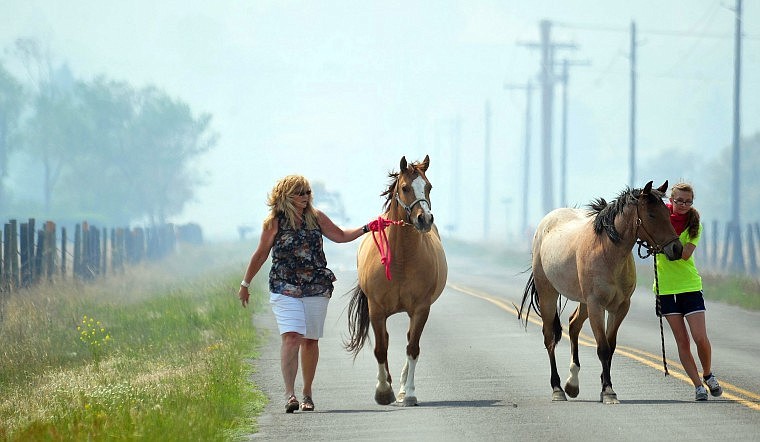
Helena residents move their horses down Sierra Road on Tuesday during evacuations in the face of a major wildfire. The nervous horses had to be pushed often to keep them going down the road.
I grew up in the Tri-Cities, Wash., and have always loved to write. I attended the University of Washington, where I earned a double major in journalism and political science, with an area of emphasis in history. I am the fifth out of six kids — don't believe any of the stories that my siblings tell. To be able to tell others stories and take photos for a living is a dream come true — and I considered myself blessed to be a community journalist. When I am not working, I enjoy spending time with family and friends, hiking and spending time outdoors, genealogy, reading, and watching the UW Huskies and the Seattle Seahawks. I am a servant to my cat, Frankie, who yes, will eat anything and everything in sight … even wedding cookies. | July 10, 2026 12:00 AM
GO BAG ESSENTIALS
Important documents (bank, IRS, trust, investment, insurance policy, birth certificates, medical records)
ATM, credit and debit cards and cash in small bills
Medications, RX numbers and vaccination records for humans and pets
Non-perishable food and water for 72 hours
Driver’s license, passport
Computer backup files and passwords
Inventory of home contents (consider making a video inventory now, prior to an emergency)
Photographs of the exterior of the house and landscape
Address book including medical and veterinarian contact information
Cellphone charger, car charger and battery packs
Personal toiletries
Enough clothing for 3-5 days
Family heirlooms, photo albums and videos
Batteries
PREPARE FAMILY MEMBERS
If possible, evacuate all family members not essential to preparing the house for wildfire
Plan several evacuation routes from your home
Designate a safe meeting place and contact person
Relay plans to a contact person
Designate a “safe area” where people can wait out a wildfire (i.e., ballfields, irrigated pastures or parking lots)
Register for a local emergency notification system (such as “reverse 911” or “CodeRED”)
WHAT TO WEAR
Wear only cotton or wool clothes, including long pants, long-sleeved shirt or jacket, a hat and boots
Carry gloves, water to drink, and goggles
Keep your cellphone, a flashlight and a portable radio with you at all times
Tune in to a local radio station and listen for instructions
IDHS NIMS 700: A1000 mask
PREPARE VEHICLE
Keep your vehicle’s gas tank full
If you can lift your garage door manually, place your vehicle in the garage pointing out with the keys in the ignition and disconnect the electric garage door opener. If not, park in your driveway facing out
Roll up the car windows
Close the garage door
Place essential items in the car
If you do not drive, make other arrangements for transportation in advance
Close the garage door when you leave
INSIDE THE HOME
Close all interior doors
Leave a light on in each room
Remove lightweight, non-fire-resistant curtains and other combustible materials from around windows
Close fire-resistant drapes, shutters, and blinds
Turn off all pilot lights
Move overstuffed furniture, such as couches and easy chairs, to the center of the room
Close fireplace damper
Close or block off any doggie doors
Lock up firearms or valuables
⚠️ Important Note
Be prepared: It will likely be dark, smoky, windy, and hot
There may be airborne burning embers, no power or telephone, and poor water pressure
Remember: There is nothing you own worth your life
Please evacuate immediately when asked
OUTSIDE THE HOME
Place combustible patio furniture and barbecues in the house, garage, or away from the home
Shut off propane at the tank or natural gas at the meter, and clear the area of combustible material
Close all exterior vents, doors, and windows
Leave gates unlocked
Turn on outside lights
If available and if there’s time, cover windows, attic openings, and vents with plywood (at least ½ inch thick)
Ensure that all garden hoses are connected to faucets and turned off
Don’t leave sprinklers on or water running (they can affect critical water pressure)
Ensure that house numbers and street signs are visible and reflective if possible
PREPARE PETS
Have identification on your animal. Many animal species can be microchipped (a permanent form of identification)
Have veterinary records and medications in one easy-to-find place. Pro tip: A gallon Ziploc bag can keep them dry and contain loose pills
Transport food, water, and bowls in easy-to-carry, sealed containers
Have a buddy system. Can neighbors help if you are not home during an evacuation? Do you have a family member or friend who can house animals during extended evacuation (especially for livestock and poultry)?
Dogs and small pets should be securely crated (one animal per carrier). Even well-behaved animals may panic; carriers keep them safe
Remove non-essential items from carriers or cages to prevent injury during transport
PREPARE HORSES, LIVESTOCK & OTHER LARGE ANIMALS
Have a livestock trailer and a reliable towing vehicle
Practice loading livestock into the trailer and towing it before an emergency
ARTICLES BY CAROLINE LOBSINGER

Wellness fair puts focus on health
The Wellness & Connection Fair is bringing together local health and wellness professionals together in Sandpoint for a day of presentations, activities and community resources.

BCSD pays share of ISBT shortfall
District opts to make lump sum payment
Boundary County School District paid $217,000 to cover its share of the Idaho School Benefit Trust's $13 million shortfall.

Deadline extended for 'Valor' stories
The Valor publication is gathering photos, military service details and personal stories from Boundary County veterans and military families. Featured profiles highlight local service members' contributions, achievements and sacrifices across generations.