
Forests prep salvage sales ahead of wildfire season
HAILEY SMALLEY | Hagadone News Network | UPDATED 3 months, 2 weeks AGO
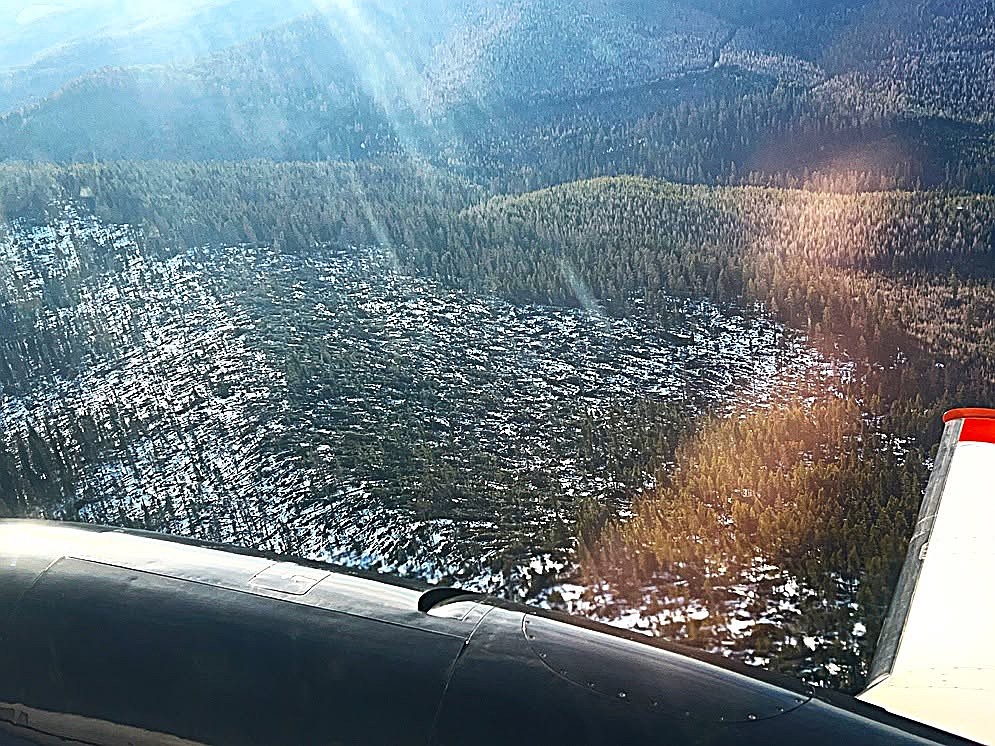
An area of blowdown is seen on the Tally Lake Ranger District of the Flathead National Forest in May 2026. (Flathead Forest photo)
Thousands of acres of federal and state forestlands in the inland Pacific Northwest are being contracted out for salvage sales following mass blowdown events this winter.
A combination of wet, warm winter weather and severe windstorms downed trees across the region, first in December 2025 and then again in March 2025.
“It was a warm winter. We had received a lot of rain so instead of frozen ground, we had wet ground. The ground was soft. Trees were easily uprooted,” said Seth Cole, the forest timber management officer for Kootenai National Forest in northwestern Montana and northern Idaho.
A few downed trees are nothing to worry about, but Cole said mass amounts of downed timber — whether the result of windstorms, wildfire or insect outbreaks — can raise the risk of further ecological disturbances.
Dry logs are prime fuel for wildfires and, depending on their position, can also act as ladder fuels, carrying flames from the ground into the forest canopy. Dead wood is also a favored food for many forest pests. More food means more bugs, which can then move into previously undamaged areas of the forest.
“Salvage is one of those elements we use to address these situations,” said Cole.
In a salvage sale, contractors are permitted to harvest trees that have already been downed or damaged by wind, fire, insects or other means. Contractors benefit from the sale of the harvested timber, either as sawlogs or for timber byproducts like pulp, while managers get the perks of a full-fledged cleanup effort with few upfront costs.
But salvage sales also come with their own sets of challenges, making what would seem like a win-win solution unfeasible in many areas. While contractors are saved the trouble of cutting down the trees themselves, the large amount of downed timber can also make it difficult to maneuver machinery and creates additional hazards for workers. The cost of building new roadways to access some blowdowns may outweigh the value of the harvestable wood, especially if the timber was damaged during the blowdown event.
Time is another critical factor, as downed timber can rot if left too long. Decay rates vary based on the environmental conditions and the tree species, but Cole said two years is a general deadline for getting a salvage sale under contract.
In many cases, the Forest Service can employ categorical exclusions to expedite the review process for salvage sales by forgoing a public-facing environmental analysis. To qualify for the streamlined process, the salvage project must encompass 250 acres or less and require no more than a half mile of new road construction.
More than 500 acres in Flathead National Forest and 795 acres in the Idaho Panhandle National Forest have been marked for salvage following the winter windstorms. The Montana Department of Natural Resources and Conservation plans to salvage windthrow on another 2,000 acres this summer.
On the Kootenai National Forest, “we’re still trying to assess what all is out there,” said Cole. “I think we’re still discovering stuff and determining whether it’s a salvage sale or a noncommercial cleanup.”
The forest is currently reviewing several salvage sales in previously burned areas, and Cole said he hopes to add the recent windthrow to the docket before the end of summer.
ARTICLES BY HAILEY SMALLEY

Trump stumps for Flint in Kalispell as Election Day nears
President Donald Trump, wearing a dark suit, red tie and red USA cap, ambled into the Majestic Valley Arena to the raucous roar of a crowd.
Flathead National Forest greenlights Swan Valley timber project
A 2,307-acre timber project is now under way in the Swan Valley.
Flathead National Forest greenlights Swan Valley timber project
A 2,307-acre timber project is now under way in the Swan Valley.