
Summer Nutrition Program keeps kids fed when school is out
MAKEILAH LAW | Hagadone News Network | UPDATED 3 months, 2 weeks AGO
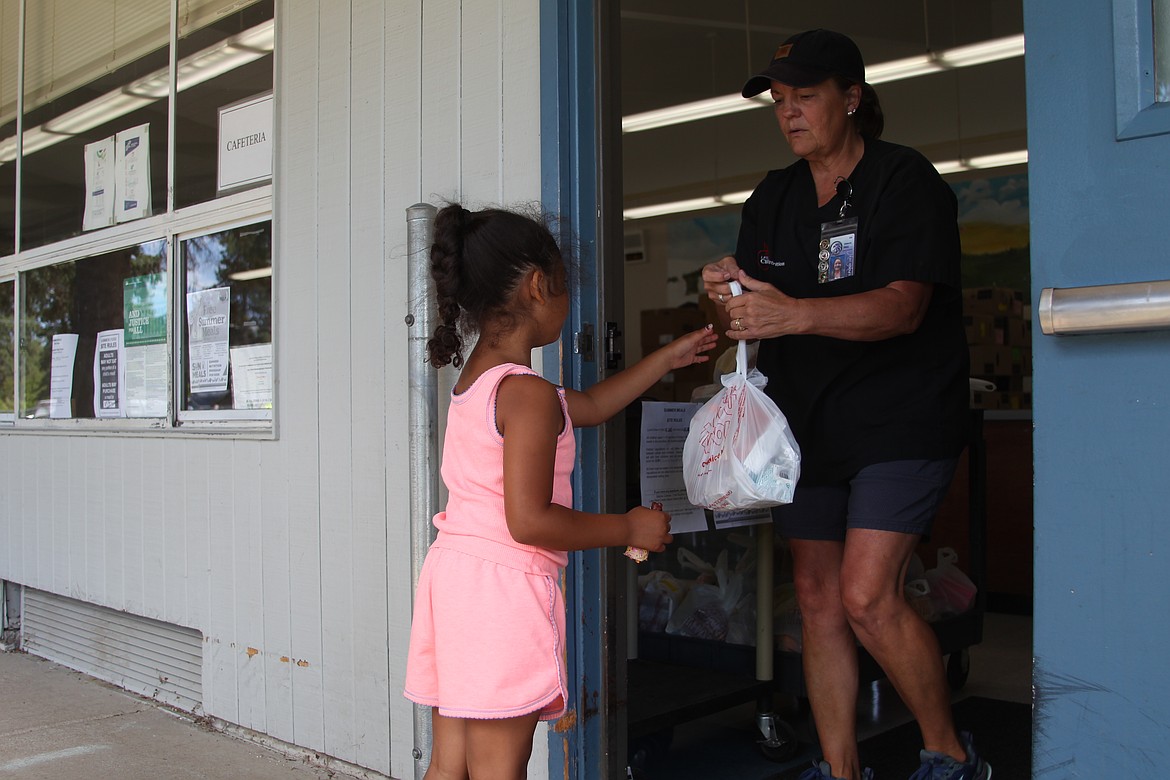
Dawna May, the Summer Nutrition Programs for Kids kitchen manager, hands a child a saddlebag of meals.
Photo by MAKEILAH LAW
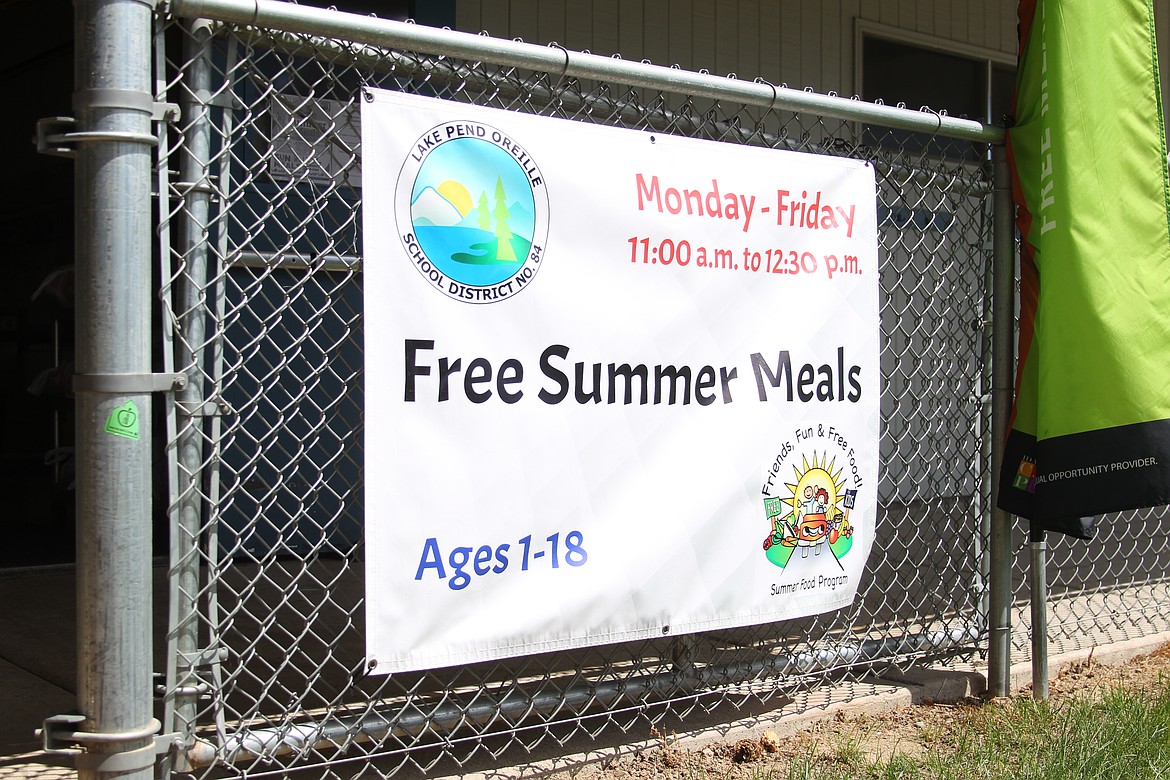
A banner is displayed outside of Farmin Stidwell Elementary School promoting free summer meals for children through the United States Department of Agriculture's Summer Nutrition Programs for Kids
SANDPOINT — On weekday afternoons at Farmin Stidwell Elementary, Dawna May, the school's kitchen manager, waits by the door to extend a saddlebag full of food to excited children.
Whether they pedal away with the bag dangling from a bike handlebar or climb into a car seat behind a waiting parent, every child leaves with nutritious meals free of charge.
These free meals are a result of the United States Department of Agriculture's Summer Nutrition Programs for Kids (SUN).
The SUN program is administered through the Idaho State Department of Education and operates to provide nutrient-dense meals to children ages 1-18 in low-income areas during the summer.
When school is out, meals served through the National School Lunch and School Breakfast Programs end — making nutrient dense meals for many children in the country less accessible, according to the Idaho Department of Education website.
Sandpoint isn't immune to the summer hunger gap.
With more than 50% of its students classified as low income, Farmin Elementary qualifies for the program. But meals aren't limited to only children attending the school.
"They do not have to be Lake Pend Oreille School District students. They can be any student, any child 1 to18 years of age that is in the area or visiting the area," said Bobbie Coleman, LPOSD child nutrition director.
In each bag, lunch is provided for the day as well as breakfast for the next morning. Instructions can also be found printed on a colorful sheet of paper, explaining how to prepare each meal.
Free meal pickups are also offered at City Beach and Sandpoint High School, where meals are served from Monday through Friday. All pickup locations distribute meals from 11 a.m. to 12:30 p.m.
However, at Farmin Elementary, meals are offered seven days a week. On Friday, children take home a bag filled with lunches and breakfasts for the entire weekend.
The program has a two-week cycle menu, which gives children a wide variety of food and makes meals less repetitive, said Coleman.
As a result of the USDA's specific menu compliance requirements for summer meals, certain components must be included in each meal.
"They have to be all whole grain items, decreased sugar items, nutrient dense items that are in there," said Coleman.
Coleman said the program provides critical economic health and social support to children and families in the United States, adding that it combats summer hunger and supplies grocery benefits in a safe environment.
"What drives me every day in child nutrition is seeing the direct impact a reliable meal has on children's well-being," said Coleman. "We aren't just feeding kids; we're showing them that their community cares about them year-round."
"Leading a team that serves as a safety net for local families is the most rewarding work I could ever ask for," said Coleman.
 A banner is displayed outside of Farmin Stidwell Elementary School promoting free summer meals for children through the United States Department of Agriculture's Summer Nutrition Programs for Kids
ARTICLES BY MAKEILAH LAW

Healing garden seeks next generation of volunteers
Leaf blowers roared throughout the Healing Garden on Saturday morning as volunteers worked diligently to prepare the garden for the winter months. The cool bite of fall didn't keep volunteers from showing up and, although their cleanup duties varied, everyone shared a common goal: caring for a space they love.

Idaho Liberty Bell to visit area
As part of the nation's 250th birthday celebration, the 2026 Idaho Liberty Bell tour will make 23 stops across Idaho, including cities in Bonner and Boundary County early next week.

Apply Idaho readies students for college applications
As college application deadlines approach, Sandpoint High School seniors are receiving support through a program that lightens the load of applying for college. Apply Idaho, a free application platform, is partnering with the high school to assist seniors in sending their personal, academic and application information to several in–state Idaho colleges in one step.