
Forever chemicals found in Flathead Watershed
Bigfork Eagle | UPDATED 2 months, 1 week AGO
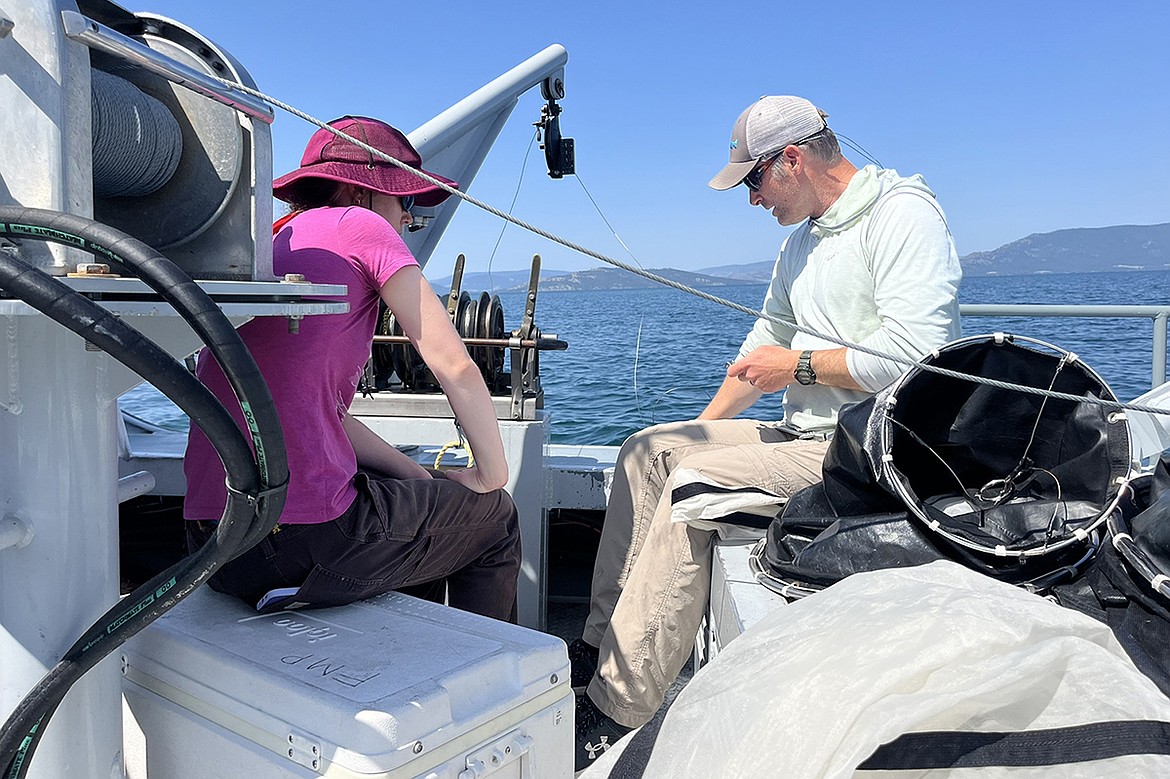
Tyler Tappenbeck (right), a senior researcher with the Flathead Lake Biological Station, collects water samples with Meadow Gregory, a 2025 FLBS lake ecology intern. (UM photo by FLBS marketing intern Grace Porges)
The University of Montana's Flathead Lake Biological Station has detected pharmaceuticals, personal care products and the presence of what are commonly known as forever chemicals in the Flathead Watershed.
“Detection of these compounds is not entirely surprising given results elsewhere,” said Bio Station Director Jim Elser. “But confirming their presence in the Flathead, even at these low levels, is still a matter of concern.”
According to the Bio Station, per- and polyfluoroalkyl substances are a class of synthetic chemicals characterized by exceptionally strong carbon-fluorine bonds. This bond imparts high levels of chemical stability, durability and resistance to degradation, thus the term “forever chemicals."
The chemicals are widely used in hundreds of industrial processes and consumer products, including carpets, clothing, food packaging materials, wire and cable coatings, pesticides and herbicides. In total, there are around 15,000 different compounds.
Forever chemicals were detected in water at all Bio Station sampling locations in the Fall of 2025, which included sites in Flathead Lake, the Flathead River, the Swan River and Stoner Creek. Of the 40 compounds targeted for analysis, 10 were detected.
Of those 10, three were found at quantifiable levels that were above laboratory reporting limits. For compounds with established thresholds for safe drinking water, concentrations were low and well below those standards. The forever chemical analysis was completed after the annual State of the Lake Report, which was released earlier in the summer and deemed Flathead Lake pristine.
“Right now, PFAS concentrations are not at levels to cause direct concern about human health, but they should motivate us to find out more about where they are coming from and to continue surveillance,” Elser said in a statement. “Unfortunately, that is very challenging because analysis of PFAS in water samples is extremely expensive.”
To this point, all of the sampling and analyses into forever chemicals conducted by the Bio Station have been made possible by philanthropic support.
For most per- and polyfluoroalkyl substances, thresholds for safe concentrations for drinking water have not been established. Exposure to forever chemicals may lead to various health problems, including decreased fertility, developmental effects or delays, increased cancer risk, immune impairment, hormone disruption and increased risk of obesity. Additionally, the short- and long-term ecological impacts of forever chemicals are poorly understood.
IN A separate Bio Station study, pharmaceuticals and personal care products were analyzed in water samples collected from Ashley Creek, two sites in Flathead Lake and two sites in Whitefish Lake.
Chemicals used in pharmaceuticals and personal care products and their degradation byproducts are persistent and are increasingly detected in water bodies worldwide. They include caffeine, prescription and non-prescription drugs, consumer products and controlled substances.
Pharmaceuticals and personal care product compounds were detected at all sampling sites.
Like many forever chemical compounds, thresholds for safe concentrations of pharmaceuticals and personal care products in drinking water have not been established, and the ecological impacts are poorly understood — especially regarding their effects on humans and aquatic organisms in combinations and under natural conditions.
Bio Station scientists also emphasized the need for expanded monitoring and research to better understand the human health and ecological implications of forever chemicals and pharmaceutical and personal care product compounds in area waters.
“In the Flathead, we need to work together to get a better perspective on the distribution of PFAS and [pharmaceutical and personal care products] in various streams, rivers and lakes in our watershed,” Elser stated. “And then work together to reduce or eliminate the sources that are introducing them to our ecosystems.”