
Alliance for the Wild Rockies, residents score win in fight for North Idaho’s old growth, grizzlies
MIKE GARRITY / Contributing Writer | Bonner County Daily Bee | UPDATED 20 hours, 22 minutes AGO
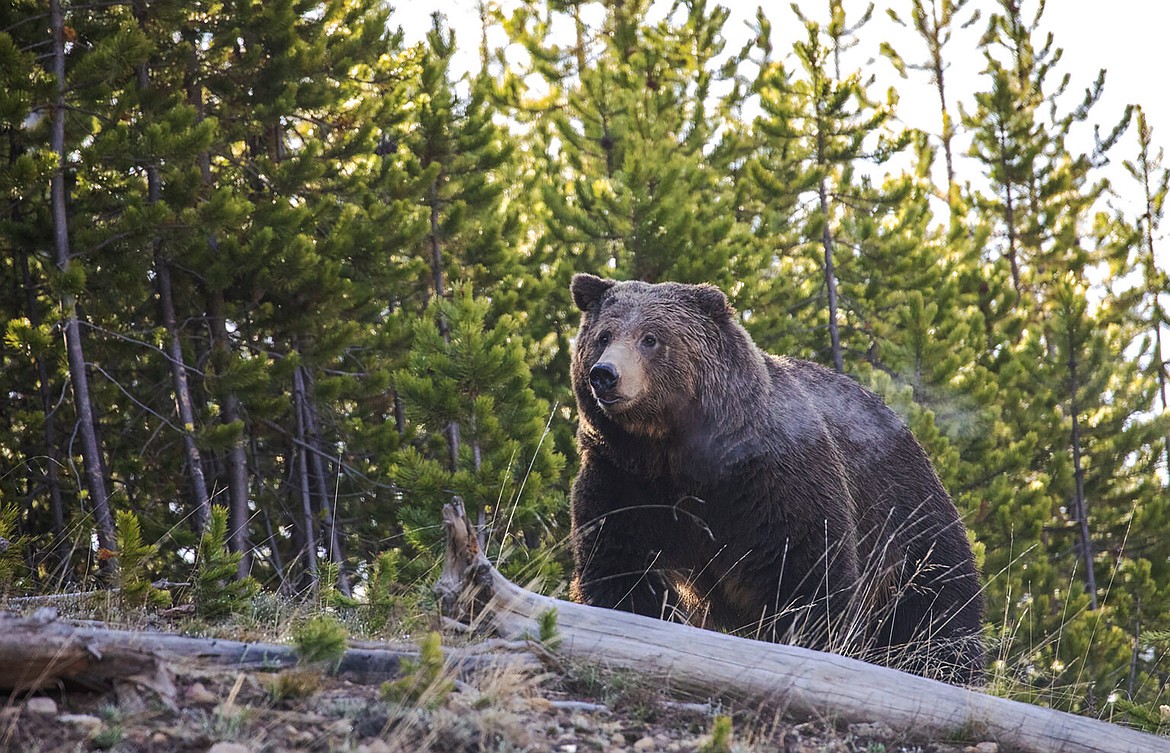
A grizzly bear photographed in Yellowstone National Park on May 19, 2020.
Photo by JIM PEACO / National Park Service
Seven long years ago the Alliance for the Wild Rockies, with the support of local residents, took the U.S. Forest Service to federal court to halt the Hanna Flats logging, road-building, and burning project on the Idaho Panhandle National Forests in northern Idaho. Through a long and winding legal saga the good news — for grizzly bears, old growth forests, and the local populace which strongly opposed the deforestation — is that a federal appeals court just ruled for the Alliance.
The logging project is located in the habitat of the imperiled Selkirk grizzly bears, which are in dire straits having been reduced to a mere 50 bears when the minimum needed for recovery is 100 bears. The bears suffer from human-caused mortality at unsustainable rates and are regularly displaced and harmed from logging and road-building in their habitat.
Even though grizzly bears are protected by the Endangered Species Act, for the Hanna Flats project, the Forest Service authorized unsustainable activities in this grizzly’s habitat: 2,203 acres of logging, 139 acres of burning, and addition of over 20 miles of motorized trails.
The agency also found over 30 miles of illegal user-created roads in the area when planning the project and instead of stopping the illegal use, the agency instead authorized reconstruction of some of these roads for use by commercial logging trucks during the logging project.
This is precisely the kind of conduct that ensures these grizzlies will go extinct if we don’t step in with litigation.
The Hanna Flats project is illegal because the Forest Service claimed that it could skip the normal environmental analysis process for the project because the project area was allegedly in a “wildland urban interface” area, but it turns out that the Forest Service ignored the definition of “wildland urban interface” that is actually found in the law.
Thus, its argument collapsed like a house of cards. The appeals court’s decision stands for the simple-to-understand concept that the Forest Service must follow the law just like anyone else. The agency cannot ignore the law and do whatever it wants with our public lands — particularly those public lands that are critically necessary for the survival of imperiled, endangered species like the Selkirk grizzly bear.
This is a big win for endangered grizzly bears, but in addition to protecting the grizzly bears, the court’s ruling also protects the rights of the homeowners in this area who strongly opposed the massive clearcutting operations that would destroy the forests around their homes and trails and lead to harmful sedimentation of rivers and streams.
Throughout the years of litigation, the local residents bravely stood up and spoke truth to power to protect their home. There is no doubt that their resistance and strength helped bring about this victory.
There is really no hope of recovering this imperiled grizzly population as required by the Endangered Species Act unless the government starts complying with the law. This court decision is one step in the right direction.