
Flathead Lake water clarity remains pristine, annual report says
Elsa Ericksen Hagadone News Network | Lake County Leader | UPDATED 1 day, 4 hours AGO
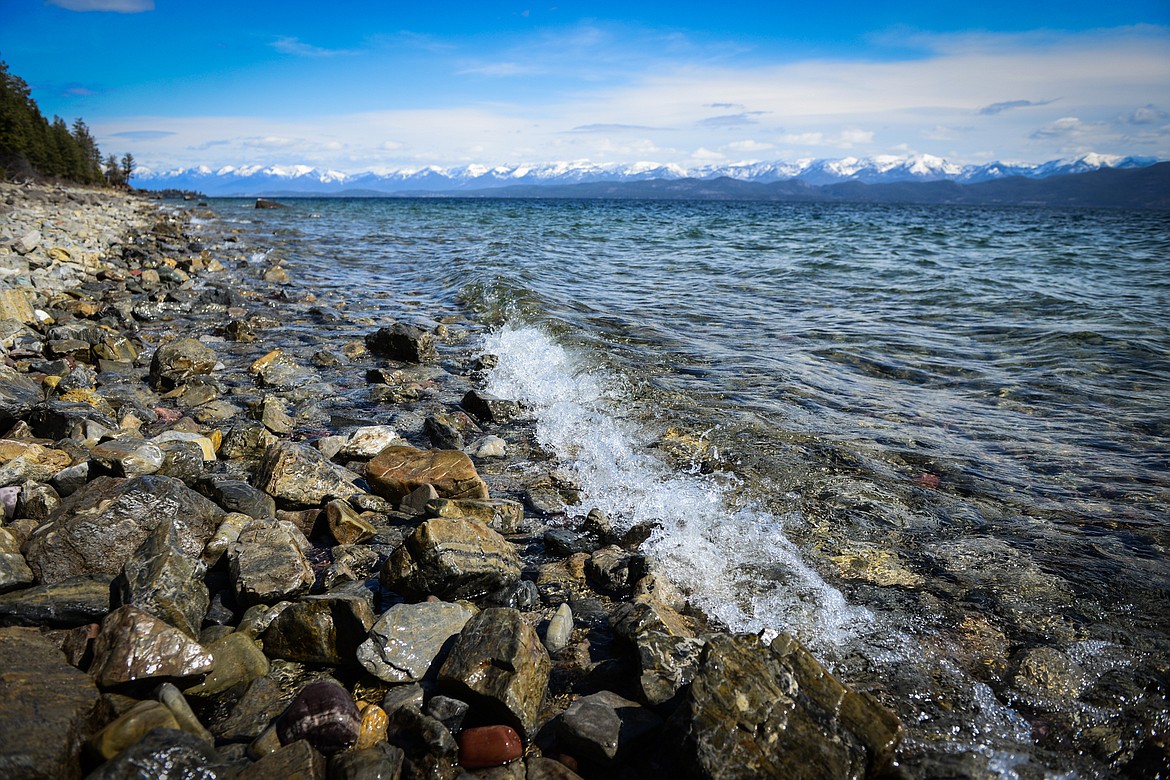
Waves crash on Flathead Lake in this file photo. Flathead Lake Biological Station scientists says they are beginning to learn more about microplastic pollution in the Lake. (Casey Kreider/Daily Inter Lake)
The decades-long effort to preserve Flathead Lake’s crystal-clear water continues to be a success, according to a new report from the Flathead Lake Biological Station.
The lake has shown “no consistent signs of long-term or even recent deterioration of the lake’s world-class water quality,” according to the biological station’s annual State of the Lake report released in June.
Since 1977, the University of Montana field station on Flathead Lake has tracked key metrics that directly impact the lake’s health, water clarity and aquatic life. The recently released report examined water samples from summer 2025 and found that all the data fell well within the historical norms for Flathead Lake.
The markers include water clarity, the abundance of planktonic algae, the concentration of dissolved oxygen and the concentration of phosphorus. Scientists monitor these specific trends because they can cause changes in the lake that are obvious to the average water recreationist: cloudy water, algal blooms and decreasing fish populations.
While the measurements for these markers shifted in a direction suggesting declining lake health from 2024 to 2025, the report indicates that this movement is normal and reflects typical annual variability. The long-term trends reveal that Flathead Lake’s water quality has remained consistent since the biological station began testing water samples nearly five decades ago.
When the biological station first started its monitoring program in the late 1970s, samples showed the early warning signs of declining water quality. Human activity increased nutrient and sediment levels through shoreline erosion and untreated sewage, as well as the introduction of non-native species, according to the Biological Station report.
The early results from water sampling spurred federal and state agencies to classify Flathead Lake as “impaired” and prompted the nation’s first ban of phosphate detergents, as well as the implementation of advanced wastewater treatment strategies.
The June report shows that ensuing efforts to preserve the lake’s ecosystem have thus far been successful, according to the biological station.
In 2025, Flathead Lake’s water clarity, measured by lowering a disk into the water until it is no longer visible, decreased slightly from the previous year but was still above the long-term average of 11.2 meters, according to the report. Water clarity, one of Flathead Lake’s defining characteristics, varies throughout the year, and measurements are recorded in the summer after the conclusion of the spring river runoff into the lake.
The abundance of planktonic algae, which the biological stations track by measuring chlorophyll concentration in the water, increased relative to last year but still falls well within historical trends. Clearer lakes, like Flathead Lake, have lower quantities of chlorophyll, while lakes with more chlorophyll are greener.
The concentration of deep-water oxygen decreased to 85% in 2025 compared to around 87% in the previous year. The data represent the percentage of the maximum oxygen concentration that water can hold at its given temperature, and higher values are better for aquatic organisms such as the various fish species found in Flathead Lake. While there was a decrease from the previous year, the biological station has observed a statistical increase in deep-water oxygen concentration since 1992, indicating a decrease in oxygen-consuming organic matter in the lake’s bottom waters.
The phosphorus levels in Flathead Lake showed no statistically significant increase from the previous year and remained below the long-term average. High phosphorus concentrations are known to cause algal blooms that degrade water quality, can be toxic, and can deplete oxygen levels in deep water. Wastewater, livestock runoff and agricultural fertilizer use are all common causes of phosphorus increases.
The biological station also monitors the Mysis shrimp population in Flathead Lake due to its impact on aquatic life and projects a slow increase in the species over the long term.
The non-native freshwater shrimp from the Midwest wreaked havoc on Northwest Montana’s lakes in the 1980s after they were introduced as a food source for kokanee salmon. But the salmon and shrimp feed on the same zooplankton, and the kokanee salmon population crashed. At the same time, fellow midwestern transplants, lake trout and lake whitefish, thrived on the new food source at the expense of native species like west slope cutthroats and bull trout.
To view the full 2025 State of the Lake Report, visit flbs.umt.edu/media/vmrhhm0e/stateoflakereport2025.pdf.