
Looking good
JOEL MARTIN | Hagadone News Network | UPDATED 2 months, 3 weeks AGO
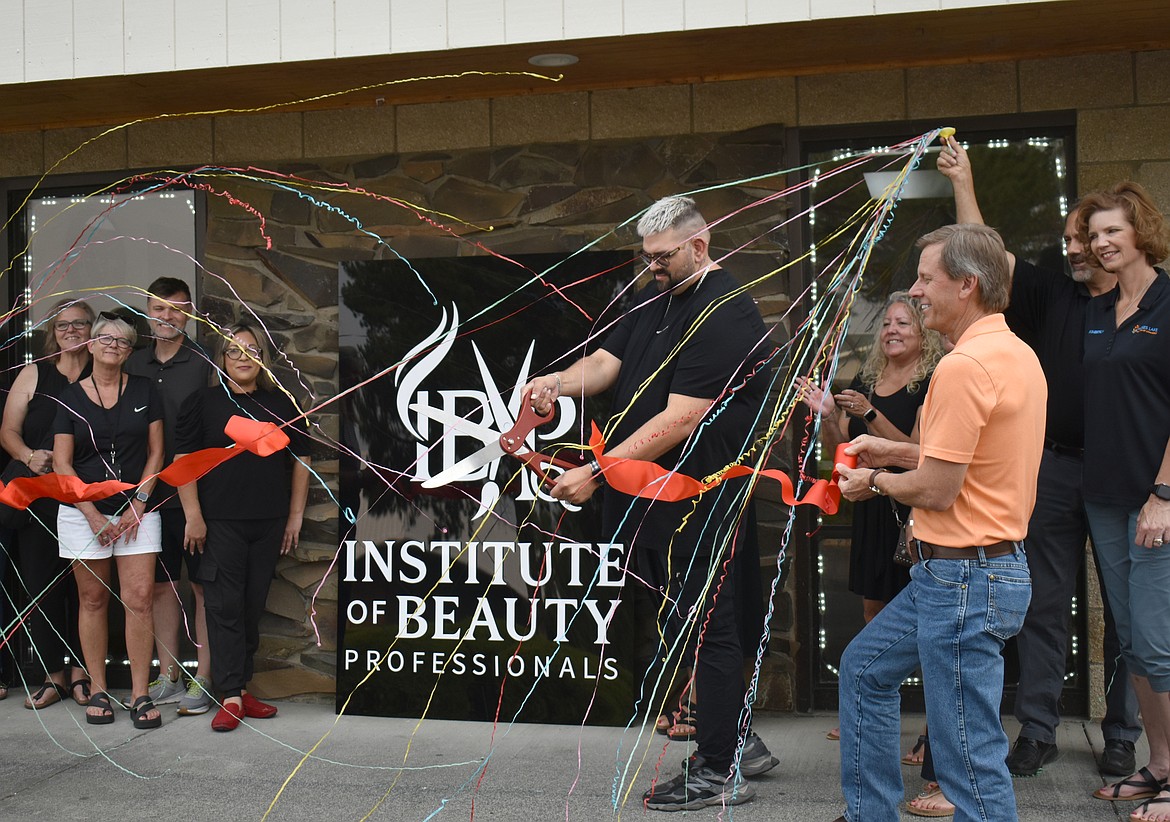
Institute of Beauty Professionals owner Nicholas Harle cuts the ribbon on his beauty school in Moses Lake, showered in streamers and surrounded by members of the Moses Lake Chamber of Commerce.
JOEL MARTIN/COLUMBIA BASIN HERALD
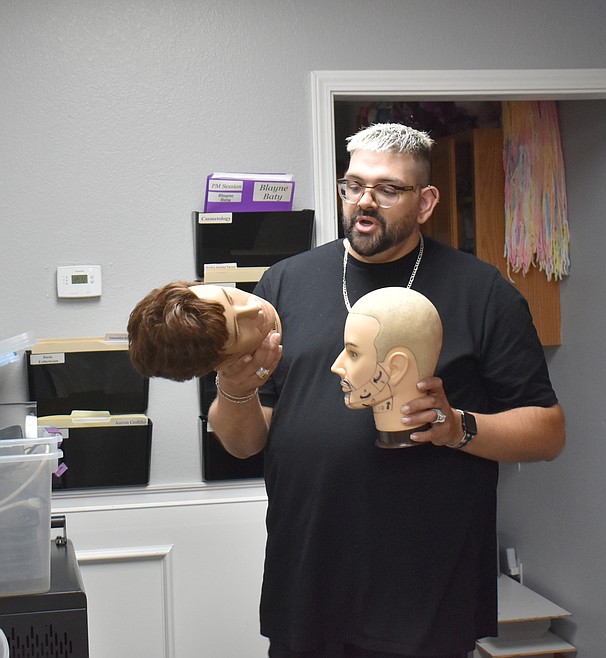
Institute of Beauty Professionals owner and instructor Nicholas Harle shows a couple of the practice heads IBP students use to learn proper hair-cutting and shaving techniques.
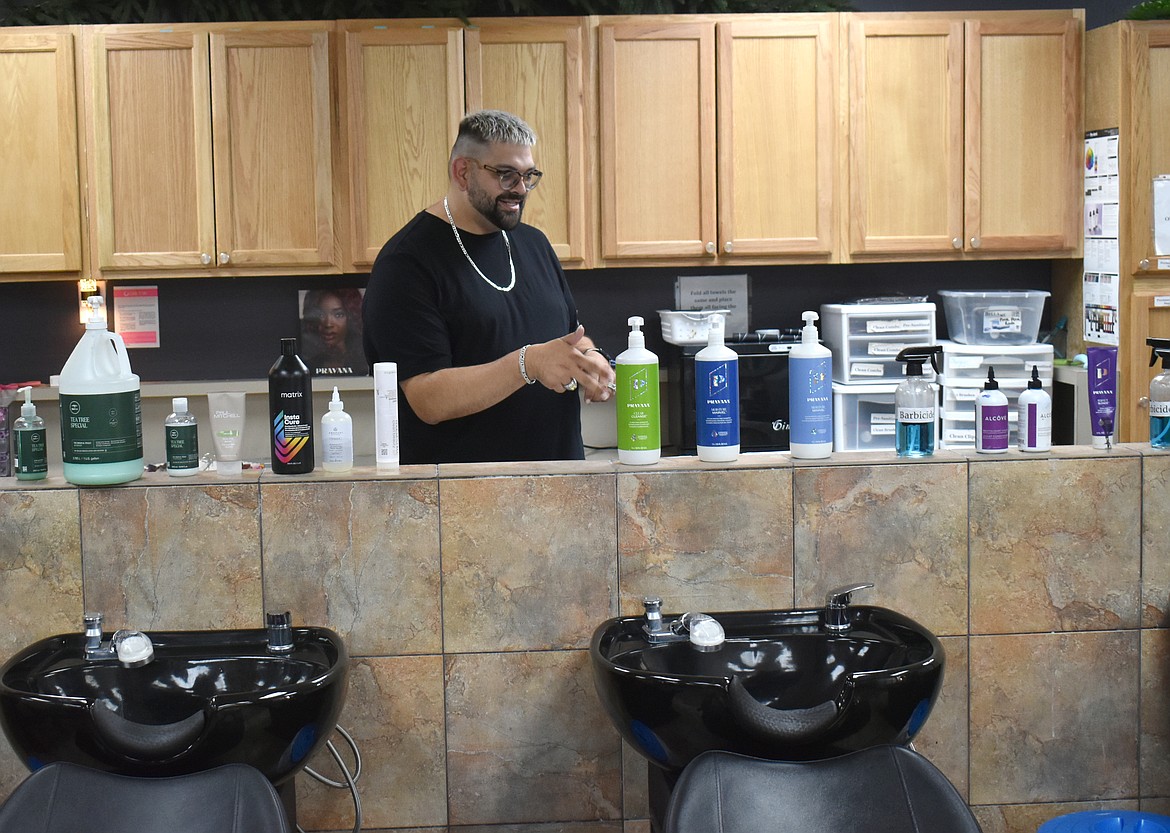
An important part of the instruction at IBP is safely handling some very potent chemicals, owner and instructor Nicholas Harle said.
Joel Martin has been with the Columbia Basin Herald for more than 25 years in a variety of roles and is the most-tenured employee in the building. Martin is a married father of eight and enjoys spending time with his children and his wife, Christina. He is passionate about the paper’s mission of informing the people of the Columbia Basin because he knows it is important to record the history of the communities the publication serves. | July 24, 2026 3:15 AM
MOSES LAKE — It takes a lot of training to make people look their best.
“(A license to do) nails is 600 hours (of instruction),” said Institute of Beauty Professionals owner and instructor Nicholas Harle. “Cosmetology is 1,640 hours, barbering is 1,000, hair design is 1,440 and aesthetics is 750.”
IBP takes its own private students and also serves the Columbia Basin Technical Skills Center’s cosmetology program, Harle said. Those students spend 2 1/2 hours a day at IBP and earn credits in lab science, technical science, first aid and fine arts, he said. There were 61 CBTECH students at IBP last year, he said, and there are about 25 full-time students.
The students learn more than just how to wield a pair of scissors, Harle said. They study things like human anatomy, safe handling of some pretty potent chemicals and how to formulate hair color, which involves a lot of math, he said.
“They also have to learn about business,” he said. “They learn soft skills: (projecting a) professional image, communicating for success.”
The students track their own hours and send the forms to the state, he said.
Their employment prospects are good once they finish, Harle said.
“Barbering is a hot commodity right now,” he said. “It fades out and comes back about every six years. Aesthetics is a hot commodity too, with eyelash extensions and brow laminations and eyelash lifts. A set of nails: in the Tri-Cities I know someone who charges about $185 a set. When I was working in the industry before I became an instructor, I was making $400,000 a year.”
Harle cut the ribbon on the school Tuesday, but he’s actually been open since March of last year, he said. Before that the school was known as Char-Glo School of Beauty, which his grandparents Charles and Gloria Determan had opened in 1979. The name was changed for legal reasons after Charles Determan passed away in 2025, Harle said.
Harle grew up in the beauty school, said his mom, Charlene Fuichs, who serves as IBP’s chief operating officer.
“He started at the age of 15,” Fuchs said. “He went through the CBTECH (cosmetology) program, graduated high school, got his cosmetology license and proceeded to move forward with his teaching.”
Becoming licensed as an instructor took another 500 hours of training, Harle said, and he also earned a degree in vocational teaching from Central Washington University.
“Education is a lot of work, and it’s continuous,” he said. “Either you’re learning with the students or you’re learning outside how to keep the students motivated and encouraged in the field they want to be in.”
IBP offers haircuts, coloring and other services to the public, in order to let the students get some training on real customers, who get the service at discounted prices.
“Most of the time they can just walk in and get the service,” Harle said. “They don’t have to wait too long.”
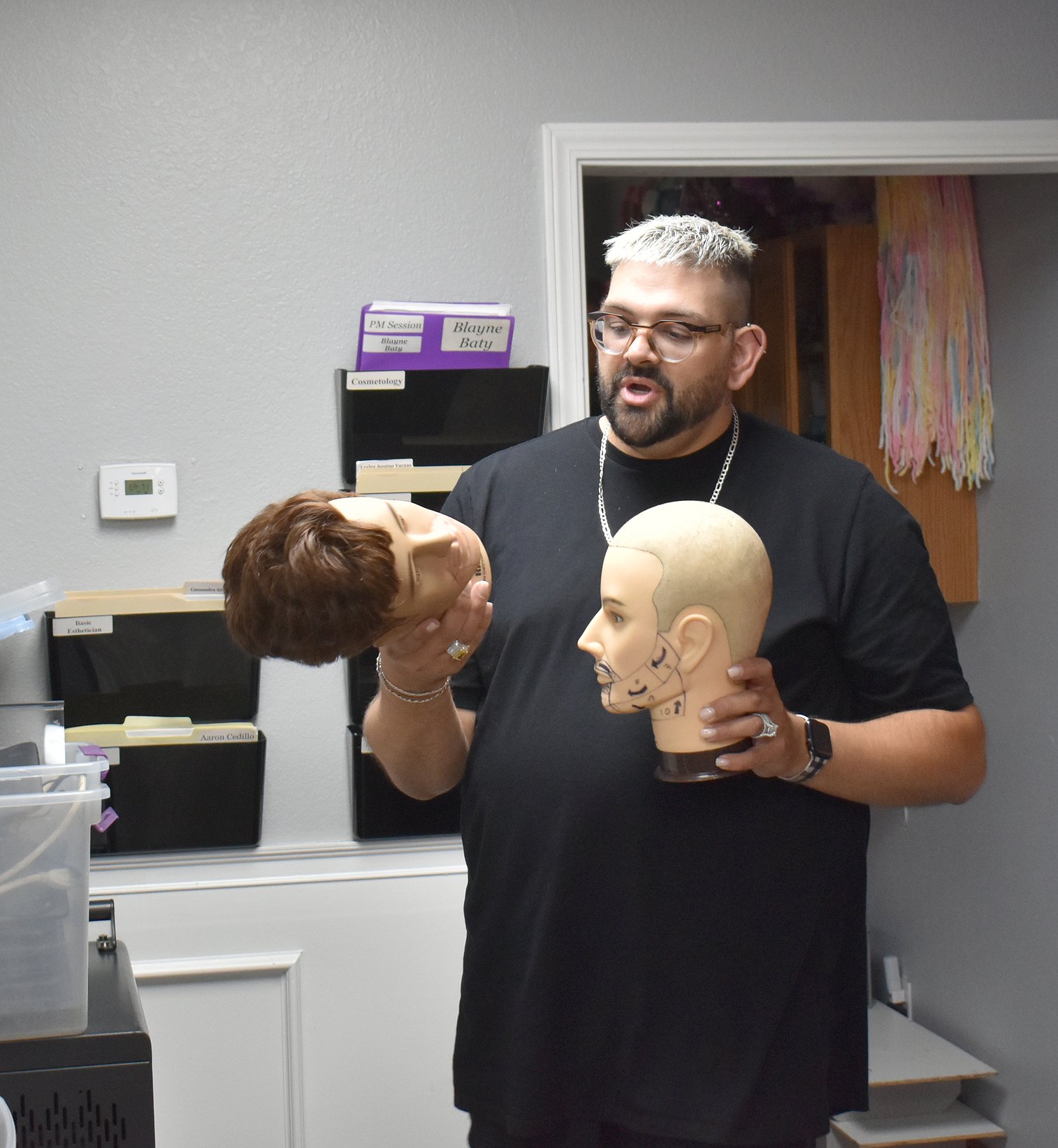 Institute of Beauty Professionals owner and instructor Nicholas Harle shows a couple of the practice heads IBP students use to learn proper hair-cutting and shaving techniques.
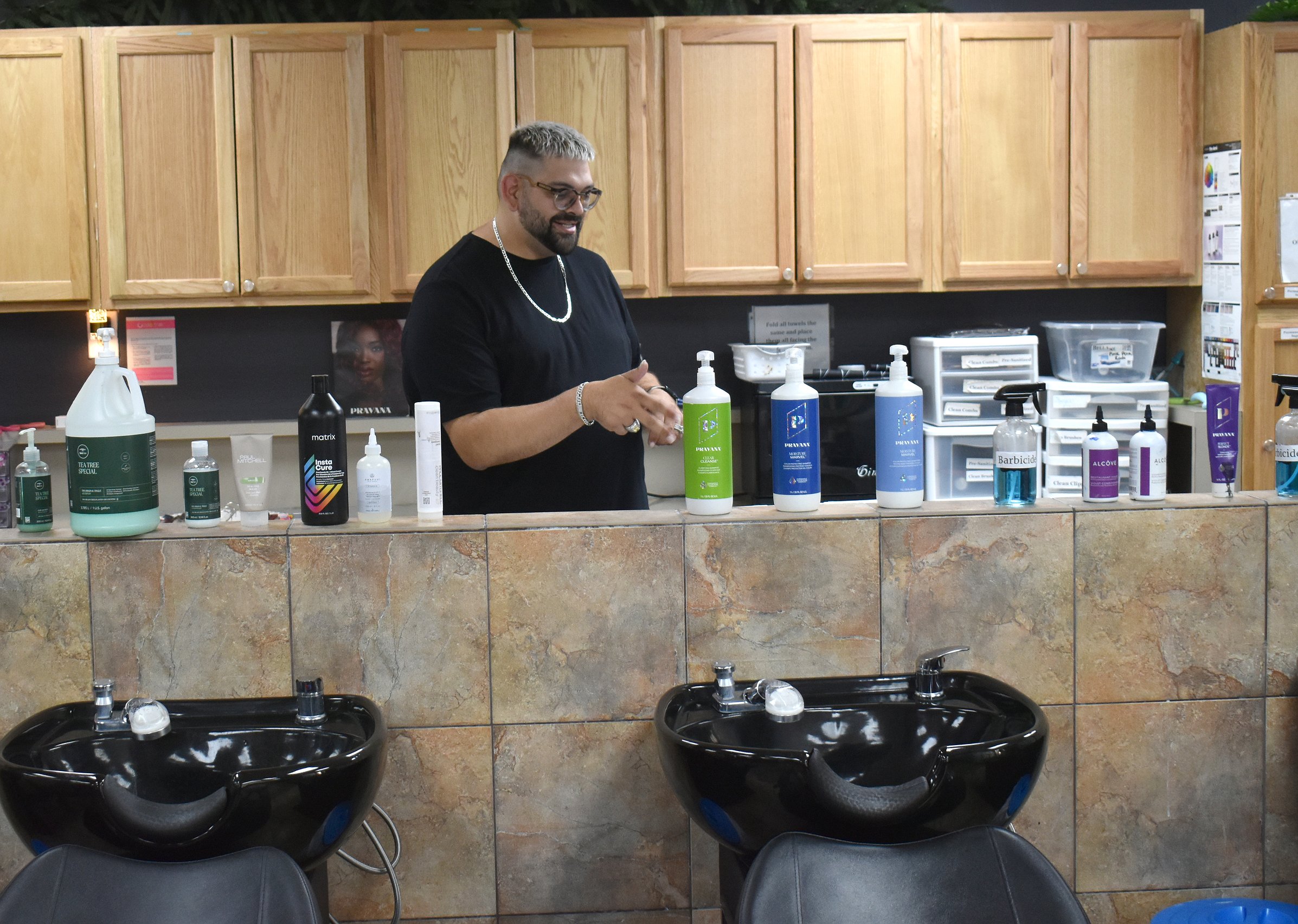 An important part of the instruction at IBP is safely handling some very potent chemicals, owner and instructor Nicholas Harle said.
ARTICLES BY JOEL MARTIN

Endless battle
Noxious Weed Control Board works to keep invasive plants under control
MOSES LAKE — Some of the nastiest plants in Grant County were the topic of a class led by Jay Johnson, a consultant with the Grant County Noxious Weed Control Board, Tuesday. The Noxious Weed Control Board, as its name would suggest, is tasked with keeping weeds under control in Grant County. That’s not a small job; the board’s website lists 129 species of noxious weeds that are found around Grant County. A noxious weed is defined as an invasive, non-native plant that threatens agricultural crops, local ecosystems or fish and wildlife habitat, according to the Noxious Weed Control Board. Washington state law requires that these weeds be identified and their spread kept to a minimum, if not completely eradicated. “We’re one of those agencies a lot of people don’t really understand,” Johnson said. “We’re a county office and … our funding is tax-based assessment. When you get your tax bill and you look down at all the expenses that you pay for, there we are.”

BASIN EVENTS: Oct. 16-24
COLUMBIA BASIN — Whether you feel like shopping, crafting, learning or seeing a show, there’s something happening for you this week in the Basin. Oct. 16 ‘My Family (Mi Familia)’ screening Spanning three generations, “My Family (Mi Familia)” is a heartfelt drama that follows the Sánchez family as they build their lives in East Los Angeles. Through love, hardship, triumph, and sacrifice, the film explores the immigrant experience, the strength of family bonds, and the traditions that connect one generation to the next. Lowrider show and taco truck before the screening. Sponsored by Columbia Basin Allied Arts, EDUBS C/S and the Moses Lake Creative District. $12 per person. Doors open at 6 p.m., film begins at 7 p.m. at the Moses Lake Civic Center Auditorium, 401 S. Balsam St. Tickets and info: www.cba-arts.org.

Moses Lake author encourages women to look beyond church culture norms
MOSES LAKE — A Moses Lake author’s book, “A Christian Woman Striving to Live Her Faith in a Man-Controlled World,” takes aim at the role to which many churches relegate the female half of their congregations. “It’s to encourage women in the faith,” Linda Curran said. “A lot of churches say, ‘Teach Sunday school, do this, do that, but don’t (evangelize.)’" In her book, Curran recounts a time when she moved to a new community and joined a church there. She was surprised to learn that, as a new female member, she had been automatically assigned church cleaning duties. When she questioned it, she wrote, she was met with condescension and her objections were brushed aside. In other churches, she said, women who were capable of teaching were relegated to “women’s ministry.”