
Sheriff: ICE partnerships should be left to local officials
Bonner County Daily Bee | UPDATED 19 hours, 54 minutes AGO
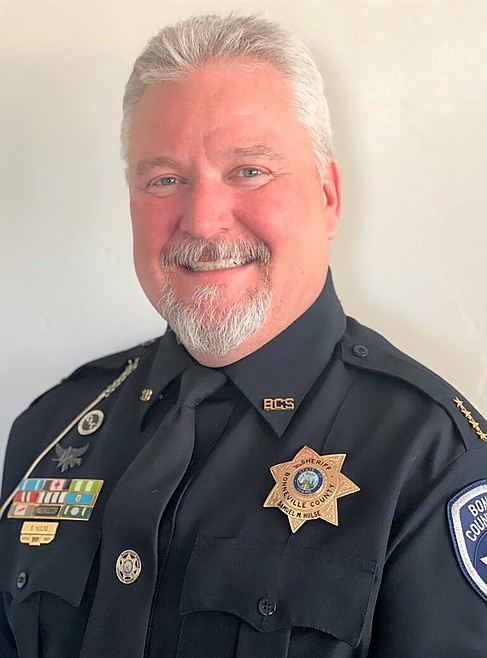
Hulse
An Idaho county sheriff told a committee of state legislators on Thursday that partnership agreements with ICE should be local decisions, not required by the Idaho Legislature or state government
“Participation in the ICE partnership programs is voluntary and should remain a decision of locally elected officials who are accountable to their communities they serve,” Bonneville County Sheriff Samuel Hulse told the Idaho Legislature’s Committee on Federalism during a meeting Thursday at the Idaho State Capitol in Boise.
“What I want to make clear is that it is the responsibility of the federal government to protect our nation from illegal immigration,” Hulse said. “We have a co-responsibility to ensure that they are effective in their jobs, but it is not local enforcement’s job to enforce the immigration policy of the nation.”
Hulse is president of the Idaho Sheriffs’ Association, which opposed a bill that Idaho legislators introduced earlier this year that would have required local law enforcement agencies to enter into partnership agreements with ICE.
In March, the Idaho House of Representatives voted 41-27 to pass House Bill 659 to require local sheriffs and police departments to sign 287(g) agreements with ICE, the Idaho Capital Sun previously reported.
But the Idaho Senate never took up the bill, and it died when the 2026 legislative session adjourned.
On Thursday, Hulse told legislators that capacity issues at local county jails and local budget constraints are two reasons why a local law enforcement agency may not be best served signing a formal partnership with ICE.
“Idaho counties, tribal governments and local law enforcement agencies should have the flexibility to determine whether participation aligns with their operational capabilities, public safety priorities and the needs of their communities,” Hulse said. “While this has been a hot-button subject for the Idaho Legislature recently, this approach reflects Idaho’s longstanding commitment to local control, recognizing that government is most effective when the decisions are made by those closest to the people they serve.”
Hulse told legislators that Idaho sheriffs already voluntarily cooperate with ICE in several ways without signing a formal 287(g) agreement. He said examples include providing ICE with inmate booking information and allowing federal authorities to interview and take custody of individuals.
“This existing collaboration ensures federal immigration enforcement responsibilities are fulfilled without requiring local agencies to assume those duties directly,” Hulse said. “Mandating 287(g) participation fails to recognize the diversity of Idaho counties. Sheriffs must prioritize core public safety responsibilities and the decisions to enter into federal agreement must remain a local one.”
In March, the Idaho House of Representatives voted 41-27 to pass House Bill 659 to require local sheriffs and police departments to sign 287(g) agreements with ICE, the Idaho Capital Sun previously reported.But the Idaho Senate never took up the bill, and it died when the 2026 legislative session adjourned.
On Thursday, Hulse told legislators that capacity issues at local county jails and local budget constraints are two reasons why a local law enforcement agency may not be best served signing a formal partnership with ICE.
“Idaho counties, tribal governments and local law enforcement agencies should have the flexibility to determine whether participation aligns with their operational capabilities, public safety priorities and the needs of their communities,” Hulse said. “While this has been a hot-button subject for the Idaho Legislature recently, this approach reflects Idaho’s longstanding commitment to local control, recognizing that government is most effective when the decisions are made by those closest to the people they serve.”
Hulse told legislators that Idaho sheriffs already voluntarily cooperate with ICE in several ways without signing a formal 287(g) agreement. He said examples include providing ICE with inmate booking information and allowing federal authorities to interview and take custody of individuals.
“This existing collaboration ensures federal immigration enforcement responsibilities are fulfilled without requiring local agencies to assume those duties directly,” Hulse said. “Mandating 287(g) participation fails to recognize the diversity of Idaho counties. Sheriffs must prioritize core public safety responsibilities and the decisions to enter into federal agreement must remain a local one.”