
AUG. NIBJ: Lessons in leadership
KAYE THORNBRUGH | Hagadone News Network | UPDATED 2 months, 2 weeks AGO
Kaye Thornbrugh is a second-generation Kootenai County resident who has been with the Coeur d’Alene Press for six years. She primarily covers Kootenai County’s government, as well as law enforcement, the legal system and North Idaho College. | July 28, 2026 1:00 AM
Leadership looks different in different fields and organizations, but the qualities that guide and inspire others often have common roots. Meet three local leaders in different spaces who bring with them unique experiences and insights into how they do it.
***
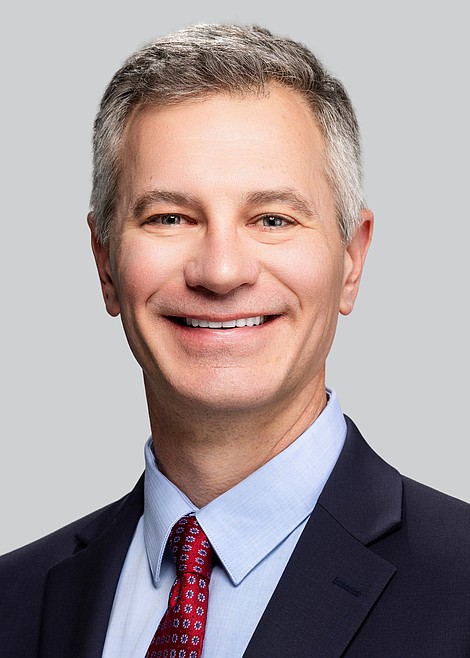
Jameson Smith, Kootenai Health CEO
Jameson Smith joined Kootenai Health as chief executive officer in 2024.
Smith is a mission-driven, seasoned health care executive with more than 25 years of leadership experience. He has served in leadership roles at multiple health care systems in a variety of markets. Throughout his career he has been committed to improving patient experience and clinical quality, valuing and empowering caregivers, and serving the community.
1. What does leadership mean to you? How do you apply that concept within your organization?
Like most leaders, I could write many pages in response to this question. But when I distill it down, I follow a simple model in this order:
1. Inspire
2. Challenge
3. Empower
4. Encourage, encourage, encourage
5. Repeat the cycle
It all starts with inspiration – defining our vision and purpose, why is it meaningful, declaring that we have the potential to be the best at what we do and that we are engaged in something bigger than ourselves. Inspiration is inherently optimistic and aspirational, but the goal is not simply “ra ra.” Rather, it is to gain buy-in from the organization that we have set our sights in the right direction. The second step is to challenge the team – set high standards, explain why we are not where we want to be, define the gap we must cover and transparently convey that there is real work to do. Third, after you’ve challenged a team, I believe you need to empower them to meet that challenge. This means involving them in the development of the plan (the how) to meet our goals and trusting them to run with it. In fact, empowerment really should be synonymous with trust. It also means deeply listening to your team in order to create a sensitive feedback loop that quickly identifies opportunities, removes barriers and reinforces accountability.
Finally, I list encouragement three times for a reason. When you ask people to do difficult things, I believe a leader must regularly uplift, praise and celebrate people during the hard work, rather than waiting for the outcome. As we all know, positivity, or conversely negativity, is contagious. A leader should set the tone and create an environment that fosters the right behavior. To use a simplistic example, encouragement is the fertilizer in the soil that makes plants more likely to grow and more likely to exceed the norm.
In terms of application, believe it or not, I’ve shared this model explicitly with my entire leadership team and we use it in real-world scenarios. In the past, I approached these concepts like “secret sauce.” I mean, who wants to be told, “First, I am going to inspire you…”? But I’ve found it to be very powerful to simply share my methodology and follow the steps so that everyone is on the same page.
2. How have you developed your leadership skills over time? Did you seek training, learn by doing or some other way? In what ways would you say you’ve grown as a leader?
While I wish I could recommend a magic book or podcast or course that changed my leadership journey, that was not my experience. I believe my leadership skills have developed as a result of time in grade at escalating levels of responsibility. I climbed the ladder without skipping a rung, but I didn’t stay too long at any one level. You just can’t substitute for experience, but you also must avoid getting stuck, becoming stale. I was able to do that by being open and flexible when the “next step” opportunity presented itself. This meant changing jobs, sometimes changing employers and certainly changing geography (my family has lived in six different places). And each time I started a new job, I had more and more confidence in how to achieve success (and what not to do).
In addition, as a result of putting myself into different situations, I met a tremendous number of colleagues, mentors and friends who have helped me so much along the way. That network is a powerful multiplier of leadership skills because out of those relationships, you can add to your toolkit: take what works for you, discard what doesn’t work for you and, when you really don’t know what to do, you can reach out to a trusted confidante.
3. Can you share a challenge you’ve faced as a leader? How did you overcome it? What did you learn from it?
When I started my last leadership role, President of Saint Joseph Hospital in Denver, Colo., we were average in terms of patient satisfaction. It was holding us back from achieving many other goals – Magnet Designation for Nursing Excellence, CMS 5 Star Quality Rating and limiting our growth. We set a goal to be a top decile performer in two years. Going back to my leadership model in Question #1, everyone bought into this aspirational goal. It took a relentless focus by the whole team and I had to “walk the walk” with a high degree of visibility and a big chunk of my calendar. We also challenged each unit and created competition among the units, which created lots of creativity. We quickly adopted tactics that worked on one unit across the organization and failed fast with things that didn’t work. This was highly supported by data analysis, which helped us avoid wasting time on things that didn’t move the needle. Finally, we praised even small incremental improvement and celebrated success along the way. In the end, we achieved 92nd percentile performance. Most importantly, we stayed above the 90th percentile for five years in a row.
4. Similarly, what’s an example of a leadership win that you’re proud of? How did you make it happen?
Related to the patient experience story above, I’m most proud of achieving Magnet Nursing Excellence designation at my last two organizations. Neither organization could even apply when I arrived and both achieved (and sustained) their designation. Magnet is really an organization-wide achievement and only about 10% of hospitals receive this designation nationally. Fortunately, Kootenai Health has been a Magnet organization since 2006! We just went through our fifth accreditation survey, which is extremely rare air. I’m confident we will receive our accreditation, which will mean Kootenai Health will be Magnet level for over 25 years!
5. What do you wish you’d known when you first stepped into a leadership position, whether at your current organization or one in the past? What advice would you share with someone who’s in the same position and looking to grow as a leader?
The most important thing I’ve learned is to have a sense of urgency in leadership. Don’t admire problems and don’t accept mediocracy. Setting the bar too low is an insidious approach. Also, I’m not a big fan of long-range strategic plans. You’ve got to have one, don’t get me wrong. But more often than not, businesses and life are too dynamic to adhere strictly to a plan. Rather, it is more important to establish your identity and your values. This will allow you to accomplish things in smaller chunks, take advantage of unforeseen opportunities and build strength/confidence over time that enable the big wins to happen.
I would share two inspirational quotes to reinforce this perspective:
“Life is no brief candle to me. It is a sort of splendid torch which I have got a hold of for the moment and I want to make it burn as brightly as possible before handing it on to future generations.” — George Bernard Shaw
“A ship in the harbor is safe, but that is not what ships are built for.” — John Shedd
***
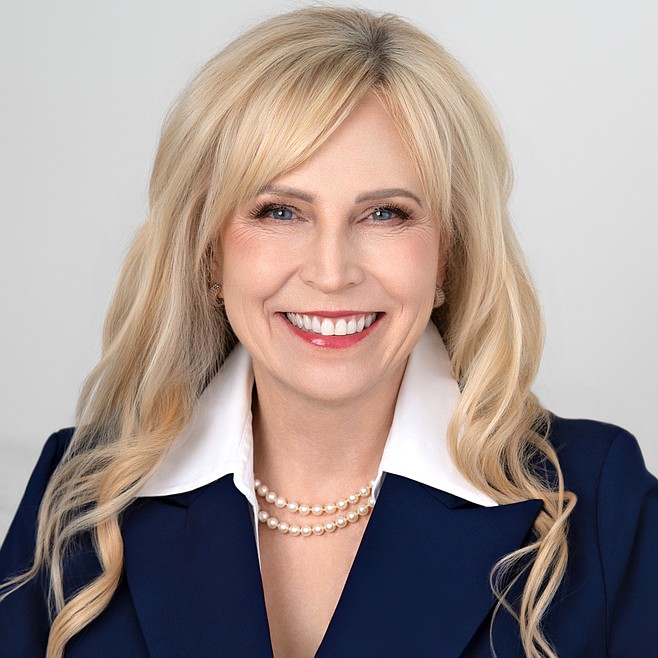
Tarie Zimmerman, North Idaho College Trustee, business owner, financial advisor
Tarie Zimmerman chairs the North Idaho College Board of Trustees, where she focuses on strengthening governance, fostering collaboration and advancing student success.
She also serves on the Association of Community College Trustees Public Policy and Advocacy Committee, where she contributes to national conversations on governance, workforce development, affordability and student access. She has presented on board governance and policy at the ACCT Leadership Congress and the Northwest Commission on Colleges and Universities Annual Conference.
Professionally, Zimmerman is the owner and financial advisor at STAR Financial Wealth Management in Coeur d’Alene. Before entering financial services, she worked in aerospace engineering for a Fortune 500 company, bringing an analytical and strategic perspective to her leadership.
Zimmerman is one of the founders of the North Idaho Women and Their Money Conference. She is also an active member of the Rotary Club of Coeur d’Alene.
1. What does leadership mean to you? How do you apply that concept within your organization?
I believe leadership is the responsibility to evaluate complex situations, make thoughtful decisions based on the best available information and be fully accountable for those decisions. It is built on trust, integrity and the ability to inspire others to work toward a common purpose.
As chair of the North Idaho College Board of Trustees, I view leadership as stewardship. Trustees are elected to act in the best interest of the institution, its students and the community it serves. Every decision should support the college's mission while considering both immediate needs and long-term outcomes.
I also believe effective leadership is collaborative. One of the greatest strengths of a governing board is the variety of perspectives around the table. As chair, I encourage every trustee to contribute to the discussion because thoughtful dialogue leads to better decisions. My role is to create an environment where ideas can be openly shared, carefully evaluated and refined until the best solutions emerge.
Ultimately, leadership requires both conviction and humility. After carefully evaluating the facts and reaching a conclusion, I have a responsibility to communicate it clearly, listen respectfully and build consensus around the best path forward.
2. How have you developed your leadership skills over time? Did you seek training, learn by doing, or some other way? In what ways would you say you've grown as a leader?
My leadership has developed primarily through practical experience. Over the years, I have taken on increasing responsibility in my professional career, nonprofit organizations, church, youth sports and now higher education governance. Each role has given me opportunities to navigate challenges, make thoughtful decisions and contribute to positive outcomes.
One experience that shaped me profoundly happened when I was a young mother. My two-year-old son became critically ill. Thankfully, he recovered, but that experience taught me the true meaning of community. I learned that leadership is not about carrying every burden yourself; it is also about allowing others to help. Giving people the opportunity to contribute creates stronger relationships, builds trust and reminds us that we accomplish far more together than we ever could alone.
Over time, I have become more confident in making difficult decisions. I seek out information, listen carefully to different perspectives and recognize that most issues are complex, not simply black and white. After thoughtfully evaluating the facts and considering the long-term impact, I am prepared to make a decision and stand behind it. My experience has taught me resilience, strengthened my judgment and reinforced the importance of listening, collaboration and accountability. Every challenge has made me a better leader.
3. Can you share a challenge you faced as a leader? How did you overcome it? What did you learn from it?
One of the greatest leadership challenges I have faced was during my first two years as a trustee for North Idaho College. At the time, I was part of the board minority while the college was experiencing significant governance challenges that ultimately resulted in accreditation sanctions. Although I did not have the votes to change the board's decisions, I realized that leadership is not defined by authority alone, it is defined by integrity, preparation and perseverance.
I came to every meeting prepared, thoughtfully evaluated each issue and respectfully explained my positions, even when I knew I would be in the minority. I believed it was important to demonstrate the principles of good governance through my actions, remain respectful of differing viewpoints and consistently advocate for what I believed was in the best interest of the college, its students and the community.
That experience also shaped my work on the Board Policy Subcommittee. Working alongside trustees with different perspectives, our goal was to modernize board policies that had not been comprehensively reviewed in more than a decade. Rather than insisting on every change at once, we focused on building consensus around meaningful improvements that everyone could support. Those policy revisions were ultimately adopted and established a stronger governance framework for the future.
The experience taught me an important lesson; meaningful change is often incremental. Effective leaders recognize that progress is built one step at a time. By remaining patient, principled and focused on the long-term mission, you can continue moving an organization forward, even when the path isn't as fast or as straightforward as you would like.
4. What's an example of a leadership win that you're proud of? How did you make it happen?
One of the leadership accomplishments I am most proud of is helping guide North Idaho College back to good standing with its accreditor after one of the most challenging periods in the institution's history.
When I was first elected to the Board of Trustees, the college faced significant governance challenges that ultimately resulted in a "Show Cause" sanction. This is the final level of accreditation sanction before loss of accreditation. During that time, I focused on what I could control: preparing thoroughly, modeling effective governance, advocating for sound decision-making and remaining steadfast in my commitment to the college's mission.
After the 2024 election, the Board of Trustees had an opportunity to move forward with a renewed commitment to collaboration, accountability and effective governance. From our first meeting, we worked together to rebuild trust, strengthen board practices and demonstrate consistent adherence to accreditation standards. Over the following 15 months, the Board of Trustees, President Swayne, the college administration, faculty, staff and students all played important roles in that effort. Together, we remained focused on our shared mission of serving students and restoring confidence in the institution.
On Feb. 9, 2026, the Northwest Commission on Colleges and Universities removed the college's sanctions and restored North Idaho College to good standing. That achievement was the result of working toward a common goal and I am proud to have been part of the leadership team that helped guide the college through that transformation.
Leadership isn't tested when everything is going well; it's tested when an organization faces adversity. Those moments reveal your character, your values and your commitment to the mission. I am proud that our Board remained focused on that mission and demonstrated that principled, collaborative leadership can restore trust and create lasting, positive change.
5. What do you wish you'd known when you first stepped into a leadership position? What advice would you share with someone who's in the same position and looking to grow as a leader?
Looking back, I realize I would have benefited from a greater appreciation for the importance of learning before leading. Every organization has its own history, culture, strengths and challenges. Taking the time to understand how an organization arrived where it is today provides valuable context for making thoughtful decisions about its future.
I would also tell a new leader that listening is one of the most important skills they can develop. Listen to understand, not simply to respond. People need to feel heard and many of the strongest ideas come from those who bring different perspectives, experiences and insights.
Above all, lead with integrity. Speak truthfully, prepare thoroughly and make decisions you can stand behind with confidence. Leadership is not about having all the answers; it is about asking good questions, evaluating the facts and acting in the best interest of the organization and the people it serves.
Finally, be patient. Meaningful change rarely happens all at once. Build trust, focus on what can be achieved today and continue working toward the larger vision. Lasting leadership is measured not only by how quickly change occurs, but by how well you build a foundation others can continue.
I've come to believe that leadership is less about directing others and more about serving them. When you lead with integrity, listen with humility and remain committed to the mission, people often accomplish far more together than any one leader could accomplish alone.
***
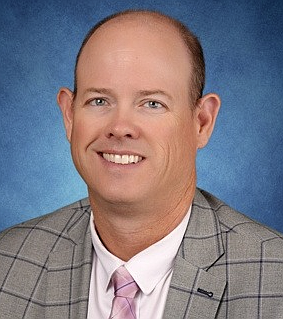
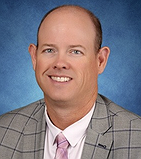
Dr. Shon Hocker, Coeur d'Alene Public Schools Superintendent
Before coming to Coeur d'Alene in 2021, Dr. Shon Hocker served as superintendent of Dickinson Public Schools in Dickinson, N.D. for four years and superintendent of the Big Horn School District in Cowley, Wyo. from 2007 to 2018. In 2016, he was named Wyoming Superintendent of the Year. From 2004 to 2007, he served as principal of Shelley High School in Shelley, Idaho.
Dr. Hocker received his doctorate in educational leadership from Idaho State University in 2016 and a Master of Science from Idaho State University in 1999.
1. What does leadership mean to you? How do you apply that concept within your organization?
To me, leadership is about service and empowerment. It’s about clearing the path so our teachers, staff and students can thrive. Within our district, I apply this by practicing collaborative leadership. I believe the best decisions aren't made in a vacuum, so I work to ensure our educators and community members have a seat at the table. When our staff feels supported and valued, that energy directly translates into successful learning environments for our students.
2. How have you developed your leadership skills over time? Did you seek training, learn by doing, or some other way? In what ways would you say you’ve grown as a leader?
Over 32 years serving in education, my growth has been a healthy mix of formal training, mentorship and "learning by doing." I am fortunate to have worked with, or been mentored by, some of the best educators in Idaho and the country.
However, there is no substitute for the wisdom gained on the ground. Over the last two decades as a superintendent, my greatest area of growth has been transitioning from a leader who felt I had to have all the answers to one who knows the real strength lies in asking the right questions and listening to those answers.
3. Can you share a challenge you’ve faced as a leader? How did you overcome it? What did you learn from it?
One of the most persistent issues in school leadership is balancing rising operational costs and evolving student needs with tight, unpredictable budgets. We have overcome this challenge by shifting from a traditional top-down budgeting model to a student-centered, strategically aligned, collaborative budgeting process.
We focus on what directly impacts teacher and student success in the classroom. By prioritizing our spending and streamlining administrative costs, we have kept our community’s valuable resources where they matter most. I learned that financial constraints don't have to mean a compromise in educational quality. When you treasure community partnerships and align your budget directly with your core values, you find creative solutions you never would have seen working alone.
4. Similarly, what’s an example of a leadership win that you’re proud of? How did you make it happen?
There are so many things I am proud of. It is difficult to pinpoint just one. My proudest leadership win isn't a single event; it is the sustained culture of excellence we’ve built right here at Coeur d'Alene Public Schools. We are incredibly proud to be a high-achieving district - an accomplishment that is directly fueled by our tremendous community support.
We made this happen by intentionally knocking down the walls between our schools and the community. By prioritizing transparent communication and inviting families, local businesses and taxpayers to be active partners in our vision, we are turning shared goals into reality. Seeing our community rally behind our students and staff year after year to ensure they reach those high academic benchmarks is, without a doubt, one of the greatest wins of my career.
5. What do you wish you’d known when you first stepped into a leadership position, whether at your current organization or one in the past? What advice would you share with someone who’s in the same position and looking to grow as a leader?
I wish I had known that leadership is a marathon of relationships, not a sprint of tasks. Early on, it’s easy to get buried in paperwork, policy and politics, but the human element is what truly moves a district forward. My advice to rising leaders is simple: Listen more than you speak. Protect your people. Remember that you can’t lead people where they do not trust you to take them. Focus on building that trust first and the rest will follow.
 Zimmerman
 Hocker
ARTICLES BY KAYE THORNBRUGH

Stateline shooter pleads guilty to manslaughter
A DoorDash driver who fatally shot a pedestrian during a road rage incident near Stateline Speedway has pleaded guilty to voluntary manslaughter, though whether a judge will accept the pretrial settlement offer in the case remains to be seen.
Stateline shooter pleads guilty to manslaughter
Prosecutors originally charged Edsel Johnson with first-degree murder
A DoorDash driver who fatally shot a pedestrian during a road rage incident near Stateline Speedway has pleaded guilty to voluntary manslaughter, though whether a judge will accept the pretrial settlement offer in the case remains to be seen.

Kootenai County history revealed
Community members get close-up look at time capsule contents
Liz Boutin is no stranger to historical artifacts. A museum professional and fine artist, Boutin said she's handled Egyptian and Greek items that date back to antiquity. But she had a new experience this summer, after local historical preservationists retrieved a 100-year time capsule from inside the outer wall of the old Kootenai County courthouse.