AUG NIBJ: Servant leaders in a local community
BOB KIRKPATRICK | Hagadone News Network | UPDATED 2 months, 3 weeks AGO
Unlike leaders who focus on authority or control, servant leaders listen actively to community members’ concerns, empower others to take ownership of solutions, foster inclusion by valuing diverse perspectives and build trust through transparency and ethical action.
They are individuals who lead by serving others first, prioritizing the needs of neighbors, organizations, and the public good over personal gain. They are rooted in the philosophy introduced by Robert K. Greenleaf in 1970, which emphasizes caring, humility, integrity, empathy, and a commitment to others' growth.
Servant leaders are also mentors who guide youth or new residents and help them build skills and confidence.
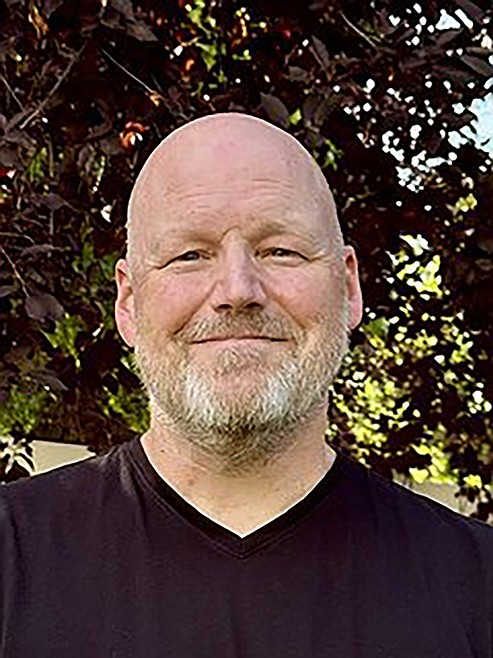
Patrick Marshall, founder of Servant’s Compass based in Coeur d’Alene, is one such individual who guides people and organizations through change with clarity and confidence.
“At Servant's Compass, I work with people with disabilities or veterans transitioning into civilian life,” Marshall said. “I focus on identifying barriers, setting clear goals, and developing actionable strategies for lasting success.”
His services reflect a commitment to servant leadership and supporting individuals, particularly those with disabilities, in rediscovering purpose and achieving personal and professional growth.
Marshall is also the president of the Autism Society of Idaho.
“The Autism Society's wonderful,” Marshall said. “The developmentally disabled and those with mental health issues in our communities need all the support they can get, but we are understaffed and underfunded and are on the verge of going away, and that’s the last thing we want to see.”
Working with people with autism and developmental disabilities can be challenging and requires building a trust base.
“Trust — it’s the number one thing — you must meet people where they are. If somebody's having a bad day, you can’t march in and be a jerk,” Marshall said. "This line of work requires empathy and care for people. If genuine about it, you're going to be successful at it — going to connect on some level.”
Marshall said his motivation to help people stems from a natural inclination.
“I was a local high school dropout and was accepted by the Coast Guard on a recruiting program for people without degrees. It was like someone was looking out for me,” Marshall said. “It was a complete one in a million fluke that I got the opportunity to do what I'm doing now, and it’s always been a priority to pay that forward.”
Marshall said he realized that being in the Coast Guard was his launch point.
“I'm not going to squander this. You know, I couldn't spell when I joined, and it was just terrible. Then I started going to school and got my degree in psychology,” Marshall said. “And becoming a leader — leading people — not being a leader, and a good supervisor came naturally for me. I care for people who I grew up with and are working in this and the surrounding communities."
Marshall said selflessness is the most important characteristic of a good leader.
“You're going to meet all kinds of leaders. Some feel that because they are the boss, they don’t have to do any of the grunt work,” Patrick said. “I always felt strongly that a boss needs to give people meaningful work so that they can get better and learn everything they need to be successful.”
He said connection, resilience and the ability to listen are also important characteristics of good leadership.
“Being a good communicator is essential, but connection is so much deeper. Having empathy — being able to read a room and get a check feeling and asking, how are we doing today?” Marshall said.
He added that listening is a tremendous part of being a leader as well.
“Behind every complaint, there's a hidden request,” Marshall said. “If you are really listening as a leader, you might actually hear what it is they're asking for."
If leaders are truly practicing empathy and connection, Marshall said, they’re going to grasp those things.
“The more you exercise something, the more that becomes muscle memory,” Patrick said. “You want to be able to get your finger on the pulse of things and find out what they know to be successful.”
Marshall founded Servant's Compass a little over a year ago.
“It’s still kind of in the exploration stage, but I’m doing what I feel is important under that umbrella,” Patrick said. “My goal is to establish a little more robust team to where we're doing consulting and going in and working with companies to understand better and appreciate more the people who work for them.”
ARTICLES BY BOB KIRKPATRICK

Experts urge businesses to embrace AI
iTech Summit targets AI’s expanding role in everyday life

New Apothecary opens in Rathdrum
The store carries over 300 herbs