
For Flathead Lake's orchards, cherry farming is a family affair
ELSA ERICKSEN | Hagadone News Network | UPDATED 2 months, 2 weeks AGO
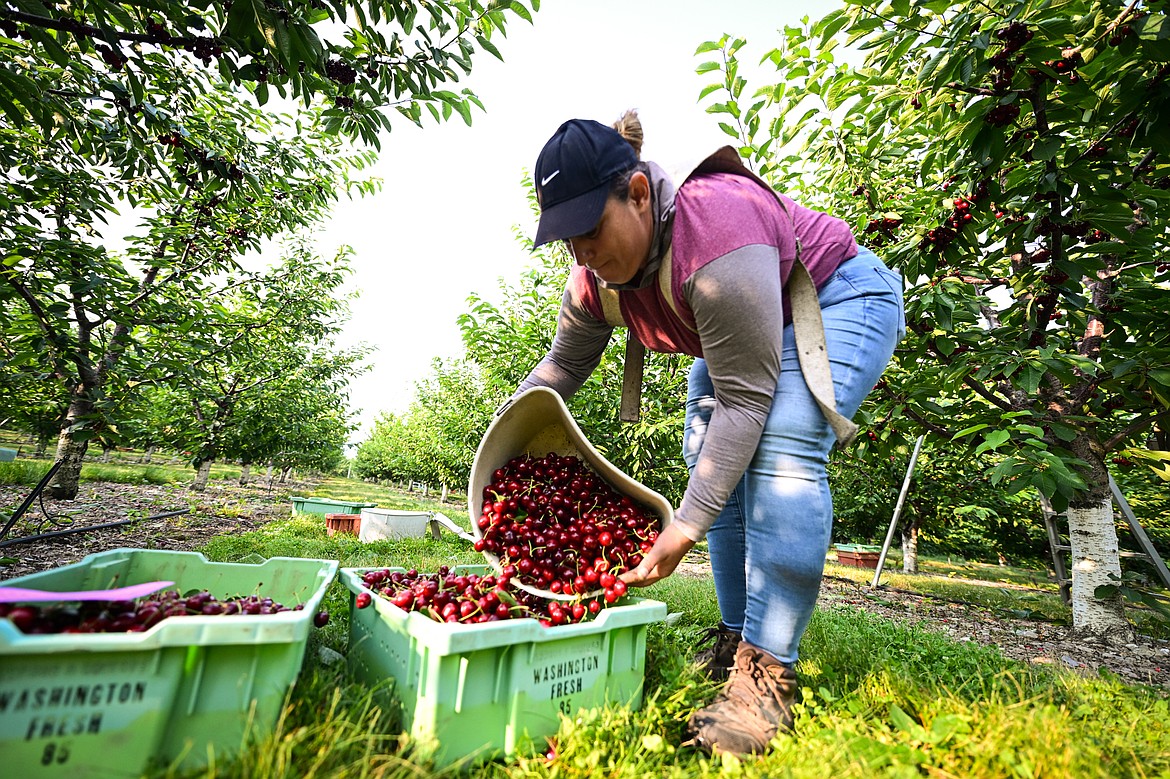
Alma Ruelas harvests lapins cherries at Buena Vista Orchard on Wednesday, July 22. (Casey Kreider/Daily Inter Lake)
Casey Kreider
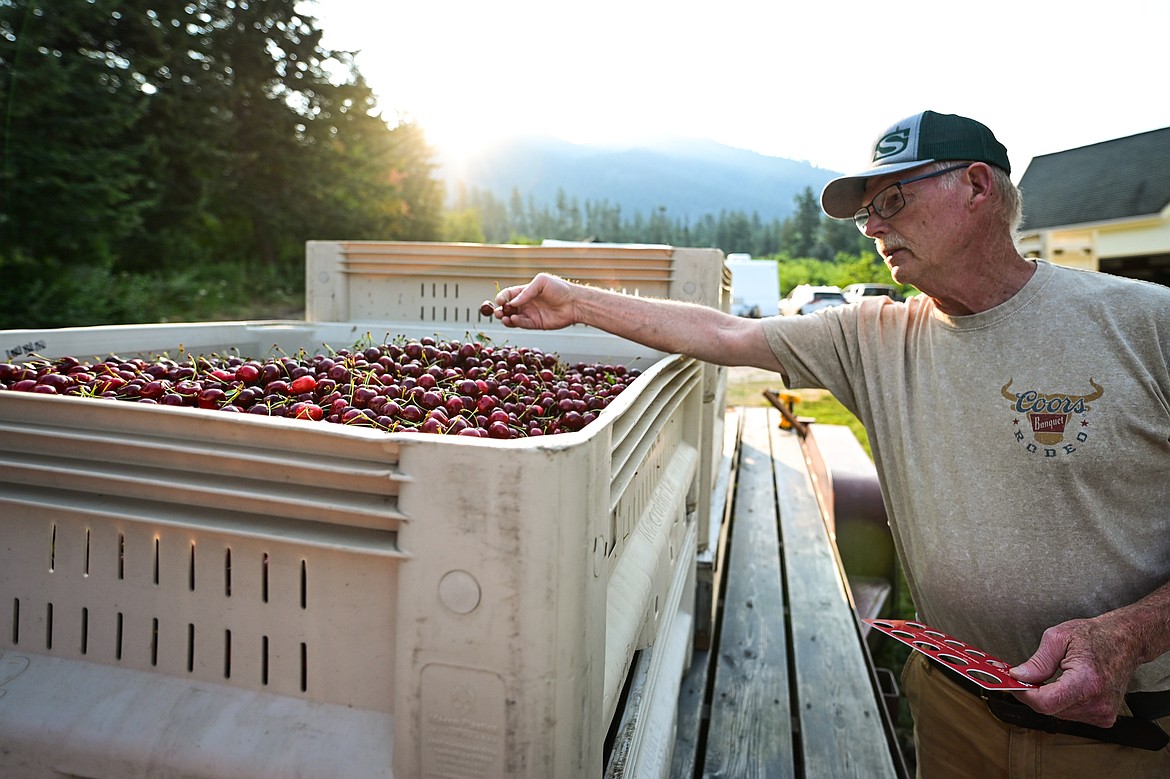
Bruce Johnson sifts through a bin of lapins cherries using a cherry sizing card at Buena Vista Orchard on Wednesday, July 22. (Casey Kreider/Daily Inter Lake)
Casey Kreider
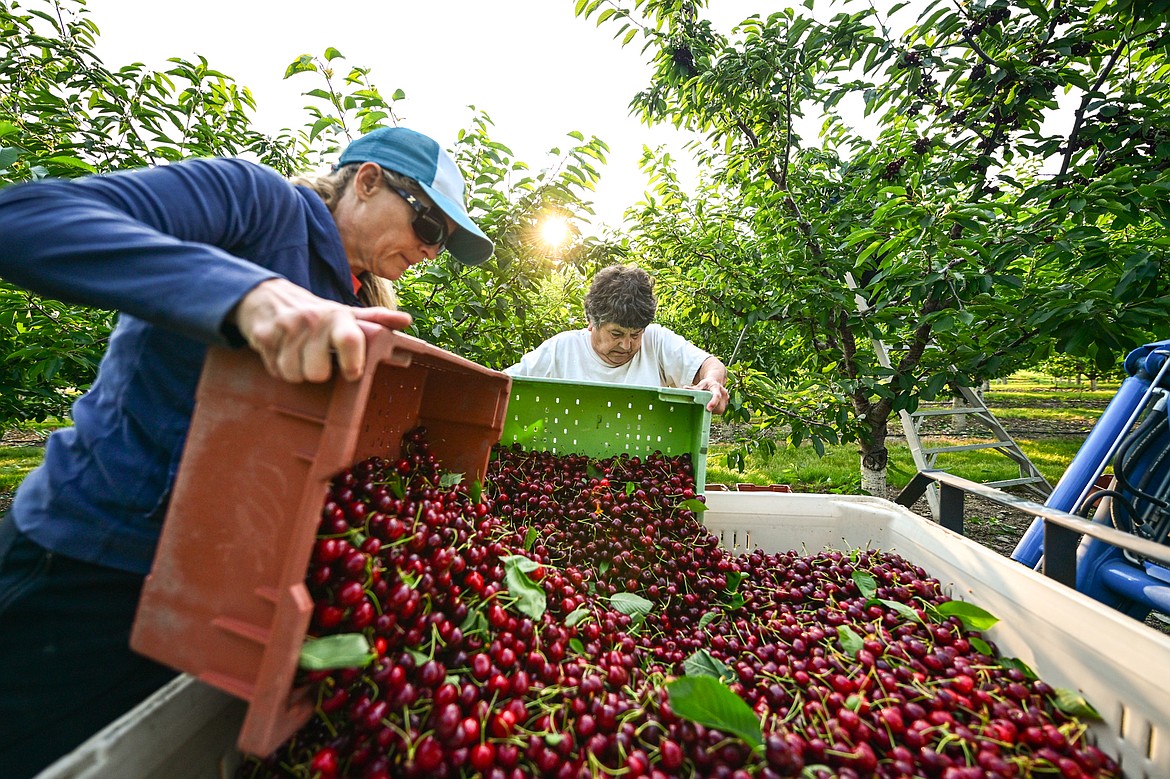
Claudine and Lynn Johnson harvest lapins cherries at Buena Vista Orchard on Wednesday, July 22. (Casey Kreider/Daily Inter Lake)
Casey Kreider
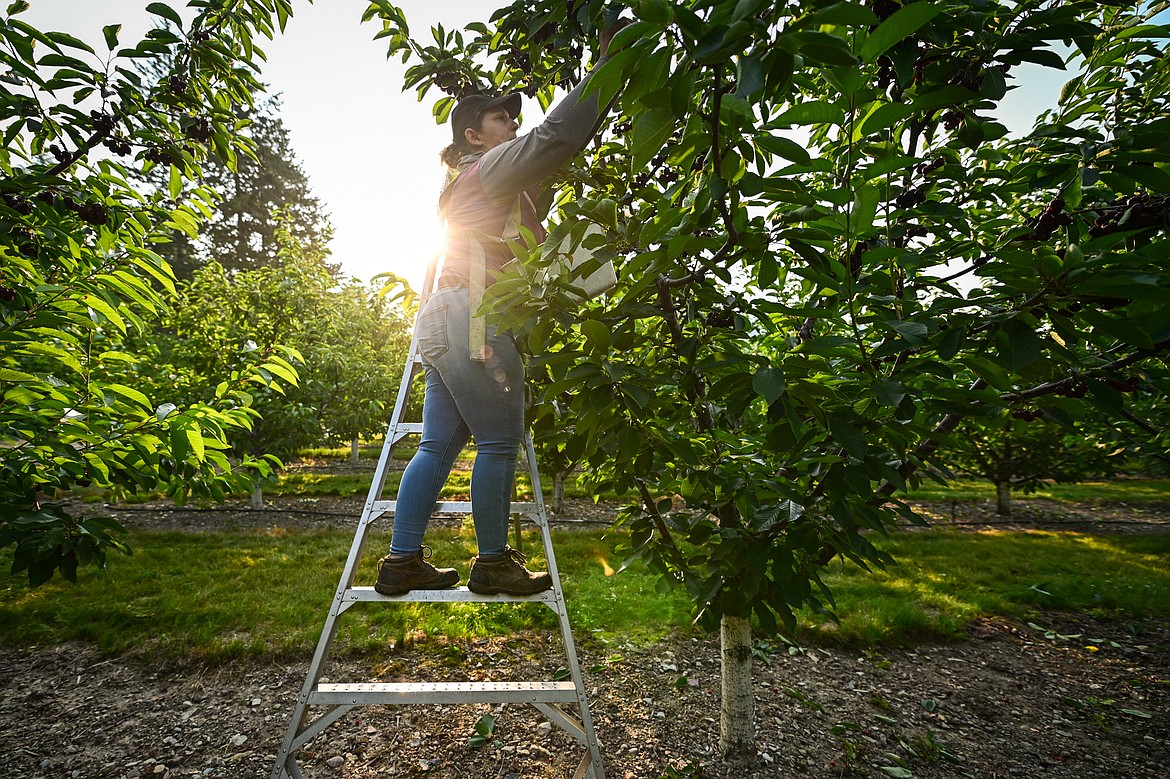
Alma Ruelas harvests lapins cherries at Buena Vista Orchard on Wednesday, July 22. (Casey Kreider/Daily Inter Lake)
Casey Kreider
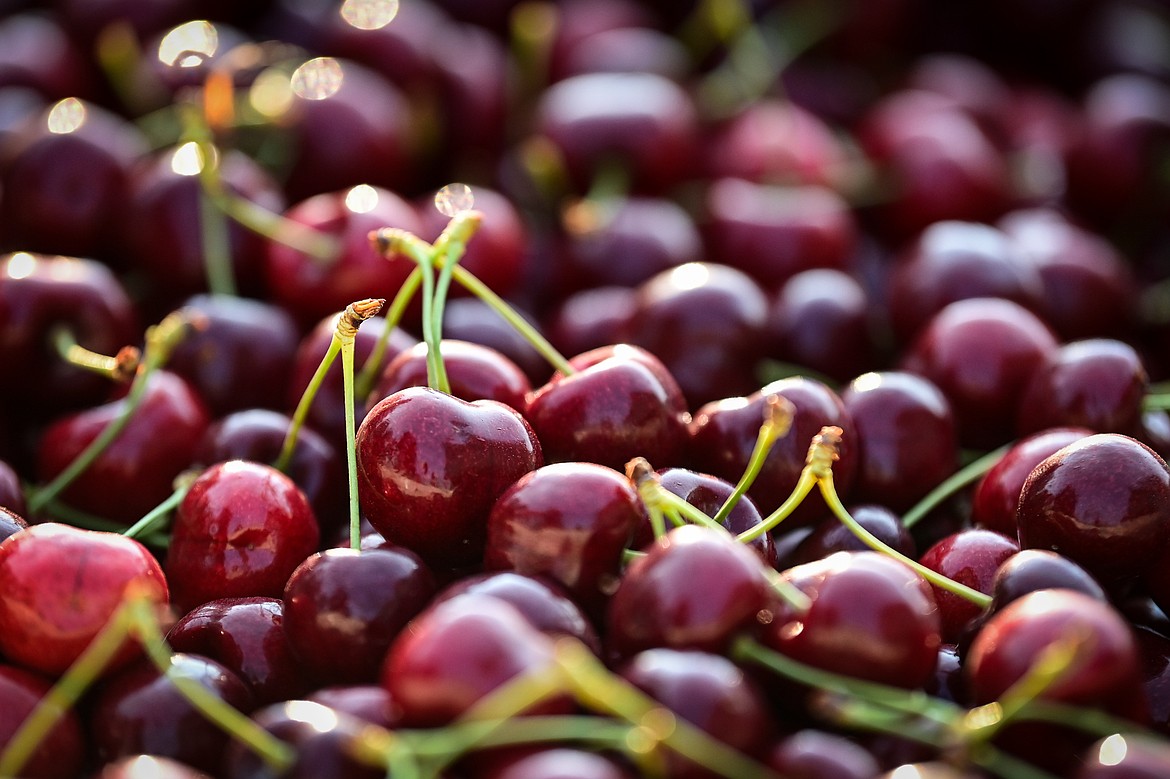
Lapins cherries at Buena Vista Orchard on Wednesday, July 22. (Casey Kreider/Daily Inter Lake)
Casey Kreider
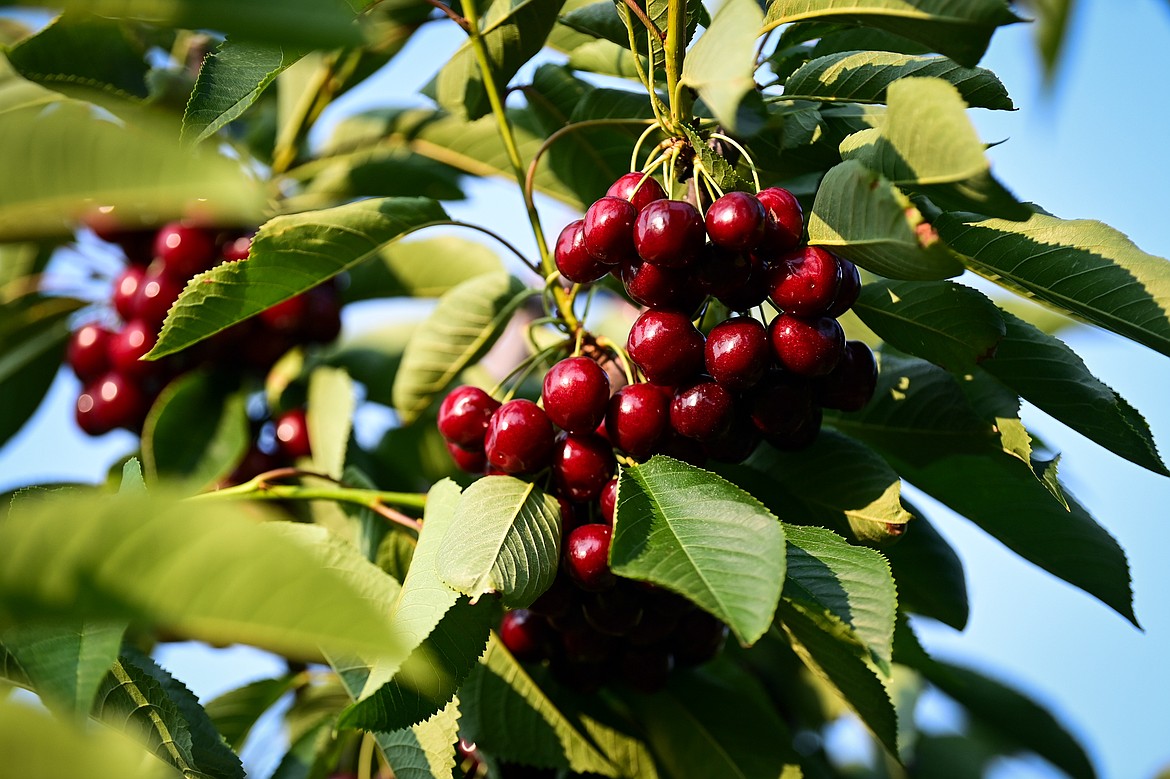
Lapins cherries at Buena Vista Orchard on Wednesday, July 22. (Casey Kreider/Daily Inter Lake)
Casey Kreider
The sun had just peeked over the Swan Range to illuminate seemingly endless rows of gleaming red cherries in a soft golden light as the fruit trees at Buena Vista Orchard cast long shadows. At 8 a.m., it was already 70 degrees, and temperatures were expected to soar into the 90s by the afternoon.
Hidden in the dense foliage, Alma Ruelas was perched on a ladder, hip leaned against a rung, using both hands to swiftly pick Lapin cherries from the trees and plunk them into the basket at her chest strapped around her shoulders. Overflowing with the bright red fruit, the basket weighs more than 30 pounds.
Ruelas started picking at 5:30 a.m., when the weather was cool enough for both workers and cherries, and she would continue until the sun got too hot around noon. Working in tandem with the other dozen pickers at the orchard along the east shore of Flathead Lake, she methodically emptied her basket into a larger bin that contained 300 pounds of cherries.
Overseeing the harvest was the orchard’s owner, Bruce Johnson, a retired forester. He darted through the rows with vivacious energy as hundreds of pounds of cherries were pulled from the trees.
"It's looking to be a good harvest," Johnson said. "We've had two years of bad harvests, so everyone's pretty excited right now. We're hauling fruit, hauling good fruit, and the other thing is the weather is cooperating."
After two devastating years in which most of the cherry crop was destroyed by a late frost and then a freak summer storm, Johnson is thrilled that the weather offered few surprises this year. As president of Flathead Lake Cherry Growers, the consortium of cherry orchards along the shores of Flathead Lake, he knows firsthand that many growers chose not to harvest their cherries in the past two years.
This year, though, is poised to be a record year, and the flurry of activity in the orchard reflects that. The locals and tourists who buy cherries from the roadside stands along Montana 35 or stop by orchards to pick their own rarely see this side of the process, as small crews work frantically to harvest cherries during a small window of time.
"Cherry farming is a family affair," Johnson's daughter, Carrie, said as she helped move 300-pound bins of cherries to the trailer that would haul the fruit away to the Monson Fruit Company staging area at Finley Point, the cherries' last stop before being trucked to Washington and distributed around the country. "I was 12 when I was inducted into the cherry hall of fame."
Johnson's wife Lynn, son Scott and daughter-in-law Claudine are also present for the harvest, moving cherries from the orchard to the trailer and sifting through the fruit to inspect for bird pecks or splits, of which there are very few this year.
The Johnson kids are grown now but still help with the harvest each summer. It's a common arrangement for the small, family-owned cherry orchards along Flathead Lake.
Even more crucially, the cherry farms around Flathead Lake are reliant on the families of migrant workers who travel to Montana for two to three weeks at the end of each July for the harvest. Cherries, unlike other fruits, don't continue to ripen after they've been picked, so skilled workers who are able to harvest the cherries quickly, when they are ripe, are valuable.
“I know how to pick, but I’m usually holding on to something with one hand and picking with the other hand,” Johnson said as Ruelas continued to pull cherries from the tree. “The really good pickers are balanced on their ladder, picking with both hands. The other part is knowing how to put your ladder so it’s safe."
Some families have worked for Johnson for 20 years. Ruelas, on the other hand, has only worked at Buena Vista for three years but started coming to Montana with her parents when she was a young girl.
"I have come since I was 10 years old to Montana, and now I'm almost 40, so a couple of years," she laughed while continuing to pick cherries at a rapid-fire pace. "This is my favorite harvest that I do. I love to pick cherries because they're easier and this is the season where we make a little bit more money."
Ruelas is originally from Ichán, Mexico, but now lives in Sunnyside, Washington, year-round, primarily working in the state’s apple orchards and hop yards, but still making the annual pilgrimage to Montana to pick cherries.
Johnson said this has been a major shift since he first started his orchard in 1997. Back then, the migrant workers he hired came to the United States from Mexico and Central America on H-2A visas that allowed them to temporarily work in the United States. They followed the harvest season up the Pacific Coast before returning to their home countries for winter.
Today, though, Johnson said the families he hires are permanent residents of the United States who primarily live in the Tri-Cities area of Washington. While they still travel for a few harvests, they are far less nomadic than 30 years ago.
The work is still a multigenerational affair. Ruelas is a mother of four, and while her two oldest are adults now and stay at home in Washington, the younger kids are 6 and 12 and still make the journey to Montana.
During the day, the youngsters hop on a school bus and go to Polson Middle School, where they take part in the Migrant Education Program, a federal initiative that provides funding to states for school programs for the children of migrant workers.
"Some of the migrant workers are going from state to state and they bring their families and the kids don't get to go to school every day like our kids would, so it's the government's effort to give them some more school," Johnson said.
When the kids are teenagers, they'll start to work in the orchards alongside their parents to learn the skill and earn some money of their own. Most stay low to the ground and don't yet get up on the high ladders.
"I think it's good because you can sometimes take your kids and teach them, so that way it keeps a new generation," Ruelas said. "That's an awesome part of the cherry season. I don't think we want them just to be at the house with the tablets."
As Ruelas continues to make quick work of the rows of cherry trees, the Johnsons load an eighth and final bin of cherries onto the trailer. Johnson will haul them 7 miles down the road to Monson Fruit's field office at Finley Point.
Since Montana cherries make up a tiny percentage of the cherry market compared to Washington State, the orchards along Flathead Lake pool their crop and sell as a group to Monson Fruit, a Washington-based company that will distribute the cherries around the country.
At the staging area, the cherries will be doused in cold water from a hydrocooler and then stored in an air-conditioned warehouse before being shipped by semi-truck to Washington.
As he navigated his truck down Buena Vista's winding driveway with the 2,400 pounds of cherries that had been picked that morning, Johnson reflected on the ups and downs of life in the cherry industry.
"I've been doing this long enough to know better," he laughed.
"It's funny how when my kids were teenagers, they didn't really think this cherry harvest thing was that cool," he added. "It took two or three weeks out of their summer, you know. And what's up with that? But kids turn the corner in their 20s and start going, 'Well, that's pretty neat thing to do.' It's a tradition type of thing."
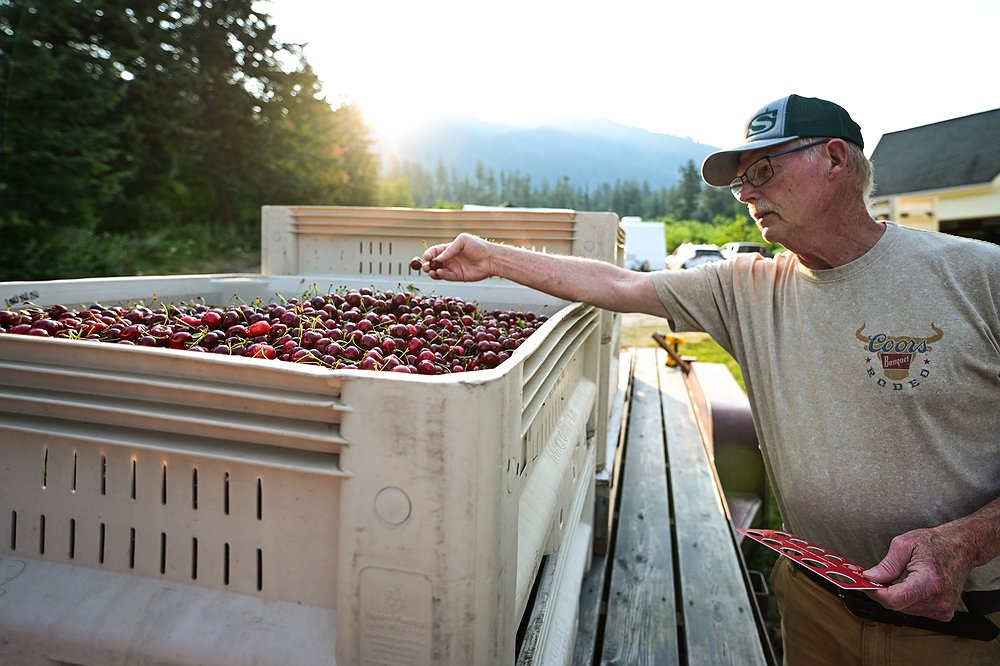 Bruce Johnson sifts through a bin of lapins cherries using a cherry sizing card at Buena Vista Orchard on Wednesday, July 22. (Casey Kreider/Daily Inter Lake)
Casey Kreider
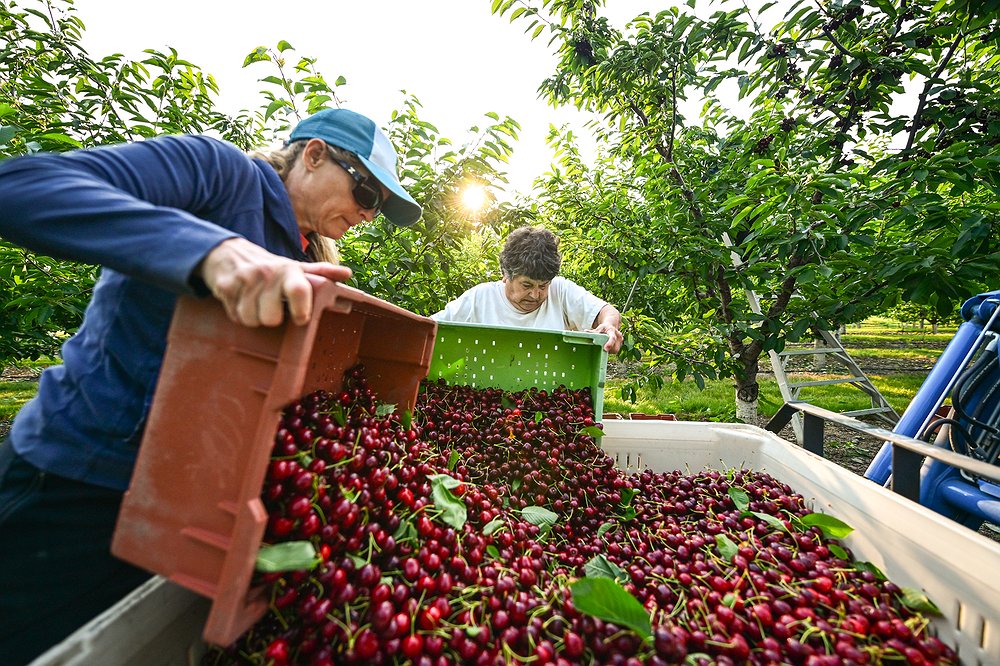 Claudine and Lynn Johnson harvest lapins cherries at Buena Vista Orchard on Wednesday, July 22. (Casey Kreider/Daily Inter Lake)
Casey Kreider
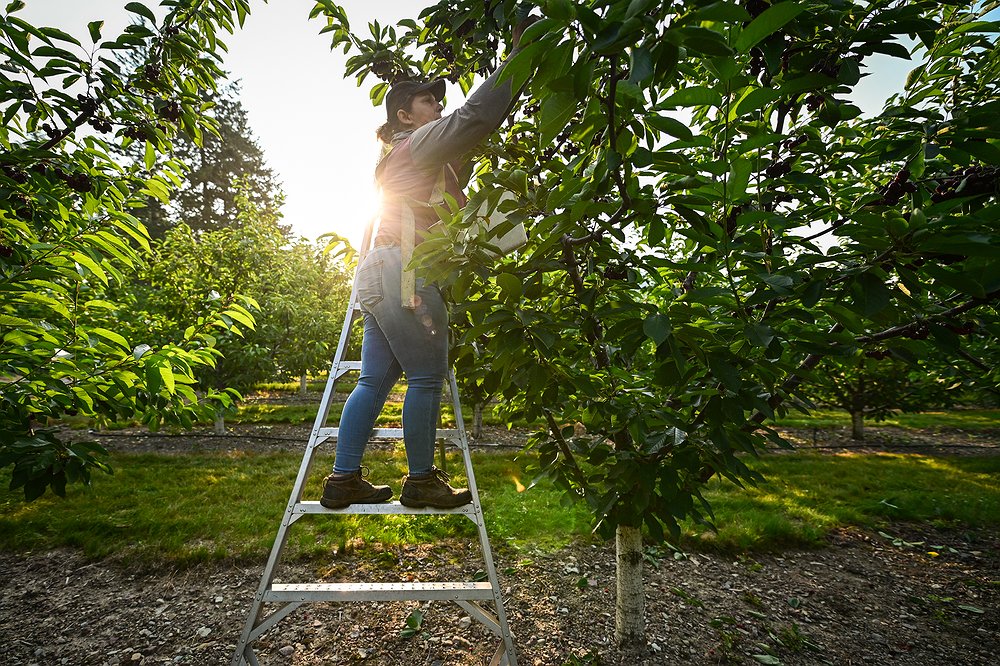 Alma Ruelas harvests lapins cherries at Buena Vista Orchard on Wednesday, July 22. (Casey Kreider/Daily Inter Lake)
Casey Kreider
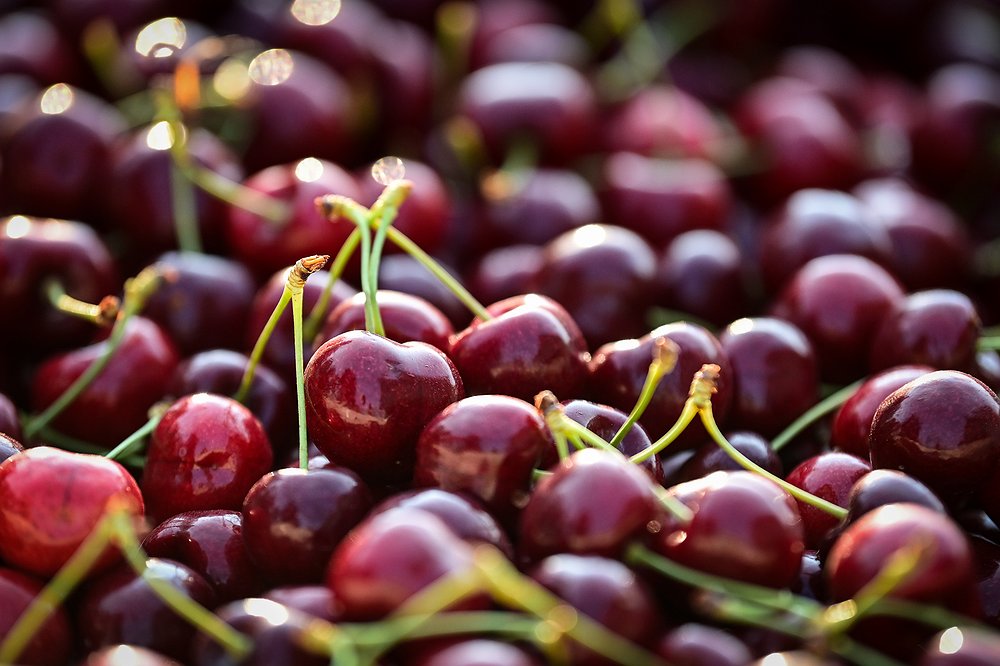 Lapins cherries at Buena Vista Orchard on Wednesday, July 22. (Casey Kreider/Daily Inter Lake)
Casey Kreider
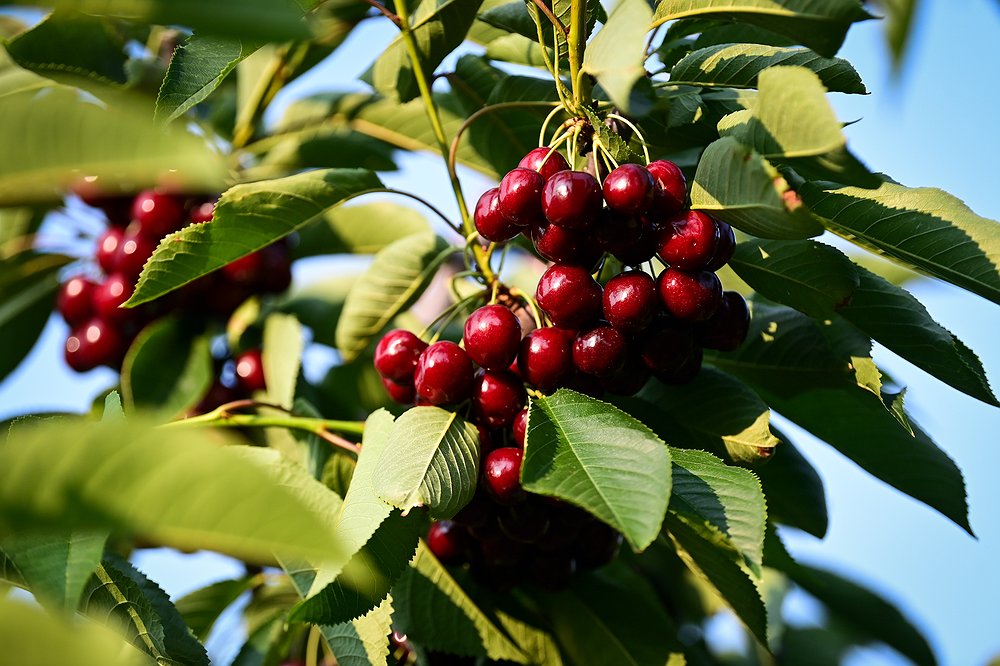 Lapins cherries at Buena Vista Orchard on Wednesday, July 22. (Casey Kreider/Daily Inter Lake)
Casey Kreider
ARTICLES BY ELSA ERICKSEN
The century club: Montana's centenarians reflect on 100 years of life
Completing those hundred laps around the sun is no easy feat. There are an estimated 108,000 centenarians in the United States.
Lakeside residents turn to citizen-initiated zoning to protect neighborhood
For the last three years, Fetveit has spearheaded a neighbor-led effort to create a new zoning district in Lakeside that would protect this area along the lakeshore from overdevelopment.
Effort to rebuild iconic Bigfork cross is underway
When completed, the new cross will stand 100 feet tall with a crossbeam that spans 53 feet. The metal roof trusses that will be used to construct the cross will be 5 feet wide.