
When not understanding something is the smartest response
Bonner County Daily Bee | UPDATED 2 weeks, 3 days AGO
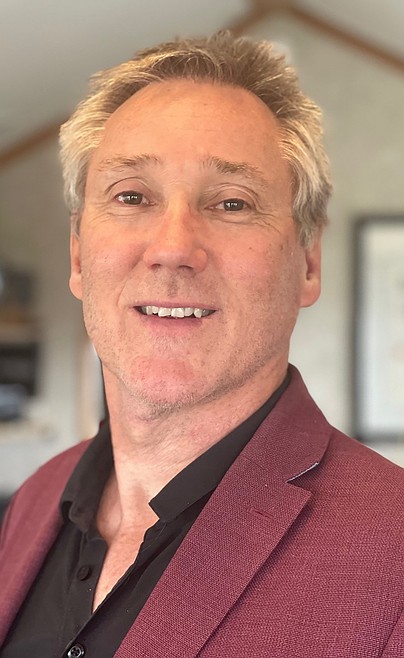
Seth Schneider
Fatigue, brain fog, joint pain, migraines, poor wound healing, food sensitivities, and the feeling that your body is no longer working properly may all begin with disrupted microcirculation.
When liquid crystalline water fails to form along hydrophilic surfaces, the vascular glycocalyx may no longer maintain physiologic zeta potential. Red blood cells then lose colloidal stability, clump together, and obstruct narrow capillaries, while impaired proton-induced motion reduces spontaneous flow through the body’s smallest fluid conduits. As sol-gel phase changes deteriorate, fascia loses lubrication, joints become vulnerable to wear, and the body enters a state of blood stasis, tissue dehydration, and diminished proton-mediated cellular resonance.
If you did not understand that paragraph, congratulations. It was nonsense, and not understanding it was the smartest response.
Almost every unfamiliar term came from a real article about the hidden powers of water in the body. The one exception was proton-mediated cellular resonance, which I invented because the paragraph seemed to need a diagnosis.
The other terms are real enough. The glycocalyx is the thin protective coating inside blood vessels. Zeta potential has to do with the electrical charge that helps particles in a fluid stay apart. Sol-gel describes movement between more liquid and more gel-like states. I could look them up. I could define them. I still could not tell whether the full argument made sense.
That was what happened when I read the actual article. It moved from liquid crystalline water to exclusion zones, proton gradients, colloidal stability, tensegrity, microcirculation, electromagnetic fields, hypermobility, migraines, arrhythmias, vaccines, and aging. I kept slowing down and trying again. The sentences sounded serious. The references were there. The author seemed certain.
I was confused, and after a while I became unsure of myself.
Maybe I did not know enough chemistry. Maybe the missing connection was obvious to someone trained in fluid dynamics. Maybe a cardiologist would understand how water near a surface had become an explanation for atrial fibrillation. I began giving the article credit for knowledge I could not verify.
Without quite noticing, I had taken the confusion out of the article and placed it in myself. I assumed the writer had explained something and I had failed to grasp it. The harder the passage was to evaluate, the more authoritative it began to seem.
Put enough unfamiliar nouns into a sentence and they begin supervising one another.
The real article did not make one enormous leap. It took many smaller steps. A laboratory observation became a theory about water. The theory was applied to the body. Then it became an explanation for disease. Observation, analogy, hypothesis, and clinical conclusion arrived in the same confident voice, so the change in evidence was easy to miss.
A person reading this while sick has even more at stake. Many people are tired, frightened, or still looking for an explanation after medicine has given them several diagnoses and no satisfying account of how they fit together. A theory that gathers pain, dizziness, poor sleep, food reactions, and brain fog into one mechanism can feel like relief. The reader may not understand the explanation, but at least someone appears to understand the reader.
Nor was it clear which expert could settle the matter. The argument crossed physical chemistry, cell biology, blood flow, connective tissue, immunology, and electromagnetism. A specialist might know one section and be no better equipped to judge the rest. We imagine that somewhere there is a person who understands the entire chain.
There may not be.
I asked AI to help sort it out. AI could define zeta potential and explain the glycocalyx. It could translate difficult sentences into ordinary English. What it could not do without investigating each link separately was tell me whether the whole chain held. There is another risk too: AI is very good at supplying smooth transitions. It can make a weak argument easier to understand without making it any more true.
The experience left me with a simpler question. When I finish a health article and feel stupid, did I fail to understand it, or did the writer fail to explain it?
Sometimes the answer will be me. Sometimes the science will simply be difficult. But I no longer think confusion should automatically count in the writer’s favor.
Your proton-mediated cellular resonance may be perfectly fine.
Seth Schneider is a health columnist for the Bonner County Daily Bee.