
Field study
JOEL MARTIN | Hagadone News Network | UPDATED 2 months, 2 weeks AGO
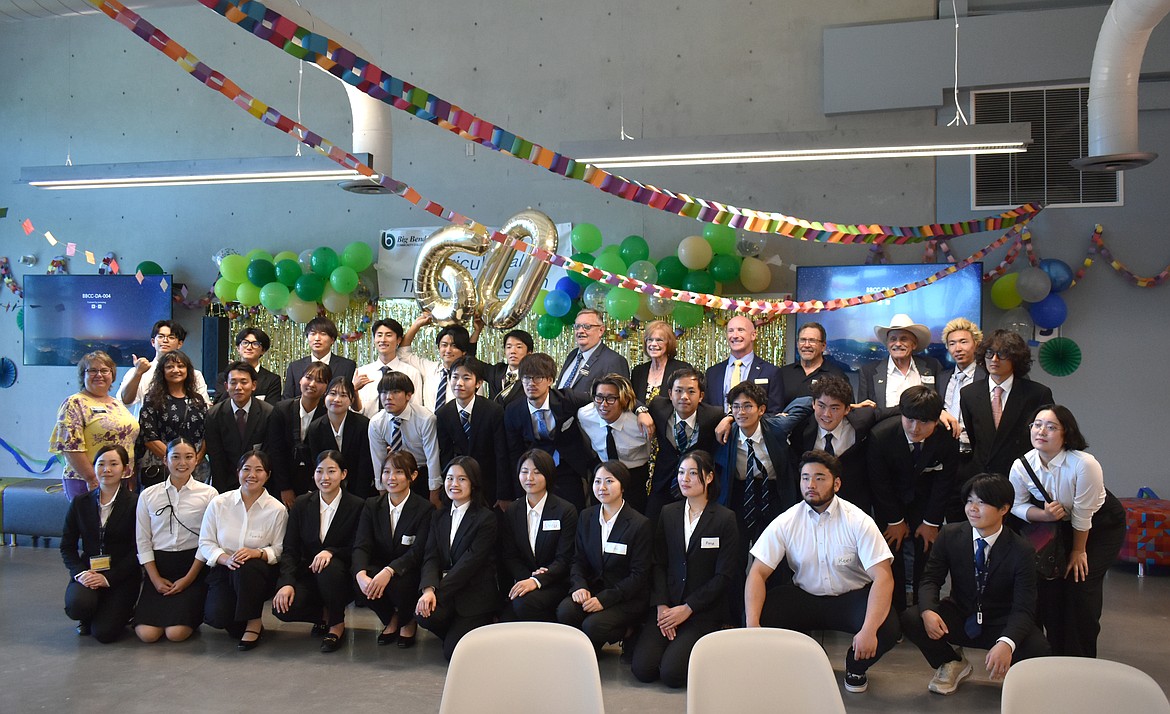
Former and current students of the Japanese Agricultural Training Program, along with Big Bend instructors and local dignitaries, gathered to celebrate 60 years of the exchange program Monday.
JOEL MARTIN/COLUMBIA BASIN HERALD
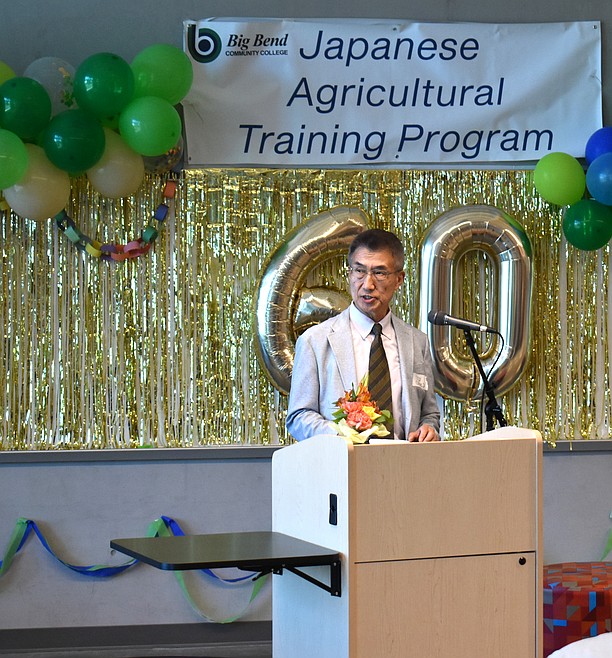
Takashi Yoshikawa, executive director of the Japanese Agricultural Exchange Council in Tokyo, speaks Monday about the desperate need for farmers and improved agriculture in Japan.
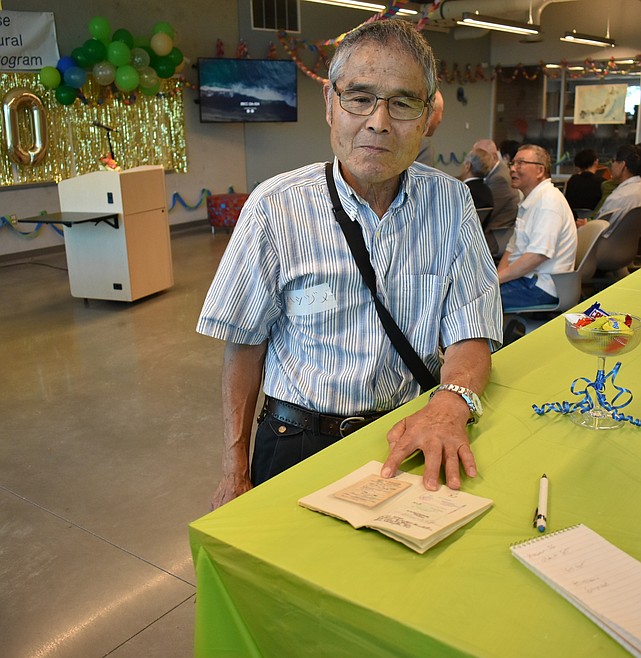
Takuo Hashizume, one of the first JATP trainees, shows his passport and U.S. draft card from his time studying with the program in 1966.
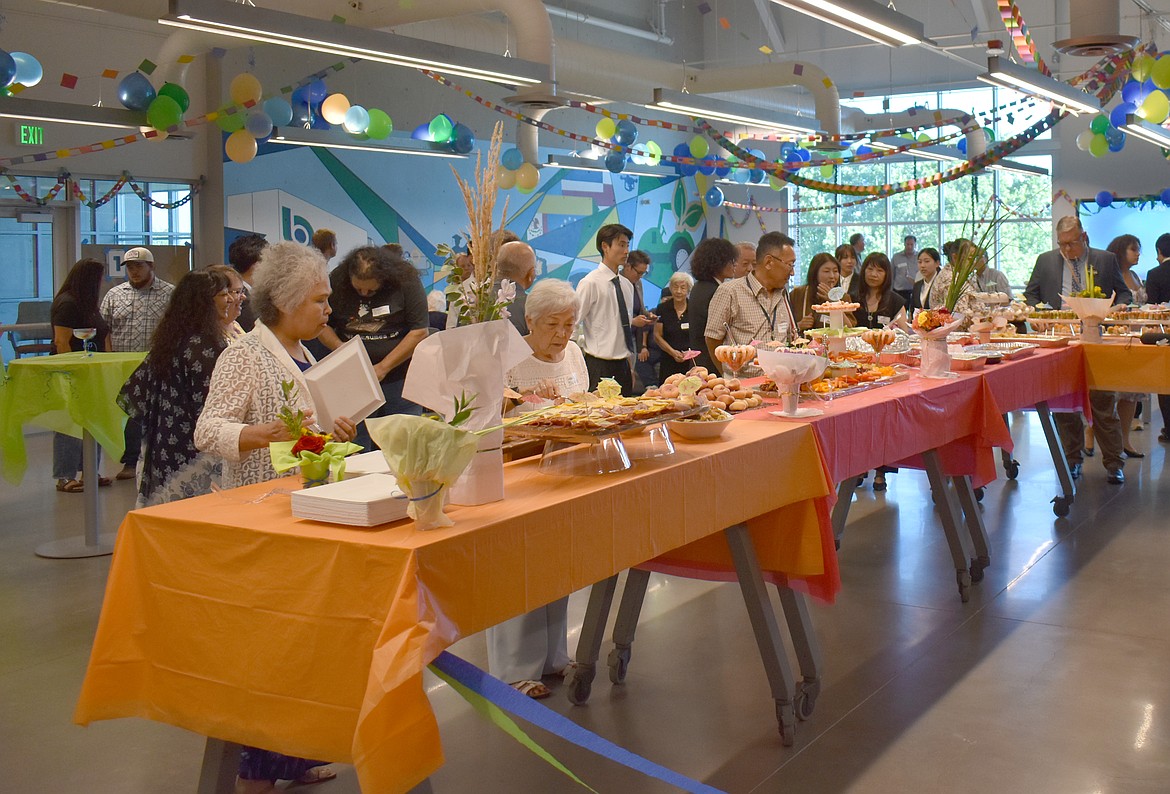
Attendees help themselves to a buffet Monday at the 60-year celebration of the Japan Agricultural Training Program at Big Bend Community College Monday.
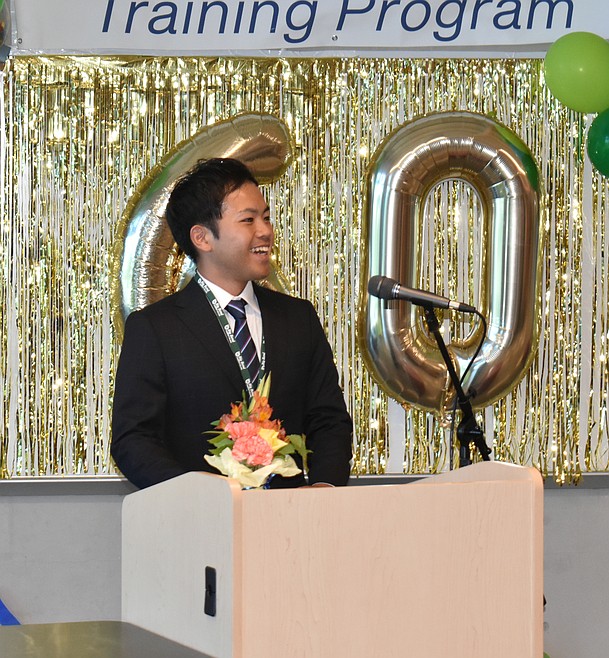
Trainee Koto Kokizoe thanks the JATP organizers for the education he is getting through the program. Kokizoe is one of 31 students spending a year and a half in the U.S. learning American farming methods.
Joel Martin has been with the Columbia Basin Herald for more than 25 years in a variety of roles and is the most-tenured employee in the building. Martin is a married father of eight and enjoys spending time with his children and his wife, Christina. He is passionate about the paper’s mission of informing the people of the Columbia Basin because he knows it is important to record the history of the communities the publication serves. | July 31, 2026 3:00 AM
“Eighty percent of the population lives on 20 percent of the land, and only about 11 percent of the land is farmable. (Japan’s) square mileage is equal to California, but it has very limited plateaus. Everything else is the sharpest, high, unfarmable, unlivable mountains. So, they need to focus on doing more with less.” — JATP director Larry Rimple
MOSES LAKE — Six decades of agricultural collaboration between the Columbia Basin and Japan were celebrated Monday evening at Big Bend Community College.
“Over the years, hundreds of participants have come to our region to learn, to work, and share their talents,” Big Bend Community College President Sara Thompson Tweedy said at the commemoration Monday. “And in doing so, you have enriched our college, strengthened our agricultural community, and created lifelong relationships that continue to span the Pacific Ocean.”
Monday’s celebration marked 60 years of the Japanese Agricultural Training Program, which brings students from Japan to the U.S. to study American farming methods, both in the classroom and on actual host farms. In attendance were not only the 31 Japanese students currently studying in the JATP, but also alumni from years past, some of whom were returning to the U.S. for the first time since they studied with the program.
“I was asked by one of our guests where the pool is at Big Bend,” JATP Director Larry Rimple said. “Well, we got rid of that in 1982.”
The JATP starts at the beginning of July with eight weeks of classroom study, 8 a.m. to 7 p.m., at BBCC, Rimple said. Besides ag-specific subjects, students take two classes a day in English and also agricultural Spanish, since many of the people they’ll encounter in their field study will be migrant workers. There are also physical education classes, so the students don’t get out of shape.
Every Friday students visit a different farm in the Columbia Basin, Rimple said.
“We try to mix it up to hit every type of farm: dairy, fruit, vegetable, row farming, and cattle,” Rimple said.
After the first eight weeks, the students are sent out to 22 farms across Washington, Minnesota, California, Oregon, Idaho and Hawaii, Rimple said. For 14 months they’ll stay at host farms in all those states getting their hands dirty and experiencing all the aspects of agriculture that you can’t get from a book. Finally, they’re sent to the University of California, Davis, for eight weeks of intensive training in agribusiness.
“All of these trainees are attending agricultural colleges in Japan, which is a two-year school (there), so the majority of them are taking an 18-month sabbatical from their courses to come here,” Rimple said. “The goal is they will take new methods or improved methods back to Japan.”
The expertise, and farmers to put it to use, are badly needed there, said Takashi Yoshikawa, executive director of the Japanese Agricultural Exchange Council in Tokyo, which oversees the JATP. The average of a farmer in Japan is 68, compared to 58 in the U.S., Yoshikawa said.
“That is a big problem in Japan, and also the decline in the number of farmers,” Yoshikawa said. (There were) more than 6 million in 1950, but in 2025 (it had) dropped to 1.02 million … and the Ministry of Agriculture, Forestry and Fishery of Japan estimates the projected number in 2050 will be 0.36 million. That's quite a big drop.”
Japan is not naturally farm-friendly, Rimple said.
“Eighty percent of the population lives on 20 percent of the land, and only about 11 percent of the land is farmable,” Rimple said. "(Japan’s) square mileage is equal to California, but it has very limited plateaus. Everything else is the sharpest, high, unfarmable, unlivable mountains. So, they need to focus on doing more with less.”
Japan is only 38 percent self-sufficient when it comes to raising food, Yoshikawa said, and fewer young people want to engage in agriculture because the work is hard, not very profitable and sometimes dangerous. Programs like JATP help to counter that trend, he said; about 60 percent of JATP trainees return to the farm.
Trainee Koto Kokizoe did not come from a farming family; but discovered a love for agriculture as a university student, he said.
“I worked on a normal farm in Japan for five years,” Kokizoe said. “Through agriculture, I realized how precious it is, not only in growing crops but in growing people. I firmly believe in the infinite potential of agriculture.”
Not all of the trainees return to farm; however. Takuo Hashizume, a member of the first training class in 1966, went on to try his hand at farming in Alberta, Canada, but ended up becoming a welder and settling in Abbottsford, British Columbia. But he did get a surprising education in American culture, he said.
“At the time, I was young and stupid, and three of us trainees went downtown (in Moses Lake),” he said. “The weather was hot, and we were looking for beer. We saw the A&W, and the order board said something-beer. We ordered beer, and the girl says, ‘We don’t have beer, we have root beer.’ I had never tasted soda before I came to Moses Lake. So, I tried it, and right away spit it out and said, ‘This is not beer!’”
The program doesn’t attract as many people as it used to, Rimple said. The first class in 1966 consisted of about 120 students, he said, and about 100 enrolled every year in the 1970s. The numbers began dipping to 20-30 in the 1990s, he said, and now they’re beginning to come back up.
“I think there's no longer the mystique in Japan about farming versus working for Panasonic or Sony; it's not what people want to do now,” Rimple said. “They see the troubles that Japan is having, feeding their own people, and they have more access to that information. So, they really want to help.”
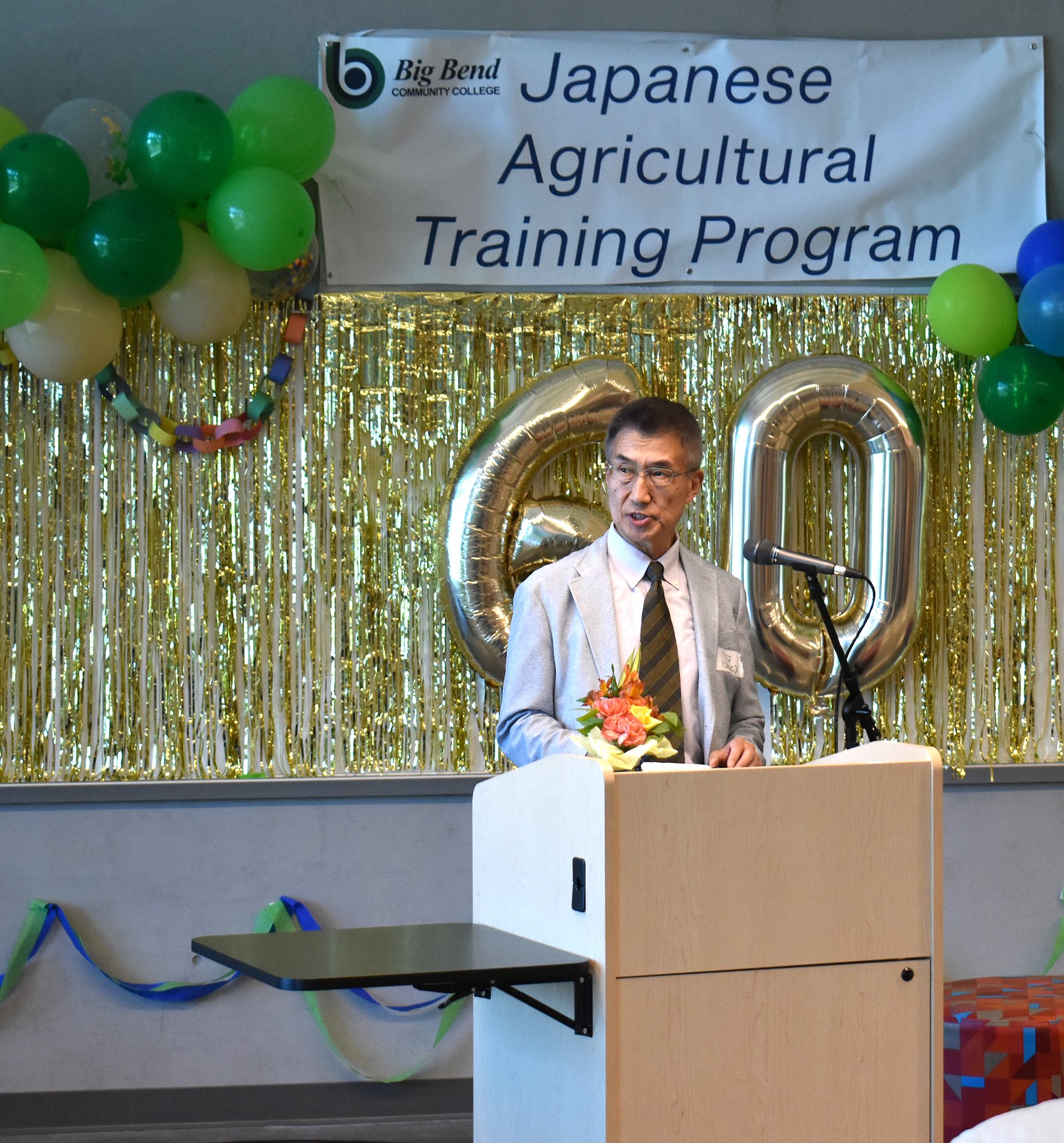 Takashi Yoshikawa, executive director of the Japanese Agricultural Exchange Council in Tokyo, speaks Monday about the desperate need for farmers and improved agriculture in Japan.
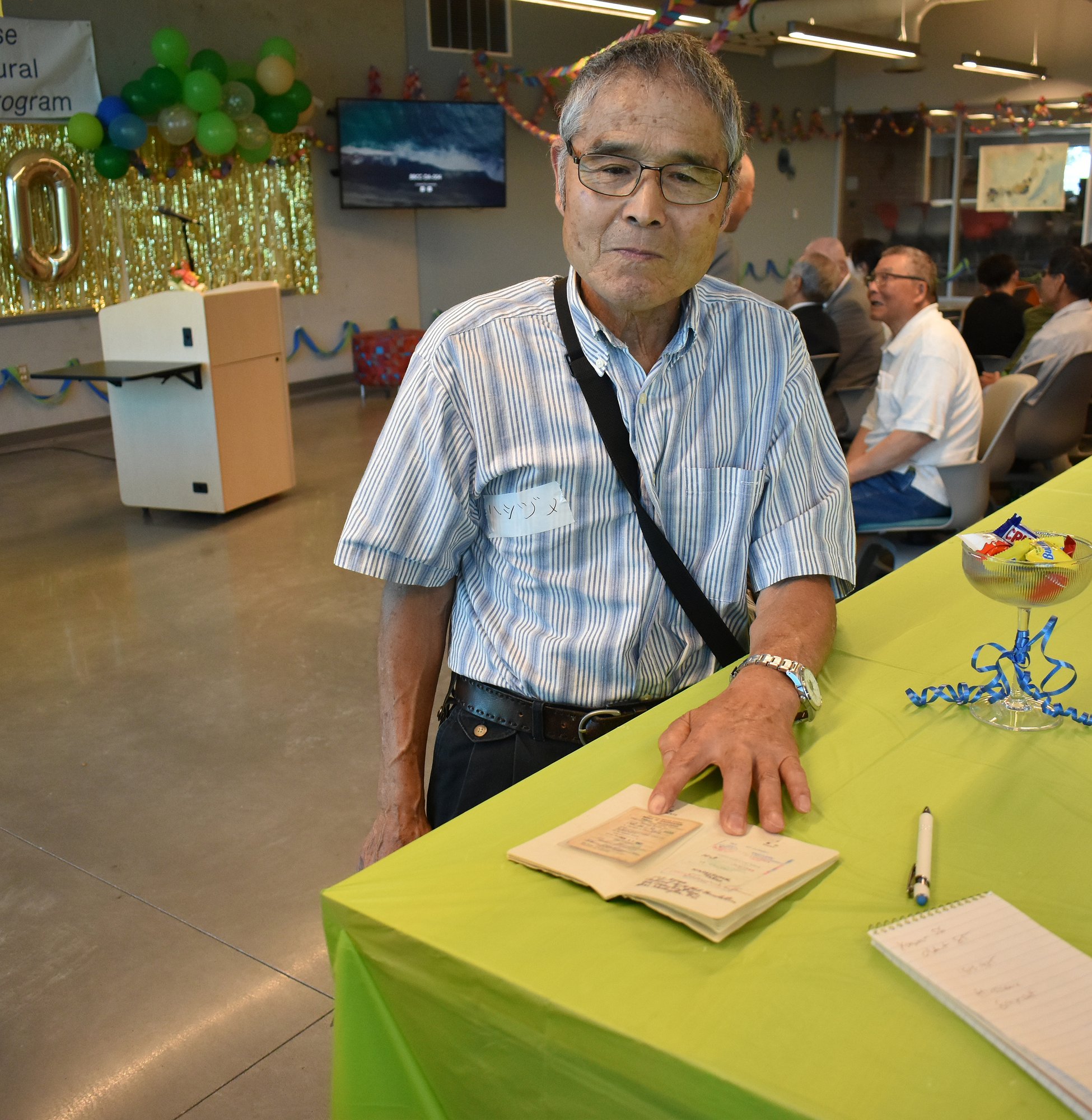 Takuo Hashizume, one of the first JATP trainees, shows his passport and U.S. draft card from his time studying with the program in 1966.
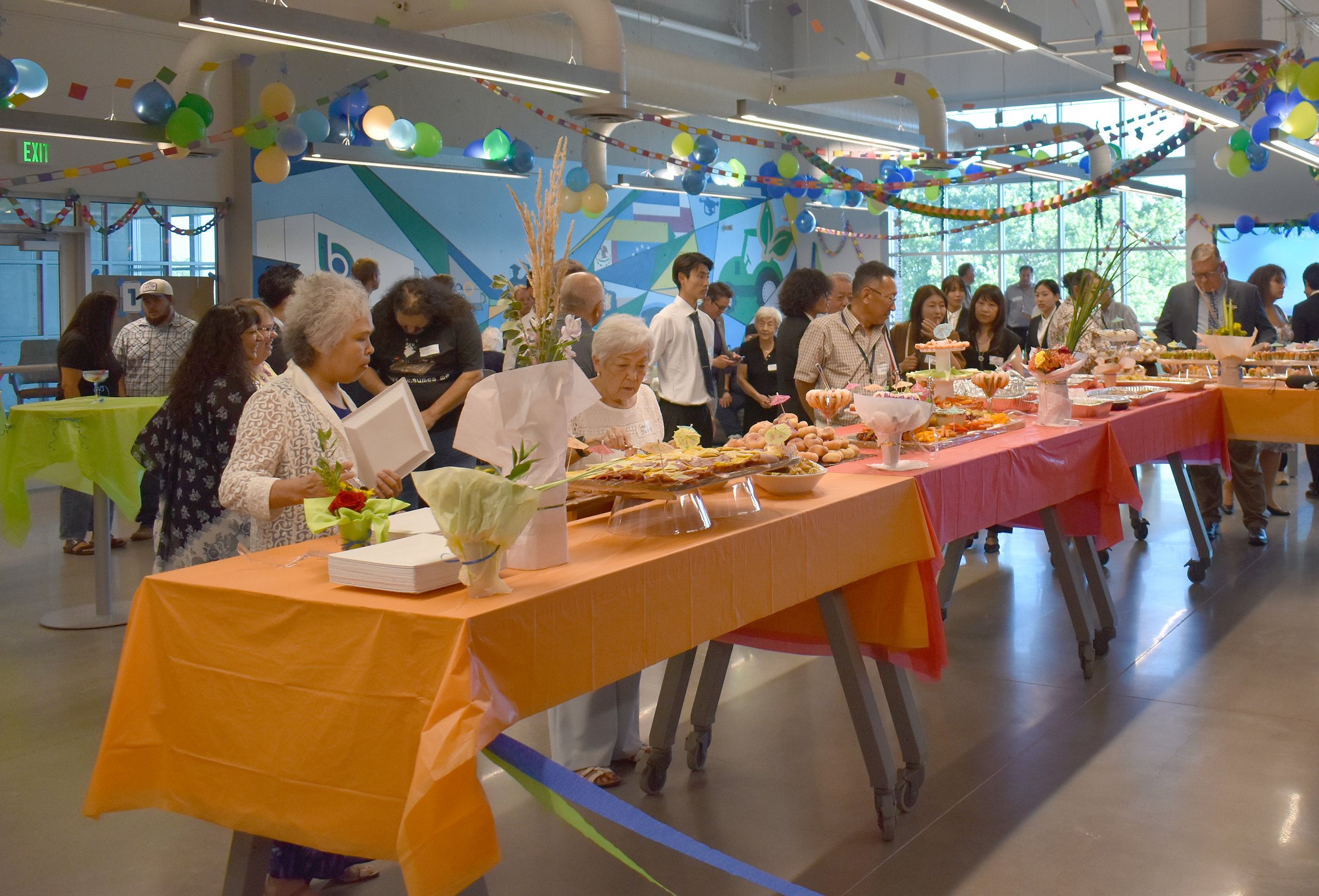 Attendees help themselves to a buffet Monday at the 60-year celebration of the Japan Agricultural Training Program at Big Bend Community College Monday.
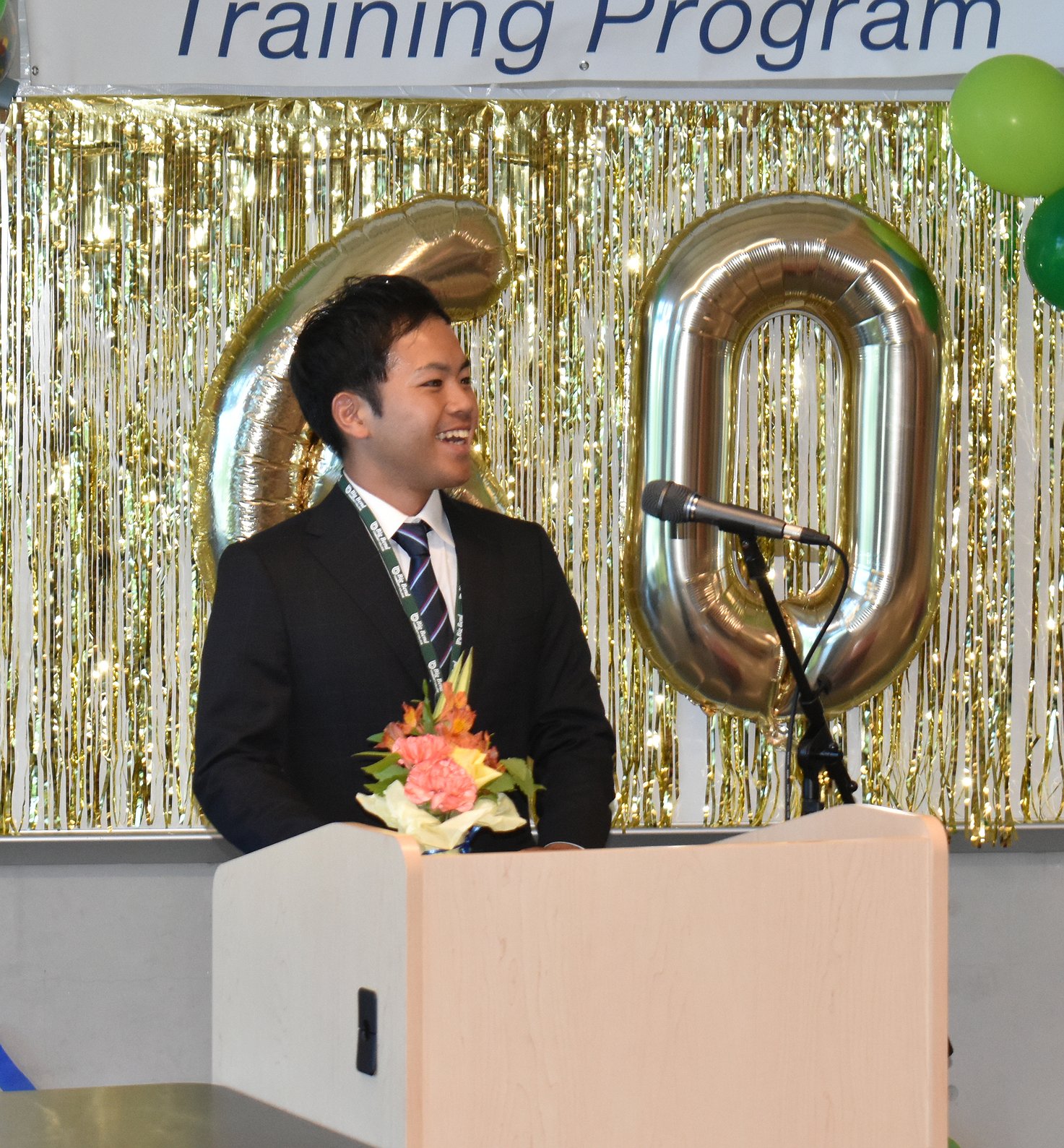 Trainee Koto Kokizoe thanks the JATP organizers for the education he is getting through the program. Kokizoe is one of 31 students spending a year and a half in the U.S. learning American farming methods.
ARTICLES BY JOEL MARTIN
Endless battle
Noxious Weed Control Board works to keep invasive plants under control
MOSES LAKE — Some of the nastiest plants in Grant County were the topic of a class led by Jay Johnson, a consultant with the Grant County Noxious Weed Control Board, Tuesday. The Noxious Weed Control Board, as its name would suggest, is tasked with keeping weeds under control in Grant County. That’s not a small job; the board’s website lists 129 species of noxious weeds that are found around Grant County. A noxious weed is defined as an invasive, non-native plant that threatens agricultural crops, local ecosystems or fish and wildlife habitat, according to the Noxious Weed Control Board. Washington state law requires that these weeds be identified and their spread kept to a minimum, if not completely eradicated. “We’re one of those agencies a lot of people don’t really understand,” Johnson said. “We’re a county office and … our funding is tax-based assessment. When you get your tax bill and you look down at all the expenses that you pay for, there we are.”

BASIN EVENTS: Oct. 16-24
COLUMBIA BASIN — Whether you feel like shopping, crafting, learning or seeing a show, there’s something happening for you this week in the Basin. Oct. 16 ‘My Family (Mi Familia)’ screening Spanning three generations, “My Family (Mi Familia)” is a heartfelt drama that follows the Sánchez family as they build their lives in East Los Angeles. Through love, hardship, triumph, and sacrifice, the film explores the immigrant experience, the strength of family bonds, and the traditions that connect one generation to the next. Lowrider show and taco truck before the screening. Sponsored by Columbia Basin Allied Arts, EDUBS C/S and the Moses Lake Creative District. $12 per person. Doors open at 6 p.m., film begins at 7 p.m. at the Moses Lake Civic Center Auditorium, 401 S. Balsam St. Tickets and info: www.cba-arts.org.
Moses Lake author encourages women to look beyond church culture norms
MOSES LAKE — A Moses Lake author’s book, “A Christian Woman Striving to Live Her Faith in a Man-Controlled World,” takes aim at the role to which many churches relegate the female half of their congregations. “It’s to encourage women in the faith,” Linda Curran said. “A lot of churches say, ‘Teach Sunday school, do this, do that, but don’t (evangelize.)’" In her book, Curran recounts a time when she moved to a new community and joined a church there. She was surprised to learn that, as a new female member, she had been automatically assigned church cleaning duties. When she questioned it, she wrote, she was met with condescension and her objections were brushed aside. In other churches, she said, women who were capable of teaching were relegated to “women’s ministry.”