
THE DIRT: Innovative wastewater project blends infrastructure upgrades with environmental benefits
Shoshone News-Press | UPDATED 3 weeks, 4 days AGO
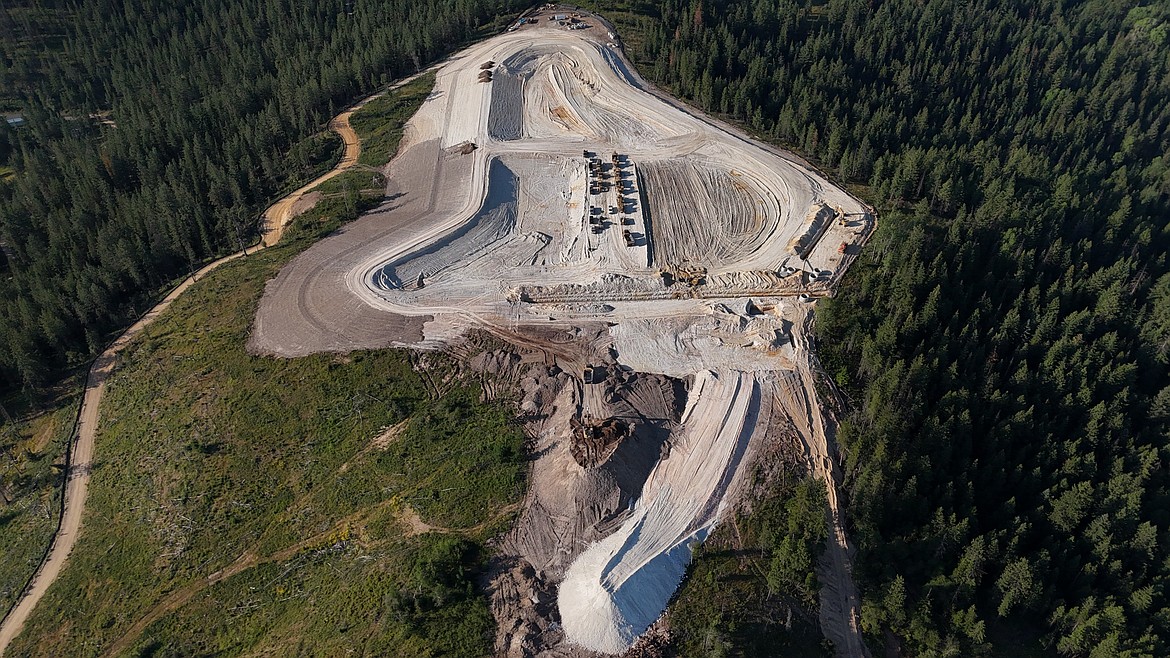
Work is still being completed at the future site of the Kingston-Cataldo Sewer District's new treatment facility.
Courtesy photo
The Kingston-Cataldo Sewer District is redefining what infrastructure can achieve. By pivoting to an innovative land application treatment approach, the district is securing future capacity and self-sustainability while cultivating a thriving local ecosystem.
Faced with current user rates averaging $72 per month per housing unit, the district began exploring alternative treatment methods to control future costs while maintaining effective service. Those efforts led to the development of a land application facility, funded through a combination of support from the Idaho Department of Environmental Quality (DEQ), ARPA funds, and Leading Idaho grants.
Construction on the project began approximately one year ago and is expected to reach completion this summer. Once operational, all customer flows will be directed to the new facility. When the construction phase is completed, the system will undergo rigorous "clean water" testing before going fully operational.
Beyond its primary function of wastewater treatment, the project has sparked unexpected and valuable conservation partnerships. The Idaho Fish and Wildlife Office (IFWO) expressed interest in enhancing the site by providing native wildflower seeds. What began as a plan for 20 acres quickly grew to 40 acres with additional support, including a donation from Avista Utilities.
In total, 52 acres will be irrigated during the driest part of the summer. The irrigation will be a vital hydration source for the landscape while simultaneously providing critical support to local pollinators. Plans also include planting additional milkweed, generously donated by WingsRising Inc. of CDA, to benefit monarch butterflies, a species identified as a "species of greatest conservation need" in Idaho. Milkweed serves as an essential food source for monarch larvae.
The project has also yielded surprising geological discoveries. During excavation, crews encountered consistent clay deposits extending 55 feet deep—an unexpected find in what was assumed to be rocky terrain. This fine, talc-like clay proved ideal for construction purposes such as retaining walls and compaction.
In a unique collaboration showcasing local circularity, some of the clay was donated to Priest Lake potter Brad Sondahl. Sondahl has been exploring the material’s use in pottery, creating complementary coffee mugs for the sewer district without impacting the project’s budget or timeline.
Additional enhancements are currently in progress, including hydroseeding following irrigation installation. The district is considering another IFWO recommendation to use a native seed blend instead of a standard dryland grass mixture to ensure better long-term survival and ecological resilience. While the native blend may incur a small increase in cost, it is expected to serve as a prototype for similar facilities in the future.
The project will ultimately transition approximately 350 connections to the new system, reducing flows to the South Fork Sewer District and increasing capacity for the region. Overall, the initiative represents a forward-thinking, collaborative solution that benefits both the local community and the Idaho environment.
By choosing ecological integrity over the status quo, the Kingston-Cataldo Sewer District is proving that wastewater management doesn't just have to be about "disposal"—it can be about renewal.
The Dirt is a series of informative articles focused on all aspects of cleanup efforts associated with the Bunker Hill Superfund Site. Our goal is to promote community awareness of contamination issues, to provide tools for protecting public health, and to keep the community informed of current and future cleanup projects. The Dirt is a group of committed and local experts from multiple agencies, including the Basin Environmental Improvement Project Commission, Panhandle Health District, Shoshone County, Silver Valley Economic Development Corporation, and the Idaho Department of Environmental Quality.