
Rewarding and demanding: Volunteers track western Montana bluebirds
MONTE TURNER | Hagadone News Network | UPDATED 3 months, 4 weeks AGO
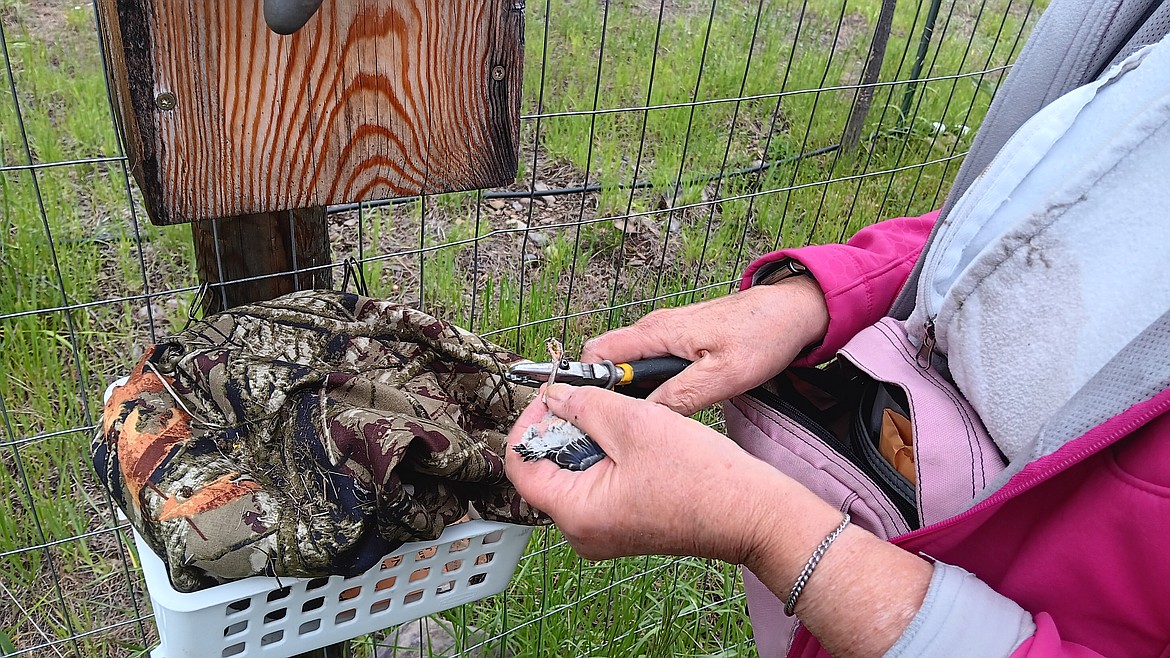
Jane Brockway serves on The North American Bluebird Society and on the Bluebird Journal Committee. She is also the president of Mountain Bluebird Trails and the editor of their newsletter. Here she bands a 13-day old western bluebird from one of the bluebirds houses she monitors every week this time of year.
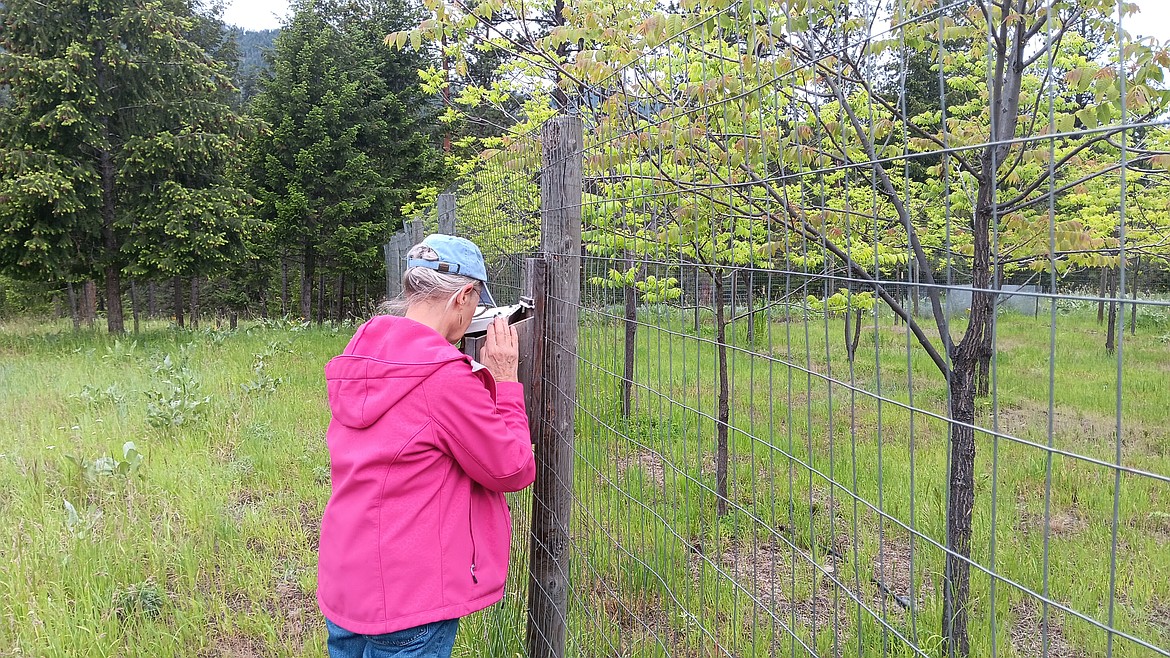
Jane Brockway stealthily approaches a bluebird house on her trail of about 100 she monitors every week and journals the information while banding the fledglings. (Monte Turner/Mineral Independent)
For anyone spotting bluebirds around western Montana right now, there is an easy way to tell the two local species apart.
Male mountain bluebirds are a soft, pale blue from head to tail, while male western bluebirds sport bright blue wings and tails paired with a rusty-orange breast. Female birds of both species are more subdued in color, though female western bluebirds often show a faint wash of orange on the chest. While both species still call Mineral County home, longtime local bird enthusiasts have noticed a significant change over the years.
Doug and Dana Austin have monitored a bluebird trail in the Tarkio area for nearly two decades. Today they maintain 18 nest boxes, most of which are occupied each season.
“In the early years, most of our boxes had mountain bluebirds,” Doug said. “Now almost all of the boxes have western bluebirds.”
The change mirrors what other local bird monitors have observed across the county. As mentioned, the western bluebirds tend to be brighter, but darker in color than their mountain cousins. Interestingly, the brilliant blue coloration is not actually caused by blue pigment.
“Their feathers do not have blue hue,” Austin explained. “The color has to do with the way the feathers reflect sunlight.”
Competition may be one reason for the shift. Austin believes western bluebirds are generally more aggressive and often outcompete mountain bluebirds for nesting sites. Native tree swallows also compete for the same nest boxes.
“We let them duke it out,” Austin said. “They are both native species.” The changing balance between the two birds may also be linked to natural habitat succession. After wildfires, insects move into burned forests, attracting woodpeckers that excavate nesting cavities. Mountain bluebirds are often among the first birds to use those cavities. As forests recover, western bluebirds frequently move in and eventually become the dominant species. Austin noted that mountain bluebirds also tend to favor more open country and higher elevations. The Tarkio area's ranchlands continue to provide excellent bluebird habitat, and the Austins credit generous landowners who allow nest boxes to be mounted on fence posts throughout the area. “We are very grateful for our neighbors who let us put up boxes on their property,” said Doug.
Few people have spent more time watching the county's bluebird population than Jane Brockway, who has monitored approximately 100 bluebird houses for decades.
“Mineral County used to have more mountain bluebirds than we do now,” Brockway said in agreement with the Austins.
She recalled a visit from retired ornithologist Dr. Harry Power of Great Falls, a former Rutgers University professor who identified Mineral County as prime western bluebird habitat.
“All of these ponderosa pines have lots and lots of spiders, and that's what western bluebirds love,” Brockway said. “We don't have as much of the open area that mountain bluebirds like.”
When Brockway began monitoring boxes in the 1980s, mountain bluebirds occupied nearly half of her trail. Today, western bluebirds dominate. In fact, she has not recorded a mountain bluebird nest in her boxes for the past two years.
The work of monitoring bluebirds is both rewarding and demanding. Brockway spends two days each week checking boxes, banding birds when necessary, and recording nesting activity. Weather can make or break a nesting season.
“We've had a lot of rain this spring,” Brockway said.
Heavy rains can soak nests and threaten young birds. To improve survival, Brockway sometimes replaces waterlogged nests with dry ones she has saved from previous seasons. Monitoring continues until the last fledglings leave their nests, sometimes as late as mid-August when pairs raise a second brood.
Despite the long hours, Brockway remains enthusiastic about sharing her knowledge and recruiting new volunteers. She offers training for anyone interested in helping, from schoolchildren to adults with no prior experience.
“I won't leave a volunteer alone without knowing what to do and how to do it,” she said.
Every nesting season brings triumphs and losses. Rain, heat, predators and other challenges are all part of nature's cycle.
“It is all very fascinating,” Austin said. “We rejoice for the ones who survive and fledge.”
Anyone interested in learning more about bluebirds or helping monitor nest boxes can contact Brockway at [email protected].
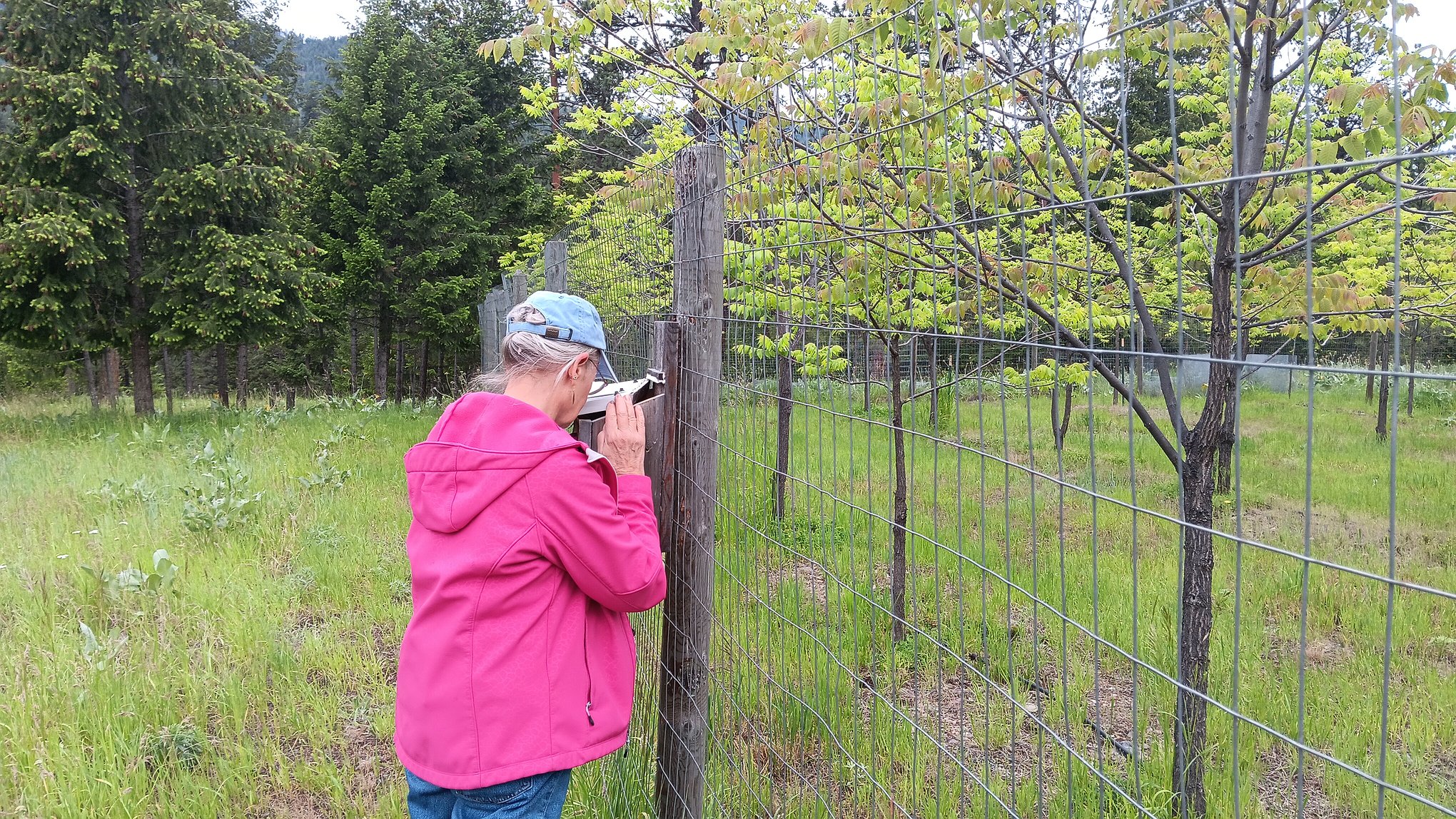 Jane Brockway stealthily approaches a bluebird house on her trail of about 100 she monitors every week and journals the information while banding the fledglings. (Monte Turner/Mineral Independent)
ARTICLES BY MONTE TURNER

West End Fire to turn up the heat with chili cookoff fundraiser
What better place to enjoy a bowl of full-blown, mega-scorching-hot chili than at a fire station stocked with wildfire equipment, fire extinguishers and a building full of professionally trained firefighters, EMTs and Quick Response personnel?

Senior center cooks up hot dishes with a side social fun
There’s something about a good home-cooked meal that can bring people through the door, and at the Superior Senior Citizens Center, head cook Jessica Williams seems to have figured out the recipe.
Montana-Idaho border reconfigured after survey retraces original state lines
The Bureau of Land Management has completed its official resurvey of the Montana-Idaho boundary near Lookout Pass, going back to the original survey monuments and retracing the line that was established more than 120 years ago.