
Editorial: Set guardrails, but don’t muzzle creativity on Parkline Trail
Daily Inter Lake | Daily Inter-Lake | UPDATED 2 weeks, 2 days AGO
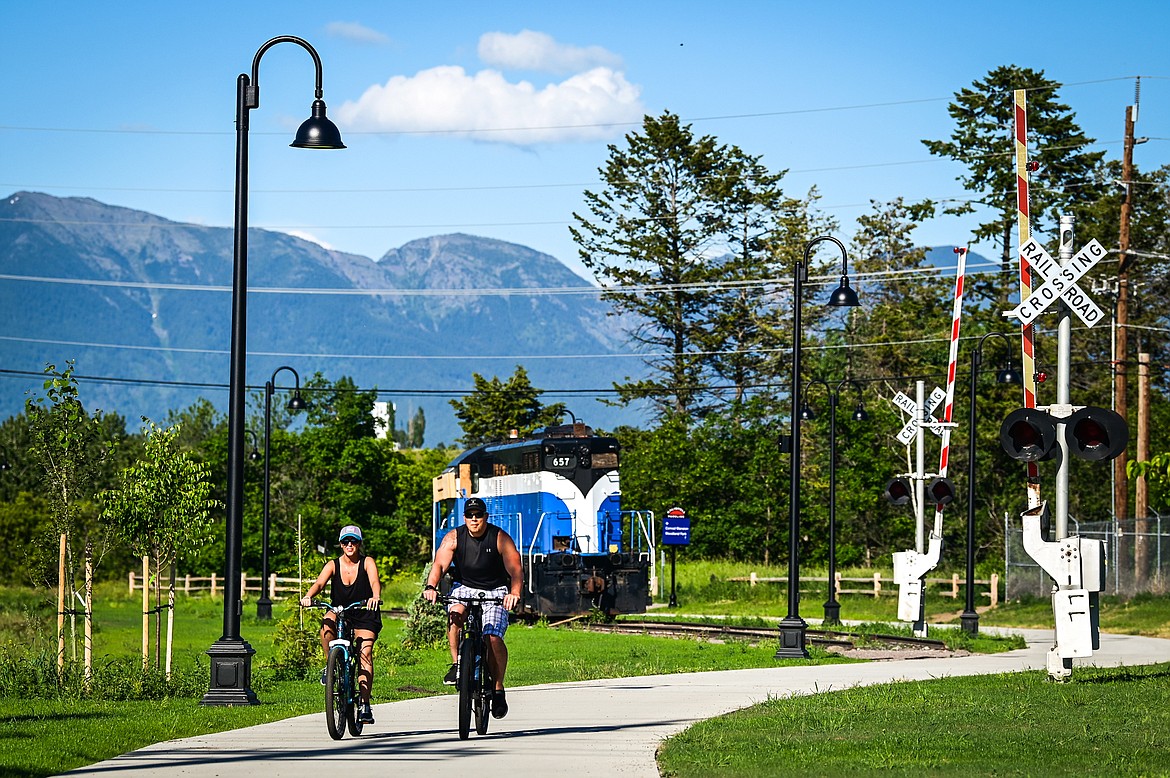
Bella Lauber and Jacob Sherwood ride bikes along the Parkline Trail in Kalispell on Tuesday, July 5. (Casey Kreider/Daily Inter Lake)
Years of planning and millions of dollars have gone into preparing Kalispell’s Parkline Trail for redevelopment. Now the city must decide how much influence it should have on what comes next.
At a work session Monday, the City Council narrowly decided to explore creating a set of design standards for new development along the trail. With the vote, it tasked the city Planning Commission to come back with a list of recommendations.
Revitalizing the former railway corridor has been a city priority since about 2012. Completion of the 1.6-mile path in 2022 marked an important step toward improving downtown walking and cycling accessibility. Former Mayor Mark Johnson called it the city’s “most transformative project in the next 100 years.”
Zoned as B-3 Core Area Business, the corridor allows for taller multistory buildings and a mix of commercial and residential uses, giving developers a wide canvas for imaginative projects.
In advocating for design standards, Mayor Ryan Hunter argued that establishing some rules would be vital to preserving the corridor’s pedestrian-friendly character.
“Nothing could kill the Parkline Trail quicker than lining it with parking lots,” Hunter said.
The mayor is right on this point. Providing developers with clear design expectations that prioritize sidewalks, trail-facing entrances and public gathering spaces will help ensure projects meet the original vision for the area.
But in crafting these design standards, the Planning Commission must tread lightly.
Heavy-handed or overly defined regulations will only stifle the creativity the city should be encouraging.
Demanding certain facades, paint colors or architectural styles would result in a homogeneous and contrived district. Creativity should prevail, so long as development meets the goal of walkability.
Restrictive standards can also raise building costs that ultimately get passed on to tenants — a sure way to slow economic development and limit the potential for attainable downtown housing.
The city should guide developers with thoughtful design guardrails without dictating every detail, so as not to stifle the innovation this area is ripe for.