
Water keepers: Volunteer monitoring program first line of defense for Flathead River
Daily Inter-Lake | UPDATED 1 month, 1 week AGO
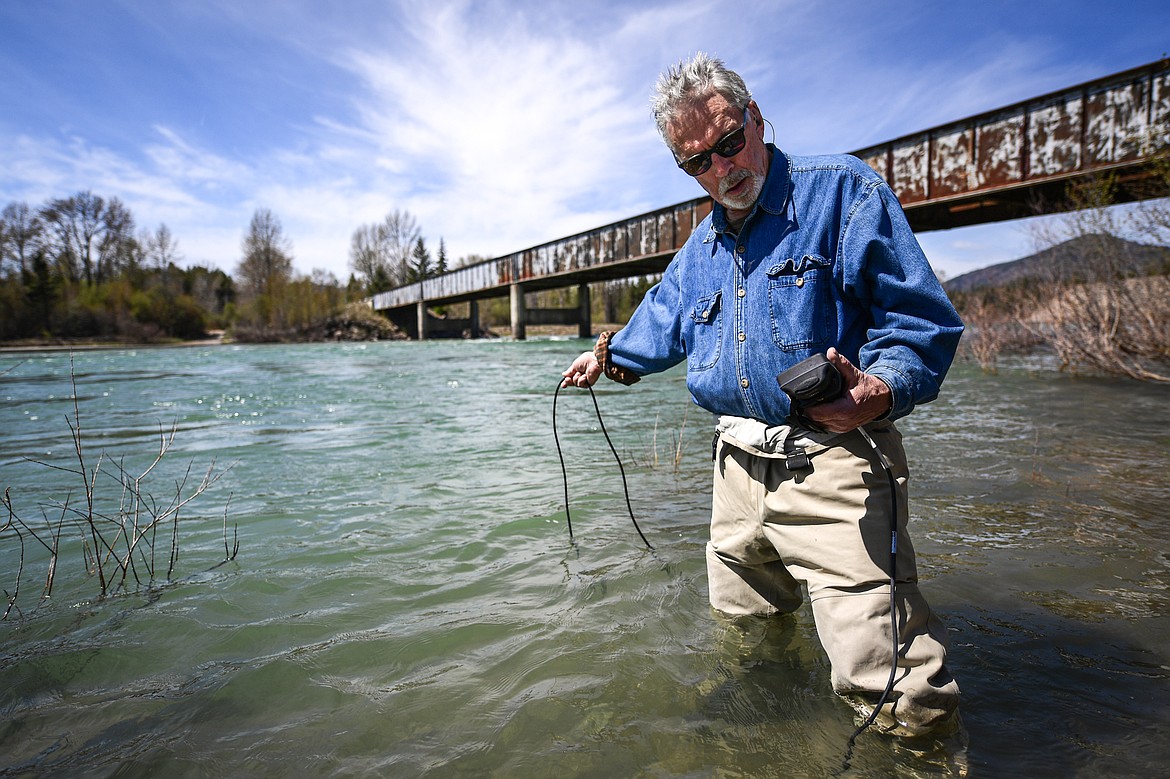
Steve Nogal reads data gathered by a YSI water quality meter during a water quality monitoring training session at the Blankenship Bridge river access along the Middle Fork Flathead River on Wednesday, May 6. (Casey Kreider/Daily Inter Lake)
Casey Kreider
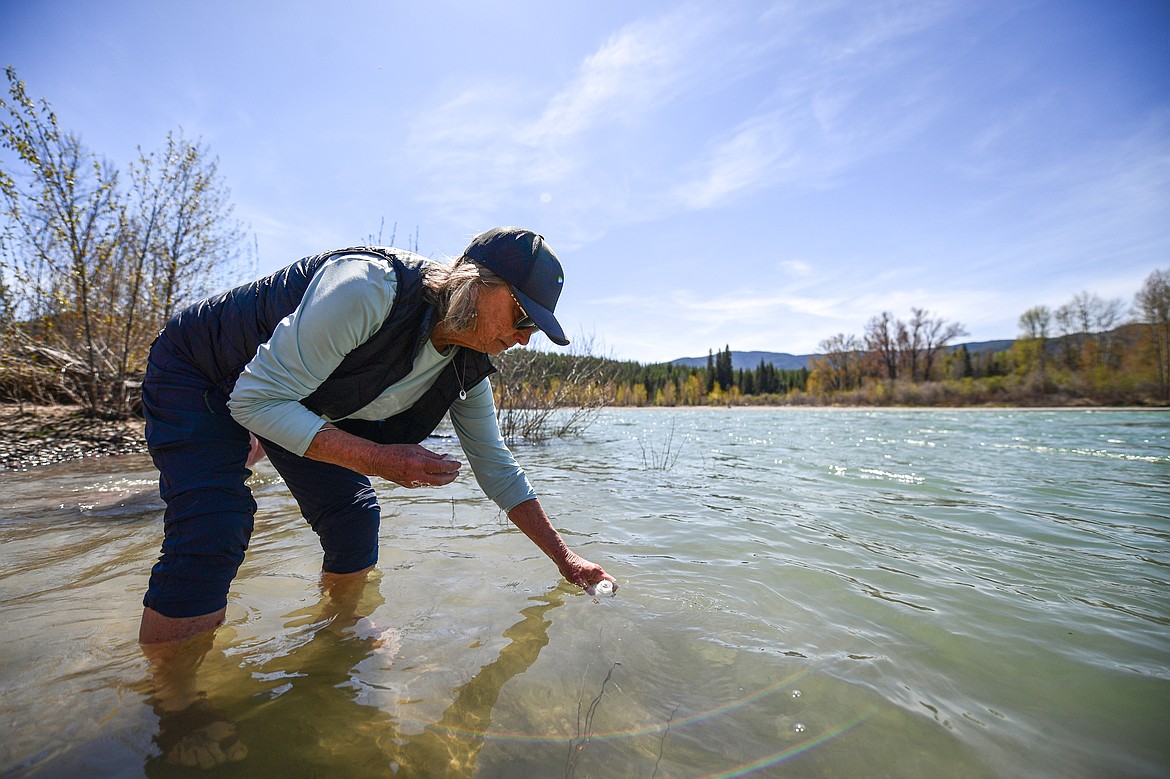
Mary Person takes a test sample from the Middle Fork Flathead River during a water quality monitoring training session held by Flathead Rivers Alliance and Monitoring Montana Waters at the Blankenship Bridge river access along the Middle Fork Flathead River on Wednesday, May 6. (Casey Kreider/Daily Inter Lake)
Casey Kreider
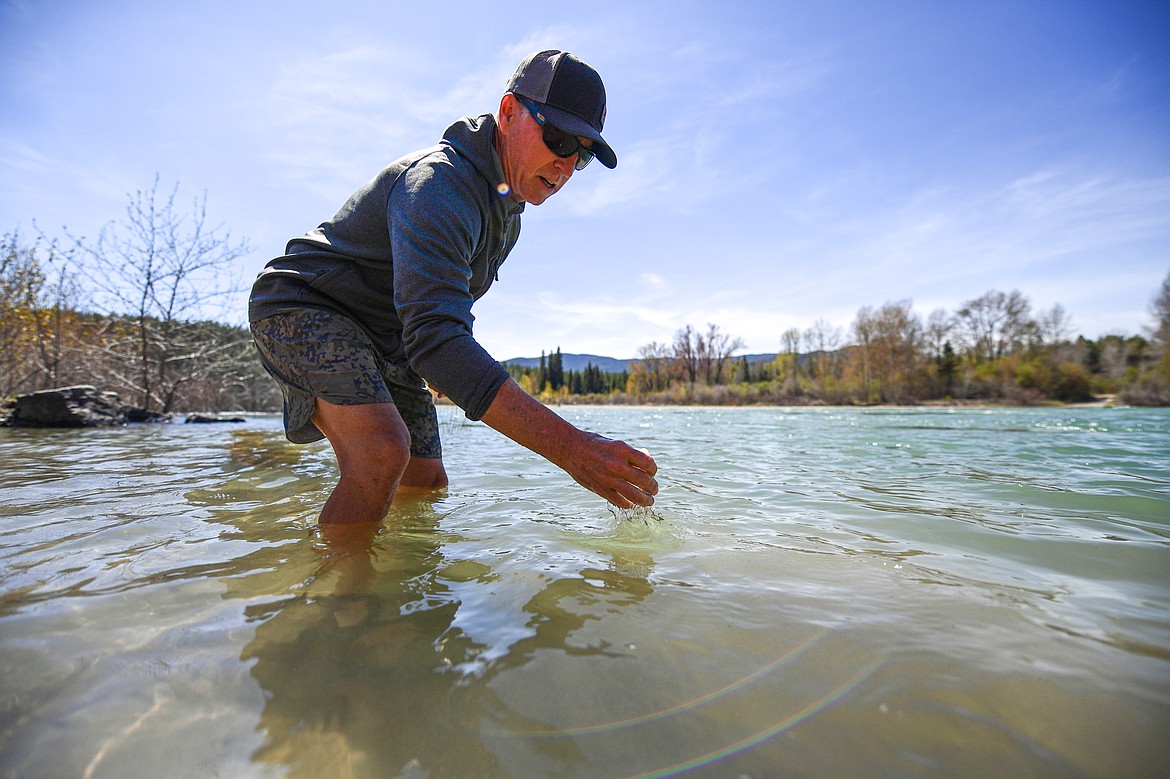
Andy Crites takes a test sample from the Middle Fork Flathead River during a water quality monitoring training session held by Flathead Rivers Alliance and Monitoring Montana Waters at the Blankenship Bridge river access along the Middle Fork Flathead River on Wednesday, May 6. (Casey Kreider/Daily Inter Lake)
Casey Kreider
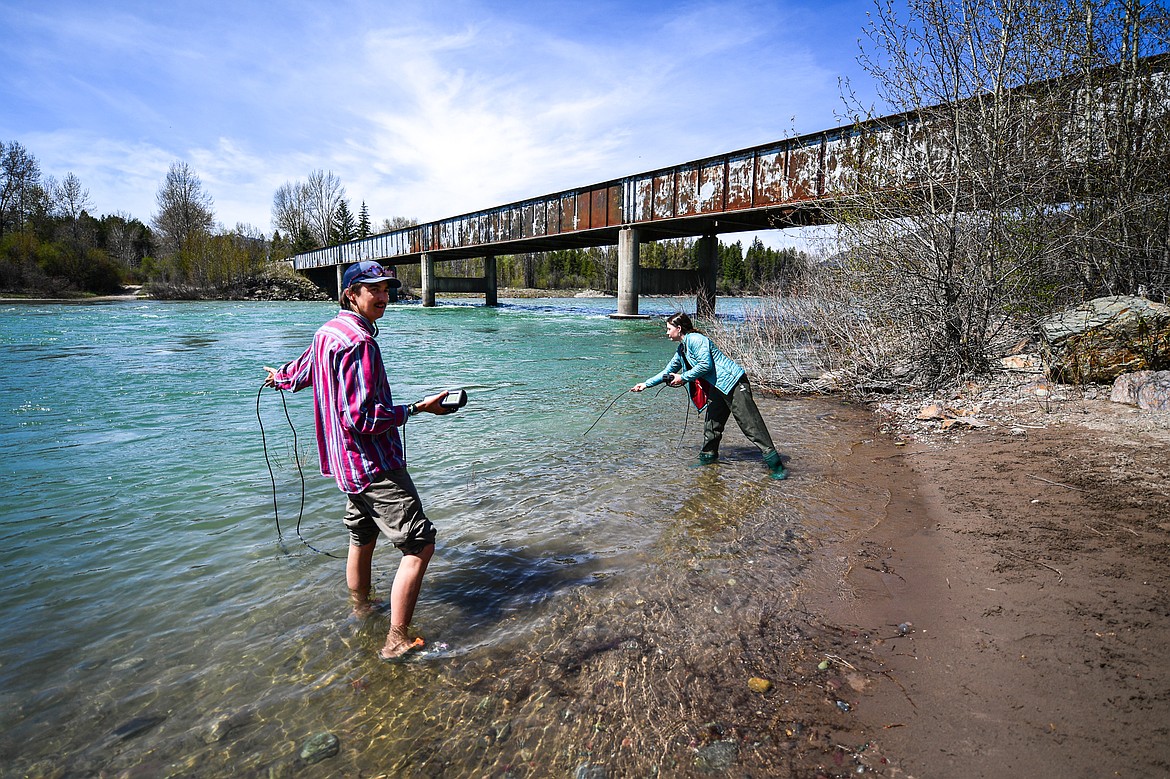
Geoffrey Gill, program coordinator with Flathead Rivers Alliance, and Callie Nelson, with Flathead Lake Biological Station’s Monitoring Montana Waters program, demonstrate how to use a YSI water quality meter during a water quality monitoring training session at the Blankenship Bridge river access along the Middle Fork Flathead River on Wednesday, May 6. (Casey Kreider/Daily Inter Lake)
Casey Kreider
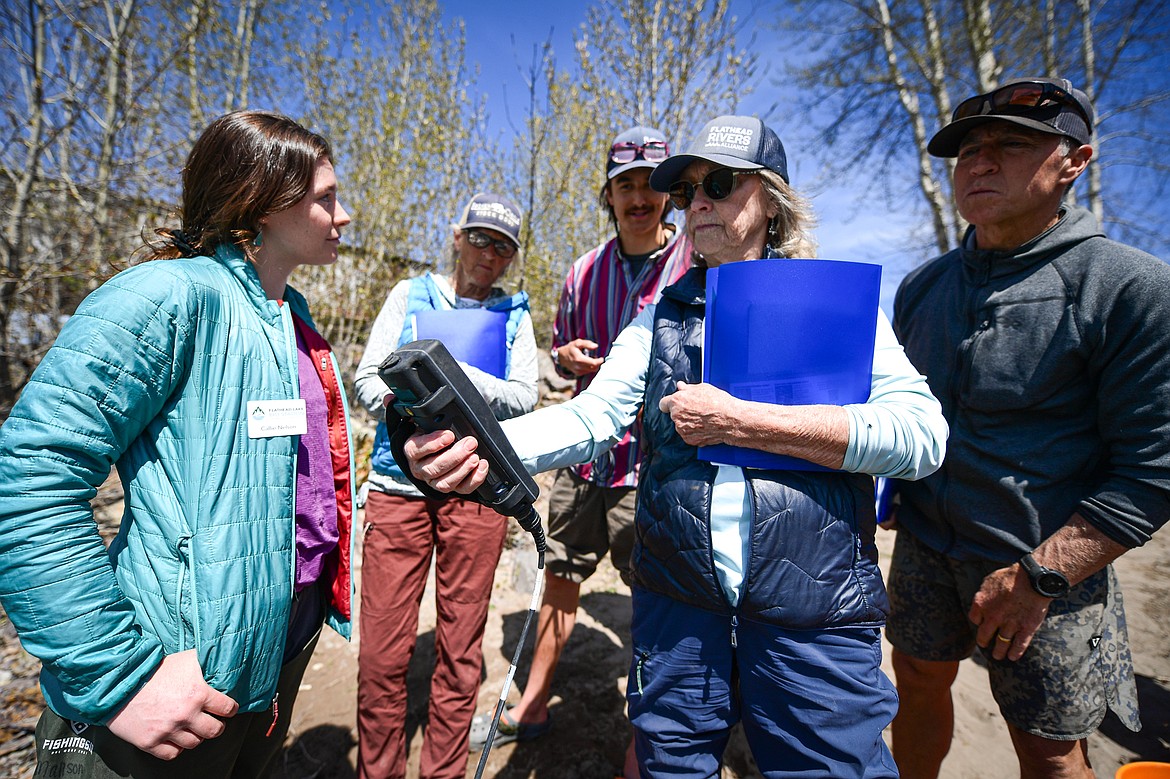
Callie Nelson, left, with Flathead Lake Biological Station’s Monitoring Montana Waters program, and Geoffrey Gill, back, program coordinator with Flathead Rivers Alliance, discuss data gathered by a YSI water quality meter with participants during a water quality monitoring training session at the Blankenship Bridge river access along the Middle Fork Flathead River on Wednesday, May 6. (Casey Kreider/Daily Inter Lake)
Casey Kreider
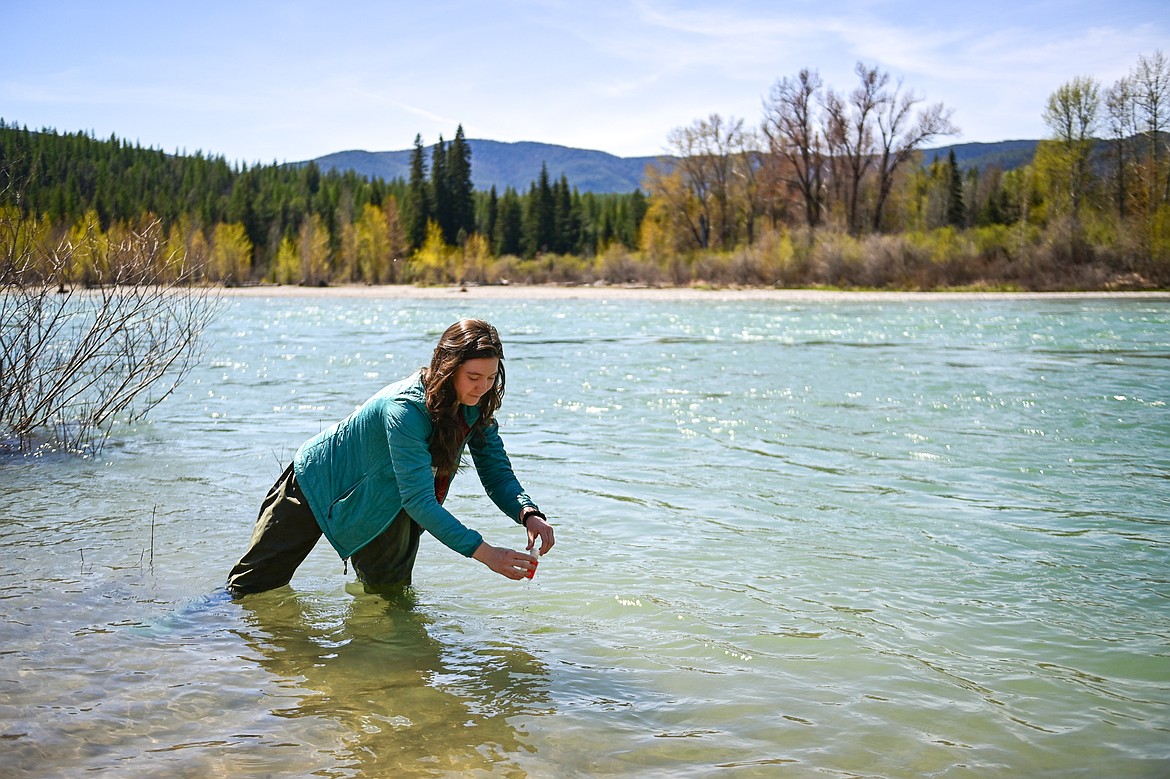
Callie Nelson, with Flathead Lake Biological Station’s Monitoring Montana Waters program, demonstrates how to collect a water sample during a water quality monitoring training session at the Blankenship Bridge river access along the Middle Fork Flathead River on Wednesday, May 6. (Casey Kreider/Daily Inter Lake)
Casey Kreider
A wordless yelp echoed beneath Blankenship Bridge as Geoffrey Gill high-stepped his way out of the frigid waters. It was only the first week of May, and the Flathead River was still churning with snowmelt. Gill’s feet, clad only in a pair of sandals, burned from the cold.
“Just pretend I’m standing there,” he told the group of volunteers clustered on the riverbank as he attempted to shake feeling back into his frozen feet.
The volunteers chuckled. Before long, they would be the ones plunging into the water, braving potentially bruising temperatures for the sake of one of Northwest Montana’s most well-known waterways.
Every summer since 2023, local nonprofit Flathead Rivers Alliance has collected samples from dozens of spots up and down the Flathead River. The program is one of 14 citizen-based water sampling initiatives supported by Flathead Lake Biological Station’s Monitoring Montana Waters program, which aims to provide land managers and governing bodies with the data necessary to protect water quality throughout the state.
Participants in the program work with researchers to identify specific monitoring goals. In locales with a recent industrial history, that might mean testing for heavy metals, but Gill, the program coordinator for Flathead Rivers Alliance, said the notoriously clean waters in the Flathead River warranted a more preventative approach.
Samples submitted by the nonprofit are tested for total nitrogen and phosphorus. While both nutrients naturally occur in watersheds, sudden spikes in the level of nitrogen or phosphorus are often an early indicator of common pollutants like septic leaks or excess fertilizer runoff.
“What we’re doing right now is really a baseline protocol in terms of the science and what you can do with the data that we have,” said Gill. “It is mostly about emergency response.”
This summer, volunteers and staff with Flathead Rivers Alliance will take monthly water samples from 12 sites along the Three Forks of the Flathead River.
At first glance, the process is painfully simple — fill a vial with river water and stick it in a cooler to send to the biological station. Wade in a little deeper, and the precision that goes into each step becomes clear.
“There’s a lot more to think about than you realize. It’s not just filling a bottle,” said Rachel Malison, a University of Montana assistant professor who runs Monitoring Montana Waters, at the May 6 training event below Blankenship Bridge.
Malison stood sentry on the shoreline, calling out occasional reminders as volunteers practiced scooping water into 60-milliliter plastic vials.
Make sure you sample in a clear spot with running water, not in an eddy, she reminded one person. Wash out the vial three times with river water before scooping up the final sample. Don’t fill the vial too full because the water will expand as it freezes in the cooler. Make sure you label each sample, so researchers know where they came from.
“It’s kind of like kindergarten,” said Malison. “You have to be careful that you follow all the little steps.”
The attention to detail continues at Flathead Lake Biological Station, where lab technicians use specialized equipment to measure miniscule changes in light absorbance at different wavelengths. The variance allows researchers to calculate about how many micrograms of phosphorus and nitrogen there are in every liter of river water.
The result is then uploaded to a database run by the Montana Department of Environmental Quality, allowing state regulators to pinpoint suspicious upticks in nutrient levels, and, if necessary, begin investigating the source. The timely response is especially important as elevated levels of nitrogen and phosphorus may lead to algae blooms that deplete water of oxygen, suffocating fish and other aquatic animals.
If cleanup efforts are ever needed, the data collected by Flathead Rivers Alliance can also act as a goalpost, helping regulators determine what nutrient levels typically look like in that section of the river.
To date, all of the samples that Flathead Rivers Alliance has collected returned normal results for nitrogen and phosphorus, a fact Gill found unsurprising.
In 1976, Congress named the Three Forks of the Flathead River as one of the nation’s first Wild and Scenic Rivers, affirming the waterway’s natural beauty, lack of impeding structures like dams and stellar water quality. The designation also paved the way for the conservation of those features in the future.
Gill said the volunteer monitoring program is critical to ensuring the Flathead River retains its high marks for water quality, especially as public land agencies like the U.S. Forest Service often lack the funding and staff to consistently sample the river themselves.
“The idea of doing a good job and good work is that nobody notices,” said Gill. “This is the hard work that goes into making this experience what it is and this place what it is.”
The program also provides a direct pathway for residents to learn about and contribute to the protection of the Flathead River. During the program’s early days, Flathead Rivers Alliance founder Sheena Pate took most of the water samples herself. Last year, the organization invited volunteers to participate in the program for the first time.
Gill said all six volunteers from last year signed on to take water samples again this summer. Another 10 new volunteers turned out for the training event, putting the program near its capacity for the current season.
“People are always stoked about water quality,” said Gill. “I think that water quality and fish are the two things that get people most tactile about the river. They want a river where they can see to the bottom, and that means that the water needs to be clean, and that’s a really distinct neural pathway for people.”
Less tactile, but no less important, said Gill, are Flathead Rivers Alliance’s other volunteer programs, including its flagship River Ambassador program in which participants act as liaisons at popular river access sites, answering questions and giving recreationists tips for how to float the river responsibly. The organization also hosts annual clean-up days to pull invasive weeds and collect litter along the riverbanks.
The goal of every event, said Gill, is to keep the Flathead River wild and scenic for centuries to come.
“We have something good here,” he said. “And you only get it to be good for you if you give back every now and again.”
Reporter Hailey Smalley can be reached at 406-758-4433 or [email protected]. If you value local journalism, pledge your support at dailyinterlake.com/support.
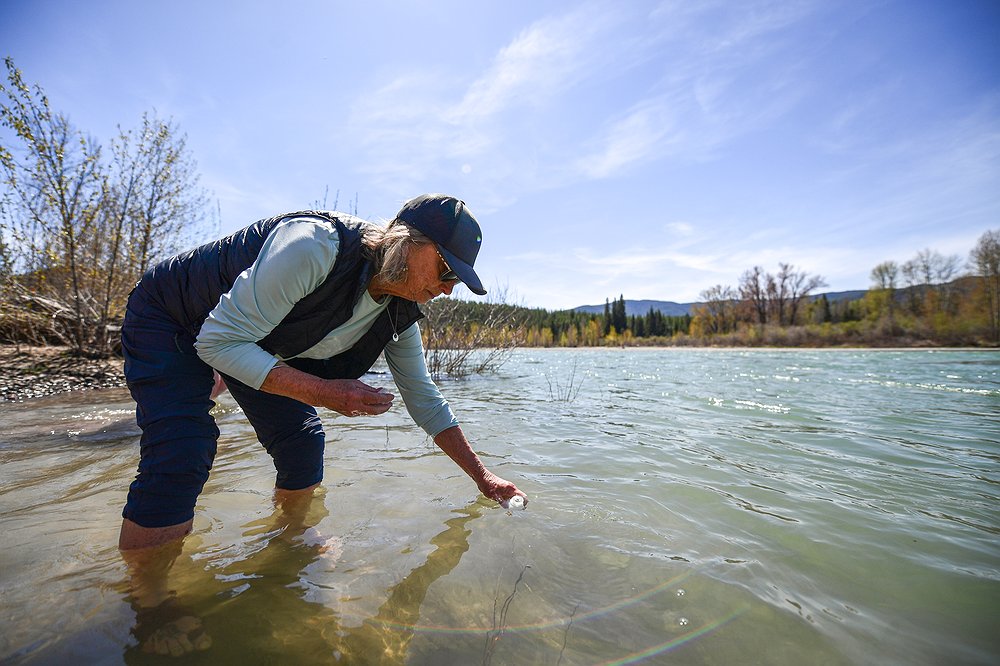 Mary Person takes a test sample from the Middle Fork Flathead River during a water quality monitoring training session held by Flathead Rivers Alliance and Monitoring Montana Waters at the Blankenship Bridge river access along the Middle Fork Flathead River on Wednesday, May 6. (Casey Kreider/Daily Inter Lake)
Casey Kreider
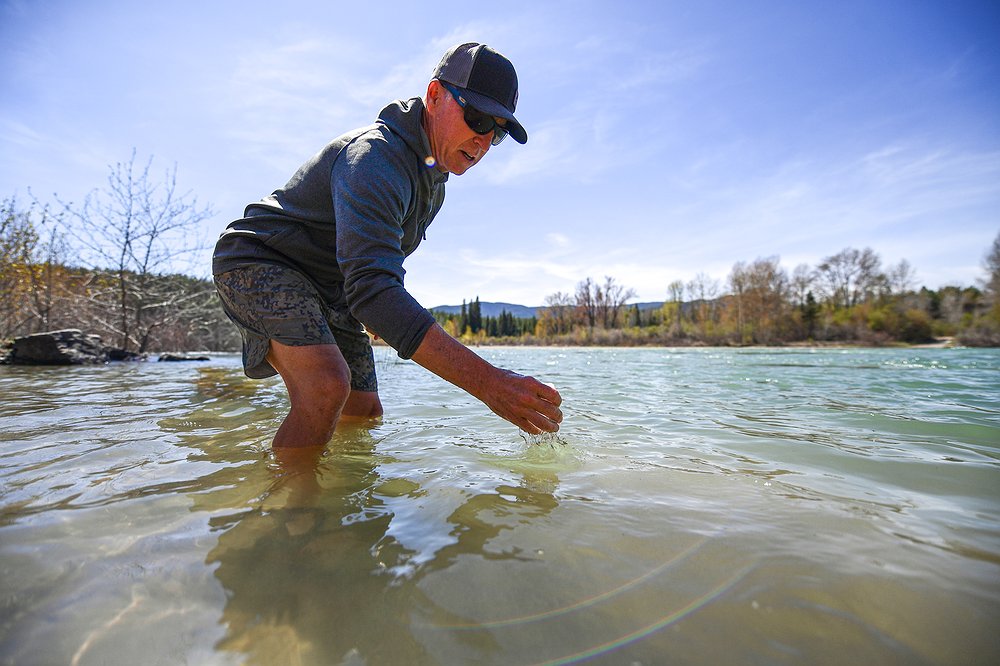 Andy Crites takes a test sample from the Middle Fork Flathead River during a water quality monitoring training session held by Flathead Rivers Alliance and Monitoring Montana Waters at the Blankenship Bridge river access along the Middle Fork Flathead River on Wednesday, May 6. (Casey Kreider/Daily Inter Lake)
Casey Kreider
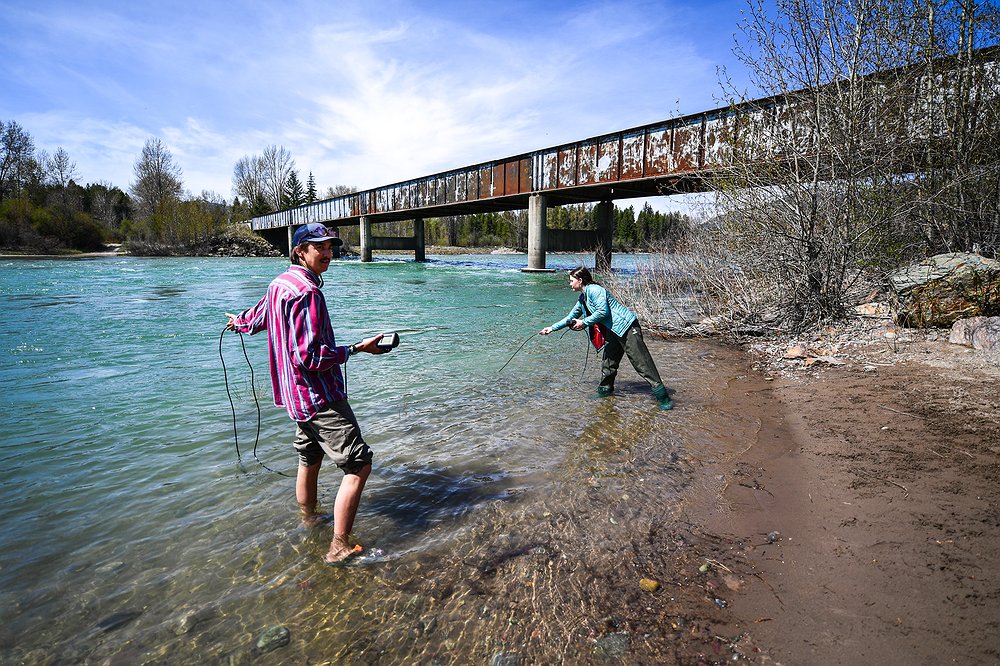 Geoffrey Gill, program coordinator with Flathead Rivers Alliance, and Callie Nelson, with Flathead Lake Biological Station’s Monitoring Montana Waters program, demonstrate how to use a YSI water quality meter during a water quality monitoring training session at the Blankenship Bridge river access along the Middle Fork Flathead River on Wednesday, May 6. (Casey Kreider/Daily Inter Lake)
Casey Kreider
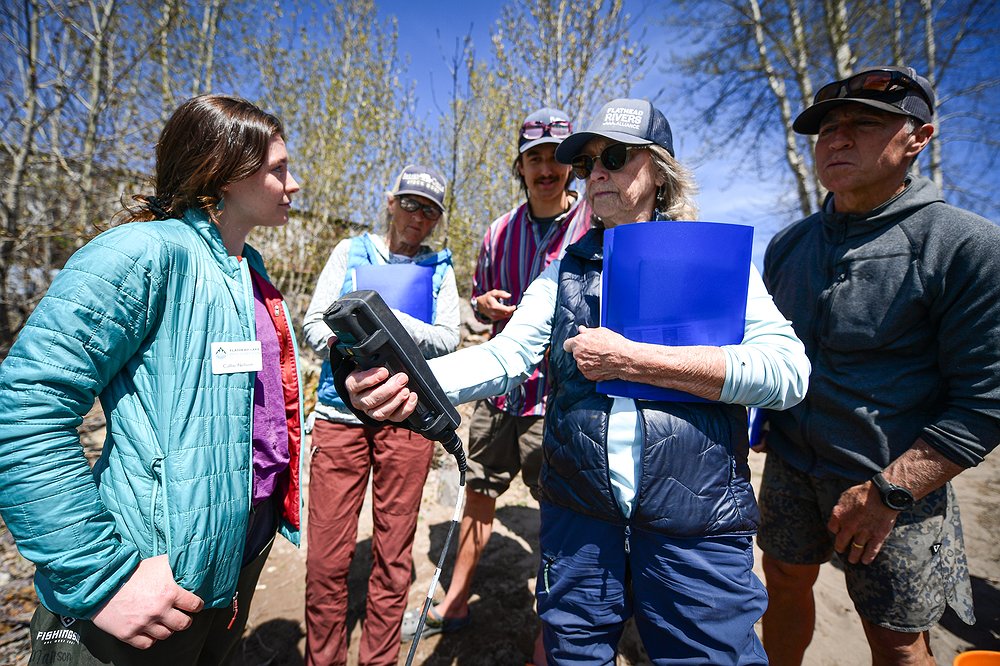 Callie Nelson, left, with Flathead Lake Biological Station’s Monitoring Montana Waters program, and Geoffrey Gill, back, program coordinator with Flathead Rivers Alliance, discuss data gathered by a YSI water quality meter with participants during a water quality monitoring training session at the Blankenship Bridge river access along the Middle Fork Flathead River on Wednesday, May 6. (Casey Kreider/Daily Inter Lake)
Casey Kreider
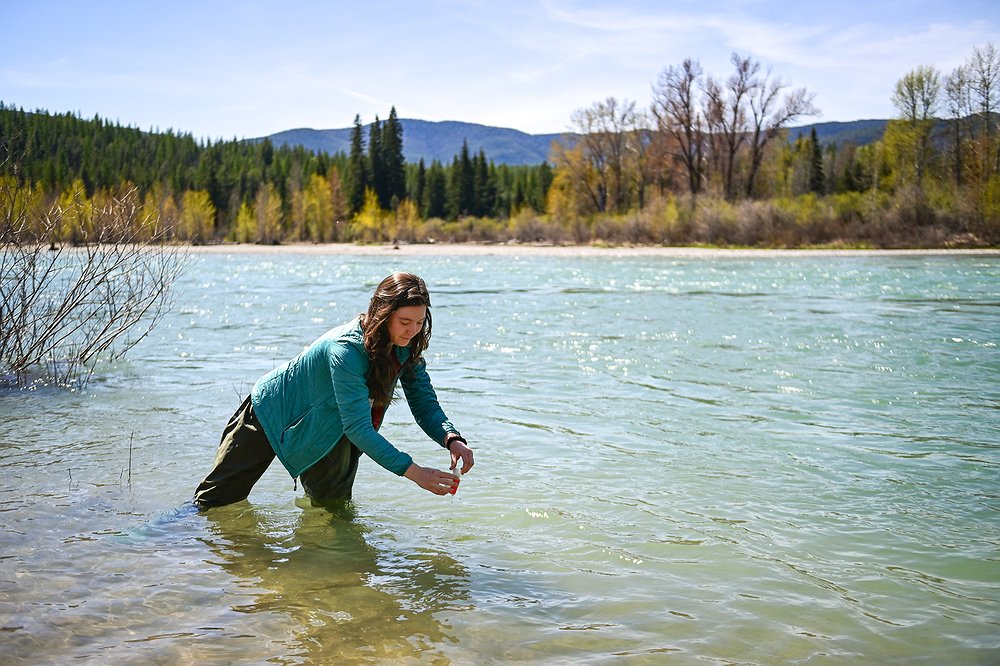 Callie Nelson, with Flathead Lake Biological Station’s Monitoring Montana Waters program, demonstrates how to collect a water sample during a water quality monitoring training session at the Blankenship Bridge river access along the Middle Fork Flathead River on Wednesday, May 6. (Casey Kreider/Daily Inter Lake)
Casey Kreider