
Low water supply means severe shortfalls for irrigation season
Bonner County Daily Bee | UPDATED 2 months, 2 weeks AGO
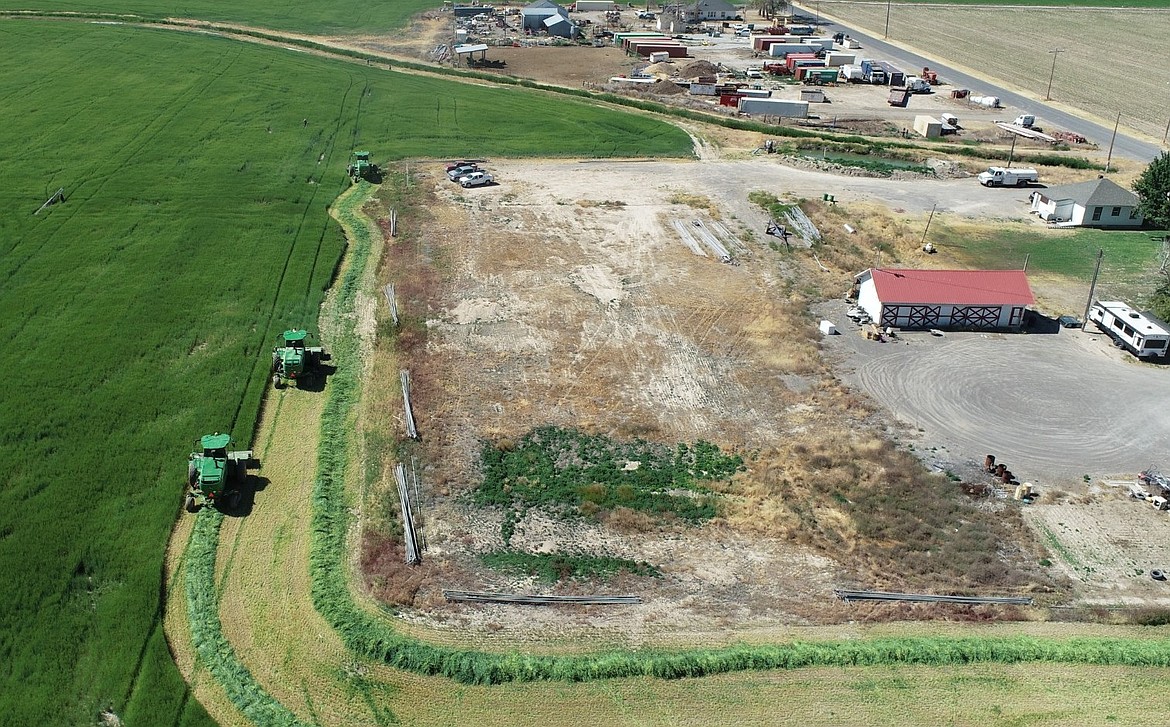
Visual of the farmland supplied by the Twin Falls Canal Company, where grain is being chopped to sell as cattle feed rather than letting it fail for lack of water, sacrificing the lower-value crop to preserve supply for the higher-value fields.
SWC photo
According to a June 11 Surface Water Coalition press release, a historically low snowpack, a statewide drought emergency and declining reach gains across the Snake River system have forced its members to impose significant reductions in their water deliveries and use.
The reductions are forcing major changes on farms and communities across southern Idaho.
“Idaho is in a bad situation. The snow never fell this past winter, so now we are dealing with one of the most challenging water years in generations, with the consequences already stacking up,” said Alan Hansten, chairman of the Surface Water Coalition. “Our members are facing deep cuts to each of their water supplies, which in turn is leaving everyone who relies on our water working hard to stretch their supply.”
Hansten added that farmers are already having to decide which fields to abandon to make it through the summer.
“The impacts of this very real drought already equate to lost crops and lost income,” Hansten said. “It will be felt in our towns, our businesses, our grocery stores and around kitchen tables across Idaho and our nation."
According to preliminary data from Water District 1 (the Idaho agency responsible for distributing surface water in priority and in accordance with Idaho water laws), the water outlook is bleak.
This year’s snowpack came in at less than 40% of the typical level for this time of year. The mountain snowpack is crucial; it melts and flows down in the spring, filling rivers and reservoirs that farmers rely on all summer. Reach gains to the Snake River are nearing record-breaking and historic lows.
The data also revealed that reservoirs are currently holding about 2.47 million acre-feet of water. Last year at this same time, they held 3.6 million acre-feet, and a normal year sits around 3.25 million. This means the system is roughly 1.2 million acre-feet short of where it should be.
The reduced supply is already evident in some agricultural fields served by the Twin Falls Canal Company, where water users are currently experiencing a 33.3% reduction in normal allocations.
The release said shortfalls are being felt by most SWC members, who collectively are responsible for delivering water from the Snake River to approximately 550,000 acres of farmland in Idaho.
“It’s important that our fellow Idahoans understand the constraints our canal companies, our irrigation districts, our farmers, our ranchers and all water users are facing,” Hansten said. “All water users are being asked to do more with less, and they are responding with the same resilience that has always defined Idahoans. The path forward is uncertain, but we will continue to work together to do what is best for the state of Idaho.”