
His dad just wanted a grandson
D. F. Oliveria / Huckleberries | Coeur d'Alene Press | UPDATED 6 days, 18 hours AGO
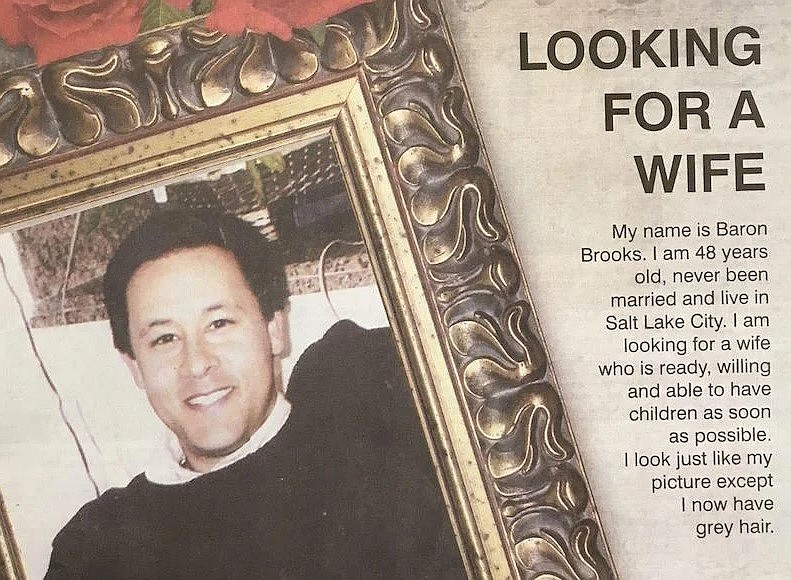
In 2016, an advertisement in The Press, paid for by a 78-year-old father seeking a wife for his son, attracted international attention.
Coeur d'Alene Press Archive
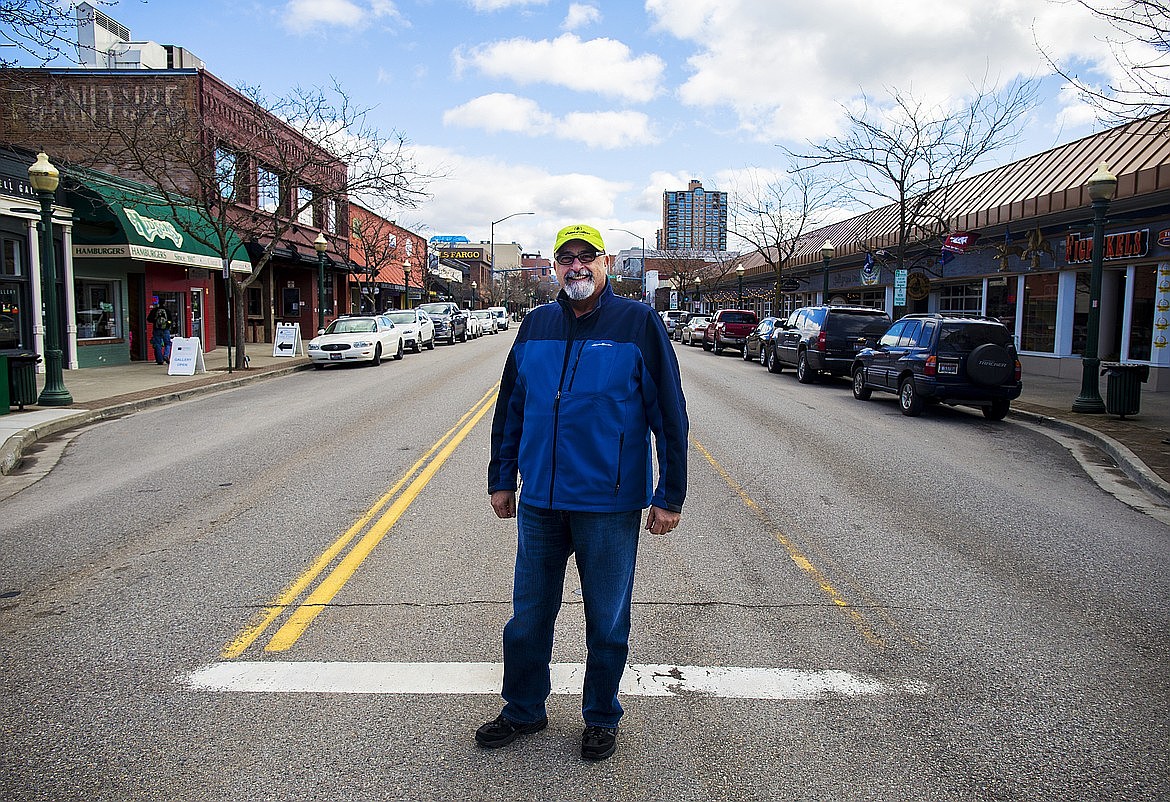
In 1993, community booster Dave Walker (shown on Sherman Avenue in 2017) named the town’s classic car show — “Car d’Lane.”
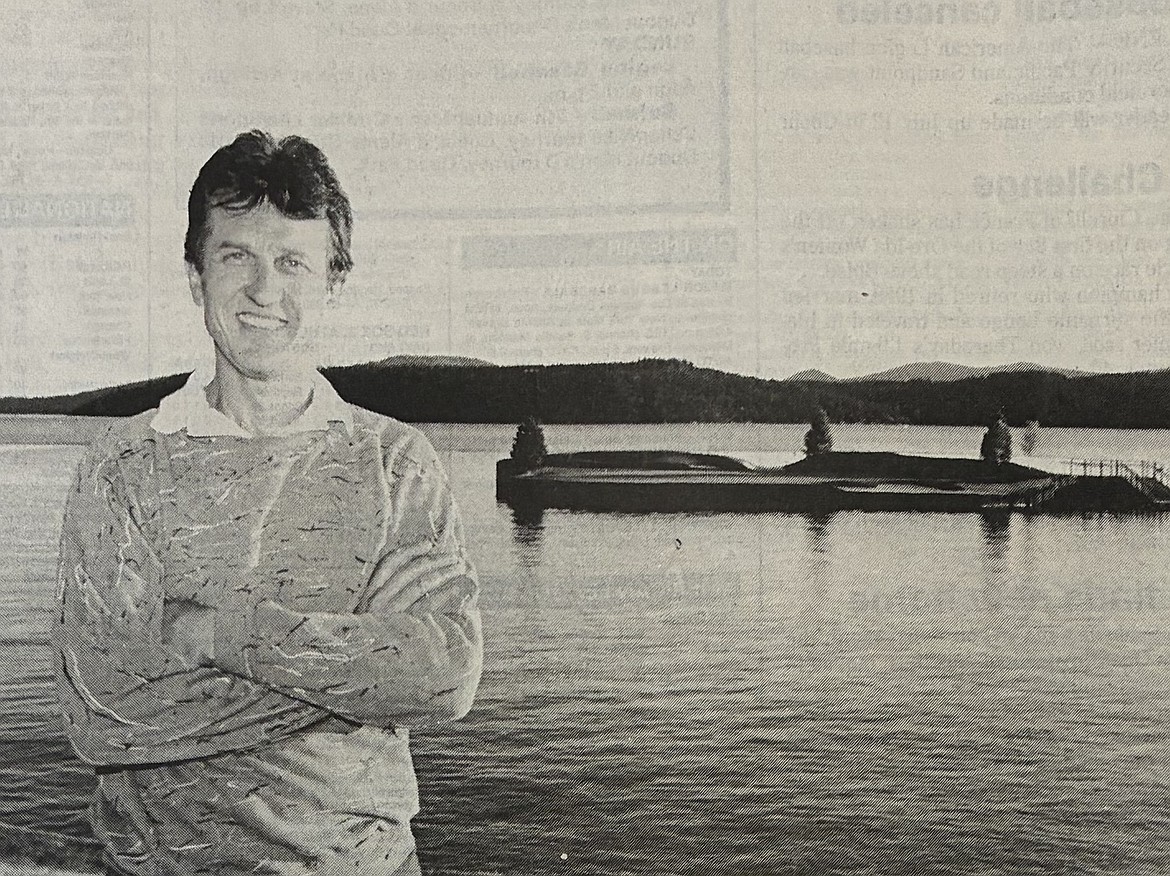
In 1991, Dennis Kisiel of Edmonds, Wash., scored the first hole-in-one on The Coeur d’Alene Resort’s new Floating Green.
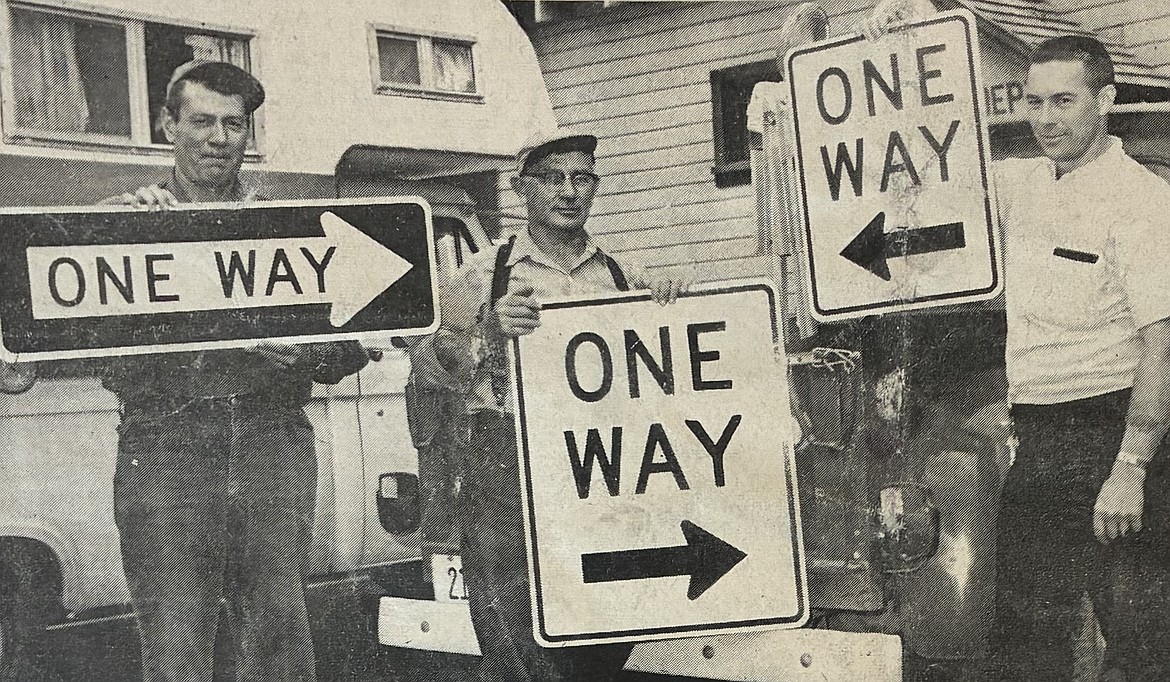
In 1966, city workers held the signs that transformed Third and Fourth streets into one-ways. Shown are, from left: street foreman Jerry Greeno, sign painter Carl Erickson and street commissioner Reed Walker.
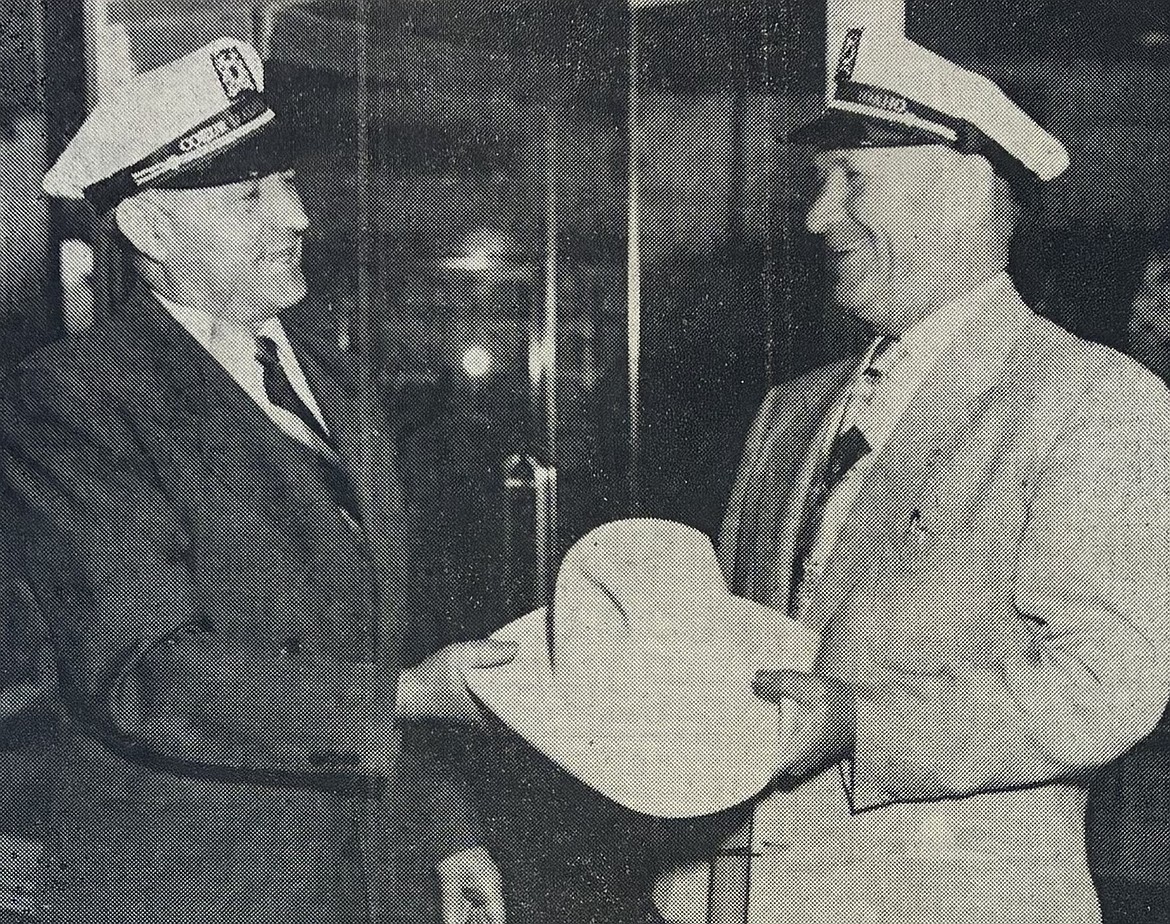
Before Independence Day 1951, Mayor L.L. Gardner, left, swapped his 10-gallon hat for an “Admiral Cap,” while Carl Gridley smiled. The cowboy hat was a gift from the Lions Club of Kamloops, British Columbia.
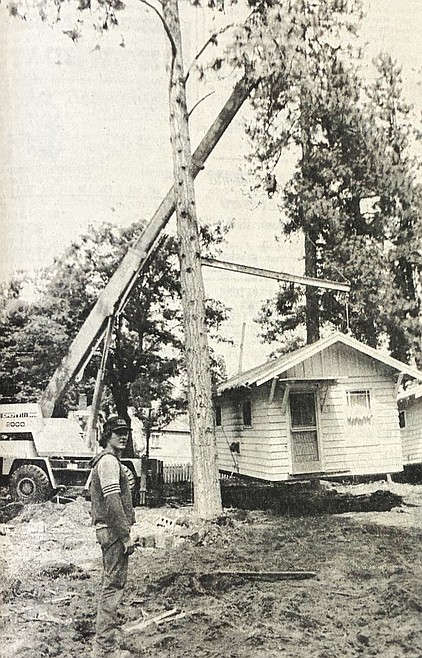
In 1981, worker Virgil Umland supervised cottage removal from Archie McGregor’s famous Lakeview Court campground.
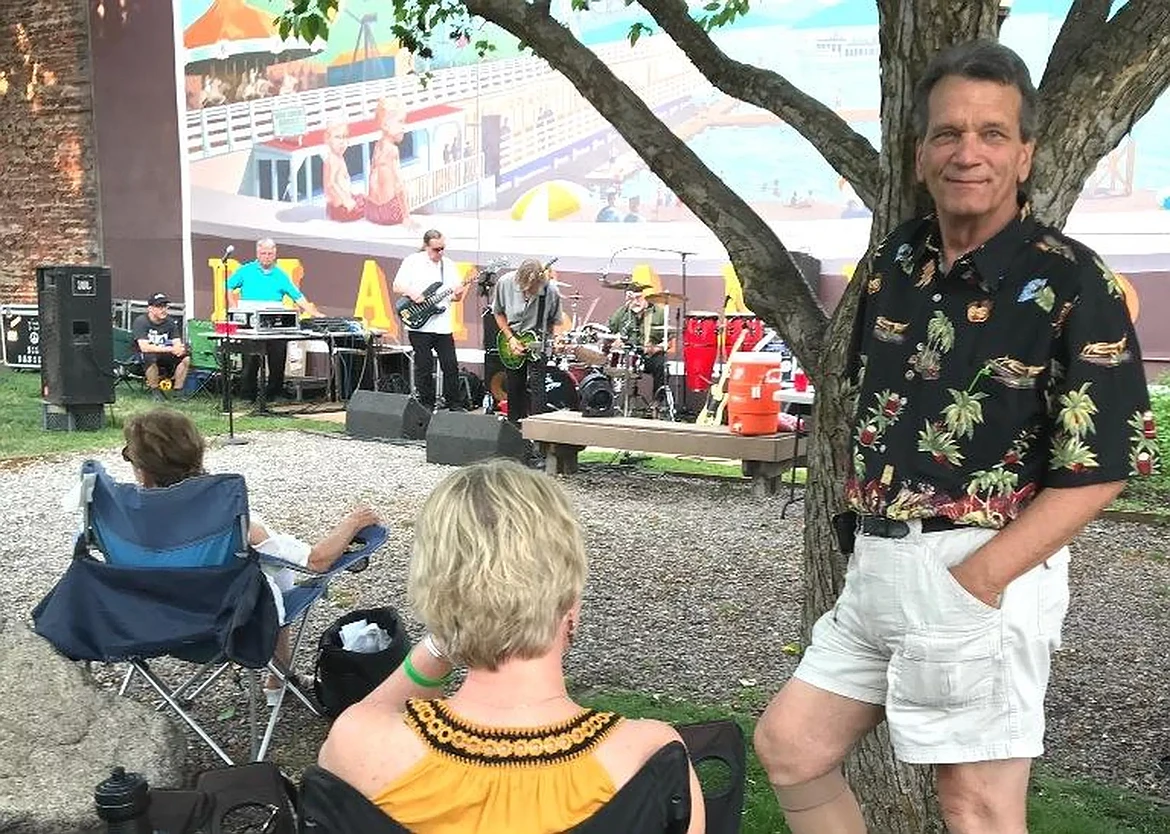
Founder Chris Guggemos enjoyed the music at a 2017 Handshake Production concert.
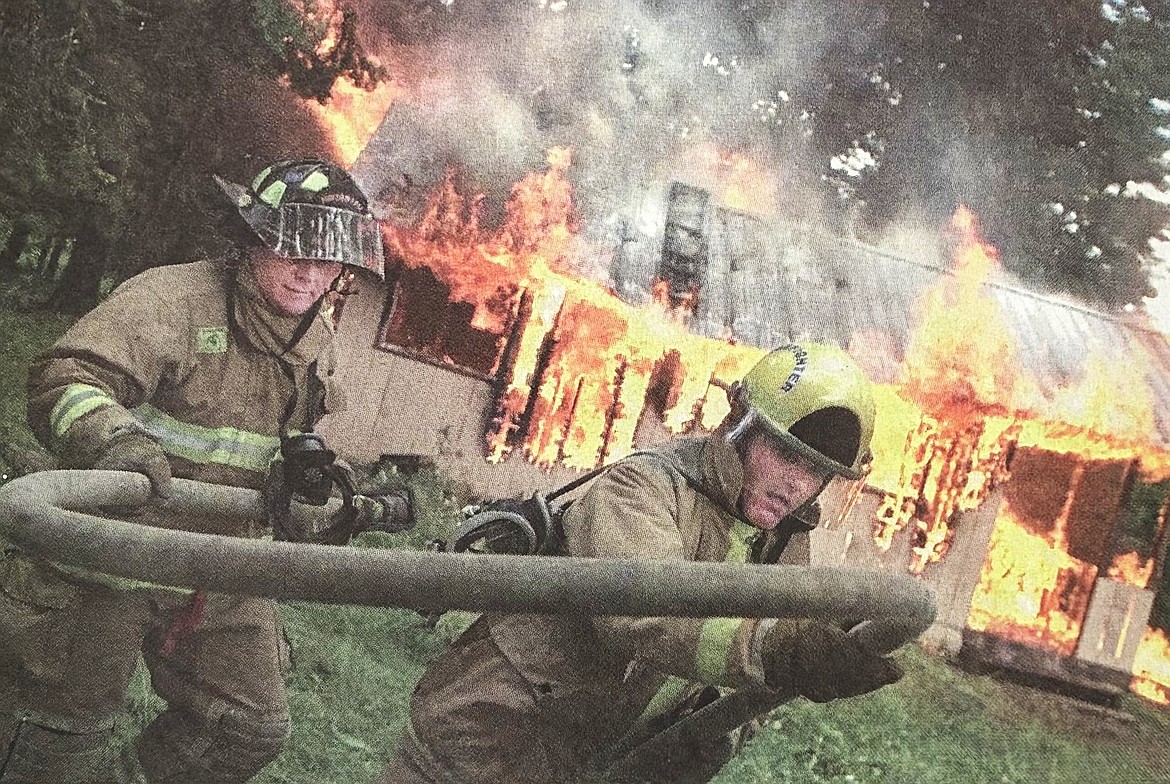
In 2001, local firefighters began practice burns at the old Aryan Nations compound on Rimrock Road.
There are matchmakers like Yente in “Fiddler on the Roof.”
And then there are matchmakers like Arthur Brooks, father of a Utah businessman.
Both are busybodies. But Yente is fictional. Arthur was real and made international news.
On June 18, 2016, Arthur Brooks paid $900 for a full-page ad in the Coeur d’Alene Press that sought a wife for his son, Baron, then 48, a Salt Lake City health food broker.
The elder Brooks, 78, a California horse breeder, was in ill health and wanted a grandson.
Not just any single woman would do, however. Arthur listed his strict requirements in the ad, titled “Looking for a Wife.” It sounded as though his son had placed it. He didn’t.
“You must be politically conservative,” the ad read. “This is very important to me. If you voted for Obama or plan to vote for Hillary, you are not for me.”
Also, the advertisement said, an interested woman must be willing to move to Salt Lake City and to stay at home with the kids.
Arthur planned to interview candidates at The Coeur d’Alene Resort.
About a dozen far-flung women responded to Arthur’s gambit, none from Coeur d’Alene. The ad also drew attention from the national media, Resort officials and Arthur’s son. Baron didn’t know what his father was up to until his phone began ringing non-stop.
“When this happened, I was as shocked as anyone else,” Baron Brooks told The Press.
Arthur Brooks left for Utah after management asked him not to conduct interviews at The Resort. Company officials feared media attention would compromise guest privacy.
Baron Brooks told The Spokesman-Review that his father had overstepped his boundaries. Still, he forgave him and OK’d the interviews in Salt Lake City.
“He was very contrite,” Baron told the Spokane newspaper. “He never dreamed in a million years that this little thing that he thought was cute and funny would go worldwide viral.”
Baron, a political conservative, told The Times of Israel that his father picked an Idaho paper for his Hail Mary ad due to the state’s well-known conservatism.
“You probably are going to get more like a Midwest-type values in Idaho — somebody’s who more right of center than you would, say, in Los Angeles,” Baron said.
There’s no indication that Baron’s unexpected 15 minutes of fame produced a wife.
A star is born
Dennis LeKander started it informally during Idaho’s centennial.
Community booster Dave Walker named it.
From a humble beginning, Car d’Lane has blossomed into a cherished summer event.
LeKander, who operated a car collector business, launched Car d’Lane in 1990 by arranging a warm welcome for touring southern Idaho car buffs. He did so by asking local classic car fans to park their automobiles along Sherman Avenue. About 35 did.
“They drove in. People just clapped. And that was about all it was,” LeKander told The Press on June 21, 1996.
Afterward, LeKander and Dennis Demming of the Coeur d’Alene Downtown Association decided the impromptu car show should become an annual event.
“The first couple of years it was kind of word of mouth, a very informal get-together with car people,” LeKander said.
In January 1993, the event, which was first called “Downtown Car Show,” got its catchy name. Dave Walker suggested it be called “Car d’Lane” during an organizational meeting hosted by the late Suzanne Kaderka, then manager of the Downtown Association.
And the rest is history.
One and done
For almost three months, golfers at the new Coeur d’Alene Resort golf course tried — and failed — to sink a hole in one on the Floating Green.
Then, on Friday, June 21, 1991, Dennis Kisiel approached the 14th green.
He had pulled a 7-iron from his golf bag when a caddie recommended a 6-iron, which produces a back spin. So, the visitor from Edmonds, Wash., swapped clubs.
Kisiel was working on five straight pars — and was trying to break 80 — when he teed off.
The Par 3 hole was set at 146 yards that day.
Kisiel’s shot sailed across the water, landed 7 feet from the hole, and rolled in.
Kisiel fell down and then high-fived his three witnesses: John Bates, Jim Hull and Al Frank. Not only was it the first hole-in-one on the Floating Green. But also his first one ever.
“To be the first to do it is exciting, because no one else can be first again,” Kisiel said.
The golf-screen designer donated the ball, scorecard and 6-iron to the course for display. In turn, he received a set of Titleist DCI clubs and a free round of golf.
The hole-in-one enabled Kisiel to shoot a 79, a good score for an amateur golfer.
Huckleberries
• Poet’s Corner: The grains of sand upon this beach / in total must four trillion reach, / and every single grain you see / belong exclusively to me — The Bard of Sherman Avenue (“Sanders Beach”).
• Answer Man: And the answer is: 5 a.m. Wednesday, June 29, 1966. The question? When did Third and Fourth streets switch from two-ways into one-ways south of Hattie Avenue? The city opted for the one-way pattern to relieve traffic on Fourth. City Engineer James LePard expected confusion: “It may be difficult at first, especially for those who live in the area and have a routine established.”
• Classy Caps: Prior to World War II, “Admiral Caps” were “widely in vogue” before and during Fourth of July celebrations in Coeur d’Alene. In 1951, the Admiral Cap Committee of the Chamber of Commerce stoked the tradition by ordering 500 hats, which were snapped up. The Press urged cap-less readers not to fret. Several more shipments of fashionable caps were on the way.
• Long Gone: In June 1981, workers moved the popular Lakeview Court on Northwest Boulevard to make way for condos. Owned by Archie and Lorraine McGregor, the place featured one-room cottages, a little store and reasonable prices. Most of the cottages were relocated to a Hayden Lake church camp. The property eventually became Coeur d’Alene North. Widower Archie McGregor lives there today.
• FYI: In a letter to The Press in December 2017, the late Chris Guggemos pinpointed when our free summer concert series began: 1992. Coeur d’Alene’s “Music Man” was thanking Suzanne Kaderka of the Downtown Association, for helping him launch the tradition She had died 10 days before. The concert series, now in the capable hands of Michael Koep, will celebrate its 34th anniversary this summer.
Parting shot
In the end, the Aryan Nations compound on Rimrock Road provided a community service.
Its collection of ramshackle buildings, trailers and a church served as fodder for fire-fighting practice. One by one, the buildings began to burn June 28, 2001: a guard house, a concession stand with a large swastika on the tin roof, the guard tower, the bunk house.
Founder Richard Butler’s farmhouse and church were saved until after the Fourth of July “to let things die down,” according to The Press.
Virginia Niten, a rookie firefighter, wasn’t impressed that she was practicing at a complex that once served as the country’s neo-Nazi headquarters. She was simply grateful to get hands-on experience after a year of classroom theory and training tower work.
“It’s kind of like getting on the freeway in L.A.,” she told The Press. “You’re taking your life in your own hands, but you’ve had some practice.”
• • •
D.F. (Dave) Oliveria can be reached at [email protected].
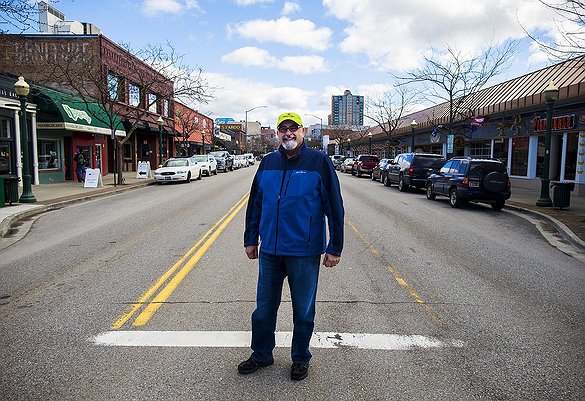 In 1993, community booster Dave Walker (shown on Sherman Avenue in 2017) named the town’s classic car show — “Car d’Lane.”
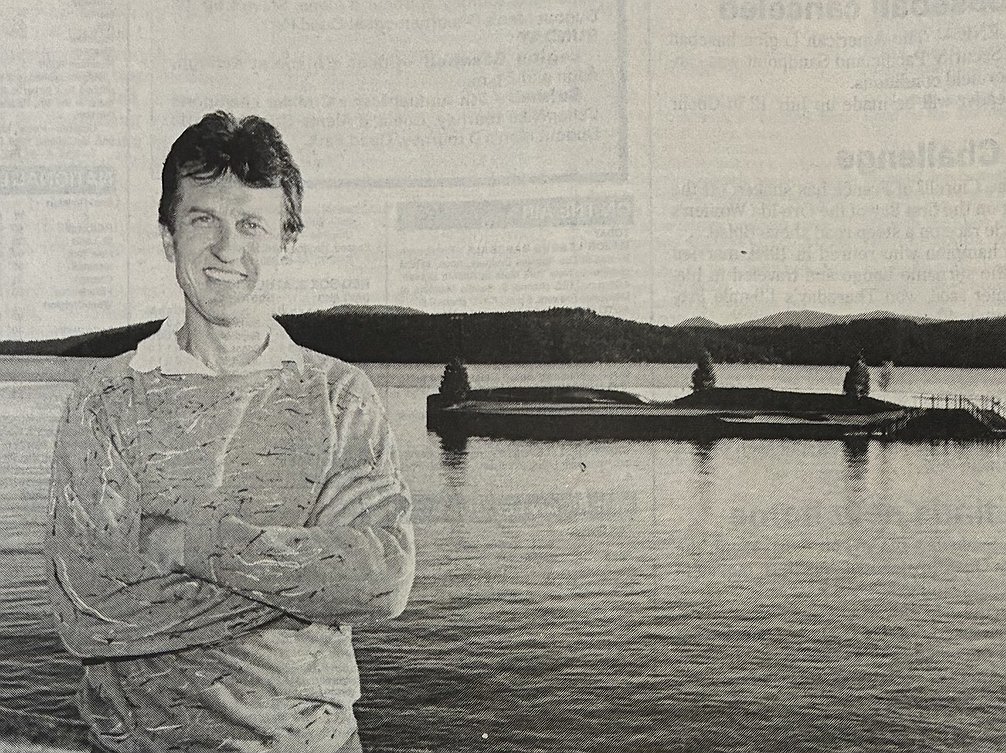 In 1991, Dennis Kisiel of Edmonds, Wash., scored the first hole-in-one on The Coeur d’Alene Resort’s new Floating Green.
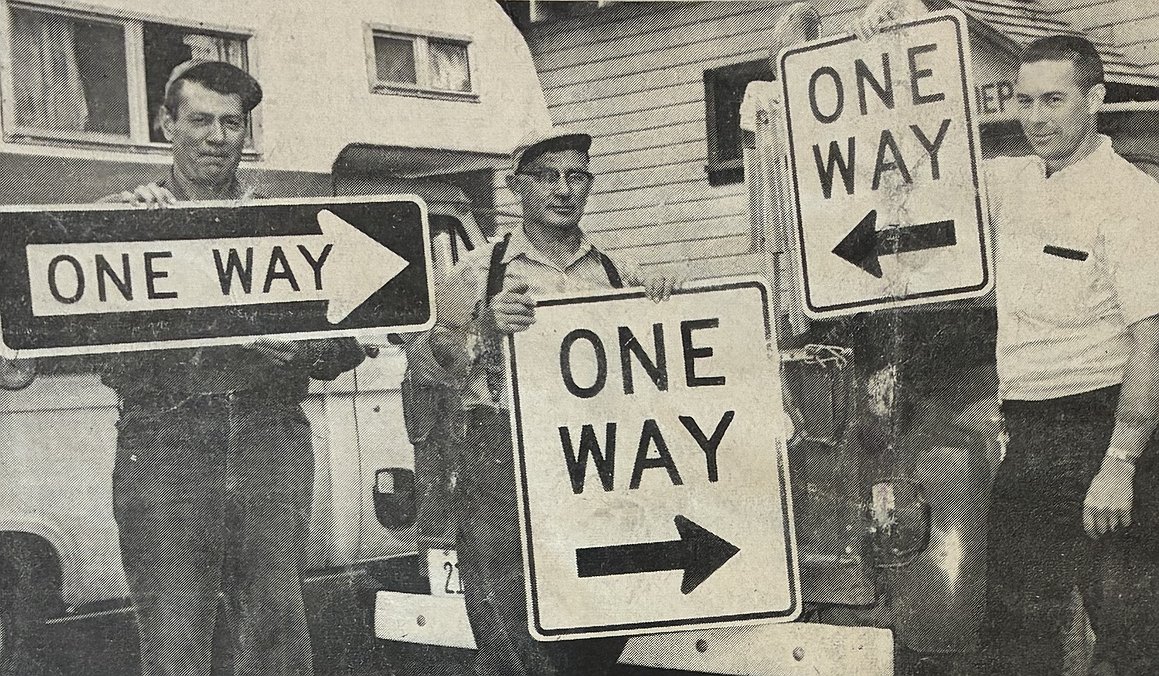 In 1966, city workers held the signs that transformed Third and Fourth streets into one-ways. Shown are, from left: street foreman Jerry Greeno, sign painter Carl Erickson and street commissioner Reed Walker.
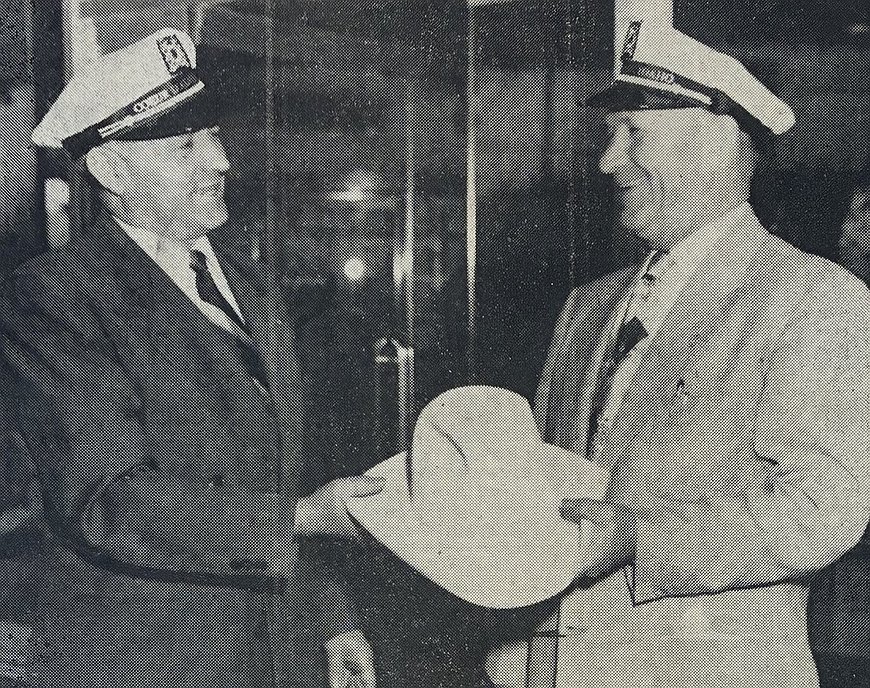 Before Independence Day 1951, Mayor L.L. Gardner, left, swapped his 10-gallon hat for an “Admiral Cap,” while Carl Gridley smiled. The cowboy hat was a gift from the Lions Club of Kamloops, British Columbia.
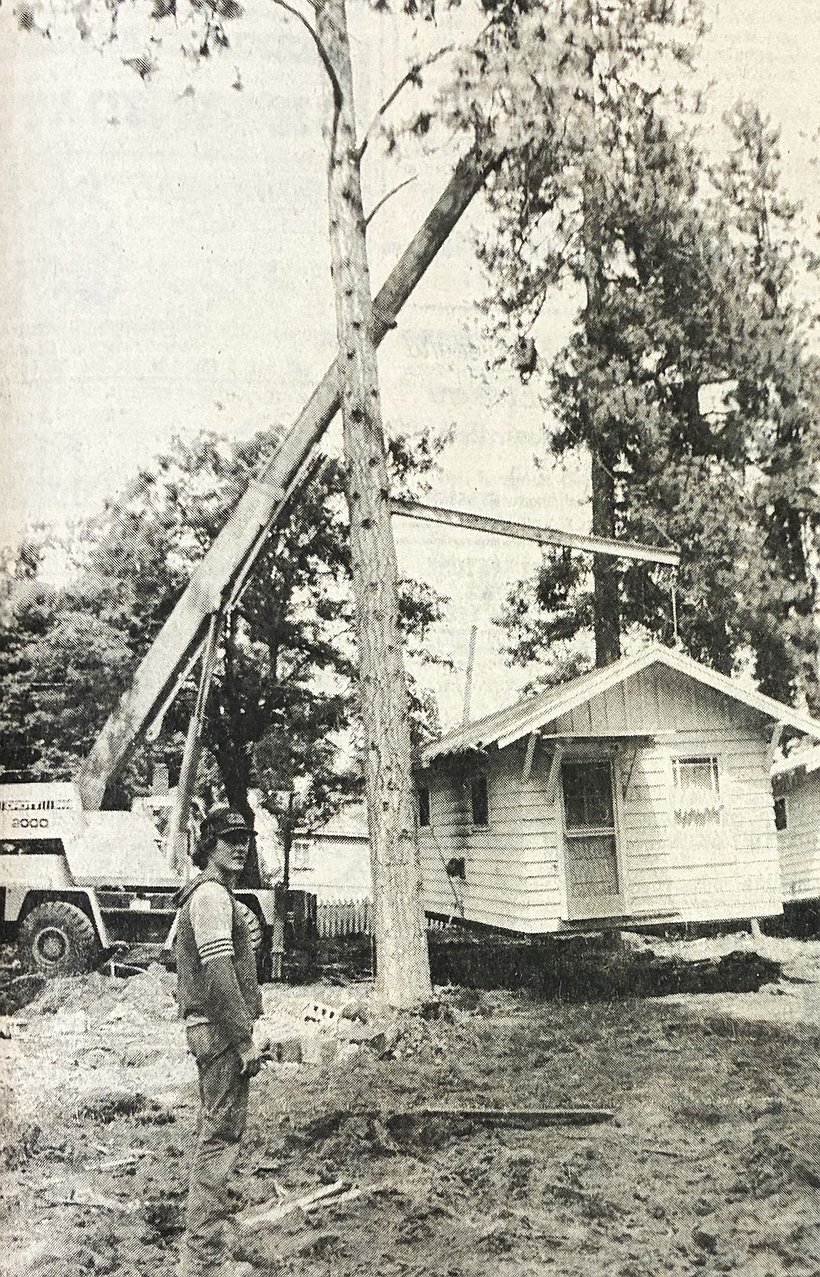 In 1981, worker Virgil Umland supervised cottage removal from Archie McGregor’s famous Lakeview Court campground.
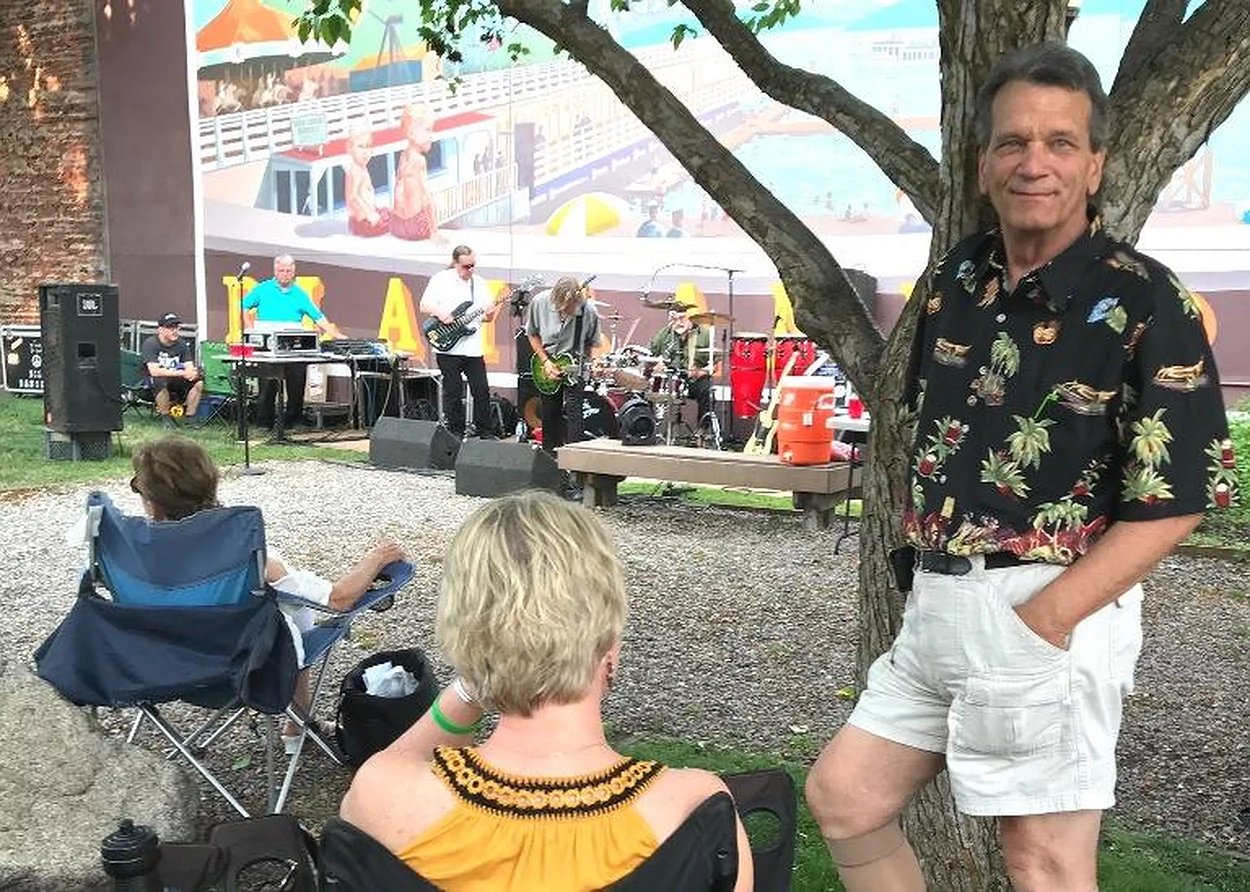 Founder Chris Guggemos enjoyed the music at a 2017 Handshake Production concert.
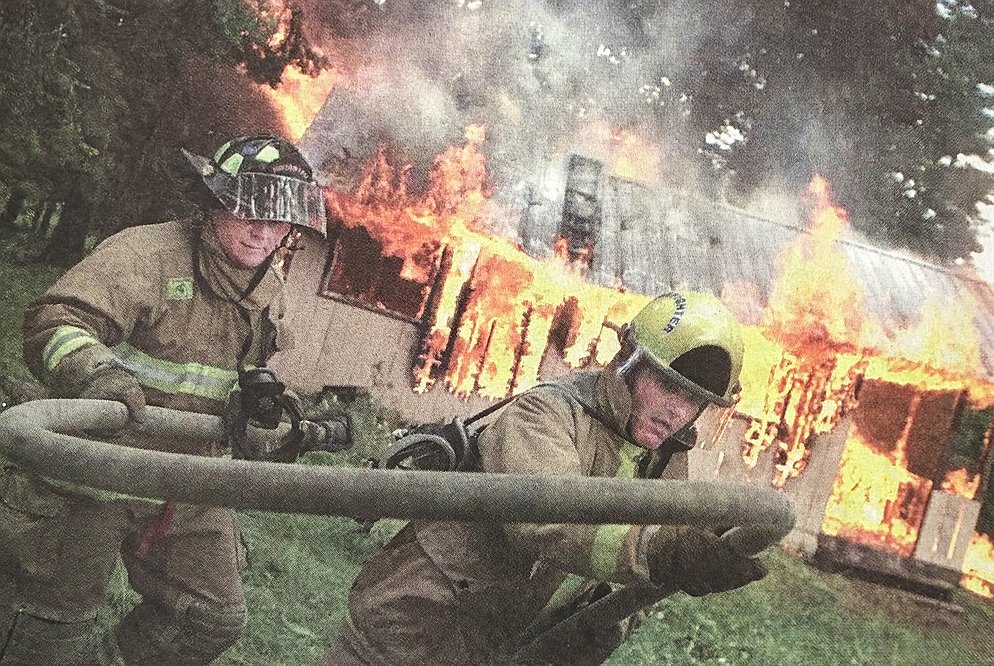 In 2001, local firefighters began practice burns at the old Aryan Nations compound on Rimrock Road.