
Fish and Game begins grizzly research trapping
KAYE THORNBRUGH | Hagadone News Network | UPDATED 3 months, 3 weeks AGO
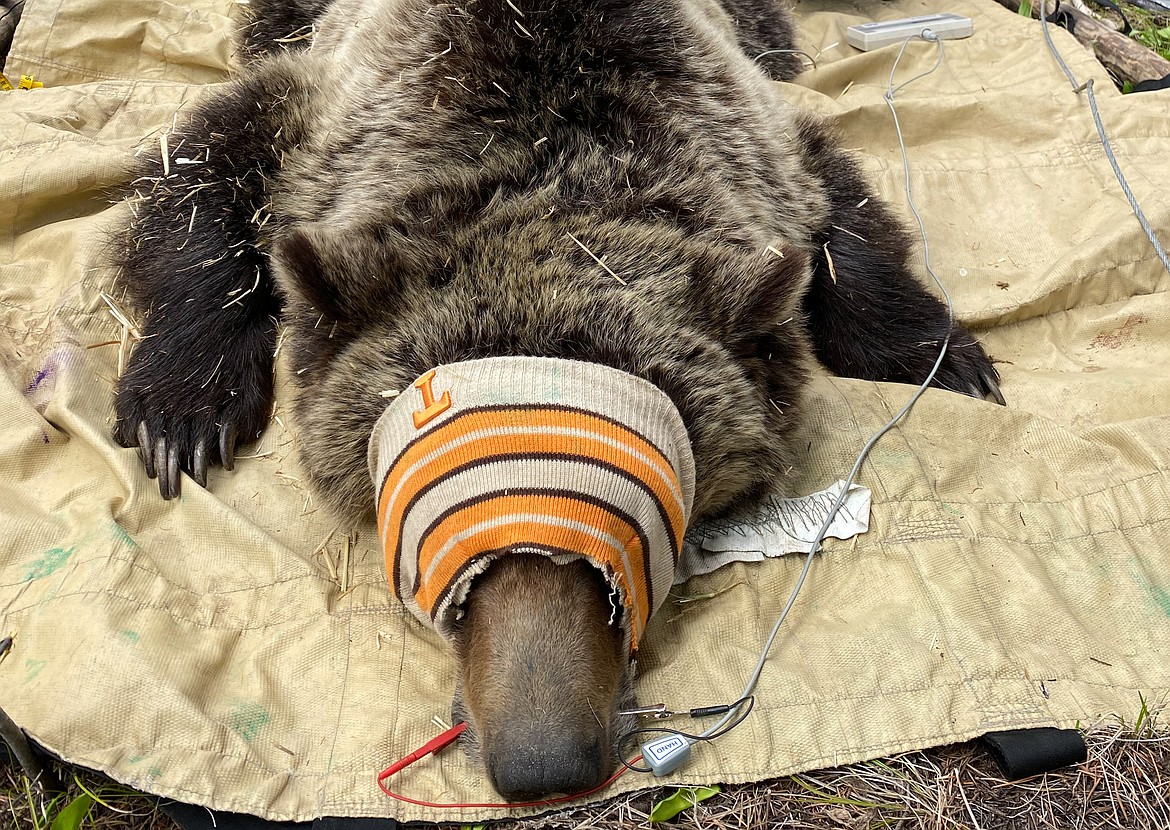
Biologists immobilize captured bears before fitting them with radio collars for researching. Photo via the Idaho Department of Fish and Game.
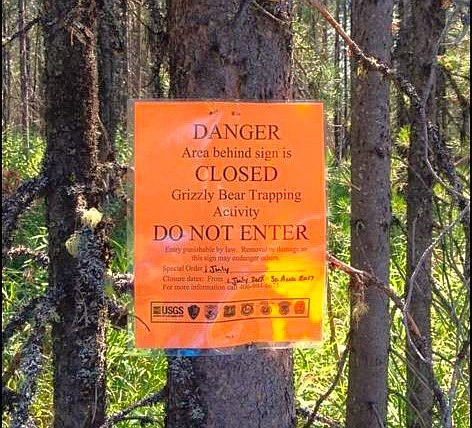
Warning signs will mark the perimeter of grizzly bear capture sites. Authorities urge the public to abide by the signs and avoid entering the posted areas. Photo via the Idaho Department of Fish and Game.
Kaye Thornbrugh is a second-generation Kootenai County resident who has been with the Coeur d’Alene Press for six years. She primarily covers Kootenai County’s government, as well as law enforcement, the legal system and North Idaho College. | June 25, 2026 1:00 AM
Biologists with the Idaho Department of Fish and Game have begun research trapping of grizzly bears in Boundary County and parts of Bonner County as part of ongoing efforts to monitor the grizzly bear population.
Operations are expected to conclude in late August.
“We do this research as part of our whole approach to managing wildlife living alongside humans,” said Morgan Pfander, a regional wildlife population biologist for the Idaho Department of Fish and Game.
Captured bears are immobilized and handled in accordance with “strict protocols” developed by the U.S. Fish and Wildlife Service and the Interagency Grizzly Bear Study Team, according to Fish and Game, and fitted with a radio collar for monitoring. Biologists will collar subadult and adult grizzly bears.
“We don’t collar young bears,” Pfander said.
By observing radio-collared female bears, biologists can document the age of first reproduction, average litter size, cub and yearling survival and how often females produce a litter.
Data collected from bears of both sexes provides estimates of survival rates, age structure, causes of mortality and more.
“The GPS location data is also used for a variety of things related to habitat use and movement and how much exchange we see between the populations in the Selkirk recovery zone and the Cabinet/Yaak recovery zone, since we have bears pretty close together in the two zones,” Pfander said.
Whenever bear-capture activities are underway for scientific purposes, the area around the site will be posted with bright warning signs. These signs are posted along the major access points and the capture site’s perimeter.
According to Fish and Game, it’s “extremely important that the public heed these signs” and stay out of the posted areas.
“At the sites, we do have lure that’s drawing bears in,” Pfander said. “We’re asking people not to enter for their own safety.”
Biologists have not conducted monitoring captures on grizzly bears in the Panhandle in many years, Pfander said.
“Up here, we are building out the program and taking on more to pitch in on the monitoring side of grizzly bear work,” she said.
Grizzly bears in the 48 contiguous states are currently protected as a threatened species.
“Grizzly bears are federally managed at the moment,” Pfander said. “They’re keeping a close eye on the population to measure how it’s doing and how recovery is progressing. When we contribute to that, it gives us a better picture of the landscape as far as grizzly bears and how the population is doing.”
 Warning signs will mark the perimeter of grizzly bear capture sites. Authorities urge the public to abide by the signs and avoid entering the posted areas. Photo via the Idaho Department of Fish and Game.
ARTICLES BY KAYE THORNBRUGH

Stateline shooter pleads guilty to manslaughter
A DoorDash driver who fatally shot a pedestrian during a road rage incident near Stateline Speedway has pleaded guilty to voluntary manslaughter, though whether a judge will accept the pretrial settlement offer in the case remains to be seen.
Stateline shooter pleads guilty to manslaughter
Prosecutors originally charged Edsel Johnson with first-degree murder
A DoorDash driver who fatally shot a pedestrian during a road rage incident near Stateline Speedway has pleaded guilty to voluntary manslaughter, though whether a judge will accept the pretrial settlement offer in the case remains to be seen.
Kootenai County history revealed
Community members get close-up look at time capsule contents
Liz Boutin is no stranger to historical artifacts. A museum professional and fine artist, Boutin said she's handled Egyptian and Greek items that date back to antiquity. But she had a new experience this summer, after local historical preservationists retrieved a 100-year time capsule from inside the outer wall of the old Kootenai County courthouse.