
Paradise Players' 'Big Sky Stories' depicts Montana history
TRACY SCOTT Valley Press | Valley Press-Mineral Independent | UPDATED 5 days, 14 hours AGO
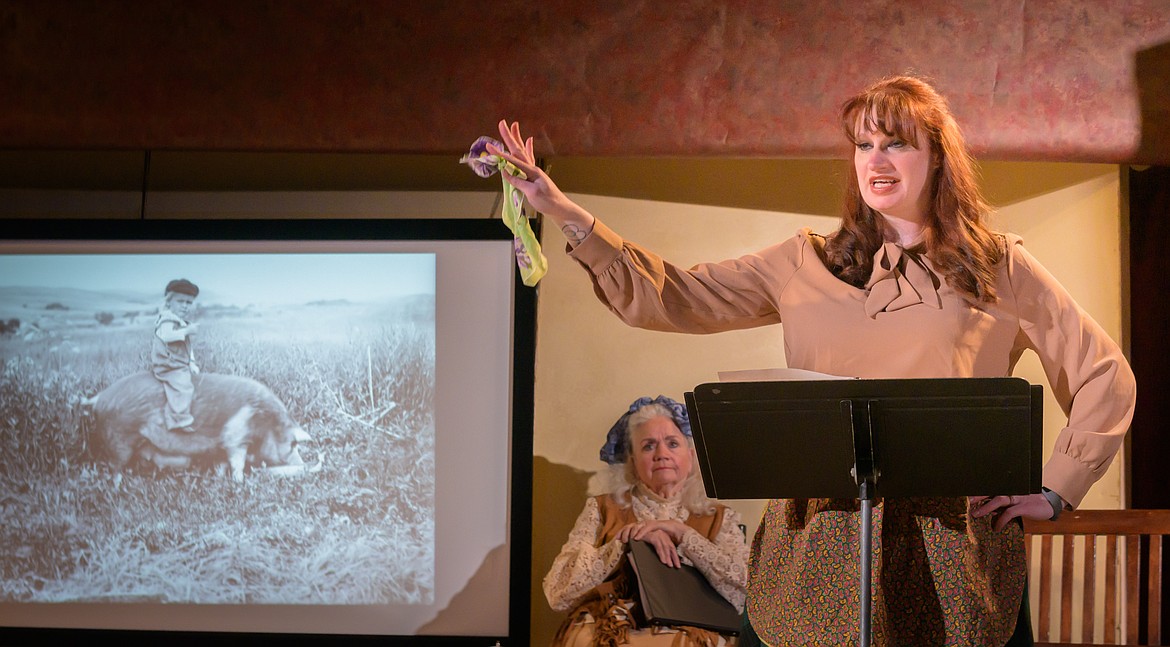
Paradise Players cast member Rashell Jones talks about a boy who would try anything once during the "Favorite Son" story. (Tracy Scott/Valley Press)
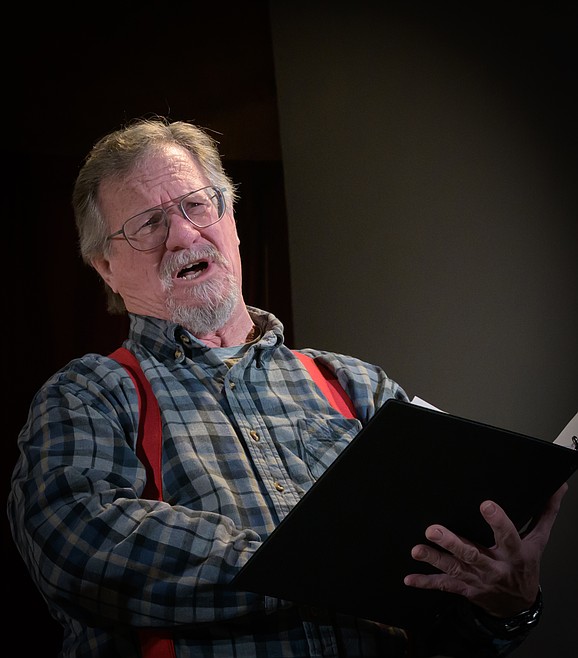
Paradise Players Dave Proctor performs in the Montana statehood story. (Tracy Scott/Valley Press)
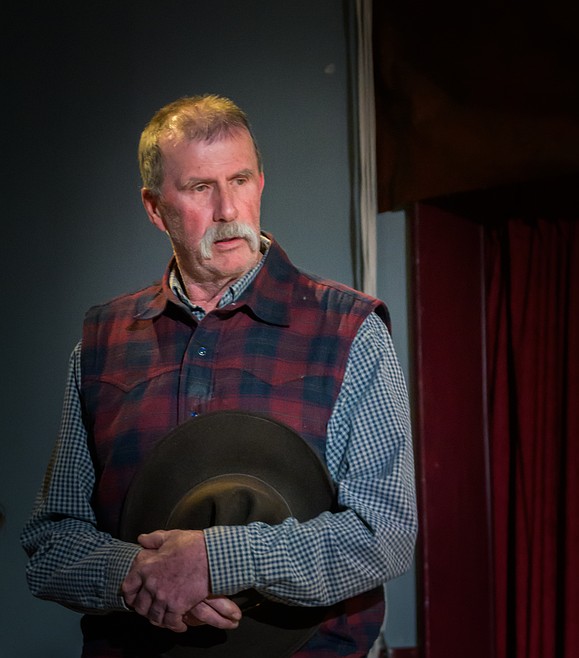
Paradise Players actor Wally Brown portrays a cowboy during the Big Sky Stories production. (Tracy Scott/Valley Press)
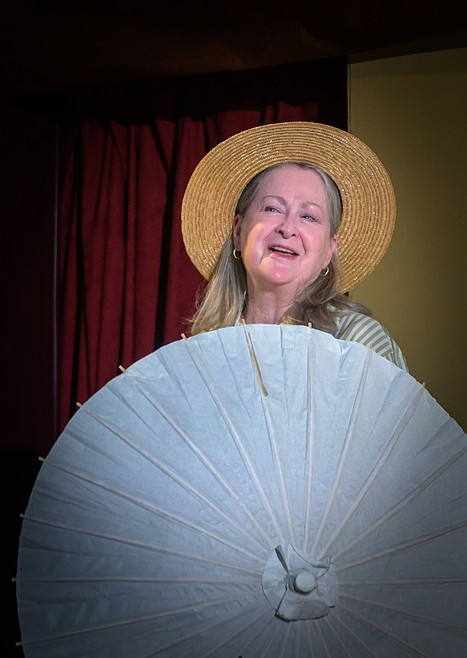
Paradise Player Director Kathleen Hubka playing the part of the girlfriend in trouble during the story "Favorite Son." (Tracy Scott/Valley Press)
Paradise Players presented a compelling series of short stories depicting life in Montana and Idaho near the turn of the 20th century. Their performances this past weekend were filled with humor, moments of tragedy and the unwavering determination of early settlers to survive.
The production, "Big Sky Stories," was written by Paradise Players Director Kathleen Hubka and was based on a wide range of true-life experiences drawn from historic — and sometimes colorful — figures of the region’s past.
Nineteen different stories were shared, covering topics such as the Big Burn of 1910, Molly B’ Dam, women’s suffrage, Deer Lodge Prison and the meaning behind the 3-7-77 logo worn on Montana Highway Patrol patches. Each story was accompanied by historic photographs thoughtfully arranged by Technical Director Wendy Artz, adding depth and authenticity to the performances.
One of the most powerful stories, "The Big Burn," along with a later piece titled "Perished," recalled the devastating wildfire of late August 1910 in western Montana and northern Idaho. The fire burned more than 470 square miles of timber and claimed the lives of over eighty people. During the performance, cast members solemnly recited the names of those who perished, creating a moving tribute to the lives lost.
Another story focused on Maggie Hall, also known as "Molly B’ Damn," a young woman from Dublin, Ireland, whose husband persuaded her into a life of prostitution. She eventually found herself in the small, nearly ghost town of Murray, Idaho, near Thompson Pass. Today, Murray commemorates its colorful history with an annual Molly B’ Damn Days festival.
The cast also brought energy and enthusiasm to "Women Can Vote," which explored the long fight for women’s suffrage, highlighting the efforts of Jeannette Rankin, the first woman elected to the U.S. House of Representatives. Rankin represented Montana, one of the early states to grant women the right to vote, marking a significant milestone in American history.
A particularly colorful and memorable story centered on prison inmate Paul “Turkey Pete” Eitner, who was convicted of murder in Mills City and sent to the Montana State Prison in Deer Lodge. Eitner spent 49 years behind bars. As he aged and his mental health declined, he came to believe he owned the prison. Fellow inmates played along, printing checks labeled “Eitner Enterprises” in the prison shop and allowing him to write millions of pretend dollars to those in need. Eitner died in prison in 1967. His funeral, held in the prison theater, remains the only funeral ever conducted within the prison walls. To this day, his name is still mentioned within Deer Lodge Prison.
One of the evening’s most intriguing discussions centered on the meaning of the 3-7-77 logo worn by Montana Highway Patrol officers. Its origin remains debated. Some believe it refers to grave dimensions — 3 feet wide, 7 feet long and 77 inches deep. Others say it was a warning from early vigilantes, giving wrongdoers 3 hours, 7 minutes, and 77 seconds to leave town. Another theory links it to Masonic symbolism: the “3” representing three men who met on Mullan Pass, the “7” representing seven nations among the twelve vigilantes, and “77” marking the number of attendees at Montana’s first Masonic funeral.
Paradise Players also expressed their appreciation to Plains Liquor Store and First Security Banks for serving as ticket outlets.
Cast members included Wally Brown, Don Mogstad, Gary Sanks, Rashell Jones, Kelly Morrison, Sherryl Wachob, Kathleen Hubka, and Dave Proctor. Hubka served as Director, with Wendy Artz as Technical Director.
Paradise Players have several upcoming productions scheduled: "The McDades" on Sunday, March 15 at 2 p.m.; "Death by Chocolate" on April 24- 26; and "T. Buckley" on Sunday, May 10.
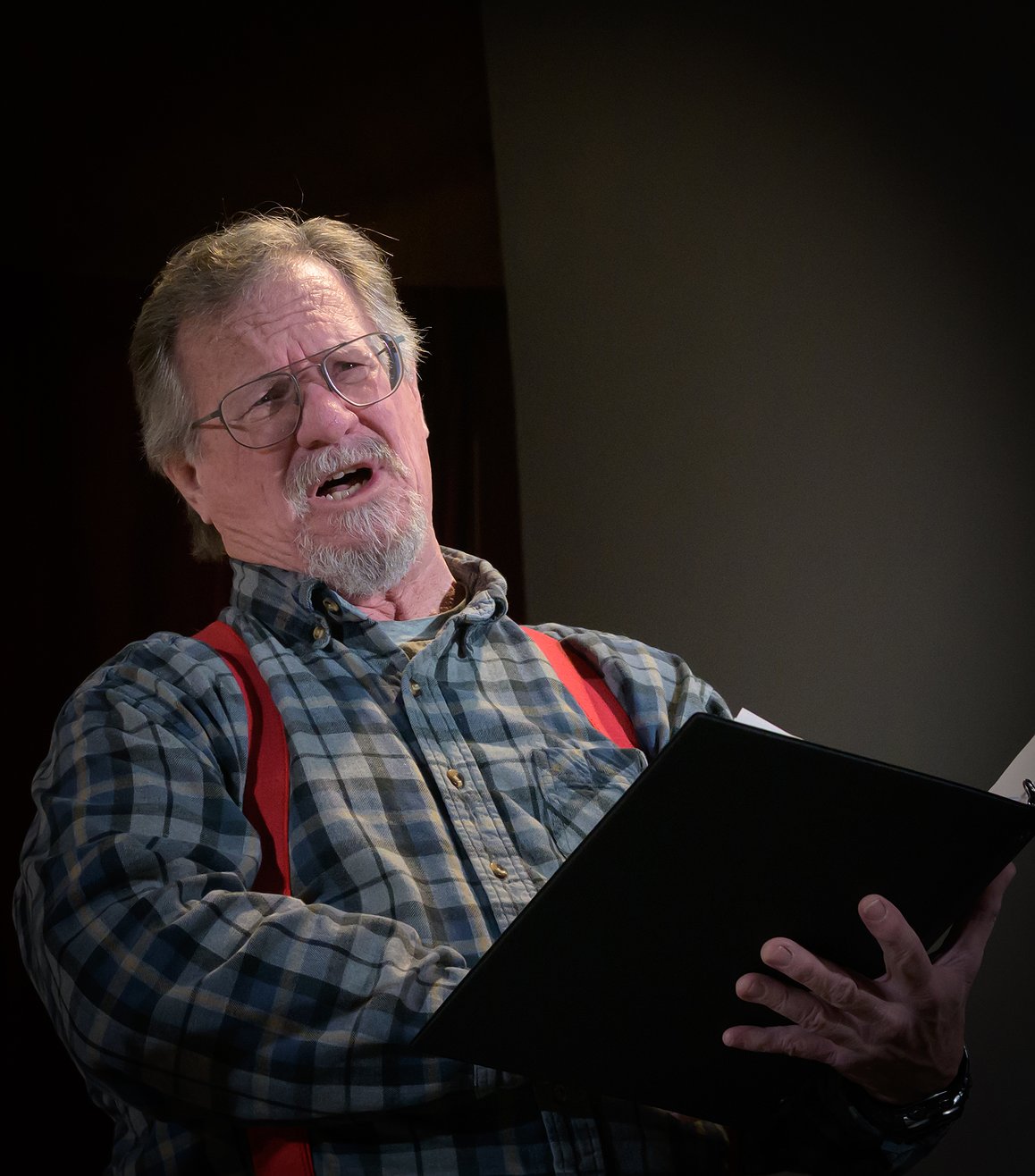 Paradise Players Dave Proctor performs in the Montana statehood story. (Tracy Scott/Valley Press)
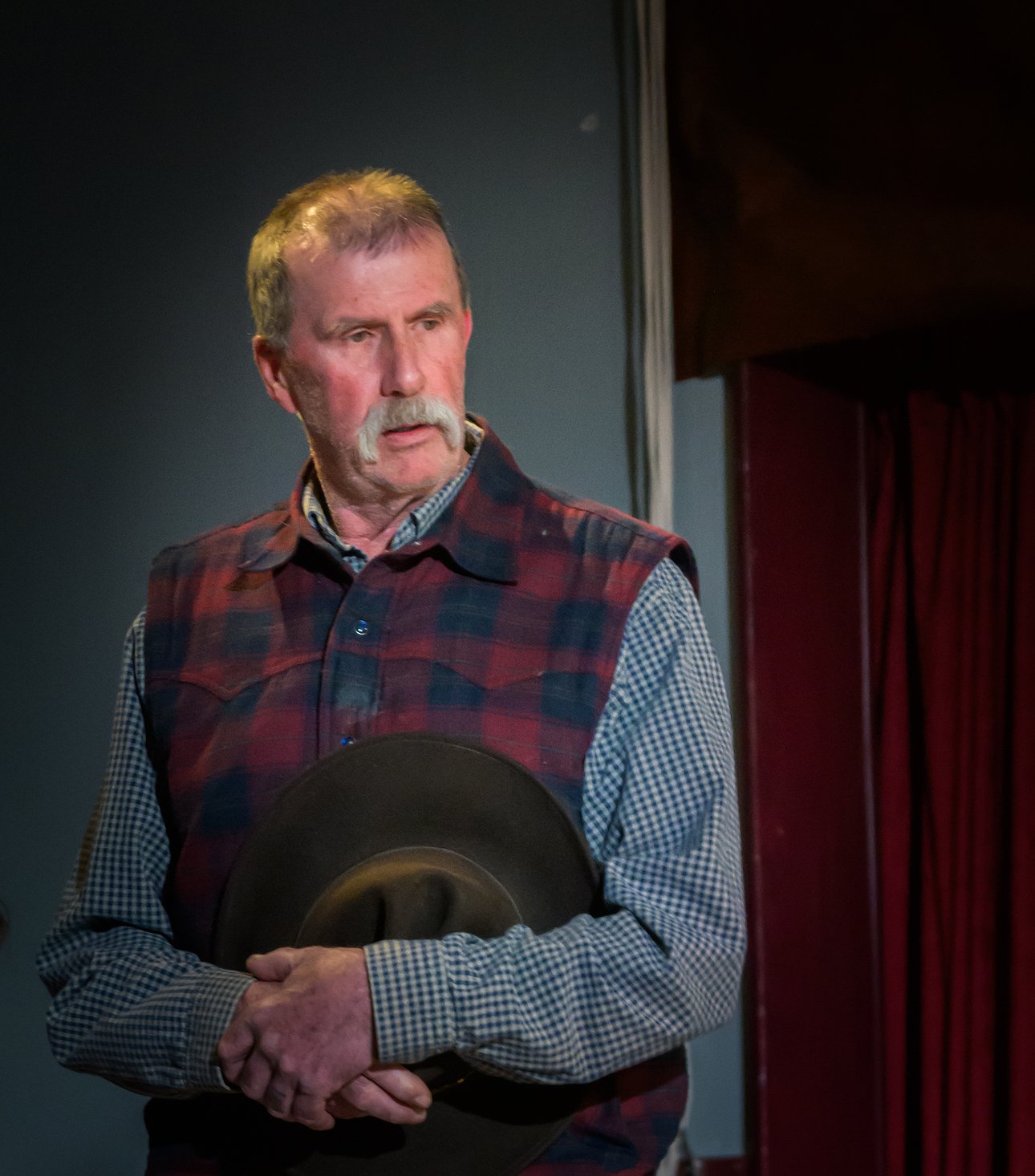 Paradise Players actor Wally Brown portrays a cowboy during the Big Sky Stories production. (Tracy Scott/Valley Press)
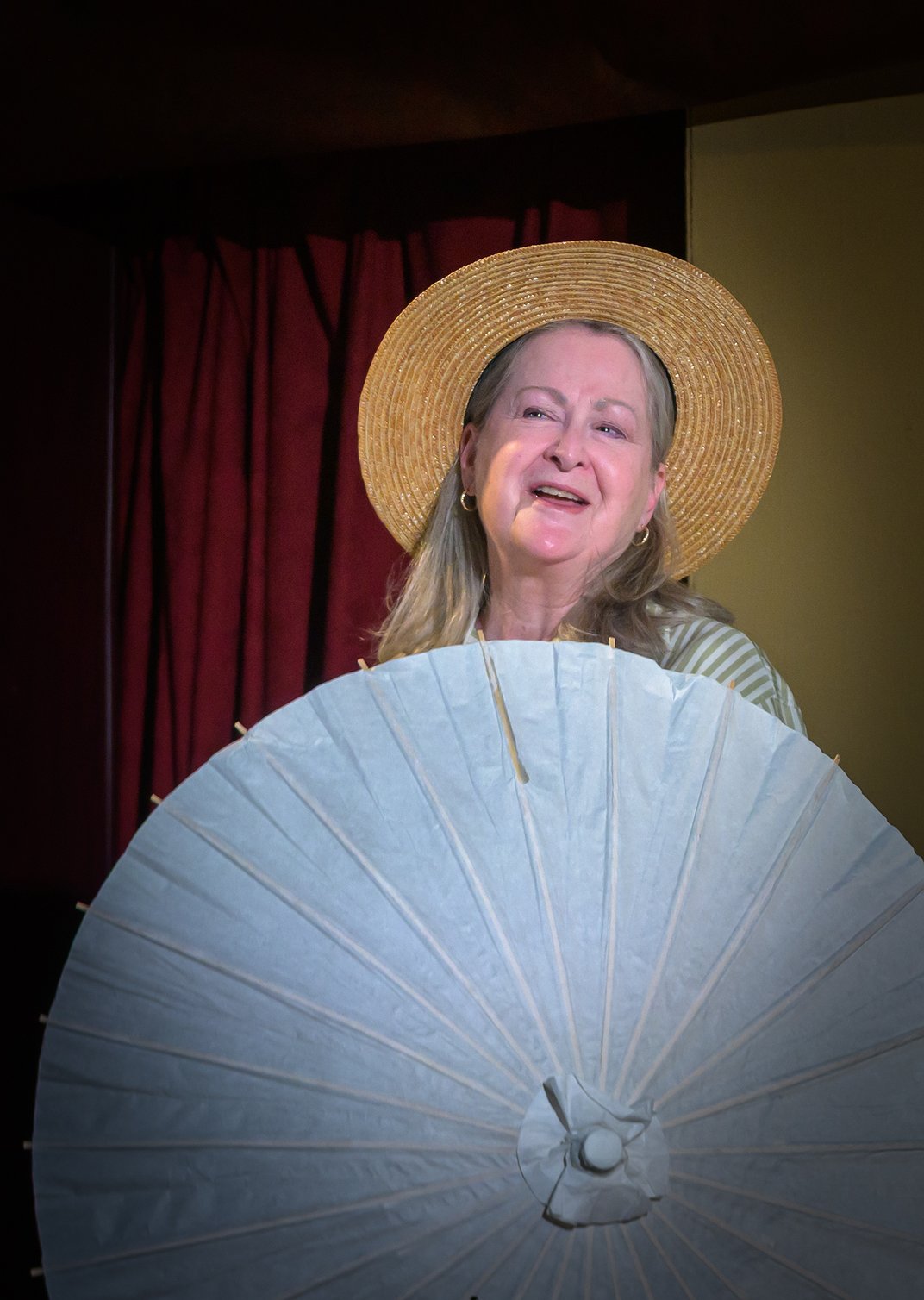 Paradise Player Director Kathleen Hubka playing the part of the girlfriend in trouble during the story "Favorite Son." (Tracy Scott/Valley Press)