
Pages of Redemption
JOEL MARTIN | Hagadone News Network | UPDATED 7 months, 2 weeks AGO
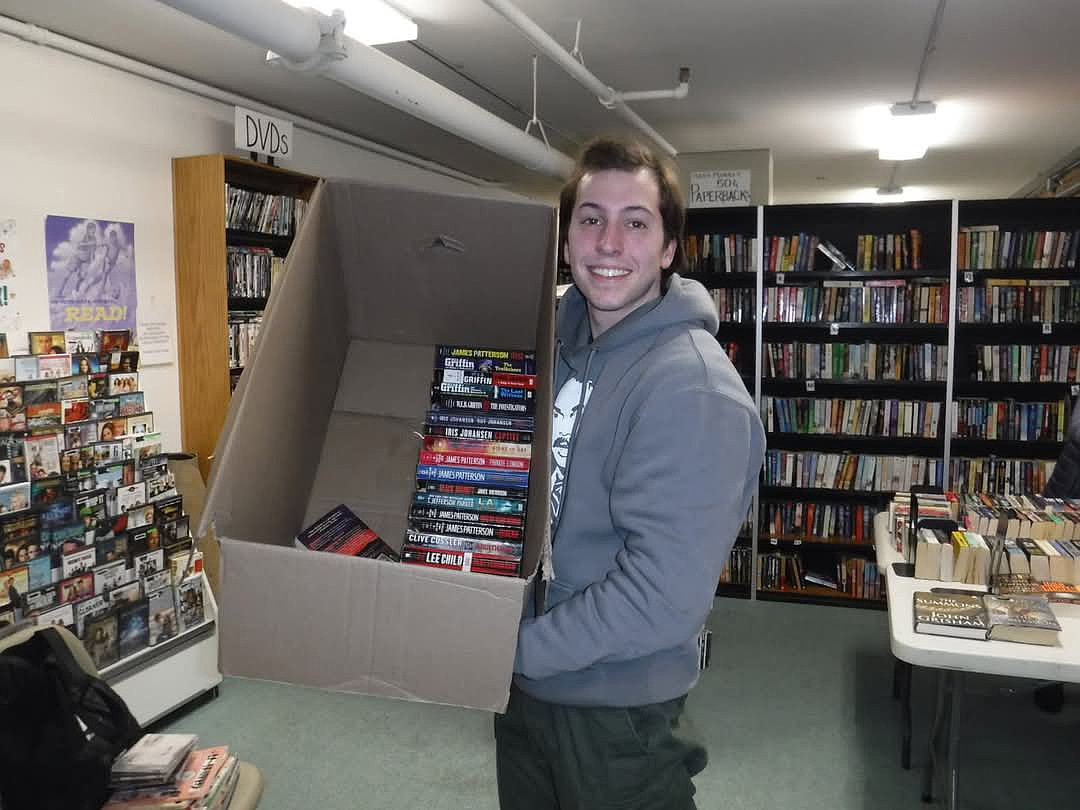
Bryson Fico of Okanogan holds up some of the books he’s collected for jails through his Pages of Redemption initiative.
COURTESY PHOTO/BRYSON FICO
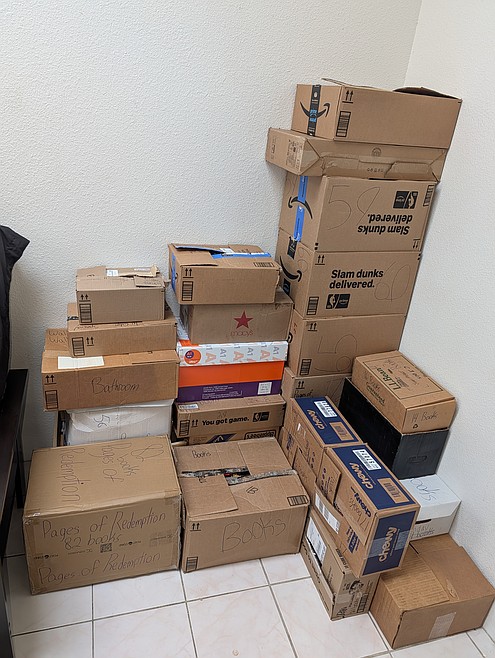
A stack of more than 1,200 books ready to be donated through Pages of Redemption.
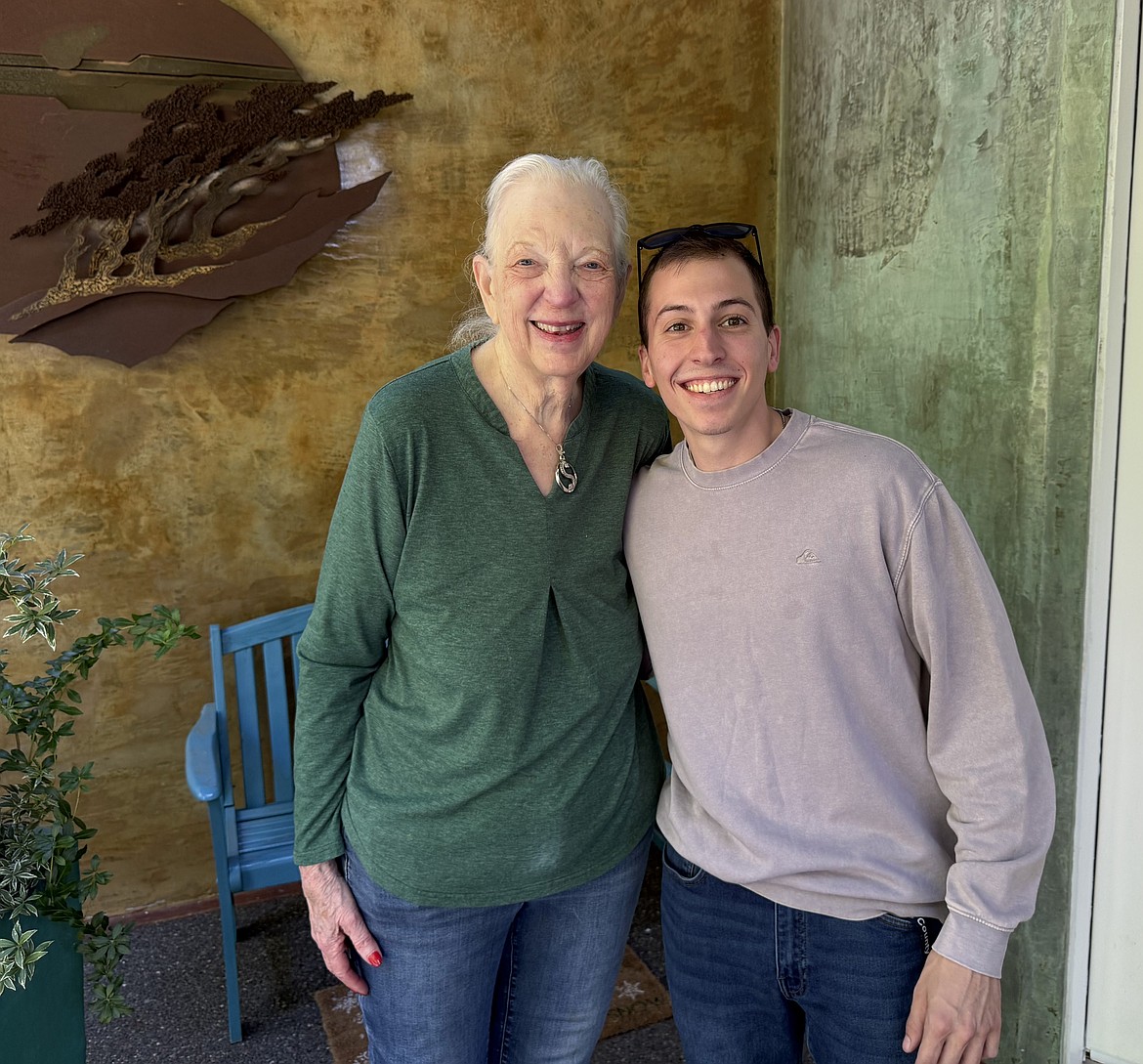
Bryson Fico, right, with bestselling author J.A. Vance. Vance, who lives in the Northwest, has donated more than 2,000 books to Fico’s Pages of Redemption initiative.
Joel Martin has been with the Columbia Basin Herald for more than 25 years in a variety of roles and is the most-tenured employee in the building. Martin is a married father of eight and enjoys spending time with his children and his wife, Christina. He is passionate about the paper’s mission of informing the people of the Columbia Basin because he knows it is important to record the history of the communities the publication serves. | March 5, 2026 3:20 AM
MOSES LAKE — A single book can make a big difference for those who are incarcerated.
“Books have the power to change lives,” said Bryson Fico, who collects and donates books to jails through his Pages of Redemption initiative. “If we can educate (inmates) or change their perspective on things, if they can see that somebody on the outside really cares about what’s going on inside these jails, they might be more inclined upon their release to give back.”
Fico has collected and donated more than 3,000 books to jails around the Northwest, he said. Those books serve both to educate inmates and to give their minds something to do during the long, dull period of incarceration.
“Not only is education an absolute key to reducing recidivism, but also that ability to use that same tool to stay in some kind of contact with their community outside the jail can really be a positive motivation for them and can ease a positive transition back into the community once they’re done with their time in the jail,” said Inspector Chris Whitsett, with the Kittitas County Sheriff’s Office.
The Kittitas County Jail has been the recipient of more than 700 books from Pages of Redemption. Fico has also supplied books to the Spokane County Jail and jails in Enumclaw, Kent, Marysville and Des Moines in western Washington. He also has donations planned at Yakima, Benton and Franklin County jails as well as the Washington State Penitentiary in Walla Walla, he said via email. Grant County Sheriff’s Chief Deputy Phillip Coats, who’s in charge of the Grant County Jail, told Fico in an email in January that the jail lacked enough space to accept book donations, but the new jail under construction might be able to accommodate them.
Fico collects books from the Friends of the Library in several different communities, as well as through book drives held at Central Washington University. He began the initiative as a student at CWU’s Department of Law and Justice, where he did his first book drive for the Kittitas County Jail.
“A few months ago, he reached out and said that he has a lot more jails that he’s working with, and a lot more counties that are building jails and are needing to build libraries for the incarcerated folks there,” said Megan Dickinson, an administrative assistant with that department. “I posted flyers and … got a huge outpouring of books. Everybody loved this cause; everybody thought it was great. We got tons and tons of books.”
There are some rules as to what books can be donated. They have to be paperbacks; hardback books are a security concern, Whitsett said. There have also been cases of books being smuggled into jails with the pages laced with drugs.
“Paperback books are going to be screened,” Whitsett said. “We’re going to screen them for appropriate material and they’re going to be physically examined, because we have to be aware of everything that comes into our jail.”
Books that are too sexually explicit are also not approved, Fico said. One facility refused to allow Dungeons and Dragons, he said, citing concerns that it could incite violence.
But as far as other genres of books go, just about anything is useful, he said.
“I bring in books on poetry,” he said. “A lot of times inmates want to write love letters to their loved ones outside of jail and it teaches them how to take their thoughts and their feelings (in a) positive way to write it down. I like the’ For Dummies’ series, where it teaches you pretty much any topic you can possibly want to learn about.”
Fiction is also very popular, he said, including mysteries and thrillers by authors like Lee Child and James Patterson. The New York Times best-seller author J.A Vance, who lives partly in the Seattle area, has supplied him with her books as well, he said.
“She found out about what I do … and she reached out to me via email and got my contact information,” Fico said. “She donated over 2,000 books ... (She said) she was on a book tour in Salt Lake City a few years back, and a lady came up to her and said, ‘My son was incarcerated in Utah, and he read a bunch of your books, and it really helped him during his time while he was incarcerated. And now he is a father, a husband, has a stable career and gives back to the community.’ And it really touched her deeply.”
Other Northwest authors have donated copies of their books as well, he said.
Fico’s books aren’t the only reading material inmates have, Whitsett said. The Kittitas County Jail keeps only a few hundred printed books, but it has a library of books in electronic form, which inmates can access via a carefully restricted tablet.
“It allows them to have a very large access to a legal library, which can be important for inmates,” Whitsett said. “And (there’s) a library of over 20,000 volumes in a variety of languages on every topic under the sun.”
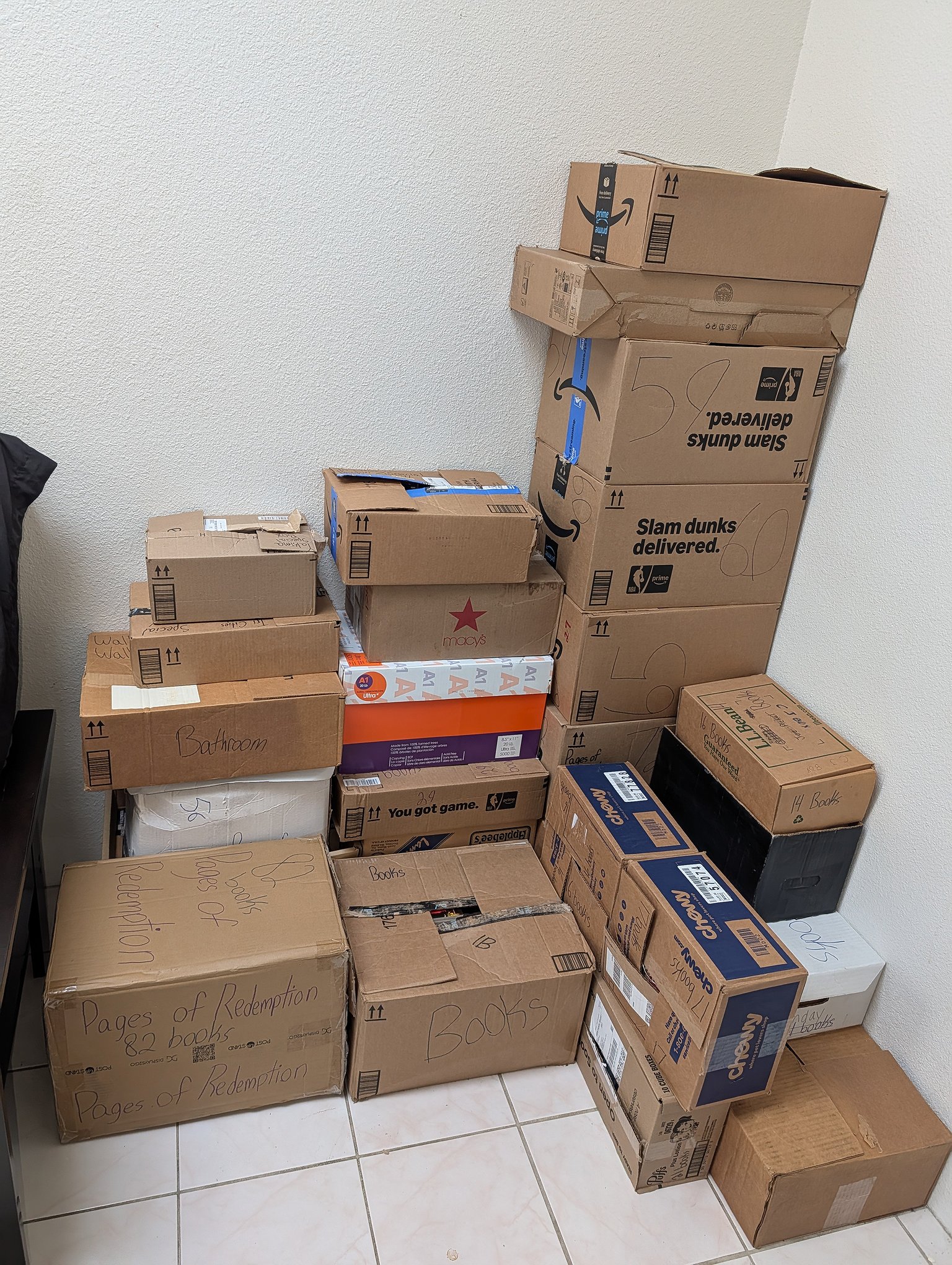 A stack of more than 1,200 books ready to be donated through Pages of Redemption.
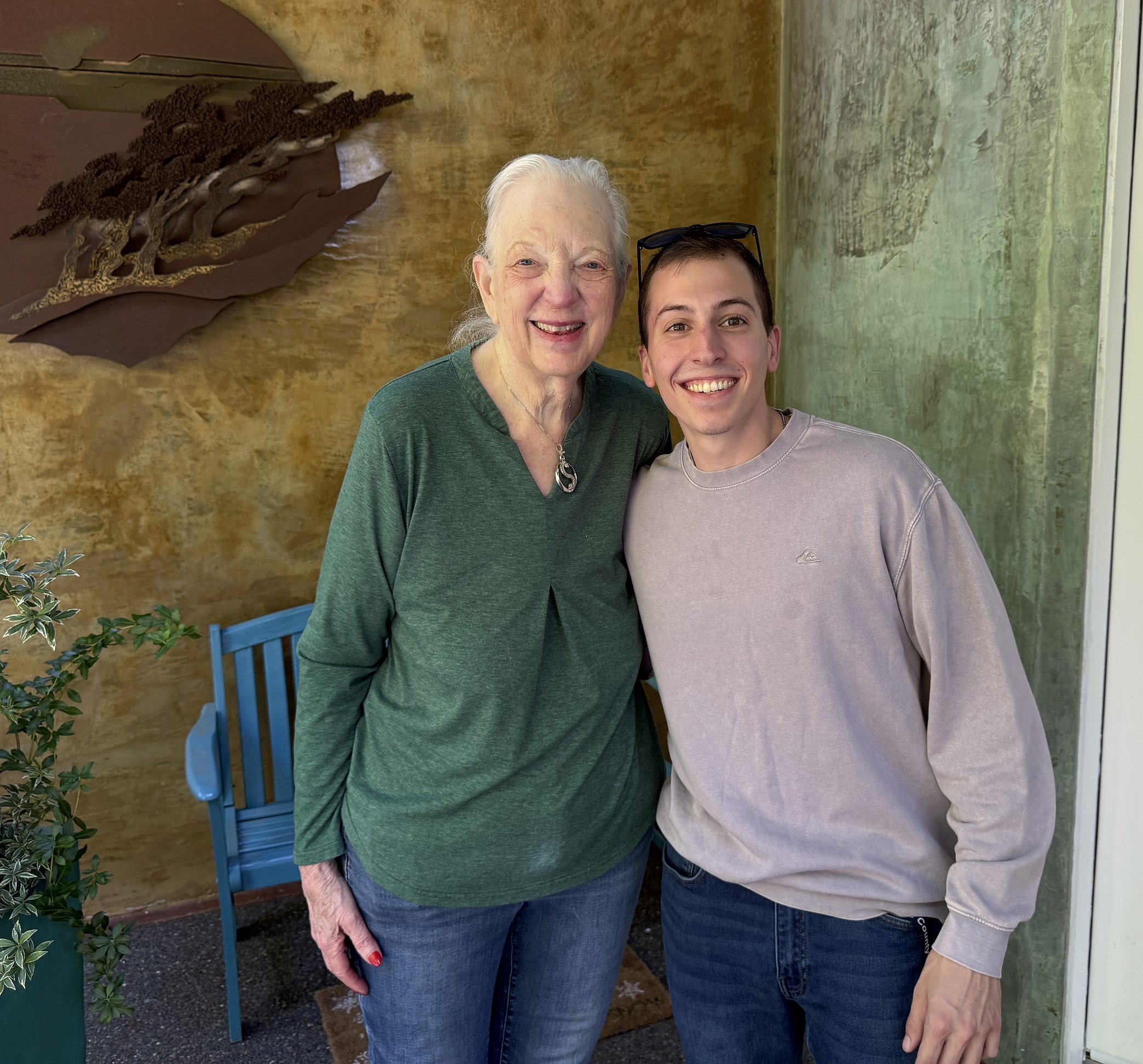 Bryson Fico, right, with bestselling author J.A. Vance. Vance, who lives in the Northwest, has donated more than 2,000 books to Fico’s Pages of Redemption initiative.
ARTICLES BY JOEL MARTIN

Endless battle
Noxious Weed Control Board works to keep invasive plants under control
MOSES LAKE — Some of the nastiest plants in Grant County were the topic of a class led by Jay Johnson, a consultant with the Grant County Noxious Weed Control Board, Tuesday. The Noxious Weed Control Board, as its name would suggest, is tasked with keeping weeds under control in Grant County. That’s not a small job; the board’s website lists 129 species of noxious weeds that are found around Grant County. A noxious weed is defined as an invasive, non-native plant that threatens agricultural crops, local ecosystems or fish and wildlife habitat, according to the Noxious Weed Control Board. Washington state law requires that these weeds be identified and their spread kept to a minimum, if not completely eradicated. “We’re one of those agencies a lot of people don’t really understand,” Johnson said. “We’re a county office and … our funding is tax-based assessment. When you get your tax bill and you look down at all the expenses that you pay for, there we are.”

BASIN EVENTS: Oct. 16-24
COLUMBIA BASIN — Whether you feel like shopping, crafting, learning or seeing a show, there’s something happening for you this week in the Basin. Oct. 16 ‘My Family (Mi Familia)’ screening Spanning three generations, “My Family (Mi Familia)” is a heartfelt drama that follows the Sánchez family as they build their lives in East Los Angeles. Through love, hardship, triumph, and sacrifice, the film explores the immigrant experience, the strength of family bonds, and the traditions that connect one generation to the next. Lowrider show and taco truck before the screening. Sponsored by Columbia Basin Allied Arts, EDUBS C/S and the Moses Lake Creative District. $12 per person. Doors open at 6 p.m., film begins at 7 p.m. at the Moses Lake Civic Center Auditorium, 401 S. Balsam St. Tickets and info: www.cba-arts.org.

Moses Lake author encourages women to look beyond church culture norms
MOSES LAKE — A Moses Lake author’s book, “A Christian Woman Striving to Live Her Faith in a Man-Controlled World,” takes aim at the role to which many churches relegate the female half of their congregations. “It’s to encourage women in the faith,” Linda Curran said. “A lot of churches say, ‘Teach Sunday school, do this, do that, but don’t (evangelize.)’" In her book, Curran recounts a time when she moved to a new community and joined a church there. She was surprised to learn that, as a new female member, she had been automatically assigned church cleaning duties. When she questioned it, she wrote, she was met with condescension and her objections were brushed aside. In other churches, she said, women who were capable of teaching were relegated to “women’s ministry.”