
JFAC to restore funding for medical programs and community colleges
ROYCE McCANDLESS / Contributing Writer | Bonner County Daily Bee | UPDATED 2 days, 11 hours AGO
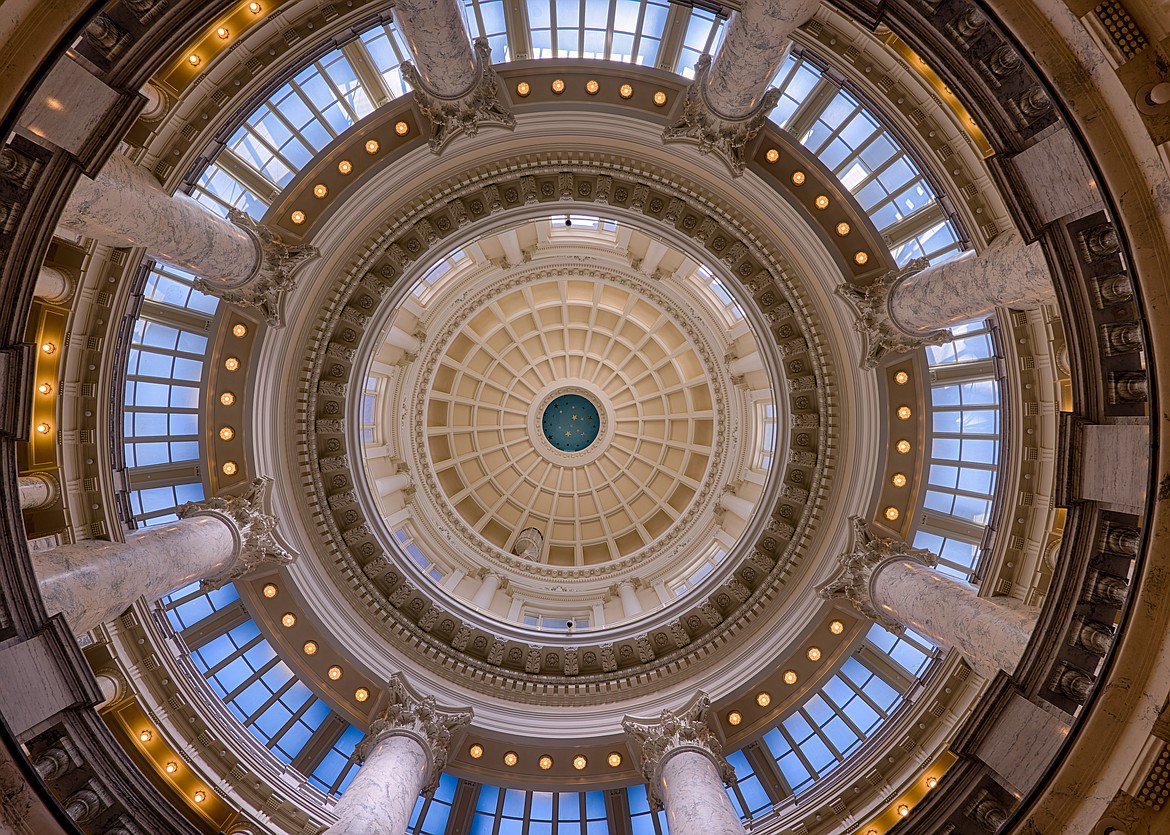
BOISE — The Joint Finance-Appropriations Committee voted Monday for health education programs and the state's community colleges to have their pending budget cuts restored.
The decisions come after JFAC added 2% cuts in February for most state agencies, and committee leadership framed budget enhancement requests, which add to the baseline agency budgets set by the body, as the avenue for state agencies to restore funding where it is most needed.
In each case, the decisions made Monday and for the remainder of this budget enhancement process will require an affirmative vote from both the House and the Senate to become law.
The future funding source for new graduate medical education (GME) residencies and fellowships prompted the longest debate among committee members, even as the committee voted 17-1 to restore $900,000 in funding for medical education fellowships and residencies.
The key consideration was adopting a separate language that would allow the legislature to fund 15 new GME residencies for the fiscal year 2027 with funds from the federal Rural Health Transformation Project (RHTP), so long as they are available for this purpose.
Under this framework, any state general funds appropriated for GME residences but no longer used as a result of the RHTP will be allocated to fund new undergraduate seats to comply with House Bill 368, which requires the state to commit to funding 10 medical school seats for undergraduate students.
Since the committee already voted to move $900,000 in funds from the general fund to the state health education programs, the language change would shift the source of this funding from the general fund to $185.9 million in funding awarded to the state through the RHTP this year.
Sen. Kevin Cook, R-Idaho Falls, said using RHTP funding for this purpose would be contrary to the program's intent and potentially violate the terms under which it would be used. With legislation pending to establish a committee to allocate RHTP funds, Cook said that JFAC directing funding is “taking away the rights” of that committee to make funding recommendations themselves.
“To try and take this money and move it towards these residencies and fellowships, you’re short-changing rural Idaho,” Cook said. “That is what it was meant to be. This is for rural Idaho, for those small towns that are struggling with the hospitals and the clinics and the doctors.”
Rep. Dusting Manwaring, R-Pocatello, responded that the intention of Idaho’s graduate and undergraduate medical education program is to create a pipeline for Idaho’s rural hospitals.
Using RHTP funds for these medical education programs will have downstream effects for rural Idaho, as graduating medical students go to work in rural Idaho hospitals. The function of the language is to provide a “trigger mechanism” if the funds from RHTP assist in educating these students, added Manwaring, who has been a proponent of the state's medical education programs.
Though Cook’s disagreements about the intent behind these funds remained, the committee voted 15-4 to direct the RHTP funds to these graduate and undergraduate medical education placements.
Separate from Idaho’s various medical education programs, the Idaho Division of Career Technical Education — which trains youth and adults for careers in high-demand fields — also received an affirmative vote to restore funding Monday.
For fiscal year 2026, the committee opted to restore $957,600 in funding to the Idaho Division of Career Technical Education’s (CTE’s) secondary programs by moving funds from the Idaho Career Ready Students Fund (ICRS), effectively reversing the additional 1% cut JFAC previously recommended.
The program will have another $1.8 million restored with money from ICRS after previously approving of 2% cuts for fiscal year 2027.
Idaho colleges and universities
When the subject of Idaho's state colleges and universities came before JFAC on Monday, the committee decided to stand by its previously approved cuts for the coming fiscal year.
Across all affected institutions, restoration of these rescissions would have amounted to $7.3 million in general funds and $1.9 million in dedicated funds for public institutions. That includes $2.6 million for Boise State University, $2.1 million for Idaho State University, $481,500 for Lewis-Clark State College and $2.2 million for the University of Idaho.
After JFAC exempted the Idaho State Police and the Department of Corrections from additional cuts, Rep. James Petzke, R-Meridian, said it is the colleges and universities that are accounting for the “biggest chunk” of the additional 2% budget reduction recommended for next fiscal year.
“I’m just cornered about the level of cuts that our universities have taken in the last few years,” Petzke said. “… I’m just concerned that we’re starting to underfund them a little bit and really compromise some of the competitiveness that we have as a state.”
Despite these remarks, the committee voted 15-3 to restore $1.9 million in dedicated funds for universities while reducing general funds by a further $242,400. The decision came after Sen. Janie Ward-Engelking, D-Boise, made a motion to restore both the dedicated fund portion and the $7.3 million in general funds for colleges and universities that failed in a 9-9 vote.
This decision contrasts with Idaho’s community colleges, which are poised to have $1.3 million in funds restored from JFAC’s additional 2% reduction for the next fiscal year. The committee’s 12-7 vote means the restoration of $167,400 to the College of Eastern Idaho, $423,800 to the College of Southern Idaho, $453,800 to the College of Western Idaho and $323,700 to North Idaho College.
Sen. Steve Miller, R-Fairfield, described community colleges as “probably the best dollars we spend on education” and said removing this funding would be felt by the professors of these colleges, who could feel pushed to look for other educational opportunities if compensation dips too low.
“I wish we could do more,” Miller said. “I just want to congratulate these guys for the job they do making the dollars stretch as far as they make them stretch.”